
Your Cart Is Our Priority
Explore our store to see what our products and resources can do for you.

TL;DR:
- Upgrading to lithium batteries provides better performance, longer lifespan, and lower long-term costs.
- Properly matching lift kits and tires improves safety, handling, and appearance.
- Focusing on quality foundational upgrades enhances reliability before adding aesthetic features.
Customizing a golf cart should be exciting, but with hundreds of upgrades on the market, it’s easy to feel stuck before you even start. Should you go for a lift kit and knobby tires, or prioritize a lithium battery upgrade that actually changes how your cart drives every single day? The truth is, the best customizations balance style, real-world performance, and a budget that doesn’t leave you regretting the decision six months later. This article walks you through ten creative ideas, backed by data and honest advice, so you can build a cart you’ll love for years, not just for the first weekend.
| Point | Details |
|---|---|
| Balance style and safety | Always match visible upgrades like lift kits and tires with practical performance and safety requirements. |
| Lithium batteries save money long-term | Though lithium batteries cost more upfront, their lifespan and efficiency offer major long-term savings. |
| Prioritize compatible upgrades | Check your cart’s specs and local laws before purchasing aftermarket parts to ensure safe, legal operation. |
| Routine maintenance pays off | Regular checks and lubrication will keep all your customizations working smoothly for years. |
Before you spend a single dollar, you need a clear sense of what you actually want from your golf cart. Are you chasing better performance on hilly terrain? Do you want a head-turning look at the club? Or do you need utility upgrades like extra storage and weather protection for daily neighborhood use? Your goal shapes everything, including which upgrades deliver the most value for your specific situation.
Setting a realistic budget early prevents the most common mistake: buying flashy add-ons first and then running out of money for the foundational upgrades that matter most. A well-thought-out list of upgrade ideas for performance and style can help you sequence your spending wisely. Think about total cost of ownership (TCO), not just the sticker price. A cheaper lead-acid battery might look attractive upfront, but replacement cycles and maintenance costs add up fast.
Compatibility is another factor that catches a lot of owners off guard. Not every upgrade works with every cart model or voltage system. Before you order parts, confirm that the upgrade is rated for your cart’s make, model, and existing electrical setup. Skipping this step leads to wasted money and, in some cases, safety issues.
Here’s a quick breakdown of upgrade priorities based on your main goal:
Statistic callout: Lithium batteries offer clear performance and efficiency gains over lead-acid options, but they come with a higher upfront cost, potential warranty concerns, and possible charger incompatibility. Lead-acid batteries are cheaper to buy initially but carry a significantly higher total cost of ownership over time.
Pro Tip: Tackle upgrades that give you the most noticeable day-to-day improvement first. For most owners, that means the battery and tires before anything cosmetic. You can always add style later, but a sluggish cart with a great paint job is still a sluggish cart. Check out top golf cart modifications and best golf cart add-ons for prioritized lists that match different budgets.
The battery is the single most impactful upgrade you can make to a golf cart. Everything else, from top speed to range to how well your accessories function, flows from the quality and capacity of your power source. This is not the place to cut corners.
Lithium batteries are the clear performance winner in 2026. They charge faster, hold a more consistent voltage throughout the discharge cycle, and last far longer than lead-acid alternatives. However, lithium vs. lead-acid is not a simple comparison. Lithium packs cost significantly more upfront, and some cart manufacturers may flag aftermarket lithium installs as warranty-voiding changes. Your existing charger may also be incompatible, adding another cost to the switch.
Here’s how the two options stack up side by side:
| Feature | Lithium | Lead-Acid |
|---|---|---|
| Upfront cost | Higher | Lower |
| Lifespan | 8-10+ years | 3-5 years |
| Weight | Much lighter | Heavy |
| Maintenance | Near zero | Regular watering needed |
| Range (105Ah) | 35-50 miles tested | 20-30 miles typical |
| Total cost of ownership | Lower long-term | Higher long-term |
The range numbers matter for real-world planning. A 105Ah lithium battery delivers a tested driving range of 35 to 50 miles per charge under typical conditions. That’s a meaningful difference if you’re running a cart around a large property or doing neighborhood errands daily.
For help matching the right battery to your cart’s voltage system, the golf cart voltage guide is a great starting point. Choosing the wrong voltage configuration can damage components and void warranties.
Pro Tip: Pair your battery upgrade with a compatible charger from the same manufacturer when possible. Mismatched chargers are one of the top reasons lithium batteries underperform or fail prematurely. Routine maintenance also matters: check connections monthly and keep terminals clean to protect your investment.
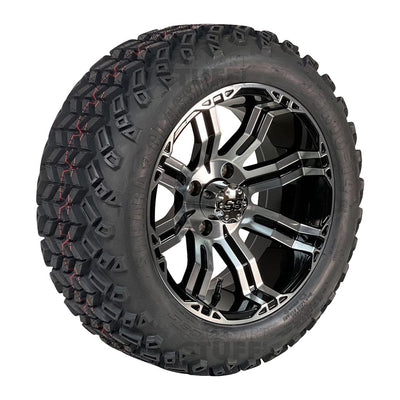
Wheels and tires are where performance and visual impact collide. Swapping out factory wheels for a set of custom alloys immediately transforms how your cart looks, and choosing the right tires for your terrain makes it handle better too. This upgrade is satisfying because you see and feel the difference right away.

Lift kits take things further by raising the cart’s ground clearance, allowing for larger tires and better obstacle handling. But this upgrade comes with trade-offs that too many owners overlook until it’s too late. The Golf Cart Lift Kit Guide breaks down the options clearly.
Benefits and drawbacks of lift kits:
Matching your tire size to your lift kit isn’t optional. It’s a safety and efficiency requirement. Here’s a quick reference:
| Lift Height | Recommended Tire Size | Notes |
|---|---|---|
| Stock (no lift) | Up to 20" | Standard fitment |
| 3" lift | 20-22" | Good all-around choice |
| 4-6" lift | 22-23" | Off-road capable |
| 6"+ lift | 23-25" | Specialty terrain use |
“Over-lifting for looks alone is one of the most common mistakes we see. A 6-inch lift with undersized tires looks awkward, strains the drivetrain, and may not fully qualify as a street-legal low-speed vehicle (LSV) in some states even with a lighting kit installed.”
As the vevor 48v golf cart battery research confirms, lifts must match tires to avoid rubbing and inefficiency, and regular monthly bolt checks plus quarterly lubrication keep lifted carts running safely over time. Use the Ultimate Wheel & Tire Guide to find combinations that work for your specific model, and if you drive a Club Car, the Club Car Lift Kit Guide offers model-specific guidance.
Once the mechanical foundation is solid, the interior is where your cart becomes truly personal. This is the fun part. Custom seats, upgraded steering wheels, and integrated tech can turn a basic cart into a rolling lounge that you genuinely enjoy spending time in.
Here’s a step-by-step process for planning your interior upgrades effectively:
Materials matter more than most people realize. Marine-grade vinyl resists UV fading and moisture far better than standard upholstery. It costs more, but if your cart sits in the sun regularly, it pays for itself by outlasting cheaper alternatives by years. The same logic applies to speaker systems: waterproofing matters on a vehicle that sees rain and humidity.
Pro Tip: Don’t try to upgrade everything at once. Start with seating, since it affects every single ride, and then add tech as your budget allows. Staggered upgrades also give you time to test each addition before committing to the next. For detailed inspiration, browse guides on how to customize golf cart interiors and explore popular golf cart accessories for curated options.
If you plan to drive your golf cart on public roads, even just through a neighborhood or across a small town, you need to understand the difference between a stock cart and a street-legal low-speed vehicle. The gap is significant, and getting it wrong can result in fines or, worse, accidents.
Most states that allow golf carts on public roads require a specific set of equipment. Here’s a breakdown:
Legal requirements (varies by state, but commonly required):
Recommended safety upgrades beyond the legal minimum:
A critical point that many owners miss: buying a “street-legal kit” online does not automatically make your cart legal. Aftermarket street-legal kits may not fully qualify a golf cart as a low-speed vehicle in some states, particularly if the cart can’t reach the required minimum speed or doesn’t have a federally compliant VIN. Always check your state and local regulations before assuming a kit covers you.
This is also where registration and insurance come into play. Some states require golf carts driven on public roads to be registered and insured like any other low-speed vehicle. Skipping this step is a liability risk. Visit the street-legal accessories page for components that meet common compliance standards and help you build a properly outfitted cart.
After working with thousands of golf cart owners across every style and use case, one pattern stands out clearly: the owners who end up most satisfied are the ones who invested in quality fundamentals first and added personality second. The ones who do it in reverse often come back looking to undo cosmetic choices that created problems.
The flashiest trend right now might be a massive lift with chrome wheels and neon underlighting. And yes, it looks incredible in photos. But if that build is sitting on mismatched tires, running an aging lead-acid battery, and has no routine maintenance schedule, the novelty wears off fast. A cart that breaks down, rides rough, or drains its battery in 15 miles stops being fun pretty quickly.
The most overlooked upgrades are almost always the practical ones: a quality battery, properly matched tires and lift height, and comfortable seating materials that last. These upgrades improve every single ride without exception. Compare that to a custom wrap or novelty horn that you stop noticing within a week.
Our honest advice: build your cart from the ground up, starting with reliability and ending with style. Explore top upgrades for 2026 with that mindset, and you’ll end up with a cart that’s both genuinely useful and genuinely impressive.
Now that you have a clear picture of what makes a great golf cart build, the next step is finding parts that actually fit your cart and your vision.
At Golf Cart Stuff, we carry a full range of parts and accessories for every major brand and model, from Club Car to EZGO to Yamaha. Whether you’re sourcing a lithium battery upgrade, browsing buy golf cart accessories for interior and comfort upgrades, or hunting down specific Club Car DS parts for a restoration project, you’ll find what you need in one place. If street legality is your priority, our street-legal accessories section has lighting kits, mirrors, and compliance components ready to ship. Start with your goal in mind, and we’ll help you build the rest.
Switching to a lithium battery offers the best long-term value, with lower total cost of ownership and significantly improved range compared to lead-acid, despite the higher upfront cost.
A 105Ah lithium battery delivers a tested driving range of 35 to 50 miles per charge under typical conditions.
No. Aftermarket street-legal kits may not fully qualify a cart as an LSV in some states, so always verify your local laws before purchasing.
Check all bolts monthly and lubricate moving parts quarterly. This simple schedule, confirmed by real-world testing data, keeps lifted carts and upgraded drivetrains running safely for years.
Custom seats or marine-grade seat covers deliver the most immediate and noticeable improvement in ride comfort and overall cart enjoyment, making them the best place to start your interior upgrade.
Explore our store to see what our products and resources can do for you.

Leave a comment