
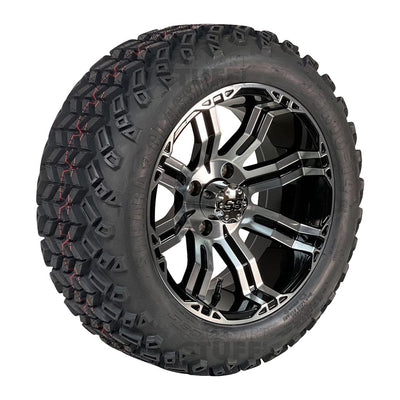
Your Cart Is Our Priority
Explore our store to see what our products and resources can do for you.

Choosing the right tires for your golf cart can feel overwhelming, especially with so many types built for different surfaces and conditions. The wrong tire makes every ride less comfortable and may even damage the course or leave you stuck in tough terrain. But when you understand what each tire is designed for, you unlock smoother rides, safer handling, and better care for your favorite paths and greens.
This list gives you clear guidance on how each major golf cart tire works, using proven facts about tire safety, durability, and surface compatibility. Whether you need everyday reliability on pavement, extra grip for off-road trails, or turf-safe performance for golf courses, you’ll find direct advice to match your needs. Get ready to discover which tire makes your golf cart perform its best in every situation.
| Takeaway | Explanation |
|---|---|
| 1. Choose street tires for pavement. | Street tires provide optimal traction, lower rolling resistance, and improved battery life on paved surfaces. |
| 2. All-terrain tires offer versatility. | All-terrain tires are suitable for varied environments, handling both paved and unpaved surfaces without needing swapping. |
| 3. Turf tires protect grass surfaces. | Turf tires distribute weight evenly to prevent damage to grass while maximizing mobility on manicured surfaces. |
| 4. Off-road tires enhance performance on trails. | Off-road tires provide deep treads and reinforced sides for tackling mud, rocks, and uneven terrain confidently. |
| 5. Heavy-duty tires ensure long-lasting durability. | Heavy-duty tires are built with reinforced materials, extending lifespan in demanding conditions, perfect for intense usage. |
When your golf cart rolls onto smooth pavement, you want tires that grip reliably without bouncing or sliding. Street tires are specifically engineered for paved surfaces where asphalt or concrete creates a hard, stable foundation for your vehicle.
Street tires differ fundamentally from their all-terrain cousins. They feature a tighter tread pattern with shallower grooves, designed to maximize the contact patch between rubber and pavement. This design prioritizes traction on hard surfaces rather than dispersing mud or navigating rocky terrain. The rubber compound used in street tires is typically harder and more durable, built to withstand the consistent friction of repeated pavement contact without excessive wear.
The performance benefits become obvious when you drive them. Your golf cart feels more stable during turns, responds more quickly to steering input, and travels with noticeably less rolling resistance. This translates to better battery efficiency if you’re operating an electric model, or improved fuel economy with a gas powered cart. You’ll also notice a quieter, smoother ride compared to chunky all-terrain patterns that vibrate on hard surfaces.
When evaluating street tires, focus on three key performance metrics. Treadwear, traction, and temperature resistance form the foundation of tire safety ratings, helping you identify which models deliver consistent performance on pavement. Higher treadwear ratings indicate longer tire life, while traction grades show how well the tire grips in wet conditions. Temperature resistance ensures the tire maintains its integrity during extended use without overheating.
Practical considerations matter too. Street tires typically cost less than all-terrain options since they require fewer specialized compounds and simpler manufacturing processes. They’re also easier to source and replace, with most golf cart retailers stocking common street tire sizes year-round. Installation is straightforward, and you won’t need specialized equipment beyond what you’d use for any tire change.
One realistic scenario: imagine your golf course community has paved cart paths connecting neighborhoods and recreational areas. Street tires excel in this environment. Your cart handles smoothly around corners, maintains consistent speed without excessive vibration, and your batteries last measurably longer between charges. The tires wear evenly and predictably, giving you reliable performance for years.
Pro tip: Rotate your street tires every 500 to 1,000 miles to ensure even wear patterns and extend their overall lifespan significantly.
All-terrain tires represent the Swiss Army knife of golf cart tire options. They excel when your cart travels across both paved pathways and unpaved terrain without requiring a tire change between conditions.
Think of all-terrain tires as a balanced compromise. They’re not optimized for any single surface the way street tires dominate pavement or specialized off-road tires conquer mud and rocks. Instead, they combine design elements from both categories to perform decently across multiple environments. The tread pattern sits somewhere between street tire efficiency and off-road capability, with moderately spaced lugs that bite into soft ground while maintaining reasonable contact on hard surfaces.
The magic happens in how the rubber compound and tread design work together. All-terrain tires use a medium-hardness rubber that resists wear on pavement yet provides enough flexibility to grip unpredictable surfaces. The tread pattern features larger blocks than street tires but smaller, more numerous lugs than aggressive off-road options. This design allows water and mud to escape from the tread without creating excessive noise or vibration on paved surfaces.
Why would you choose all-terrain over specialized options? Consider the real world scenario many golf cart owners face. Your community has paved main roads connecting neighborhoods, but residents also access dirt paths to scenic overlooks, fishing spots, or maintenance areas. Your cart might travel across a gravel parking lot, navigate the grass perimeter of the golf course, and return via smooth asphalt. All-terrain tires handle this variety without compromise, eliminating the hassle of swapping tires based on your planned route.
Research on tire traction and safety demonstrates how all-terrain tires effectively manage vehicle control across diverse terrains through their specialized tread geometry. All-terrain tires are designed for both paved and unpaved roads, providing that versatility you need for mixed surface travel. This balanced approach means your golf cart maintains stable handling whether you’re crossing a concrete path or rolling through a dirt lot.
The practical advantages extend beyond versatility. All-terrain tires typically offer a middle ground in pricing between budget street options and premium off-road models. They wear at a predictable rate across multiple surfaces, simplifying maintenance planning. Installation requires no special equipment beyond standard tire change tools. Battery consumption on electric carts remains reasonable since all-terrain tires present moderate rolling resistance compared to chunky off-road patterns.
One consideration worth mentioning: all-terrain tires won’t perform as exceptionally as specialized tires on their preferred terrain. They won’t match street tires for smooth, efficient pavement rolling, nor will they conquer serious mud pits like aggressive off-road tires. But if your golf cart lifestyle involves equal parts paved and unpaved terrain, that jack-of-all-trades approach delivers real convenience and reliability.
Pro tip: Check your tire pressure monthly and adjust based on terrain type, slightly higher for paved surfaces and slightly lower when tackling rougher ground to optimize traction without sacrificing ride comfort.
If you operate your golf cart on maintained grass, fairways, or other manicured turf surfaces, turf tires represent your best choice for protecting the landscape while maintaining mobility. These specialized tires prioritize turf preservation above all other performance metrics.
Turf tires look fundamentally different from standard options. Instead of aggressive tread patterns, they feature smooth or minimally textured surfaces that distribute pressure evenly across a wide footprint. This design philosophy reverses the typical tire logic. Rather than concentrating pressure at contact points for better traction, turf tires spread pressure across maximum surface area to minimize damage to underlying grass and soil. The result resembles a low-profile racing slick more than a traditional vehicle tire.
The science behind turf protection is straightforward. When a heavy golf cart travels over grass, the weight compresses soil and vegetation. Traditional tires with deep lugs create stress points that damage grass blades and compress soil into hard, compacted layers that resist water penetration and root growth. Turf tires eliminate this problem by spreading weight distribution more evenly, reducing peak pressure at any single point. This gentler approach preserves turf quality, maintains proper drainage, and prevents the divot patterns that plague golf courses with improper tire choices.
Why does this matter for your golf cart experience? Managing golf cart traffic effectively requires consideration of turf protection to preserve course playability and aesthetics. If you’re maintaining a private property with quality landscaping, operating on a golf course, or navigating sensitive terrain, turf tires demonstrate respect for the environment while ensuring your cart remains functional. You get mobility without sacrificing the beauty and health of the grass beneath your wheels.
The practical application works well for residential golf communities, manicured properties, or anyone who regularly drives across maintained lawns and fairways. Your cart can traverse the course without leaving visible wear patterns, bare patches, or compaction damage. Groundskeepers won’t need to conduct expensive overseeding or aeration to repair tire damage. The investment in turf tires pays dividends in property appearance and turf longevity.
One important characteristic to understand: turf tires excel specifically on grass but perform poorly on pavement, gravel, or unpaved terrain. The smooth tread that protects turf offers minimal traction on hard surfaces and can feel slippery on asphalt. If your cart travels exclusively on maintained turf, turf tires deliver exceptional results. If you need mixed surface capability, you’ll face compromises with these specialized options. This is why understanding your terrain patterns before selecting tires matters significantly.
Research on turf health supports specialized turf tires that reduce soil compaction and preserve fairway and greens quality. The reduced wear means your turf recovers faster from cart traffic, maintains consistent playability, and requires fewer maintenance interventions throughout the season. Golf course superintendents and grounds managers have long recognized this benefit, and the same logic applies to any residential property where grass quality matters.
Pro tip: Keep your turf tire pressure slightly lower than street tire recommendations to increase the contact patch and further distribute weight across grass surfaces, but monitor pressure monthly since underinflation increases rolling resistance and battery drain.
When your golf cart ventures beyond manicured paths into genuine wilderness terrain, off-road tires become your essential foundation for safety and performance. These aggressive tires tackle mud, rocks, sand, and steep inclines that would defeat standard options.
Off-road tires look intentionally brutal compared to other tire types. They feature deep tread grooves with large, blocky lugs that resemble tiny paddles designed to dig into soft terrain. The sidewalls are reinforced with extra rubber layers to resist punctures from sharp rocks and branches. The overall construction prioritizes ruggedness and bite over smooth rolling or pavement efficiency. This aggressive architecture represents the opposite design philosophy from turf tires, and for good reason.
The engineering behind off-road capability focuses on three critical functions. First, deep treads cut through mud and soft ground to reach firmer subsurface material, preventing your cart from sinking or bogging down. Second, the wider tread blocks provide edge grip on loose surfaces like gravel or sandy trails where standard tires would slide uselessly. Third, reinforced sidewalls flex and absorb impact from rocks and roots without failing, protecting both the tire and your cart’s suspension. Off-road tires with deep treads and reinforced construction deliver the durability and traction necessary for genuine rough terrain adventures.
Consider a practical scenario that illustrates their value. Your golf community features scenic trails leading to a fishing pond surrounded by rocky terrain and muddy patches. Another route climbs a steep wooded hillside with exposed roots and uneven ground. Standard tires would struggle on these paths, spinning uselessly in mud or losing traction on loose surfaces. Off-road tires dig in confidently, maintain momentum through challenging sections, and handle the constant punishment of rocks and roots without degrading.
The performance benefits extend beyond basic capability. Off-road tires reduce rollover risk on uneven terrain by improving ground contact and traction, preventing the sideways slips that cause accidents on slopes. Enhanced traction and shock absorption on rugged terrain means your cart responds predictably when navigating challenging conditions. You maintain control in situations where conventional tires would fail, translating to real safety improvements for you and your passengers.
There are legitimate trade-offs to understand. Off-road tires generate significant noise on pavement due to their blocky tread pattern, feel rough and bumpy on smooth surfaces, and increase rolling resistance that drains batteries faster on electric carts. If your trails are exclusively unpaved, these drawbacks disappear. If you alternate between paved paths and rough terrain, you face the choice between compromised performance in both environments or maintaining multiple tire sets.
Installation and maintenance follow standard procedures, though the aggressive tread demands more frequent cleaning to prevent mud buildup that can imbalance the tire. Off-road tires typically cost more than street or all-terrain options due to their reinforced construction and specialized compounds. But if you genuinely use rough trails, the durability and performance gains justify the investment.
Pro tip: Lower your tire pressure slightly when tackling muddy or sandy trails to increase the contact patch and improve traction, but remember to reinflate to normal pressure when returning to harder surfaces to reduce rolling resistance and prevent sidewall damage.
Sand presents one of the most challenging driving surfaces for any vehicle, and golf carts are no exception. Sand tires are engineered specifically to keep your cart floating on top of loose sand rather than sinking into it, transforming beach and dune driving from frustrating to genuinely enjoyable.
Sand tires look dramatically different from every other tire type. They feature an exceptionally wide profile that spreads weight across maximum surface area, and the tread pattern is specifically optimized for sand rather than grip in the traditional sense. The tires are often wider and have lower aspect ratios, creating a paddle-like effect that helps your cart stay on top of the sand instead of plunging through it. Think of them as oversized snowshoes for your golf cart, designed to distribute force across soft, unstable surfaces.
The physics at work here differs fundamentally from other terrains. On sand, traditional tread patterns sink and lose traction because the sand particles flow around the lugs without creating firm contact. Sand tire design counters this by maximizing the footprint to increase flotation. The wider the tire and the larger the contact patch, the less pressure the tire exerts on the sand beneath it. Lower tire pressure compounds this effect, allowing the tire to spread even wider and sink less deeply into the sand. The result is a vehicle that glides across surfaces where standard tires would bog down hopelessly.
Consider the practical difference this makes. A golf cart equipped with standard tires approaching a beach becomes increasingly difficult to drive as sand deepens. The tires sink progressively, resistance increases, and eventually the cart either stops or slogs forward at crawling speed with spinning wheels. The same cart with sand tires rolls confidently across the beach, maintaining speed and momentum without the exhausting power drain. Sand tires maximize flotation over sandy terrain by optimizing their large footprint and distinctive tread design for loose, shifting surfaces.
If you’re fortunate enough to have beach or dune access at your golf community, sand tires unlock that entire environment for exploration. They enable you to reach scenic overlooks, fishing spots, or beach activities without struggling through sand every inch of the way. The improved flotation also means less strain on your cart’s motor and battery, translating to longer range and less maintenance stress from constant high throttle operation.
One realistic consideration: sand tires perform terribly on pavement and moderately on other hard surfaces. The wide, soft profile that works beautifully on sand creates excessive rolling resistance on asphalt, generates uncomfortable vibration on concrete, and wears unpredictably on varied surfaces. If your golf community features beach and dune areas but you also need pavement capability, sand tires become an option only if you can dedicate them to sand-only use or accept their compromised performance elsewhere.
The investment in sand tires pays dividends if you frequently access beaches or dunes. Battery drain decreases measurably compared to standard tires struggling through sand. Maintenance becomes less intensive since you’re not straining your motor constantly. Most importantly, sand driving becomes a pleasure rather than an exercise in frustration. Sand tire tread optimization reduces penetration into loose sand, allowing for better maneuverability and genuine safety when navigating challenging beach and dune conditions.
When preparing your golf cart for beach use, sand tires represent one of the most effective modifications you can make. They transform your vehicle’s capability dramatically and open entire recreational areas that would otherwise remain inaccessible or frustrating to reach.
Pro tip: Deflate sand tires to approximately 50 to 60 percent of their normal pressure before driving on beaches to maximize flotation and create a wider contact patch, then reinflate fully after returning to firmer terrain to restore handling and reduce rolling resistance.
Low profile tires transform how your golf cart handles tight spaces and precise navigation. These shorter, wider tires sit closer to the ground and provide a lower center of gravity that dramatically improves cornering stability and responsive steering control.
Low profile tires differ from standard golf cart tires in their height to width ratio. A typical golf cart tire might have a sidewall height that equals 50 to 70 percent of the tire width. Low profile tires flip this proportion, with sidewall heights representing only 30 to 50 percent of the width. This geometry creates a wider, flatter footprint and reduces the distance between the wheel rim and the ground. The visual effect is a sportier appearance, but the performance implications matter far more than aesthetics.
The handling improvements stem directly from this geometry change. A lower center of gravity means less weight transfer during turns, reducing the lean angle your golf cart experiences when cornering. This translates to better grip during sharp turns, more predictable steering response, and increased confidence when navigating tight spaces. Your cart feels planted and controlled rather than tippy or loose. In practical terms, you can navigate around obstacles more precisely and execute tighter turning radius maneuvers with greater stability.
Tire pressure and sidewall stiffness also factor into the maneuverability equation. Low profile tires typically feature stiffer sidewalls that resist flexing during cornering, maintaining consistent handling characteristics throughout turns. This firmness comes with a trade-off: slightly reduced shock absorption compared to taller sidewalls that can flex and compress more. Many golf cart owners find this trade-off worthwhile, exchanging a marginally softer ride for substantially improved handling precision.
Consider where improved maneuverability matters most in your golf cart use. If your community features narrow pathways between homes, tight turns around buildings, or congested parking areas, low profile tires shine. Your cart responds more quickly to steering input and maintains stability in turns without the tendency to lean or slide outward. The improved control reduces stress on the steering components and allows you to navigate confidently in spaces where standard tires feel sluggish or unstable.
Airless tires, often designed with low profile geometry, are gaining popularity in golf carts due to their enhanced maneuverability combined with reliability and durability benefits. Some low profile options feature airless construction, which eliminates the possibility of flats entirely. This combination of superior handling and maintenance free operation appeals strongly to golf cart owners seeking both performance and convenience.
The practical benefits extend beyond handling characteristics. Low profile tires typically wear more evenly than taller options because the wider contact patch distributes pressure more uniformly. Your golf cart’s smaller turning radius reduces the distance required to execute turns, which matters when navigating crowded areas or parking in limited spaces. The improved stability also contributes to safety, particularly for drivers who are less confident or for carts carrying multiple passengers.
One realistic consideration: low profile tires are better suited for well maintained surfaces than rougher terrain. The stiffer sidewalls and reduced sidewall height provide less flexibility for absorbing impacts from rocks, roots, or deep holes. If your golf cart travels exclusively on paved paths and manicured areas, low profile tires deliver exceptional performance. If you frequently venture onto rough terrain, you may prefer the shock absorption capabilities of standard or tall profile tires.
Installation requires no special equipment beyond standard tire change tools, and wheel compatibility depends on your cart’s specific model. Most modern golf carts can accommodate low profile tires with appropriate rim adjustments, though consultation with a specialist ensures proper fitment and performance.
Pro tip: Low profile tires with airless construction eliminate flats and reduce maintenance dramatically, so explore airless options if your cart handles primarily paved surfaces where the firmer ride quality won’t become problematic.
Heavy-duty tires represent the ultimate investment in longevity for golf cart owners who demand reliability and durability above all other considerations. These tires are engineered to withstand prolonged use in demanding conditions without compromising performance or structural integrity.
Heavy-duty tires distinguish themselves through multiple construction enhancements. They feature thicker rubber compounds with reinforced molecular structures that resist wear more effectively than standard options. The internal construction includes additional ply layers that strengthen the tire sidewalls and tread areas, creating a tire that flexes less and endures more stress without failing. The tread pattern is often more robust and durable, designed to maintain grip characteristics even as the tire wears down over thousands of miles. These reinforcements add weight and manufacturing complexity, which translates to higher initial cost but exceptional longevity.
The durability benefits manifest over extended use periods. A standard golf cart tire might last 3 to 4 years with regular recreational use before tread wear becomes problematic. Heavy-duty tires often perform reliably for 6 to 8 years or more under similar conditions. If your golf cart operates in commercial settings, maintenance operations, or other demanding applications that require daily use, heavy-duty tires become economically sensible despite their higher upfront cost. The lower cost per mile of use over the tire’s lifespan often favors heavy-duty options for frequently used carts.
The construction advances in heavy-duty tires reflect broader industry improvements. Heavy-duty tires are constructed with reinforced materials and robust tread patterns to withstand vigorous and prolonged use without degrading performance. Modern manufacturing techniques allow tire makers to optimize material placement and density, concentrating strength where it matters most while maintaining reasonable weight and rolling characteristics. These advancements mean today’s heavy-duty golf cart tires perform better than heavy-duty options from previous decades.
Consider the practical scenarios where heavy-duty tires shine. Your golf community might operate a maintenance fleet of carts that work daily, year-round. A hotel or resort with multiple carts constantly transporting guests experiences heavy use that challenges standard tires. A property owner with expansive grounds requiring frequent cart operation for landscaping and maintenance needs reliability and durability. In each case, heavy-duty tires reduce the frequency of replacements, minimize downtime from tire failures, and provide consistent performance across thousands of miles.
The material advancements in heavy-duty tire development also address sustainability and compliance concerns. Heavy-duty tire development leverages new materials designed to maximize wear-resistance while meeting modern environmental standards. Manufacturers use advanced compounds that reduce environmental impact during production and disposal while extending tire lifespan, meaning fewer tires require manufacturing and disposal over time.
One important distinction exists between durability and versatility. Heavy-duty tires excel at maintaining performance through extended use but don’t necessarily optimize for specific terrain types like sand or deep mud. They represent a balanced approach designed to handle general purpose golf cart operation reliably. If you need specialized performance for specific terrains, you might prioritize those characteristics over pure durability. If your golf cart operates in varied conditions with moderate use patterns, standard tires prove adequate. Heavy-duty tires become the clear choice when you prioritize reliability and longevity over specialized performance.
Installation and maintenance follow standard procedures identical to other tire types. Heavy-duty tires don’t require special equipment or technique beyond routine tire change processes. However, their greater weight and tougher construction might require slightly more physical effort during installation compared to lighter standard tires.
The investment in heavy-duty tires makes strongest sense for golf carts that operate intensively or must provide reliable, dependable service without interruption. Commercial operators, golf courses, resorts, and property owners with demanding use patterns benefit most from the extended lifespan and reliability that heavy-duty construction provides.
Pro tip: Rotate heavy-duty tires every 6 months or 500 miles of use to ensure even wear patterns across all four tires, maximizing their exceptional lifespan and maintaining balanced handling throughout their service life.
Below is a comprehensive table summarizing the key features and use cases of the various golf cart tire types discussed in the article.
| Tire Type | Primary Usage | Notable Advantages | Additional Notes |
|---|---|---|---|
| Street Tires | Smooth pavement and hard surfaces | Enhanced traction on pavement, reduced rolling resistance, quiet and stable ride | Regular rotation extends longevity. |
| All-Terrain Tires | Mixed surfaces, including paved and unpaved paths | Versatility across multiple terrains, balanced performance, moderate wear and maintenance | May not excel on specific surfaces compared to specialized tires. |
| Turf Tires | Grass-covered and maintained landscapes | Minimal damage to grass surfaces, preserves soil health | Not suitable for hard surfaces or rough terrain. |
| Off-Road Tires | Challenging terrains including mud, sand, rocks, slopes | Superior traction and durability, reinforced for rugged conditions | Increased rolling resistance on paved surfaces. |
| Sand Tires | Loose sandy surfaces such as beaches and dunes | Maximized flotation to prevent sinking, efficient traversal of soft sand | Performs poorly on non-sandy surfaces. |
| Low Profile Tires | Tightly maneuverable spaces, paved areas | Improved cornering stability, sporty appearance | Reduced shock absorption compared to standard profiles. |
| Heavy-Duty Tires | Intensive use and high durability requirements | Extended lifespan, resistance to wear and frequent usage | Heavier construction may influence handling slightly. |
Choosing the right golf cart tires can feel overwhelming when you face a variety of terrains from smooth pavement to sandy beaches and rugged trails. This article highlights the challenge many golf cart owners encounter: balancing durability, traction, and terrain-specific performance like turf protection or off-road capability. Whether you want street tires for longer battery life on paved paths, turf tires to protect grass, or heavy-duty tires that last through intense use, having the right tires is key to enjoying your golf cart experience without frustration.
Explore our wide selection of top-quality golf cart tires and accessories at GolfCartStuff. Our inventory supports every terrain need and riding style, making your search easier and more reliable. Don’t wait until worn tires slow you down or damage your terrain. Visit GolfCartStuff online now to upgrade your golf cart with tires designed for safety, longevity, and optimal performance regardless of where the journey takes you.
Street tires provide reliable grip and a smoother ride on paved surfaces, reducing rolling resistance and improving battery efficiency. To maximize performance, consider rotating your street tires every 500 to 1,000 miles for even wear and extended lifespan.
Opt for all-terrain tires if your golf cart frequently travels between paved roads and unpaved surfaces. This versatility allows you to handle a variety of terrains without needing to change tires, making them a practical choice for mixed environments.
Turf tires are designed to minimize damage to grass and soil by distributing weight evenly across a wider footprint. Ensure your turf tires are properly inflated to avoid damaging the grass while still maintaining traction and mobility.
Off-road tires feature deep treads and reinforced sidewalls, allowing your golf cart to navigate rough terrain like mud, rocks, and steep inclines. If you plan to drive on rocky trails, ensure you select quality off-road tires to enhance your safety and performance.
Sand tires are specifically designed to maximize flotation on loose sand, preventing your golf cart from sinking. Inflate them to approximately 50 to 60 percent of their normal pressure before driving on sandy terrain to optimize their performance.
Heavy-duty tires are built for durability and longevity, making them ideal for frequent or demanding use. If your golf cart experiences heavy wear, investing in heavy-duty tires can extend their lifespan significantly, often lasting 6 to 8 years with regular use.
Explore our store to see what our products and resources can do for you.

Leave a comment