
Your Cart Is Our Priority
Explore our store to see what our products and resources can do for you.

Choosing the right battery can make the difference between a smooth ride across the course and frustrating breakdowns mid-round. For many North American golf cart owners, understanding the basics of golf cart battery types is key to keeping their vehicles reliable and long-lasting. This introduction highlights how battery chemistry, voltage, and maintenance choices can shape the power, performance, and cost of your golf cart, laying the groundwork for informed decisions and better ownership experiences.
| Point | Details |
|---|---|
| Battery Selection Matters | The choice between Lead-Acid, AGM, and Lithium batteries affects performance, maintenance, and cost. Consider your specific needs and long-term budget. |
| Impact on Performance | Battery type influences speed, acceleration, and overall efficiency; Lithium batteries offer superior performance but at a higher initial cost. |
| Maintenance Requirements | Each battery type has distinct maintenance needs, with Lithium batteries requiring minimal upkeep compared to Lead-Acid varieties. |
| Lifespan and Total Cost | Higher upfront costs for Lithium batteries can lead to lower long-term expenses due to longer lifespan and reduced maintenance. |
Golf cart batteries are specialized power sources designed specifically for electric golf carts, delivering sustained and consistent electrical energy across extended periods. Unlike standard automotive batteries that provide quick bursts of power, these deep-cycle batteries support continuous power delivery throughout an entire golf course session.
Golf cart electrical systems typically operate on two primary voltage configurations:
These systems are constructed using multiple interconnected batteries - usually combinations of 6, 8, or 12-volt units - that work together to generate the required electrical current. The total voltage determines the cart’s overall performance characteristics, including speed, acceleration, and runtime.
Here’s a quick reference summarizing battery specs and their impact on golf cart use:
| Battery Type | Voltage Options | Typical Lifespan | Upfront Cost |
|---|---|---|---|
| Lead-Acid | 36V / 48V | 4-6 years | $800-$1,500 |
| AGM | 36V / 48V | 5-7 years | $1,200-$2,000 |
| Lithium | 36V / 48V | 7-12 years | $1,500-$3,000 |
Modern golf cart batteries come in several primary chemistry types, each with distinct advantages:
Battery chemistry significantly influences performance, with each type offering unique benefits in terms of power output, maintenance requirements, and overall longevity. Factors like discharge depth, charging practices, and environmental conditions also play critical roles in determining a battery’s effective lifespan.
Pro tip: Regularly monitor your golf cart battery’s water levels and charge status to maximize its performance and extend its operational life.
Golf cart battery technology has evolved dramatically, with three primary battery types dominating the market: lead-acid, AGM, and lithium. Each type offers unique performance characteristics that can significantly impact a golf cart’s efficiency and operational costs. Lithium battery technologies have particularly transformed expectations around power delivery and maintenance.
Let’s break down the key characteristics of each battery type:
Lead-Acid Batteries:
AGM (Absorbent Glass Mat) Batteries:
Lithium Batteries:
The choice between these battery types depends on several critical factors, including budget, maintenance willingness, performance requirements, and expected usage patterns. Lithium batteries represent the most advanced technology, offering significant advantages in weight, charging speed, and overall longevity, though they come with a substantially higher initial investment.
Battery selection is not just about initial cost, but total cost of ownership and performance expectations.
Performance comparisons reveal nuanced differences. Lead-acid batteries remain popular for budget-conscious users, while AGM provides a middle-ground solution. Lithium batteries emerge as the premium option for serious golf cart enthusiasts seeking maximum efficiency and minimal maintenance.
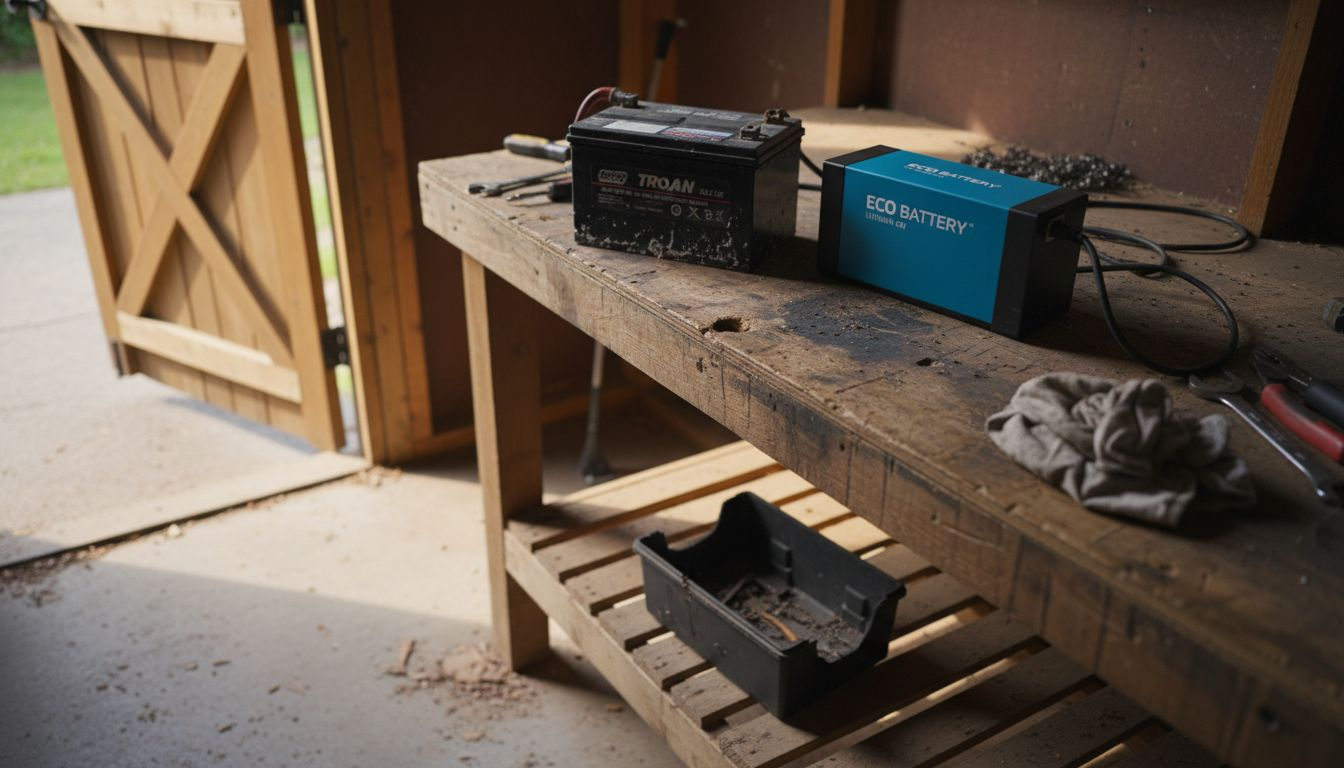
The following table highlights how different battery chemistries affect golf cart performance and ownership:
| Performance Factor | Lead-Acid | AGM Battery | Lithium Battery |
|---|---|---|---|
| Weight | Heavy | Moderate | Light |
| Maintenance Level | High | Low | Minimal |
| Charging Speed | Slow | Moderate | Fast |
| Consistency of Power | Fluctuates | Improved | Steady |
| Best Use Case | Occasional, budget | Moderate use | Frequent, performance |
Pro tip: Consider your specific usage patterns and long-term budget when selecting a golf cart battery, as the cheapest option isn’t always the most economical in the long run.
The type of battery in a golf cart directly impacts its performance, transforming fundamental aspects like speed, acceleration, and overall efficiency. Battery choices significantly affect cart performance, with each battery type presenting unique characteristics that can dramatically alter your driving experience.
Performance Metrics Influenced by Battery Type:
Lithium batteries stand out as the performance champions, offering several distinct advantages:
Weight and Power Dynamics play a crucial role in determining cart performance. Lead-acid batteries, being significantly heavier, can negatively impact maneuverability and efficiency. The additional weight not only reduces acceleration but also increases strain on the cart’s suspension and drivetrain components.
Battery performance is not just about power, but about the entire driving experience and system efficiency.
Voltage and capacity are equally critical factors. A higher voltage battery typically translates to improved speed and climbing ability, while greater capacity ensures longer runtime between charges. Lithium batteries excel in both areas, providing superior power-to-weight ratios that traditional lead-acid batteries cannot match.
Pro tip: Consider your typical terrain and usage patterns when selecting a battery, as the right choice can dramatically enhance your golf cart’s overall performance and efficiency.
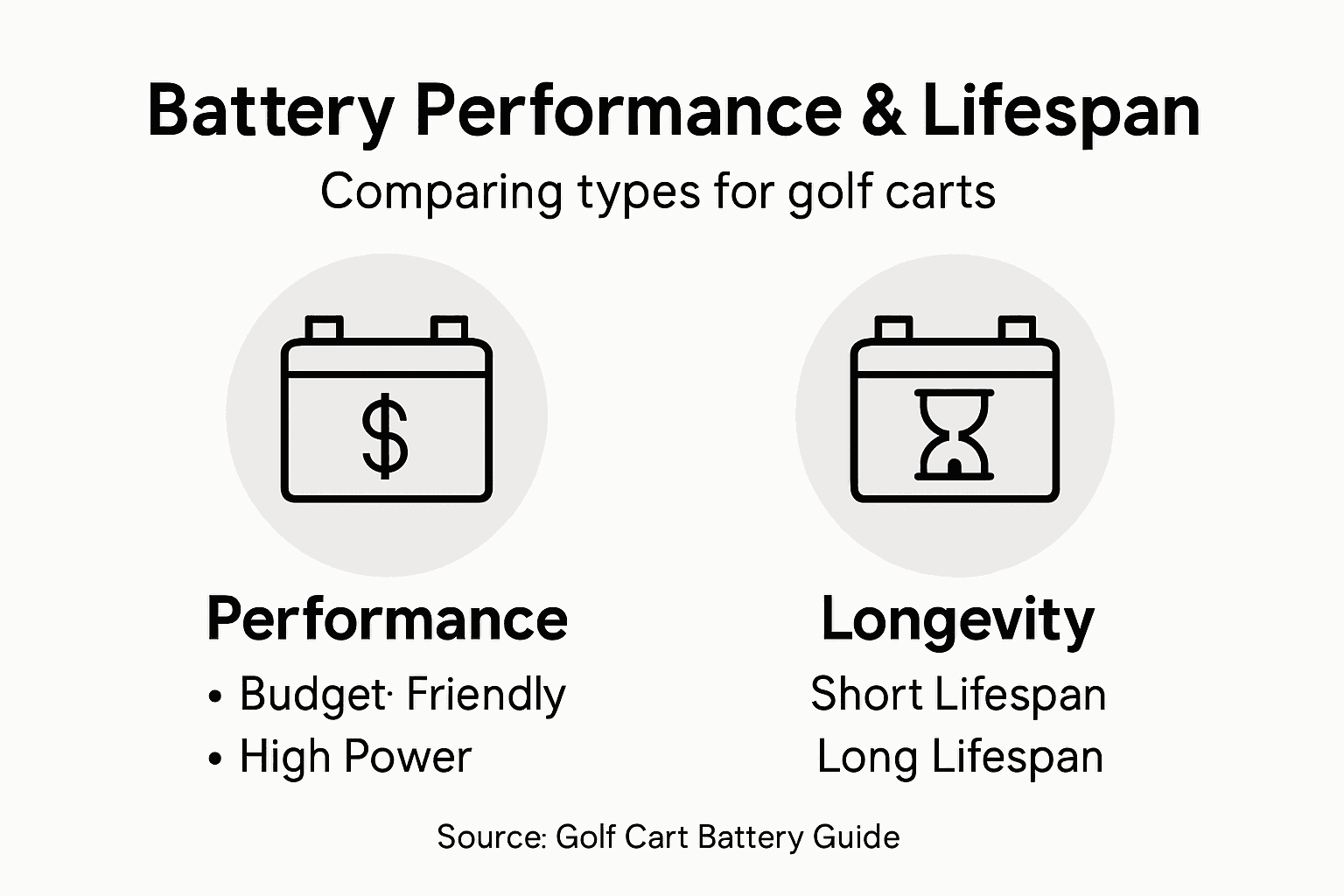
Understanding the long-term economics of golf cart batteries requires a comprehensive look at lifespan, maintenance requirements, and potential replacement expenses. Battery lifespan varies significantly depending on battery type, usage patterns, and maintenance practices, making informed selection crucial for cost-conscious golf cart owners.
Battery Lifespan Expectations by Type:
Maintenance requirements differ dramatically between battery technologies, with each type demanding specific care strategies:
Lead-Acid Battery Maintenance:
Lithium Battery Maintenance:
Replacement Cost Breakdown:
Total cost of ownership involves more than just initial purchase price - consider longevity, performance, and maintenance expenses.
While lithium batteries represent a higher upfront investment, their extended lifespan and reduced maintenance requirements often translate to lower long-term expenses. The ability to maintain consistent performance and require less frequent replacement makes them an increasingly attractive option for serious golf cart enthusiasts.
Pro tip: Track your battery’s performance and maintenance history, as consistent care can significantly extend its operational life and maximize your investment.
Selecting the right golf cart battery involves more than just picking the cheapest option available. Common battery selection errors can significantly impact your cart’s performance, longevity, and overall operational costs.
Critical Mistakes Golf Cart Owners Make:
Charging-Related Errors:
Compatibility and Selection Mistakes:
Not all batteries are created equal - understanding your specific golf cart’s requirements is crucial for optimal performance.
Each battery type presents unique challenges. Lead-acid batteries require meticulous water level monitoring and periodic equalization, while lithium batteries demand precise charging equipment and temperature management. Overlooking these nuanced requirements can dramatically reduce battery performance and dramatically shorten operational lifespan.
Pro tip: Consult your golf cart manufacturer’s specific battery recommendations and invest time in understanding proper maintenance protocols before making a purchase.
Choosing the perfect golf cart battery can feel overwhelming with all the options like Lead-Acid, AGM, and Lithium batteries. The challenges you face include balancing upfront costs with long-term performance and maintenance demands. Understanding key concepts such as battery lifespan, voltage compatibility, and charging requirements helps you avoid common mistakes that can reduce your cart’s efficiency and durability.
At GolfCartStuff, we specialize in providing high-quality golf cart batteries and accessories that match your specific needs. Whether you want the lightweight power of lithium batteries or the budget-friendly reliability of lead-acid, we have you covered to enhance speed, acceleration, and overall battery longevity.
Explore our trusted selection now and make informed decisions with expert guidance. Don’t settle for less when it comes to your golf cart’s performance. Visit GolfCartStuff today to find the perfect battery solution that keeps you moving longer and stronger.
The main types of golf cart batteries are flooded lead-acid, absorbent glass mat (AGM), and lithium batteries. Each type has unique characteristics that affect performance, maintenance, and lifespan.
Battery chemistry influences factors such as power output, discharge depth, charging speed, and overall longevity. Lithium batteries typically offer more consistent power and faster acceleration compared to lead-acid alternatives.
The lifespan varies by battery type: lead-acid batteries last about 4-6 years, AGM batteries 5-7 years, and lithium batteries 7-12 years, depending on usage and maintenance.
Lead-acid batteries need regular water level checks and cleaning, AGM batteries require minimal upkeep, and lithium batteries are the easiest to maintain with little routine care needed.
Explore our store to see what our products and resources can do for you.

Leave a comment