
Your Cart Is Our Priority
Explore our store to see what our products and resources can do for you.

Every golf cart owner with kids knows how quickly a short ride can turn into a group adventure. As families across North America look for smarter ways to bring everyone along, adding golf cart rear seats has become a popular, practical upgrade. More than just an extra place to sit, these seats expand your cart’s everyday usefulness for outdoor fun, making safe group outings easier and ensuring every ride fits your family’s needs.
| Point | Details |
|---|---|
| Rear Seats Enhance Capacity | Golf cart rear seats expand passenger capacity, accommodating families and groups effectively. |
| Types of Seats Offer Versatility | Options like Fixed, Flip-Flop, and Custom seats provide flexibility for different user needs and preferences. |
| Safety is Crucial | Adhering to safety standards and guidelines is essential for ensuring passenger protection, especially with modified seating configurations. |
| Installation Requires Compliance | Proper installation must meet both technical and legal safety regulations to avoid fines and ensure safe operation. |
Golf cart rear seats transform standard transportation vehicles from simple utility tools into versatile family and group mobility solutions. Originally designed to transport golfers and equipment around courses, golf carts have evolved significantly in their passenger capabilities.
The primary purpose of rear seats is to expand passenger capacity beyond the traditional two-person design. According to safety specifications for golf cars, these modifications serve multiple practical functions:
Modern golf cart rear seats are engineered with specific considerations in mind. Golf cart variants have appeared to accommodate more diverse transportation needs, moving well beyond their original golf course limitations. These seats are typically designed to be:
Beyond recreational use, rear seats have become critical for communities like retirement villages, resorts, campgrounds, and large private properties where efficient short-distance transportation matters.
Pro Tip: Always verify your golf cart’s specific weight capacity and passenger limitations before adding rear seats to ensure safe transportation.
Golf cart rear seats come in several distinct configurations, each designed to meet specific user needs and preferences. Golf cart variants have multiple seat designs that offer flexibility for different transportation scenarios, ranging from basic fixed seating to more adaptable options.
The three primary types of golf cart rear seats include:
Fixed seats represent the most traditional rear seat configuration. These rigid bench-style seats are typically bolted directly into the golf cart frame, providing stable and consistent passenger accommodation. They work best for users who prioritize simplicity and have consistent passenger transportation needs.
Flip-flop seats offer remarkable versatility for golf cart owners. These innovative seat designs can quickly convert between passenger seating and a flat cargo platform, making them ideal for recreational and utility purposes. Families and outdoor enthusiasts appreciate these seats for their ability to switch between carrying passengers and transporting equipment with minimal effort.

Custom seats represent the most adaptable rear seat option. These specialized seats can be designed to accommodate specific needs, such as enhanced comfort, additional safety features, or unique mounting configurations. Some custom seats include:
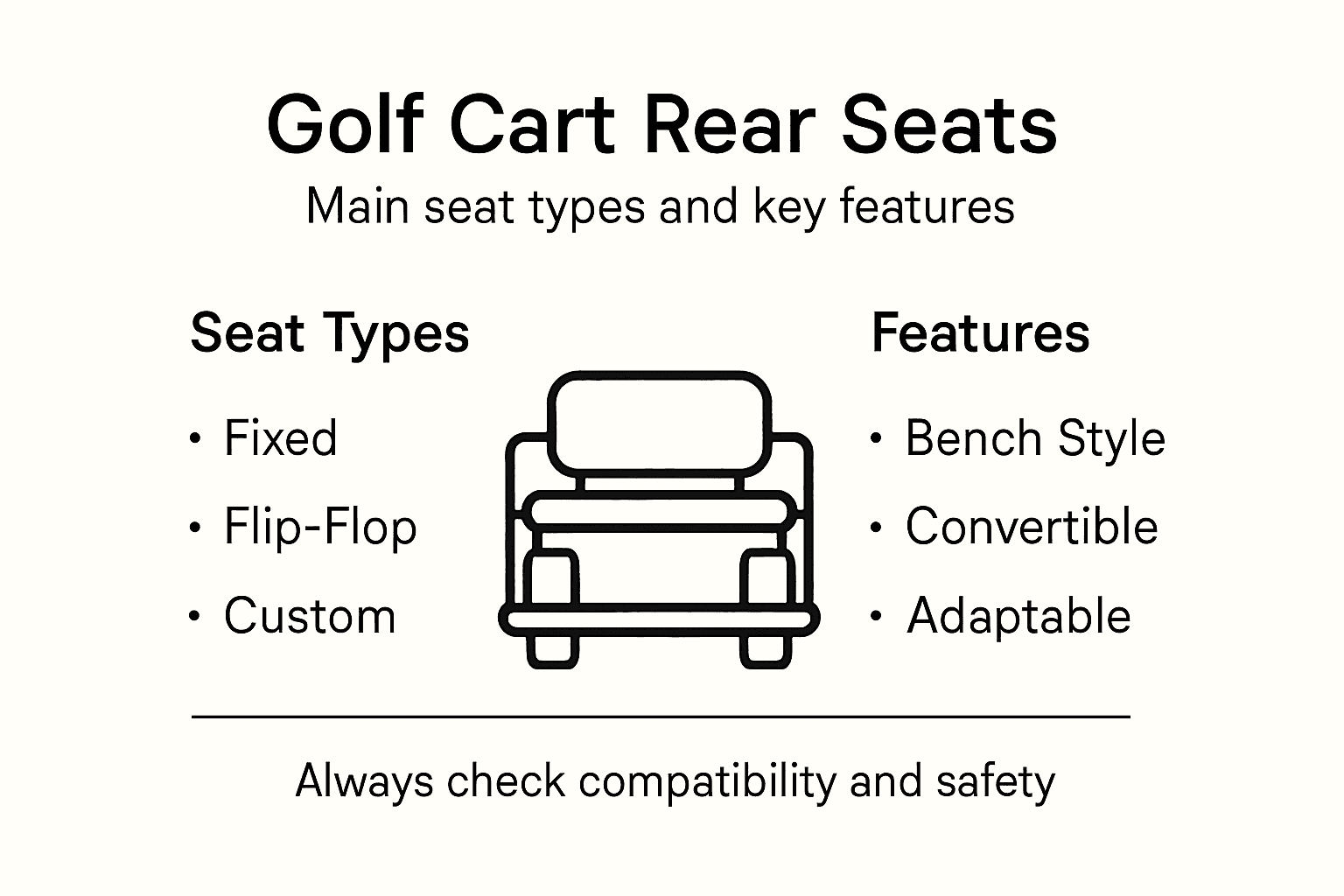
Here is a comparison of the main golf cart rear seat types and their ideal uses:
| Rear Seat Type | Best For | Flexibility Level | Example Added Feature |
|---|---|---|---|
| Fixed Seat | Routine group transport | Low | Rigid bench construction |
| Flip-Flop Seat | Hauling people or cargo | High | Foldable cargo platform |
| Custom Seat | Unique personal needs | Highest | Child safety or extra storage |
Custom rear seats allow golf cart owners to personalize their vehicles to match exact transportation requirements and lifestyle preferences.
Pro Tip: Measure your golf cart’s dimensions and weight capacity carefully before selecting or installing any rear seat configuration to ensure proper fit and safety.
Ensuring passenger safety is paramount when adding rear seats to golf carts. Safety standards provide critical guidelines for manufacturers and owners to protect riders during transportation.
Key safety features for golf cart rear seats include:
Passenger restraint systems are crucial for preventing injuries during golf cart rides. Modern rear seats must incorporate robust seat belt mechanisms that securely hold passengers in place, especially when navigating uneven terrain or making sudden turns. These restraints typically include:
Structural integrity plays a significant role in rear seat safety. The seat attachment points must withstand dynamic forces encountered during movement, ensuring that seats remain firmly connected to the golf cart frame under various conditions.
Local regulations may mandate specific safety requirements for golf cart passenger configurations, making compliance essential for legal operation.
Load limits represent another critical safety consideration. Each rear seat configuration comes with specific weight restrictions that owners must carefully observe to maintain vehicle stability and prevent potential structural failures.
Local road regulations often specify additional safety requirements for golf carts with modified seating, including:
Pro Tip: Consult both manufacturer guidelines and local transportation regulations to ensure your golf cart’s rear seat meets all safety standards before use.
Installing rear seats on a golf cart requires meticulous attention to both technical and legal safety standards. Proper installation goes beyond simple mounting, involving comprehensive safety considerations and regulatory compliance.
Installation preparation involves several critical steps:
Technical installation steps typically include:
Legal considerations are paramount when modifying golf cart seating configurations. Local road regulations often mandate specific requirements for vehicle modifications, including:
Failure to meet local legal standards can result in fines, potential vehicle impoundment, and increased liability risks.
Safety certification requires thorough documentation and potentially professional inspection. Owners must ensure that rear seat installations maintain the vehicle’s original safety specifications and do not compromise structural integrity or operational stability.
Additional legal considerations include:
Pro Tip: Consult a professional golf cart technician to verify your rear seat installation meets all local safety and legal requirements before regular use.
This table summarizes essential safety checks before and after rear seat installation:
| Safety Check | When to Perform | Why It Matters |
|---|---|---|
| Weight rating review | Before installation | Avoids overloading or instability |
| Seat belt inspection | After installation | Ensures passenger restraint function |
| Frame attachment check | After installation | Confirms seat stays securely mounted |
| Lighting conformity | After installation | Meets local road regulations |
Navigating the world of golf cart passenger accommodations involves understanding the nuanced differences between various seating solutions. Golf cart variants offer multiple configuration options that cater to diverse transportation needs and preferences.
Alternative seating solutions for golf carts include:
Rear seat kits represent a versatile middle ground between permanent factory installations and basic modifications. These adaptable solutions offer several distinct advantages:
Compared to factory-installed options, aftermarket rear seat kits provide remarkable flexibility. They allow golf cart owners to:
Aftermarket rear seat kits provide a pragmatic solution for families seeking enhanced golf cart functionality without significant financial investment.
Unlike permanent modifications, modular seat kits offer unparalleled versatility for changing transportation requirements. Owners can easily switch between passenger and utility configurations, making these solutions ideal for dynamic recreational and work environments.
Pro Tip: Measure your golf cart’s specific dimensions and weight distribution carefully before selecting a rear seat kit to ensure optimal compatibility and performance.
Expanding your golf cart’s passenger capacity with rear seats offers fantastic convenience but also raises important safety and installation challenges. The article highlights key concerns like securely mounting rear seats, choosing between fixed or flip-flop designs, and complying with local regulations for passenger safety. If you want to enhance your family outings with reliable, comfortable rear seats that meet all these demands, GolfCartStuff has the perfect solutions for you.
Explore our wide selection of golf cart parts and accessories to find durable rear seat kits and safety components that fit your specific model. With options for fixed, flip-flop, and custom seats, you can tailor your golf cart to meet exact passenger needs and weight requirements while staying compliant with legal standards. Don’t wait until your next family ride to upgrade — visit GolfCartStuff now and take the first step toward safer, more enjoyable travel.
Get started today by browsing our complete range of golf cart rear seat kits and make every ride a comfortable and confident experience.
Adding rear seats increases passenger capacity, making golf carts more versatile for family outings and group transport. It also allows for a combination of transporting people and cargo, catering to recreational and utility needs.
There are three main types of rear seats for golf carts: fixed seats, which are permanently mounted; flip-flop seats, which can convert between passenger and cargo configurations; and custom seats, tailored to specific user needs.
To ensure safety, rear seats should be equipped with secure mounting systems, integrated seat belts, and adhere to weight distribution guidelines. It’s also important to check local regulations for additional safety requirements.
Installing rear seats involves verifying model compatibility, measuring dimensions, selecting appropriate hardware, aligning mounting brackets, and securing the seat frame according to manufacturer specifications while ensuring compliance with legal safety standards.
Explore our store to see what our products and resources can do for you.

Leave a comment