
Your Cart Is Our Priority
Explore our store to see what our products and resources can do for you.

Adjustable LED kits and dedicated street-legal kits cover the vast majority of EZGO TXT carts once you match two things correctly: body style and voltage. Classic TXT bodies from the late 1990s to early 2010s and the New Body Style introduced around 2014 use different mounting brackets, and getting the voltage wrong is the single fastest way to fry a controller or end up with dim, flickering lights. Exact-fit kits for both TXT generations exist, and the breakdown below tells you exactly which one is yours.
TL;DR:
- Matching the light kit to your EZGO TXT’s specific body style is crucial, with brackets designed for classic or New Body Style models to avoid fitting issues.
- Ensuring the kit’s voltage compatibility is critical; use a multimeter to verify your pack’s voltage before selecting a kit rated for 12V, 36V, or 48V.
- Check existing wiring connectors, such as headlight plugs and brake wiring, and use adapters if pinouts differ to prevent damage and ensure proper function.
- Street-legal kits must include DOT and SAE labels on lamps and should be verified against local regulations, as “street legal” is not a guarantee of compliance.
- Installing on modified carts may require longer wiring, new brackets, or voltage-specific kits to accommodate lifts, aftermarket parts, or battery upgrades.
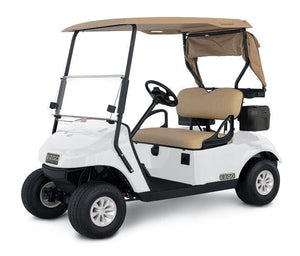
EZGO split the TXT lineup into two distinct body designs, and light kits are built around that split. Classic TXT carts built until the early 2010s have a boxier front end, a lower dash, and headlight mounting points set into the front cowl. The 2014+ New Body Style, sold under names like Freedom and Valor, has a rounder, more contoured front fascia with different bolt patterns and recessed light housings.
That difference matters because the mounting brackets included in a kit are shaped for one body or the other. A bracket built for the classic cowl will not seat flush on a New Body Style fascia, even if the wiring would otherwise work fine.
Before ordering, confirm which group your cart falls into:
An EZGO TXT parts collection breaks kits out by different year and body style groups, so you’re not guessing from a single blurry photo on a listing page.
Voltage is often the deciding factor, more so than year or body style. EZGO TXT carts run on 12V (typical for gas models), 36V, or 48V electric systems, and a kit that isn’t built to handle your cart’s voltage will either underperform or burn out fast.
“12V compatible” on a listing usually means the kit’s LEDs and controller are designed to run off a single 12V accessory circuit, which most gas TXT carts already have. A “12 to 48V” claim, which you’ll see on some multi-voltage kits, means the kit has internal voltage regulation that steps whatever your pack delivers down to what the LEDs need.
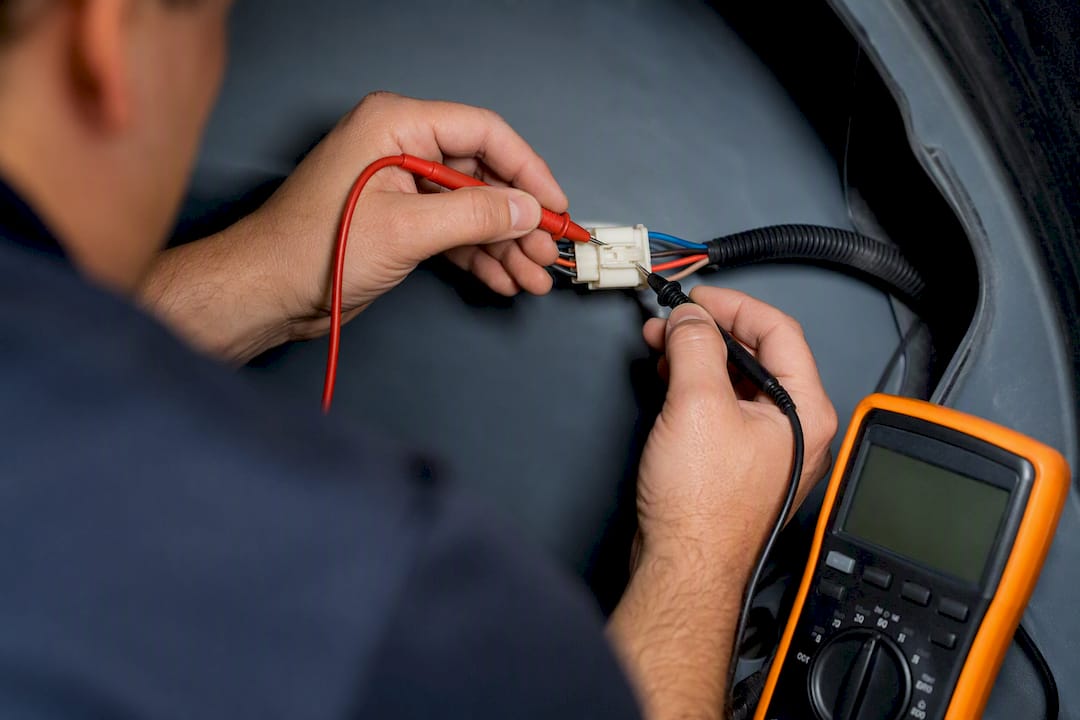
To confirm your own system, count your batteries and check the stamped voltage on each one, then multiply. Six 8V batteries wired in series, for example, add up to a 48V system. A multimeter reading across your main pack terminals will confirm it in seconds if you’re unsure.

If your cart’s voltage doesn’t match a kit’s rated input, you have three real options: install a DC to DC converter, pick a kit with a built-in regulator rated for your voltage, or choose a multi-voltage kit designed specifically to handle the mismatch.
Compatibility isn’t just mechanical and electrical. It’s also about whether the plugs on your cart match the plugs on the kit. Before you order anything, run through this checklist.
Pin count mismatches are usually the easiest fix. A 3-pin to 2-pin adapter or a set of crimped bullet connectors solves most of it. Voltage mismatches at the connector are the ones that cause real damage.
Pro Tip: Always check the fuse rating before you power anything on for the first time. A headlight and taillight circuit pulling more current than a factory 15-amp fuse allows will blow it repeatedly, and swapping in a bigger fuse without checking wire gauge is how harnesses melt.
Street-legal kits generally bundle turn signals, brake lights, a horn, mirrors, and reflectors, since most state and local ordinances require all of these for a low-speed vehicle to share public roads. “Street legal” on a product listing is marketing language, though, not a guarantee. It tells you the kit includes the right components, not that your specific cart, as wired, meets your city or county’s actual code.
DOT and SAE labeling on individual lamps is a more concrete signal, since it means that specific component was built to a recognized lighting standard. Before you assume you’re covered, verify your local ordinances directly, since requirements for low-speed vehicles vary by state.
Once installed, test every lamp function individually: low beam, high beam, both turn signals, brake lights, and the horn. Check mounting height against your local requirement and confirm every circuit is properly fused.
Allow a few hours for a first-time install, longer if you’re also running new harness wire. Gather your tools before you start: a multimeter, wire crimpers, heat-shrink tubing, butt connectors, an assortment of fuses, and the mounting hardware that comes with your kit.
The most common gotcha is tight clearance behind the front fascia on 2014+ bodies, where wiring has less room to route cleanly. Take your time here rather than forcing a harness into a gap it doesn’t fit.
Most compatibility complaints trace back to one of four causes: wrong voltage reaching the connector, a missing or poor ground, a mismatched pinout, or a fuse that’s blown from an initial surge. All four are diagnosable with a multimeter in under fifteen minutes.
Start by measuring voltage directly at the harness connector with the key on. If you’re getting battery voltage but the lights still won’t fire, check continuity on the ground wire next. A loose or corroded ground is the most common silent failure in golf cart electrics.
Pro Tip: If your cart’s voltage doesn’t match the kit’s rated input, a DC-DC converter usually solves it cleaner than trying to repin the harness yourself. Save the repin approach for simple connector-type mismatches, and if a bench test still won’t confirm the fault, it’s worth reaching out to support or switching to a kit the publisher has already confirmed fits your exact model.
A cart that’s been modified from stock changes the compatibility math. Lift kits, aftermarket dashboards, custom body panels, and previous owner rewiring jobs are the biggest culprits.
Lift kits raise the front end and can change the angle and clearance around headlight mounts, sometimes requiring longer wiring runs or different bracket angles than a stock-height cart needs. Aftermarket dash panels or custom cowls, common on carts that have been through a few owners, may not have factory mounting points at all, forcing you to drill new holes or fabricate a bracket adapter.
Previous wiring work is the sneakier issue. If a prior owner spliced in a phone charger, a stereo, or a different light kit and left old connectors in the harness, you might find unexpected voltage drops or grounds that were never properly isolated. Before installing a new kit on a cart with any history of modification, trace the existing harness with a multimeter rather than assuming factory wiring is still intact behind the dash.
Battery upgrades matter too. A cart originally spec’d for 36V that’s been upgraded to 48V for more speed and range needs a light kit rated for that higher voltage, even if the original factory kit ran fine at 36V. Ignoring that mismatch is one of the fastest ways to burn out a brand-new LED controller within the first week of use.
The aftermarket lighting space for golf carts splits into two general categories: universal accessory kits and vehicle-specific kits.
Universal LED kit makers, including brands like Plash and Boogey Lights, build underglow, canopy, and accent lighting designed to work across many golf cart brands using configurable controllers and splitters, often with Bluetooth control. These kits are flexible and easy to adapt to different carts, but that flexibility comes from shifting the compatibility burden from physical fit onto electrical setup. You’re responsible for making sure the controller’s voltage input matches your cart and that you’ve got a clean power tap.
Vehicle-specific kits, by contrast, are built around a single cart family’s mounting points and wiring layout. That’s the category Golfcartstuff’s TXT kits fall into: brackets shaped for either the classic or New Body Style fascia, with harnesses designed to plug into or near existing TXT wiring rather than requiring a splice-in accessory circuit. The tradeoff runs the other way. Less flexibility across cart brands, but a much lower chance of a mounting or pinout surprise once the box arrives.
If your priority is exact fit with minimal guesswork, a vehicle-specific kit built for your TXT’s year group is the safer starting point.
For most owners, an adjustable LED kit or a publisher-tested street-legal kit is the safer bet over a generic universal kit, simply because the bracket and pinout are already matched to your body style. A custom harness or professional install earns its cost when your cart has a lift kit, prior rewiring, or a voltage upgrade that complicates the stock layout. Whatever you choose, confirm your year group and voltage before you pick up wire cutters.
— Roshan
Skipping the guesswork on fit means starting with kits built specifically for your TXT’s body style, not a universal kit that leaves the electrical matching up to you. Two kits cover nearly every TXT on the road today.
The EZGO TXT Adjustable ALL LED LIGHT KIT is built for the classic TXT body style used in older models, with brackets and connectors matched to that cowl shape. For newer carts from around 2014 onward, the EZGO TXT Valor Street-Legal All LED Light Kit covers the New Body Style Freedom and Valor variants with the turn signal, brake light, and horn components needed for street-legal use. Product pages list full specs and installation notes, so you can check pinouts before you buy rather than after.
Confirm your model year and battery voltage first, then browse the full EZGO TXT parts collection for brackets, connectors, and accessories that pair with either kit. If something doesn’t look right once it arrives, Golfcartstuff’s installation and support page walks through common fixes before you send anything back.
Pull your cart’s parts manual for exact wiring diagrams and part numbers before cutting or splicing anything. Save or print the diagram, and cross-check connector types against the kit’s spec sheet on the product page before your first cut.
No. Universal kits from brands like Plash or Boogey Lights adapt across brands electrically, but bracket fit and pinouts still need to match your cart’s body style and voltage, which is why vehicle-specific kits built for the EZGO TXT reduce fitment issues.
TXT is EZGO’s model designation for its transportable, gas or electric golf cart line, produced across two major body generations: the classic style through 2013 and the New Body Style from 2014 onward.
The best kit is the one matched to your cart’s exact body style and voltage rather than the brightest option on a listing page. For EZGO TXT owners, that means choosing between a classic-body kit and a 2014+ New Body Style kit rated for your specific voltage.
Speed upgrades are a separate system from lighting, typically involving controller programming or motor changes, and any voltage change made for speed will also affect which light kit fits your cart afterward. Always recheck light kit voltage compatibility after any battery or controller upgrade.
Explore our store to see what our products and resources can do for you.

Leave a comment