
Your Cart Is Our Priority
Explore our store to see what our products and resources can do for you.

TL;DR:
- A golf cart fuse block is a central device that protects each electrical circuit by breaking the power when current exceeds safe levels. Proper installation and maintenance of fuse blocks, including matching fuse ratings and regular inspections, improve safety and troubleshooting efficiency.
A golf cart fuse block is a centralized electrical safety device that protects individual circuits by interrupting power when current exceeds safe levels. Every golf cart owner who has dealt with a dead accessory, a cart that won’t start, or a mysterious electrical fault has likely encountered a fuse block problem without knowing it. Understanding the golf cart fuse block explained in full, including how it works, where it lives, and how to replace it, is the single most useful piece of electrical knowledge you can have for maintaining your cart.
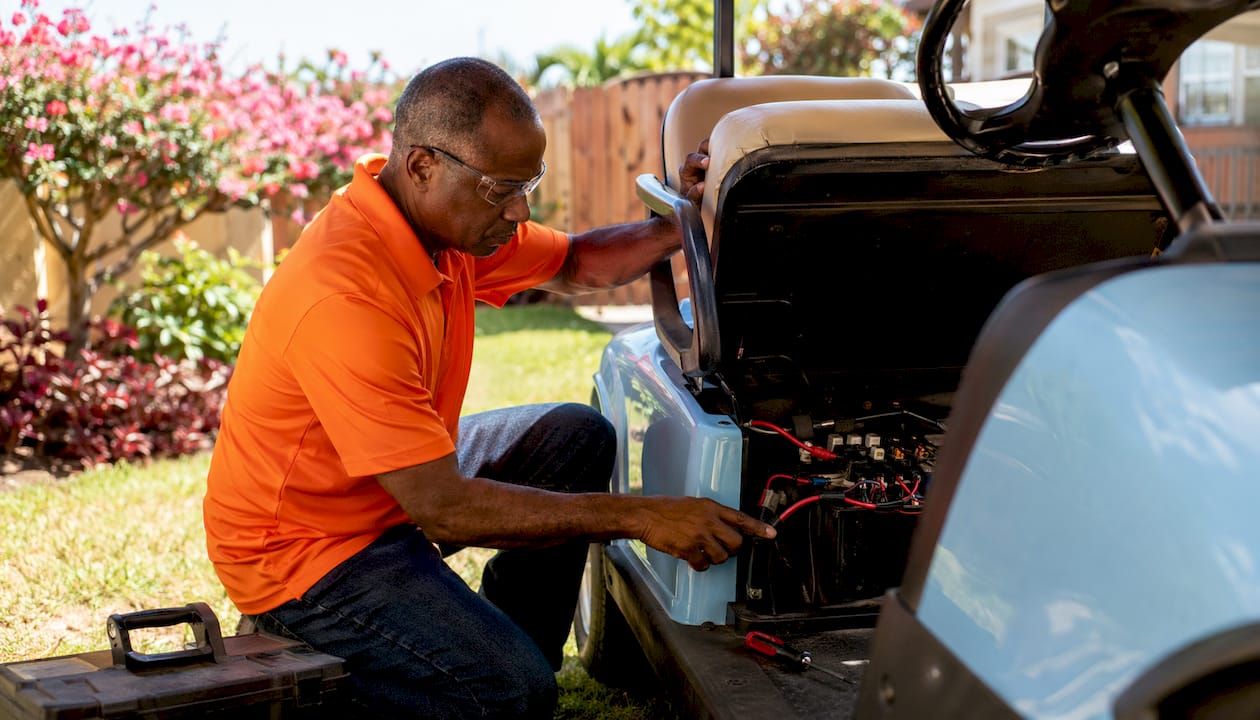
A fuse block is a centralized hub that houses multiple fuses, each protecting a separate circuit in your golf cart’s electrical system. Think of it as a circuit breaker panel for your cart. When too much current flows through a circuit, the fuse element melts and breaks the connection before wiring or components can overheat.
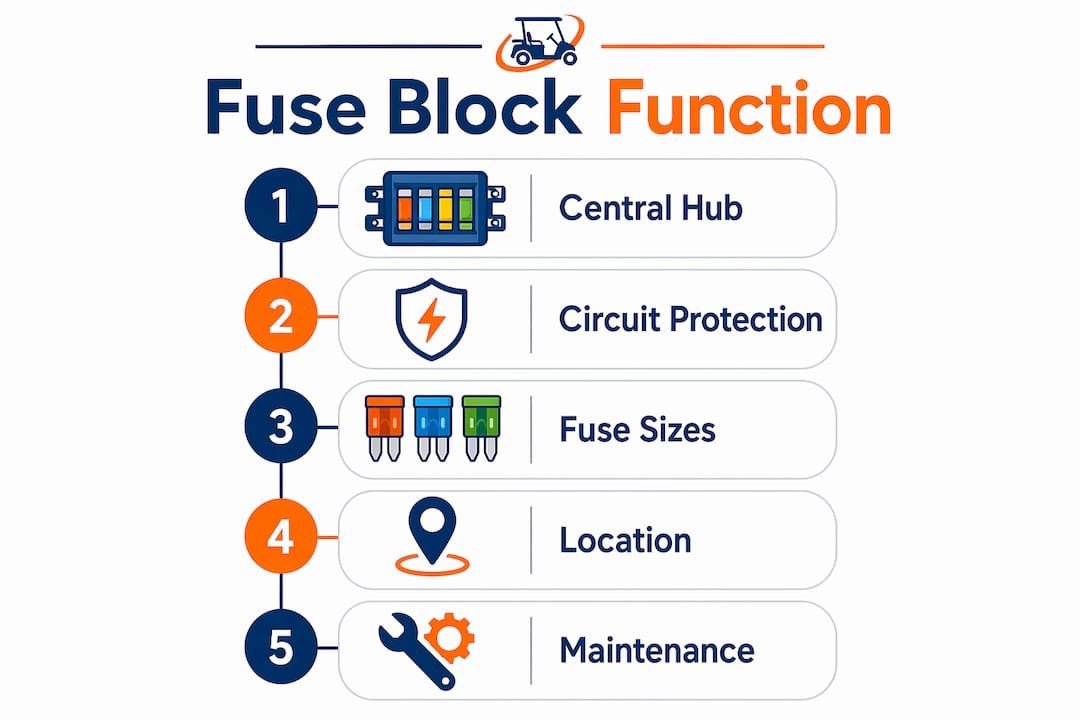
The role of fuses in golf carts goes beyond simple circuit protection. Each fuse isolates its circuit from the rest of the system. That means a blown fuse in your lighting circuit does not kill your controller or your horn. Golf cart fuse boxes isolate faults by circuit, keeping the rest of the system operational during a fault. That isolation is what makes focused troubleshooting possible.
Common fuse types and ratings in golf carts include:
Typical blade fuse sizes range from 5A to 30A, covering the full range of common golf cart accessories. A lighting circuit might use a 10A fuse, while a radio or USB hub might need 15A. Matching the fuse rating to the circuit load is not optional. Never replace a blown fuse with a higher-amp fuse, as doing so removes the only protection between your wiring and a potential fire.
Fuse block location varies by brand, model year, and whether the cart has factory or aftermarket accessories. Knowing where to look saves significant time during golf cart electrical troubleshooting.
Typical fuse block locations include under the seat, behind the dash panel, near the battery pack, or adjacent to the voltage reducer. Some models use a central fuse block for all circuits, while others scatter inline fuse holders throughout the cart.
| Golf cart type | Common fuse block location | Notes |
|---|---|---|
| Club Car DS | Under the seat, near the OBC | May have secondary inline fuses for accessories |
| Club Car Precedent | Behind the dash panel | Wiring diagram required for accurate location |
| Yamaha G-series | Near the battery pack or controller | Older models often use inline holders |
| EZGO TXT | Under the seat, near the charger receptacle | Accessory fuses may be separate |
| Custom or lifted carts | Varies widely | Aftermarket fuse blocks often mounted near the battery |
Wiring diagrams are essential for finding the correct fuse for a specific circuit, especially on models with multiple fuse locations. Without a diagram, you risk probing the wrong area or making an improper repair. Golfcartstuff’s guide on golf cart wiring basics is a practical starting point for owners who want to read their cart’s wiring layout before touching anything.
Factory fuse placements protect OEM circuits. Aftermarket accessories like light bars, Bluetooth speakers, or USB chargers often get their own inline fuse holders or a secondary fuse block mounted near the battery. Keeping those separate from the factory block prevents confusion during troubleshooting.
Installing a fuse block correctly takes about an hour if you have the right tools and a clear plan. Rushing this job creates the exact wiring problems you are trying to prevent.
Tools and safety prep:
Installation steps:
Pro Tip: Use heat shrink butt connectors instead of bare crimp connectors for every connection inside the fuse block. They seal out moisture and prevent corrosion, which is the leading cause of intermittent faults in golf cart electrical systems.
High-quality aftermarket fuse blocks with IP53-rated covers resist dust and moisture, which matters for carts used outdoors or in wet conditions. Spending a little more on a weather-resistant unit prevents repeated failures. For help understanding how your wiring connects to the block, the wiring repair workflow guide from Golfcartstuff walks through the full process step by step.
Fuse block problems show up in predictable ways. Knowing the symptoms cuts your diagnostic time in half.
Common signs of a fuse block issue:
A fuse that blows once is a warning. A fuse that blows repeatedly is telling you there is a deeper problem. Blown fuses are often symptoms of wiring problems like improper grounding or undersized wiring, not the root cause. Replacing the fuse without investigating the circuit feeding the accessory will not fix the problem.
Testing and inspection steps:
Use a multimeter set to continuity mode to test each fuse. A good fuse shows continuity. A blown fuse shows none. Inspect the fuse block terminals for corrosion, which appears as a white or green powder on metal contacts. Clean corroded terminals with a small wire brush and electrical contact cleaner.
Confirm accessory circuits receive the correct 12V from the voltage reducer or battery feed before replacing fuses. Incorrect voltage causes repeated fuse failures and accessory damage. This is a common mistake when owners add aftermarket accessories without checking the voltage source.
Pro Tip: If your cart uses scattered inline fuse holders for accessories, replacing them with a single centralized fuse block is one of the best upgrades you can make. Centralized fuse blocks organize circuits for lights, USB, and audio, making future troubleshooting far faster.
Fuse block LED indicators speed up blown fuse identification significantly. Instead of pulling each fuse to test it, a lit LED tells you exactly which circuit has failed. For carts with multiple accessory circuits, this feature alone justifies the upgrade cost.
Never bypass a fuse by inserting a wire or foil in place of the fuse element. That removes all protection from the circuit and creates a direct fire risk. If a circuit keeps blowing fuses, the answer is to fix the wiring, not to remove the protection.
A properly installed and maintained fuse block is the foundation of a safe, reliable golf cart electrical system.
| Point | Details |
|---|---|
| Fuse block function | Protects individual circuits by interrupting power during overcurrent conditions. |
| Correct fuse sizing | Always match the fuse rating to the circuit load; never substitute a higher-amp fuse. |
| Location by model | Check under the seat, behind the dash, or near the battery pack depending on your cart’s brand. |
| Repeated blown fuses | Investigate the full circuit for wiring faults before replacing the fuse again. |
| Upgrade advantage | Centralizing inline fuse holders into one fuse block simplifies all future troubleshooting. |
Most golf cart owners treat the fuse block as an afterthought. They only think about it when something stops working. That is the wrong approach, and I have seen it cause expensive damage more than once.
The fuse block is the one component that stands between a minor electrical fault and a wiring fire. When I see a cart where someone has bypassed a fuse or stuffed a higher-amp fuse into a slot to “fix” a recurring problem, I know the cart is one bad connection away from a serious issue. The fuse is not the problem. The fuse is doing its job.
What I have also learned is that an organized fuse block makes every other electrical job easier. When every circuit is labeled and centralized, diagnosing a fault takes minutes instead of an hour of tracing wires. Owners who invest in a quality fuse block with LED indicators and a weather-resistant cover spend far less time troubleshooting over the life of the cart.
My recommendation is to treat fuse block maintenance as part of your regular golf cart maintenance guide, not a reactive fix. Check terminals for corrosion once a season. Verify fuse ratings match your current accessory load, especially if you have added anything since the last inspection. And if your cart still uses scattered inline fuse holders, consolidating them into a centralized block is one of the highest-value upgrades you can make for long-term reliability. If a repair feels beyond your comfort level, a qualified golf cart technician is always the right call.
— Roshan
Keeping your golf cart’s electrical system in good shape starts with having the right parts on hand.

Golfcartstuff carries a wide selection of golf cart electrical accessories including fuse blocks, wiring components, and replacement parts for most major cart brands. Whether you are upgrading from inline fuse holders to a centralized block or tracking down a replacement for a corroded unit, the catalog covers Club Car, Yamaha, EZGO, and more. For Club Car DS owners, the Club Car DS parts collection includes electrical components matched to your model. Browse by cart brand to find compatible parts and get your electrical system back in order.
A golf cart fuse block houses multiple fuses in one location, with each fuse protecting a separate circuit. When a circuit draws too much current, its fuse blows and cuts power to that circuit only, leaving the rest of the cart operational.
Remove the fuse and test it with a multimeter set to continuity mode. A blown fuse shows no continuity. Fuse blocks with LED indicators light up at the failed circuit, making identification even faster.
Match the fuse rating to the accessory’s rated current draw. Blade fuse sizes from 5A to 30A cover most golf cart accessories, with lighting circuits typically using 10A and audio or USB circuits using 15A.
A fuse that blows repeatedly signals a wiring fault in the circuit, not a bad fuse. Check for improper grounding, undersized wiring, or incorrect voltage from the power source before replacing the fuse again.
On most Club Car DS models, the fuse block sits under the seat near the onboard computer. Club Car Precedent models typically place it behind the dash panel. Consulting your cart’s wiring diagram gives you the exact location for your model year.
Explore our store to see what our products and resources can do for you.

Leave a comment