
Your Cart Is Our Priority
Explore our store to see what our products and resources can do for you.

TL;DR:
- Golf cart ignition systems rely on interconnected components like the ignition switch and starter-generator to start and maintain engine operation. Faults in any part, especially the pedal microswitch or battery voltage, can prevent the engine from cranking, making systematic testing essential. Proper maintenance and using correct parts are crucial for reliable performance and avoiding diagnostic errors.
Golf cart ignition systems are the electrical and mechanical circuits that start your engine, control power flow, and keep your cart running reliably. Every gas-powered Club Car, Yamaha, or EZGO depends on a coordinated sequence involving the ignition switch, starter-generator, solenoid, ignition coil, and safety microswitches. When one component fails, the whole system stalls. Understanding how these parts work together is the fastest way to diagnose problems, avoid unnecessary repairs, and keep your cart starting on the first turn of the key.
Golf cart ignition systems explained at the component level reveal a closed-loop DC circuit where every part depends on the others. The ignition circuit involves the key switch, pedal microswitch, solenoid, and starter-generator coordinating to start the engine safely. Miss one link in that chain and the engine will not crank, regardless of how healthy the battery is.
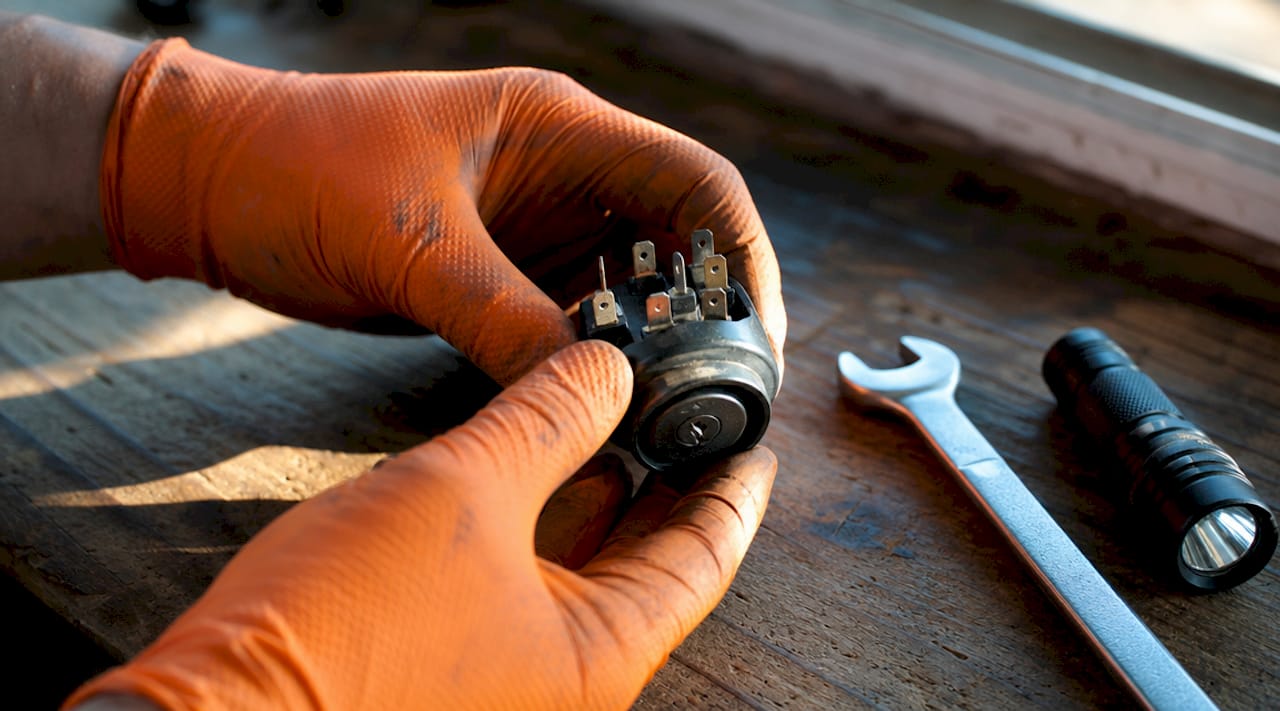
The ignition switch is the entry point for the entire starting sequence. A standard golf cart switch has five positions: OFF, R (right magneto), L (left magneto), BOTH, and START. Turning the key to START sends voltage through the circuit to activate the solenoid and engage the starter-generator. A reliable switch shows uninterrupted 12-volt continuity when the key is turned on, while an infinite resistance reading (O.L. on a multimeter) confirms switch failure.
The starter-generator is the most mechanically interesting component in a gas cart’s ignition setup. It combines two roles in one unit: it acts as a motor to crank the engine on startup, then switches to generator mode to recharge the battery once the engine is running. This dual function enables the pedal-start technology you find on Club Car DS and Yamaha G-series carts, where pressing the accelerator pedal triggers the starting sequence rather than a separate button.
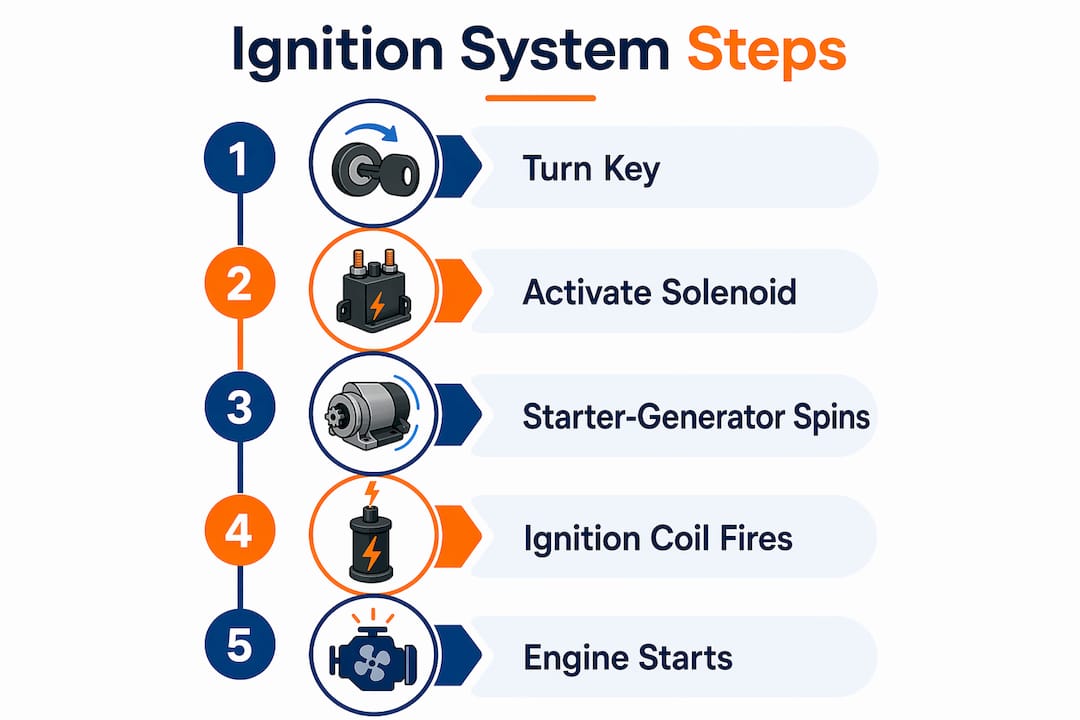
The solenoid acts as a high-current relay. When the ignition switch sends a low-current signal, the solenoid closes its contacts and delivers full battery voltage to the starter-generator. You can learn more about solenoid relay operation and how it fits into the broader ignition circuit. The ignition coil sits downstream of this process, transforming low battery voltage into the high-voltage spark that fires the combustion chamber.
The accelerator pedal microswitch is the safety interlock most owners forget about. This small switch controls starter circuit activation and prevents the engine from cranking unless the pedal is depressed. A failed microswitch produces a no-start condition that looks identical to a dead battery or bad ignition switch, which is why it causes so much diagnostic confusion.
| Component | Function | Common Failure Symptom |
|---|---|---|
| Ignition switch | Routes voltage to start circuit | Dead key, intermittent starts |
| Starter-generator | Cranks engine, charges battery | No crank, slow crank, no charge |
| Solenoid | Relays high current to starter | Click with no crank |
| Ignition coil | Produces combustion spark | Engine cranks but will not fire |
| Pedal microswitch | Safety interlock for starter | No start despite good battery |
Pro Tip: Before replacing any ignition component, confirm your battery voltage is at or above the manufacturer’s specification. Low voltage mimics almost every ignition fault on this list.
Effective golf cart ignition troubleshooting follows a specific order. Start at the power source and work forward through the circuit. Skipping steps wastes time and leads to replacing parts that were never the problem.
Check battery voltage first. A fully charged 12-volt battery should read 12.6 volts or higher at rest. Dead battery and ignition switch failure are the two most common causes of ignition system failure. Confirm the battery is healthy before touching anything else.
Test the ignition switch with a multimeter. Set your meter to DC voltage. With the key in the ON position, probe the output terminals. You should read battery voltage. An O.L. reading confirms the switch has failed internally. If the cart starts sometimes but not others, perform a jiggle test: wiggle the key while it is in the ON position. Intermittent starts that respond to jiggling point directly to worn internal contacts.
Inspect the pedal microswitch. Disconnect the microswitch connector and use a multimeter set to continuity mode. With the pedal depressed, the switch should show continuity. No continuity with the pedal down means the switch has failed. This step catches the fault that most owners misdiagnose as a starter or ignition switch problem.
Test the solenoid. You should hear a distinct click when the key is turned to START and the pedal is depressed. A click with no crank points to a weak starter-generator. No click at all points to the solenoid itself or the signal circuit feeding it. Check the small terminal wires for corrosion or loose connections before condemning the solenoid.
Check the starter-generator. Slow cranking or failure to crank after confirming good battery voltage and a functioning solenoid points to the starter-generator. Brush wear is the most common internal failure. The golf cart motor troubleshooting guide covers starter-generator diagnostics in detail.
Test the ignition coil. Use a multimeter set to ohms. Primary winding resistance on most 2026 gas carts should fall between 0.5 and 2 ohms. Secondary winding resistance should read between 5,000 and 15,000 ohms. Readings outside these ranges confirm coil failure. A coil that tests within spec but still produces no spark may have a cracked housing or a failed high-tension lead.
Do not overlook the voltage regulator. The voltage regulator prevents overcharging and undercharging of the battery during operation. A failed regulator will not prevent starting, but it will destroy your battery over time and eventually cause ignition faults that look like battery problems. Check it as part of any thorough ignition diagnosis.
Pro Tip: Always check the wiring harness for chafed insulation near the pedal box and firewall. Vibration wears through wire jackets in those areas first, creating intermittent shorts that are nearly impossible to find without a physical inspection.
Understanding golf cart ignition by brand prevents the frustration of ordering the wrong part or wiring a replacement incorrectly. Each major manufacturer uses a slightly different approach to switch design, terminal count, and circuit layout.
Club Car gas carts, particularly the DS series, use a 4-terminal ignition switch that controls the magneto circuit and the starter-generator circuit simultaneously. The 10L0L ignition switch is a direct-fit replacement for Club Car gas carts, offering four terminals and plug-and-play installation. Club Car DS models are among the most straightforward to work on because the wiring layout is well-documented and replacement parts are widely available through sources like Club Car DS parts.
Yamaha G-series carts use a similar pedal-start architecture but with different connector styles and switch housings. Yamaha ignition switches are not universally interchangeable across G1 through G22 models, so confirming the exact model year before ordering is critical. The wiring color codes also differ from Club Car, which matters when you are tracing a fault through the circuit.
EZGO gas carts use a starter solenoid configuration that is similar in principle but differs in mounting location and terminal layout. EZGO models from the TXT and RXV series also use a key switch with an integrated safety circuit that must be bypassed correctly during testing to avoid false readings.
Electric carts across all three brands replace the starter-generator and ignition coil with a controller and motor assembly. The ignition switch on an electric cart primarily controls the key switch input to the controller rather than a magneto or combustion circuit. This distinction matters because golf cart electrical system basics differ significantly between gas and electric platforms.
| Brand | Switch Type | Unique Feature | Common Replacement Issue |
|---|---|---|---|
| Club Car DS | 4-terminal key switch | Magneto and starter circuit combined | Corrosion on terminal block |
| Yamaha G-series | Model-specific housing | Unique connector styles per generation | Wrong part ordered by year |
| EZGO TXT/RXV | Integrated safety circuit | Controller key input on electric models | Bypass errors during testing |
The best ignition repair is the one you never need. Consistent maintenance prevents the corrosion, wear, and voltage problems that cause most ignition failures.
Clean ignition switch contacts annually. Use electrical contact cleaner spray and a small brush to remove oxidation from the switch terminals. Corrosion is the leading cause of intermittent starts on carts stored outdoors or in humid environments.
Inspect the wiring harness every season. Look for cracked insulation, loose connectors, and signs of rodent damage near the pedal box and engine bay. A single chafed wire can create a short that mimics multiple ignition faults at once.
Maintain battery voltage within spec. Consistent voltage management protects every component in the ignition circuit. A battery that regularly drops below 12 volts under load stresses the starter-generator and solenoid with every start cycle.
Lubricate the ignition cylinder. Apply a small amount of dry graphite lubricant to the key cylinder once per year. Avoid petroleum-based lubricants, which attract dirt and gum up the cylinder over time.
Replace worn components before they fail completely. A switch that passes the jiggle test today will fail completely within one or two seasons. Proactive replacement costs less than a tow and an emergency repair.
Know when to call a professional. If you have tested every component in sequence and still cannot identify the fault, the problem is likely in the wiring harness itself. Tracing a short through 20 feet of bundled wire requires experience and proper tools. For guidance on troubleshooting golf cart wiring, Golfcartstuff has a dedicated resource that covers the most common wiring faults by symptom.
Pro Tip: Take a photo of every connector and wire position before you disconnect anything. Reassembly errors after a repair are more common than the original fault, and a reference photo saves significant time.
A golf cart ignition system works because the ignition switch, pedal microswitch, solenoid, starter-generator, and ignition coil each perform a distinct role in a closed-loop circuit, and any single failure stops the entire sequence.
| Point | Details |
|---|---|
| Test in sequence | Always start with battery voltage before testing any other ignition component. |
| Microswitch is the hidden fault | A failed pedal microswitch causes a no-start that looks identical to ignition switch failure. |
| Coil resistance matters | Primary winding should read 0.5 to 2 ohms; secondary should read 5,000 to 15,000 ohms. |
| Brand differences are real | Club Car, Yamaha, and EZGO use different switch housings, terminals, and connector styles. |
| Maintenance prevents most failures | Annual cleaning, wiring inspection, and battery voltage checks eliminate the majority of ignition faults. |
The single most expensive mistake I see golf cart owners make is replacing the ignition switch when the pedal microswitch is the actual problem. The symptoms are identical: key turns, nothing happens. But the switch tests fine, the battery is good, and the owner is convinced the starter-generator must be dead. Then they replace the starter-generator, which also tests fine on the bench, and the cart still will not start. The microswitch was the culprit the entire time.
The second pattern I see constantly is owners skipping the voltage regulator during diagnosis because it does not seem related to starting. It is not related to starting directly. But a regulator that has been overcharging the battery for six months will eventually produce a battery that cannot hold voltage under load, and that looks exactly like an ignition fault.
My honest recommendation for 2026 models is to buy OEM or quality aftermarket parts from a supplier who stocks the correct part for your specific model year. A generic switch that is close but not exact will cause wiring headaches that take longer to fix than the original problem. The 10L0L switch for Club Car DS carts is a good example of what a quality direct-fit replacement looks like. It costs a few dollars more than the cheapest option and saves hours of frustration.
DIY ignition work is absolutely within reach for most owners. The circuit is not complex. But follow the testing sequence, document your wiring before you disconnect anything, and do not skip steps because you are confident you already know the answer.
— Roshan
When your ignition system needs a replacement part, the wrong component wastes more time than the repair itself. Golfcartstuff stocks ignition switches, solenoids, and starter components for the most popular gas cart platforms. You can browse Club Car DS parts or Yamaha golf cart parts to find direct-fit replacements for your specific model and year. Every part is sourced for compatibility, and the catalog is organized by model so you are not guessing at fitment. If you need accessories to support your maintenance routine, the full golf cart accessories collection covers everything from electrical tools to protective components.
The ignition switch routes battery voltage through the starting circuit and controls the magneto positions on gas carts. A standard switch has five positions: OFF, R, L, BOTH, and START, each controlling a different aspect of power flow and engine operation.
A single click with no crank typically means the solenoid is activating but the starter-generator is not responding. Check starter-generator brush condition and confirm battery voltage is sufficient to deliver full cranking current under load.
Test primary winding resistance with a multimeter. Readings outside the 0.5 to 2 ohm range for primary winding or outside 5,000 to 15,000 ohms for secondary winding confirm coil failure. A coil within spec that still produces no spark likely has a cracked housing or a failed high-tension lead.
Yes. The accelerator pedal microswitch is the safety interlock for the entire starter circuit. If it fails, the cart will not crank even when the ignition switch and battery are both functioning correctly.
Electric carts do not use a starter-generator, ignition coil, or solenoid in the same way gas carts do. The key switch on an electric cart sends a signal to the motor controller, which then manages power delivery to the drive motor. The diagnostic process is fundamentally different from gas cart ignition troubleshooting.
Explore our store to see what our products and resources can do for you.

Leave a comment