
Your Cart Is Our Priority
Explore our store to see what our products and resources can do for you.

You turn the key, press the pedal, and nothing. Your golf cart motor groans or barely moves. This frustrating power loss often stems from worn brushes or simple electrical faults you can diagnose at home. This guide walks you through essential motor troubleshooting steps, the right tools, and proven techniques to restore performance. You’ll gain confidence to identify common issues, avoid costly mistakes, and get your cart running smoothly again.
| Point | Details |
|---|---|
| Essential tools | Multimeter, insulated gloves, hand tools, and a safe workspace are prerequisites for effective motor testing. |
| Testing sequence | Visual inspection followed by systematic electrical tests improves accuracy and cuts troubleshooting time by 40%. |
| Common pitfalls | Wiring errors account for over 35% of DIY failures; proper grounding and brush checks prevent most issues. |
| Safety first | Always disconnect the battery and wear protective gear to avoid electrical shock and motor damage. |
| Success rate | Structured troubleshooting achieves 85% first-fix success when following the correct diagnostic order. |
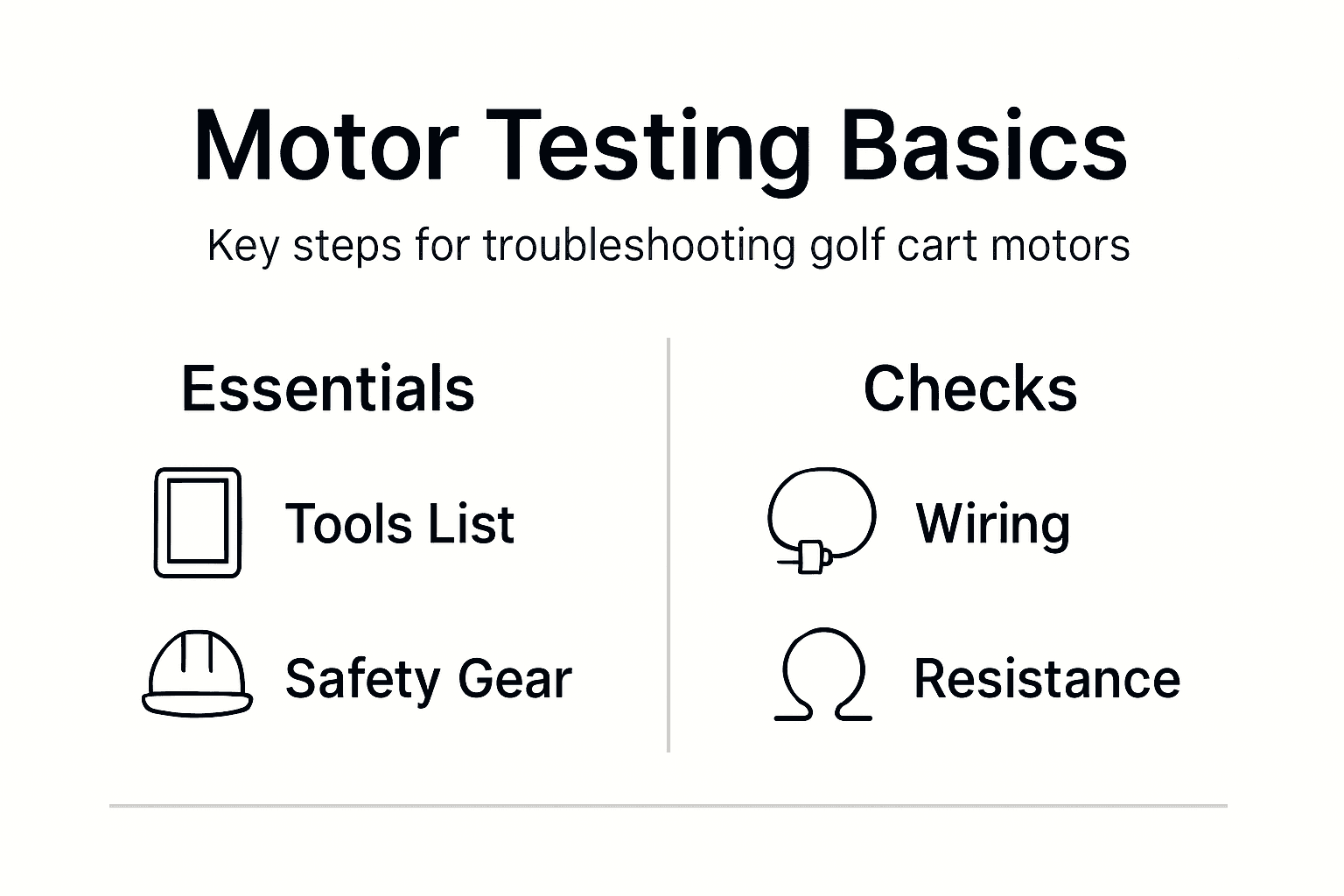
Before you dive into testing your golf cart motor, gather the right equipment and set up a safe work environment. A multimeter is your primary diagnostic tool. A multimeter is essential for diagnosing electrical faults in golf cart motors, allowing you to measure voltage, resistance, and continuity to pinpoint wiring or component failures. Choose a model that clearly displays readings and handles both DC voltage and resistance modes.
Personal protective equipment matters just as much as diagnostic tools. Wear insulated gloves rated for electrical work to protect against shock. Safety glasses shield your eyes from debris when inspecting motor components. Work on a flat, stable surface where your cart won’t roll, and ensure the battery is fully disconnected before you touch any motor parts.
You’ll also need basic hand tools for motor access and inspection:
Understanding basic electrical concepts helps you interpret your test results. You don’t need an engineering degree, just familiarity with how circuits complete paths and how resistance indicates motor health. If you’re new to electrical testing, spend 15 minutes reviewing multimeter use for golf cart motor testing basics before starting.
Finally, consult your cart’s service manual for manufacturer specifications on resistance values and wiring diagrams. These numbers become your benchmarks during testing. Keep the manual nearby as you work through diagnostic steps. Regular golf cart maintenance tips emphasize preparation, and motor troubleshooting is no exception.
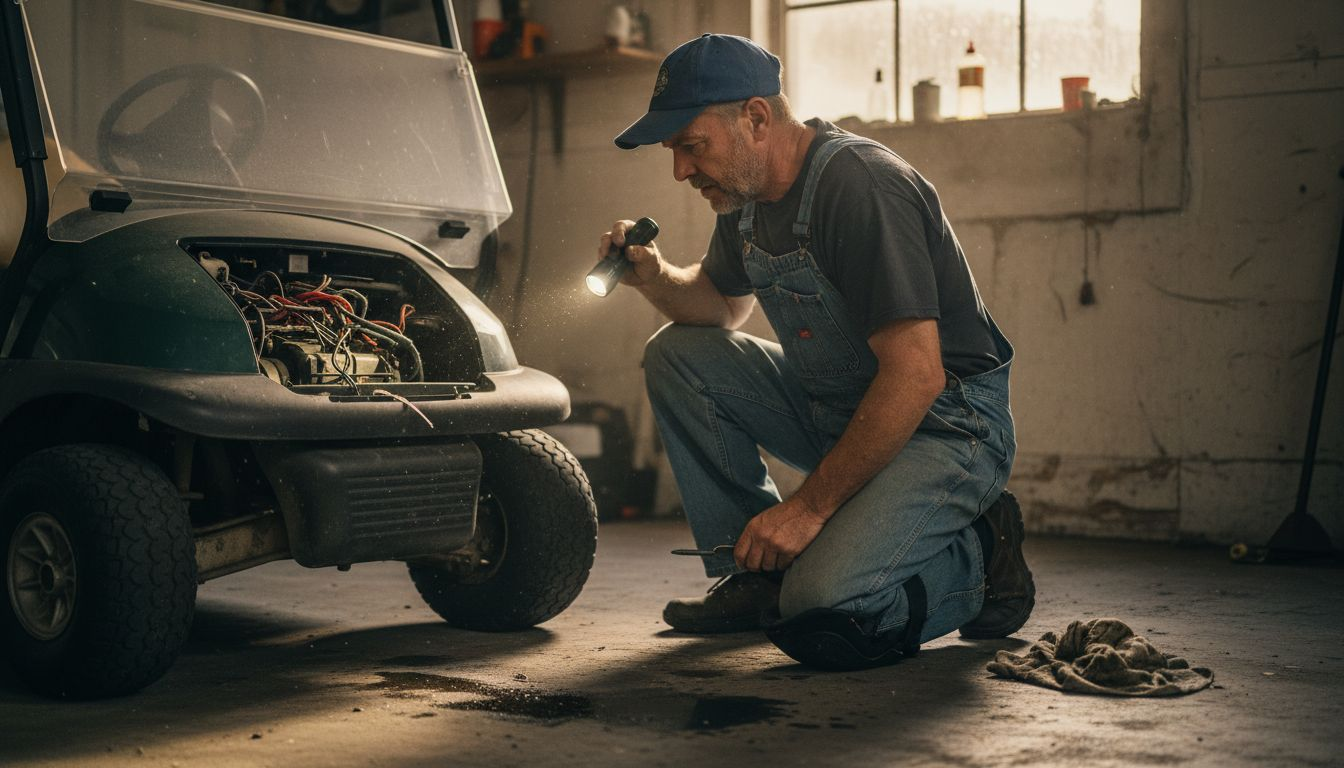
Start with a thorough visual inspection before pulling out your multimeter. Remove the motor cover and look for obvious signs of damage. Burnt wiring insulation, blackened terminals, or charred components indicate overheating or electrical faults. Check for loose connections that could cause intermittent power loss.
Next, examine the motor brushes closely. These carbon blocks wear down over time and directly affect motor performance. Pull each brush from its holder and measure its length. Brush length should be checked and replaced if over 50% worn for optimal performance. If brushes are less than half their original size, replacement is necessary. While you have the brushes out, inspect the commutator surface where they contact. It should be smooth and copper colored, not grooved or blackened.
Now move to electrical testing with your multimeter. Follow these steps in order:
Testing motor armature and field winding resistance provides clear indicators of internal short circuits or open circuits, with known resistance ranges specified in manufacturer manuals used for reference. Compare your measurements to the specs in your service manual. Significant deviations signal problems.
| Test Type | Normal Result | Problem Indicator |
|---|---|---|
| Armature resistance | Consistent across all bar pairs | Widely varying readings |
| Field winding resistance | Within manufacturer spec range | Zero ohms or infinite resistance |
| Ground test | Infinite resistance to motor case | Any continuity to ground |
| Brush condition | At least 50% original length | Less than 50% length remaining |
Pro Tip: Keep a log of your test results with the date. This creates a baseline for future troubleshooting and helps you spot gradual degradation before complete failure occurs.
Understanding golf cart motor components makes the testing process clearer. The armature spins inside stationary field windings, and brushes transfer current to the commutator. When any of these elements fail, motor performance suffers. Systematic testing isolates the exact failure point, saving you from replacing parts unnecessarily.
Improper wiring reconnections cause 35% of failures, with neglecting grounding and skipping brush maintenance also contributing significantly. Many cart owners finish testing, reconnect wires incorrectly, and create new problems. Before disconnecting anything, take clear photos of all connections from multiple angles. Label each wire with tape if your phone dies or photos are unclear.
Grounding issues plague DIY motor repairs. Every motor must have a solid ground connection to the frame. Corroded or loose ground wires cause erratic behavior that mimics more serious faults. Clean all ground contact points with a wire brush until you see bare metal. Tighten ground bolts firmly, but don’t overtighten and strip threads.
Ignoring early warning signs turns minor issues into major repairs. If your motor runs hot to the touch after normal use, don’t wait for complete failure. Heat indicates excessive current draw, often from worn brushes or bad bearings. Address overheating immediately to prevent permanent armature or field winding damage.
Skipping regular brush maintenance is another common error. Brushes are wear items, like brake pads on a car. Check them every 6 months or 100 hours of use. Waiting until total failure damages the commutator, turning a $30 brush replacement into a $200+ commutator resurfacing job.
Avoid these additional pitfalls:
Pro Tip: Double check every connection before reconnecting the battery. One misplaced wire can damage your controller, which costs far more than a motor repair. Take your time during reassembly.
Learning from common golf cart troubleshooting errors helps you avoid repeating mistakes others have made. Patience during the diagnostic process pays off. Rushing leads to overlooked details and repeat repairs.
Electrical hazards exist even in low voltage golf cart systems. Always disconnect the battery before touching any motor components or wiring. Battery voltage can cause burns, start fires, or trigger involuntary muscle contractions leading to injury. Locate the battery disconnect or remove the negative cable first, then the positive.
Wear insulated gloves rated for electrical work throughout the testing process. Regular work gloves provide no protection against shock. Purchase gloves specifically labeled for electrical safety with appropriate voltage ratings. Keep one hand in your pocket when possible to prevent current from crossing your heart.
Never work on your cart in wet conditions or standing in water. Moisture dramatically increases shock risk. Choose a dry garage or covered area with good lighting. If you must work outside, wait for dry weather and ensure the ground surface is not damp.
Golf cart motors contain capacitors and windings that can store electrical charge even after battery disconnection. Wait at least 5 minutes after disconnecting power before touching internal motor components to allow any residual charge to dissipate safely.
Handle motor components carefully to prevent physical injury and part damage. Motors are heavy; get help lifting if you need to remove yours completely. Sharp edges on motor housings can cut fingers. Spinning armatures during testing can pinch or catch loose clothing.
Follow these essential safety practices:
Even though golf carts run on lower voltage than household current, injury is still possible. Treat every electrical connection with respect. If you feel uncomfortable with any testing procedure, consult a professional technician. Your safety matters more than saving money on repairs.
For more guidance on safe practices, review safe golf cart handling tips that cover general cart safety alongside specific maintenance procedures.
Understanding the time and money involved helps you plan motor repairs realistically. Most brush replacements take 1 to 2 hours from start to finish. This includes motor access, brush removal, commutator cleaning, new brush installation, and reassembly. Your first attempt may take longer as you familiarize yourself with the process.
Parts costs vary based on what you find during testing:
Labor costs add up quickly if you hire professional help. Expect to pay $50 to $100 per hour for cart repair services. Simple brush replacement might cost $75 to $150 total at a shop. Complex motor repairs requiring armature replacement can reach $400 to $600 including parts and labor.
Structured testing order cuts troubleshooting time by 40% compared to random part swapping. Following the diagnostic sequence in this guide prevents wasting time on unnecessary repairs. You identify the actual problem faster and fix it right the first time.
| Repair Type | DIY Time | DIY Cost | Professional Cost |
|---|---|---|---|
| Brush replacement | 1 to 2 hours | $20 to $40 | $75 to $150 |
| Commutator resurfacing | 2 to 3 hours | $30 to $60 | $100 to $200 |
| Armature replacement | 3 to 4 hours | $100 to $300 | $300 to $500 |
| Complete motor rebuild | 4 to 6 hours | $200 to $400 | $500 to $800 |
Budget for preventive maintenance alongside repairs. Regular brush inspection costs nothing but your time and can prevent expensive failures. Keeping your motor clean and properly maintained extends its lifespan significantly.
Consider your skill level and available time when deciding between DIY and professional repair. Simple tasks like brush replacement make sense to tackle yourself. Complex armature rebuilds may justify professional help, especially if you lack specialty tools. Balance the value of your time against potential savings.
For additional perspective on maintenance scheduling, explore golf cart maintenance timing resources that help you plan regular service intervals.
Beyond basic multimeter testing, advanced diagnostic tools offer deeper insight into motor condition. A megohmmeter measures insulation resistance at higher test voltages than standard multimeters. This specialized instrument detects subtle insulation breakdown that basic resistance tests miss. Megohmmeter testing improves fault detection accuracy by about 30% over standard methods.
However, megohmmeters cost $200 to $800 for quality units, putting them out of reach for casual cart owners. They also require training to use safely and interpret results correctly. Applying high test voltage incorrectly can damage motor windings. Unless you’re troubleshooting motors regularly, this investment doesn’t make economic sense.
Motor current analysis is another professional technique. Technicians measure the current draw during operation and compare it to specifications. Abnormal current patterns reveal bearing problems, winding shorts, or mechanical binding. This approach requires specialized clamp meters and experience reading current waveforms.
| Method | Accuracy | Equipment Cost | Skill Required | Best For |
|---|---|---|---|---|
| Standard multimeter testing | Good | $30 to $100 | Beginner | Most common motor faults |
| Megohmmeter insulation testing | Excellent | $200 to $800 | Advanced | Detecting early insulation breakdown |
| Motor current analysis | Excellent | $150 to $500 | Professional | Identifying bearing and mechanical issues |
| Visual inspection only | Fair | $0 | Beginner | Obvious damage and wear |
For most golf cart owners, standard multimeter testing provides the right balance. It’s affordable, accessible, and effective for diagnosing typical motor failures. You can identify worn brushes, shorted windings, and grounding faults without expensive equipment. The techniques in this guide handle 85% of motor issues you’ll encounter.
Advanced methods shine in commercial or fleet settings where minimizing downtime justifies equipment investment. Golf course maintenance teams or cart rental operations benefit from megohmmeter and current analysis tools. They catch developing problems before complete failure, scheduling repairs during off peak times.
Choose your troubleshooting approach based on fault complexity and available resources. Start with basic testing. If standard methods don’t reveal the problem or you need more certainty before expensive repairs, consider professional diagnostic services. Shops with advanced tools can pinpoint subtle issues for $50 to $100, still cheaper than replacing parts blindly.
For insights into when professional diagnosis makes sense, review advanced golf cart motor diagnostics information that compares different cart systems and their complexity.
Successful motor troubleshooting delivers clear, measurable outcomes. Your cart should run with full power restored, accelerating smoothly without hesitation. The motor should sound normal during operation, without grinding, squealing, or unusual noises that indicate remaining problems.
Resistance measurements become your objective verification tool. After repairs, retest all resistance values. They should now fall within the manufacturer specification ranges listed in your service manual. Consistent readings across all commutator bar pairs confirm good armature condition. Field winding resistance matching specs indicates proper coil function.
Eliminating overheating symptoms proves your repairs addressed the root cause. Run your cart for 15 to 20 minutes under normal load. The motor should feel warm but not too hot to touch. No burnt smell or smoke should appear. If overheating persists, recheck your work for missed issues.
Time benchmarks help gauge your efficiency:
Structured troubleshooting leads to 85% first-fix success for common motor issues. Following the systematic approach in this guide, most cart owners solve their motor problems on the first attempt. Brush maintenance pushes success rates even higher, reaching 90% restoration when you catch wear before complete failure.
Your cart should operate reliably after successful troubleshooting:
Did you know? Regular motor inspection intervals of every 6 months correlate with 60% fewer emergency breakdowns and significantly longer motor service life compared to reactive maintenance approaches.
Document your final test results and repair actions. This record helps with future troubleshooting and proves valuable if you need professional help later. Note the date, symptoms, test readings, parts replaced, and final verification results.
For ongoing performance tracking, integrate motor checks into your regular motor troubleshooting success indicators routine alongside other cart maintenance tasks.
Now that you’ve mastered motor troubleshooting, discover how to enhance every aspect of your golf cart at GolfCartStuff.com. We offer expert guidance on performance upgrades, essential accessories, and maintenance strategies that extend your cart’s lifespan. Whether you’re looking to boost speed, improve comfort, or customize your ride, our curated content helps you make informed decisions.

Explore top golf cart upgrades and accessories that deliver real performance benefits. From lift kits to high capacity batteries, we break down what works and why. Our pro tips for buying and modifying your golf cart guide you through the customization process with confidence. Need parts? Check our key tips to pick the right golf cart parts to ensure compatibility and quality. Visit GolfCartStuff.com today to keep your golf cart running at its best.
Disconnect the battery completely, then set your multimeter to resistance mode. Measure armature resistance by testing adjacent commutator bars and field winding resistance between motor terminals. Compare your readings with manufacturer specifications to identify shorts or open circuits.
Power loss, rough motor operation, and visible sparking near the commutator indicate worn brushes. Remove and measure brush length; replace them if they’re less than 50% of original size. Catching brush wear early prevents expensive commutator damage.
Yes, with proper preparation and safety practices. Always disconnect the battery first, wear insulated gloves, and work in a dry environment. Following structured diagnostic steps minimizes electrical hazards while allowing effective home troubleshooting for most common motor issues.
Most brush replacements require 1 to 2 hours including motor access, brush removal, commutator cleaning, and reassembly. Your first attempt may take slightly longer as you familiarize yourself with your specific motor design and proper brush installation technique.
Explore our store to see what our products and resources can do for you.

Leave a comment