
Your Cart Is Our Priority
Explore our store to see what our products and resources can do for you.

Most golf cart buyers assume electric models can’t handle hills or rough terrain. That assumption might have been true a decade ago, but modern lithium-ion battery systems and advanced electric motors have leveled the playing field. Understanding the real differences between gas and electric golf carts helps you choose the right cart for your specific needs, terrain, and budget.
| Point | Details |
|---|---|
| Power delivery differs significantly | Gas carts provide 10-12 hp with continuous power, while electric carts deliver 3-5 hp but with instant torque. |
| Operating costs favor electric | Electric carts cost 30-40% less to operate annually due to lower fuel and maintenance expenses. |
| Battery replacement is a major expense | Electric cart batteries need replacement every 3-5 years at $800-$2,000 depending on type. |
| Range capabilities vary dramatically | Gas carts travel 100-120 miles per tank while electric carts manage 15-40 miles per charge. |
| Environmental impact matters for regulations | Electric carts produce zero emissions and minimal noise, avoiding many community restrictions. |
Gas golf carts use internal combustion engines similar to lawn mowers or small motorcycles. These engines burn gasoline to create mechanical power that drives the wheels. Electric golf carts rely on rechargeable battery packs that power an electric motor, converting stored electrical energy into motion.
Both types serve identical purposes across golf courses, residential communities, resorts, and commercial properties. You’ll see them transporting people and cargo on relatively flat terrain at speeds typically capped at 15-25 mph. The US regulatory environment treats golf carts as low-speed vehicles in many jurisdictions, with electric carts producing zero emissions and significantly less noise compared to gas models.
Here’s how propulsion basics break down:
Understanding these fundamental differences helps you decide between an electric or gas golf cart based on your priorities. Gas carts excel in continuous operation scenarios where refueling takes minutes. Electric models shine in noise-restricted areas and applications where lower operating costs matter more than extended range.
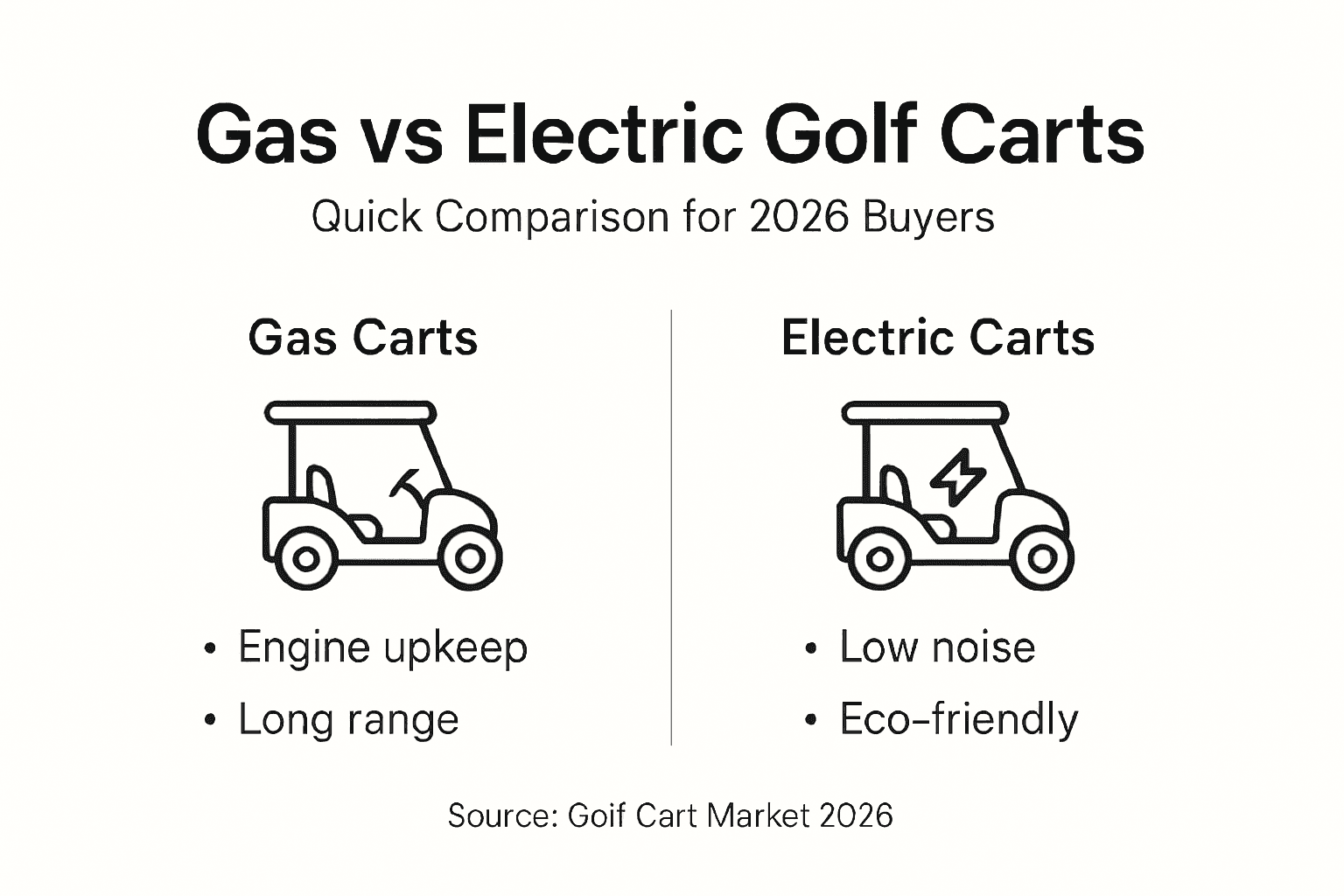
The horsepower gap tells only part of the story. While gas carts deliver 10-12 hp compared to electric carts’ 3-5 hp, electric motors provide immediate torque from zero RPM. This instant power delivery helps electric carts accelerate quickly from stops and maintain momentum on moderate inclines.
Gas engines must build RPMs before delivering peak torque, creating a lag between throttle input and acceleration. However, gas carts sustain higher speeds more easily on extended climbs because the engine continuously produces power as long as fuel flows. Electric carts draw heavily on battery reserves during sustained hill climbs, reducing overall range.
| Terrain Type | Gas Cart Performance | Electric Cart Performance |
|---|---|---|
| Flat paved surfaces | Excellent, may feel overpowered | Excellent, ideal application |
| Gentle hills (under 10% grade) | Very good, minimal effort | Very good with lithium batteries |
| Steep hills (10-15% grade) | Good, consistent power | Fair to good, depends on battery charge |
| Rough off-road terrain | Excellent, higher ground clearance options | Fair, requires upgraded suspension |
Lithium-ion battery technology and improved golf cart motor designs have dramatically improved electric cart capabilities. Modern electric models with lithium batteries climb hills that would have stopped older lead-acid powered carts. The weight advantage of lithium systems (60-70% lighter than lead-acid) improves power-to-weight ratios substantially.
Practical recommendations based on terrain:
Pro Tip: Walk your property with a smartphone inclinometer app to measure actual slope grades before deciding. Many perceived steep hills measure only 8-10% grade where modern electric carts perform well.
Gas golf carts travel 100-120 miles on a typical 5-6 gallon tank. Refueling takes three minutes at any gas station. This extended range and quick refueling makes gas carts ideal for operations requiring multiple trips throughout the day without downtime.
Electric golf carts offer 15-40 miles per charge depending on battery type, terrain, payload, and driving style. Lead-acid battery systems typically provide 15-25 miles of range under normal conditions. Lithium-ion systems extend that to 30-40 miles while maintaining more consistent power throughout the discharge cycle.
Charging logistics impact daily usability significantly. Standard 110-volt household outlets require 8-10 hours to fully charge depleted batteries. Dedicated 220-volt charging systems reduce charge time to 4-6 hours. You need to plan charging windows into your usage schedule, typically overnight.
Consider these range and refueling factors:
Electric carts work perfectly for predictable daily routes where you return to a charging location each evening. Gas carts suit unpredictable usage patterns or situations where you can’t guarantee overnight charging access. Understanding your golf cart battery options helps optimize range and lifespan for electric models.
Gas golf carts demand regular engine maintenance. You’ll need to change oil, replace spark plugs, clean or replace air filters, and adjust drive belts on schedules similar to lawn equipment. Expect 50-100 hours between oil changes and annual tune-ups costing $150-300 at service shops. The engine’s mechanical complexity means more components that eventually wear out and need replacement.
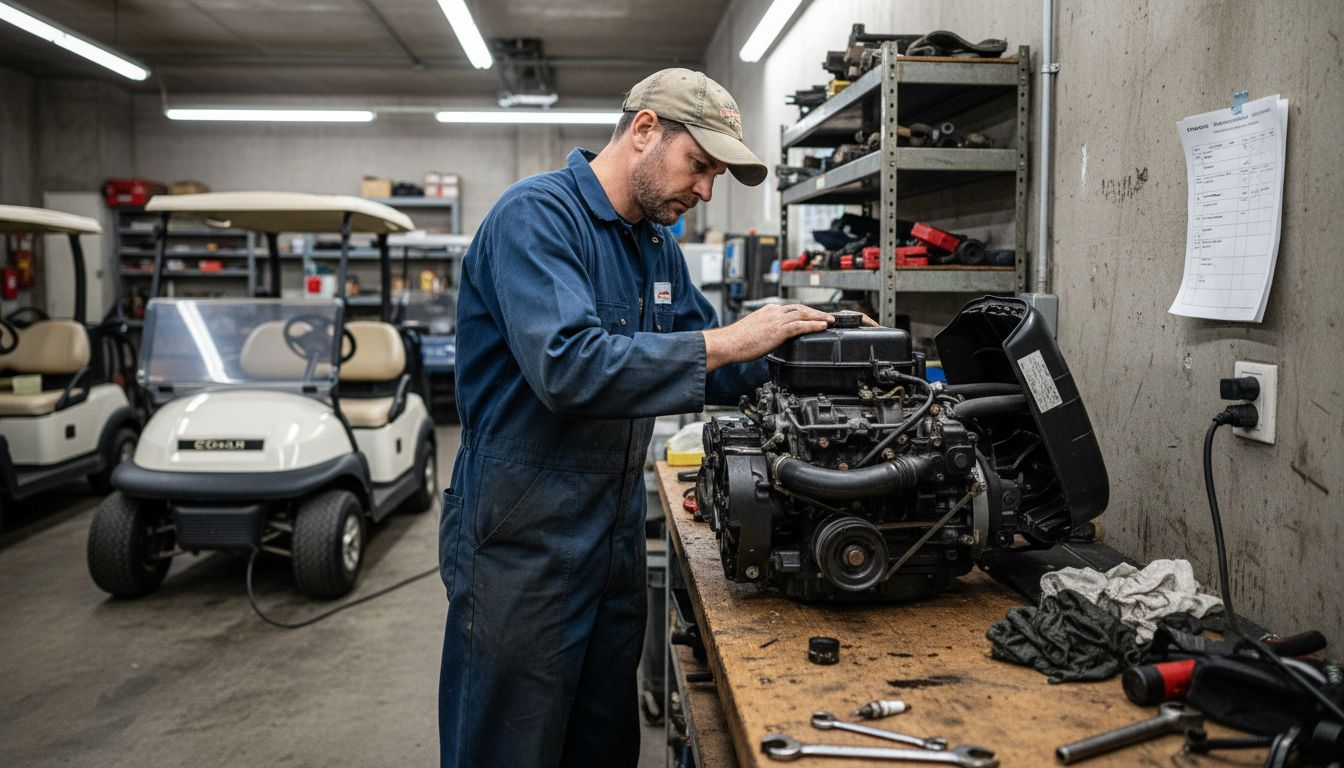
Electric carts eliminate engine maintenance entirely. You’ll focus on battery care, tire pressure, brake adjustments, and keeping electrical connections clean. The dramatically simpler drivetrain reduces maintenance frequency and costs significantly.
Battery replacement represents the largest maintenance expense for electric carts. Lead-acid batteries last 3-5 years and cost $800-1,200 for a complete set. Lithium-ion batteries extend lifespan to 5-10 years but cost $2,000-4,000 upfront. Factor this replacement cycle into long-term ownership costs.
| Cost Category | Gas Cart Annual Cost | Electric Cart Annual Cost |
|---|---|---|
| Fuel/Electricity | $400-600 (gasoline) | $150-250 (electricity) |
| Routine maintenance | $200-400 (oil, filters, plugs) | $50-100 (minimal service) |
| Battery amortization | N/A | $160-400 (replacement reserve) |
| Total annual operating cost | $600-1,000 | $360-750 |
Electricity costs roughly one-third the price of gasoline per mile traveled. At current energy prices, charging an electric cart costs $0.02-0.04 per mile while gas carts run $0.08-0.12 per mile. Over 2,000 annual miles, that difference adds up to $120-200 in fuel savings alone.
Pro Tip: Create a simple maintenance log tracking all service activities and costs. This record helps you predict upcoming maintenance needs and provides valuable documentation if you sell the cart later. Regular attention to maintaining your golf cart battery extends electric cart lifespan significantly.
When deciding between electric or gas, calculate five-year total ownership costs including purchase price, fuel, maintenance, and battery replacement. Electric carts typically cost 25-35% less to operate annually despite higher initial battery replacement expenses.
Electric golf carts produce zero direct emissions during operation. Gas carts emit carbon dioxide, carbon monoxide, and unburned hydrocarbons through exhaust systems. While golf cart emissions remain modest compared to automobiles, they contribute to local air quality issues in areas with concentrated cart usage.
Noise differences dramatically affect community acceptance and regulatory compliance. Electric carts generate minimal sound beyond tire noise and a quiet motor hum barely audible beyond 20 feet. Gas engines produce 75-85 decibels at full throttle, clearly audible several hundred feet away. The constant drone of gas engines becomes intrusive in quiet residential neighborhoods and golf course settings.
Many communities and golf courses restrict or prohibit gas-powered carts based on noise and emission concerns:
Environmental considerations extend beyond emissions. Gas carts risk fuel spills during refueling and storage. Gasoline vapors contribute to ground-level ozone formation. Proper disposal of used motor oil and filters creates additional environmental management requirements.
Electric carts shift environmental impact to electricity generation sources. In regions with coal-heavy power grids, the upstream emissions remain significant. Areas with renewable energy portfolios dramatically reduce the total carbon footprint of electric cart operation.
“The shift toward electric golf carts reflects broader transportation electrification trends. Communities recognize that reducing local emissions and noise pollution improves quality of life even when total environmental impact requires examining the full energy supply chain.”
Many buyers believe electric carts cost significantly more upfront. Base model pricing actually overlaps substantially, with entry-level gas and electric carts both starting around $8,000-10,000. Premium models of either type reach $15,000-20,000 depending on features and customization.
The myth that electric carts lack hill-climbing ability persists despite modern improvements. Lithium-powered electric carts handle 12-15% grades effectively, matching gas cart capabilities for most residential and golf course applications. The instant torque of electric motors actually provides better initial acceleration on inclines compared to gas engines that must build RPMs.
Some buyers assume gas carts run quieter than reality suggests. Standing beside an operating gas golf cart produces 75-85 decibels, equivalent to a busy urban street corner or vacuum cleaner. Electric carts measure 45-55 decibels, comparable to a quiet office environment. This 30-decibel difference represents a perceived volume reduction of roughly 75%.
Battery technology advancements often go unrecognized. Buyers remember old lead-acid systems requiring frequent water additions and suffering from memory effects. Modern lithium-ion batteries need virtually no maintenance, tolerate partial charging cycles without degradation, and deliver consistent power until nearly depleted.
Key clarifications for informed decisions:
Choosing between gas and electric golf carts requires matching cart characteristics to your specific situation. Follow this decision framework:
Gas carts suit these scenarios best:
Electric carts excel when:
Pro Tip: Review your HOA covenants or community regulations before purchasing. Some neighborhoods mandate electric carts while others restrict total cart usage. Understanding these rules prevents costly mistakes and potential conflicts with neighbors or property management.
Balance your immediate needs with long-term considerations. A cart that barely meets your range requirements today might prove inadequate as usage patterns evolve. Conversely, paying for excessive capability you’ll never use wastes money better spent on useful accessories or upgrades. Consult our guide to choosing gas or electric golf carts for additional decision support.
Whether you choose gas or electric, optimizing your golf cart enhances functionality and enjoyment. Our pro tips for buying and modifying golf carts cover essential upgrades that improve performance, comfort, and safety.
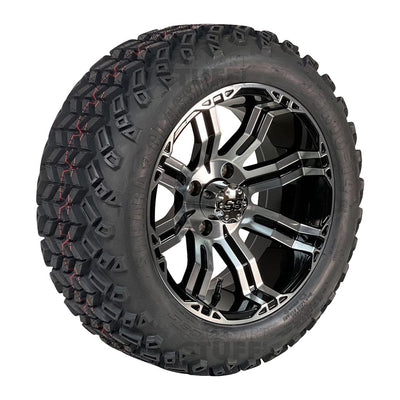
Popular enhancements include upgraded seats for better comfort on longer trips, enhanced lighting systems for early morning or evening use, and custom wheels that improve both appearance and ride quality. Storage solutions like cargo boxes and cooler brackets expand utility for recreational and work applications.
Explore our top golf cart upgrades and accessories to discover options that match your needs. Quality parts and accessories help you get maximum value from your golf cart investment regardless of power type.
Lead-acid batteries typically last 3-5 years with proper maintenance including regular watering and avoiding deep discharges. Lithium-ion batteries extend lifespan to 5-10 years and require virtually no maintenance beyond keeping terminals clean.
Modern electric carts with lithium batteries handle grades up to 12-15% effectively, matching gas cart performance for most residential and golf course applications. The instant torque delivery of electric motors actually provides better initial acceleration on hills compared to gas engines.
Gas carts produce 75-85 decibels at operating speed, clearly audible several hundred feet away. Electric carts generate only 45-55 decibels, roughly 30 decibels quieter, representing a perceived volume reduction of about 75%.
Plan on oil changes every 50-100 operating hours or annually. Annual tune-ups should include spark plug replacement, air filter cleaning or replacement, drive belt inspection, and general lubrication. Budget $200-400 annually for routine maintenance at service shops.
Electricity costs roughly one-third the price of gasoline per mile. Charging costs $0.02-0.04 per mile while gas carts run $0.08-0.12 per mile. Over 2,000 annual miles, electric carts save $120-200 in fuel costs alone.
Explore our store to see what our products and resources can do for you.

Leave a comment