
Your Cart Is Our Priority
Explore our store to see what our products and resources can do for you.

Heading out for a day on the course or zipping around a campground, many golf cart owners quickly realize that standard two-seaters just cannot do it all. Expanding passenger capacity with golf cart rear seat kits offers a practical way to carry friends, family, or gear without investing in a bigger vehicle. With careful attention to safety standards and a wide array of customization options, these kits make transforming your cart both simple and rewarding for recreational and utility use.
| Point | Details |
|---|---|
| Understanding Rear Seat Kits | Golf cart rear seat kits increase passenger capacity and utility, transforming standard carts into multi-passenger vehicles. |
| Types and Usage | Fixed and flip-style rear seat kits provide different advantages; fixed seats are more permanent while flip-style offers versatility for cargo. |
| Installation Considerations | Proper installation is crucial; follow manufacturer guidelines for compatibility and safety to ensure optimal performance. |
| Legal and Maintenance Requirements | Be aware of safety regulations and perform regular maintenance checks to promote longevity and compliance with legal standards. |
Golf cart rear seat kits represent specialized aftermarket accessories designed to expand passenger capacity and utility for recreational and utility vehicles. These modular seating solutions transform standard two-seat golf carts into multi-passenger transportation platforms, enabling owners to transport additional passengers safely and efficiently. Seating configurations are defined by national safety standards that specify design requirements and operational parameters.
Typically, rear seat kits include a foldable or fixed bench-style seat positioned behind the original driver and passenger seats. Manufactured from durable materials like powder-coated steel, molded plastic, or marine-grade vinyl, these kits attach directly to existing golf cart frames using specialized mounting hardware. The design allows for quick installation and removal, providing golf cart owners maximum flexibility in configuring their vehicles for different uses.
Rear seat kits serve multiple purposes across various environments. Recreational communities, resorts, campgrounds, and large property owners utilize these kits to enhance transportation efficiency. Utility applications include campus transportation, maintenance operations, event management, and light industrial settings where additional passenger capacity improves operational productivity. Some advanced rear seat configurations even include safety features like integrated grab bars, seat belts, and padded surfaces to ensure passenger protection.
Pro tip: When selecting a rear seat kit, always verify compatibility with your specific golf cart model and consider the intended usage environment to ensure optimal performance and safety.
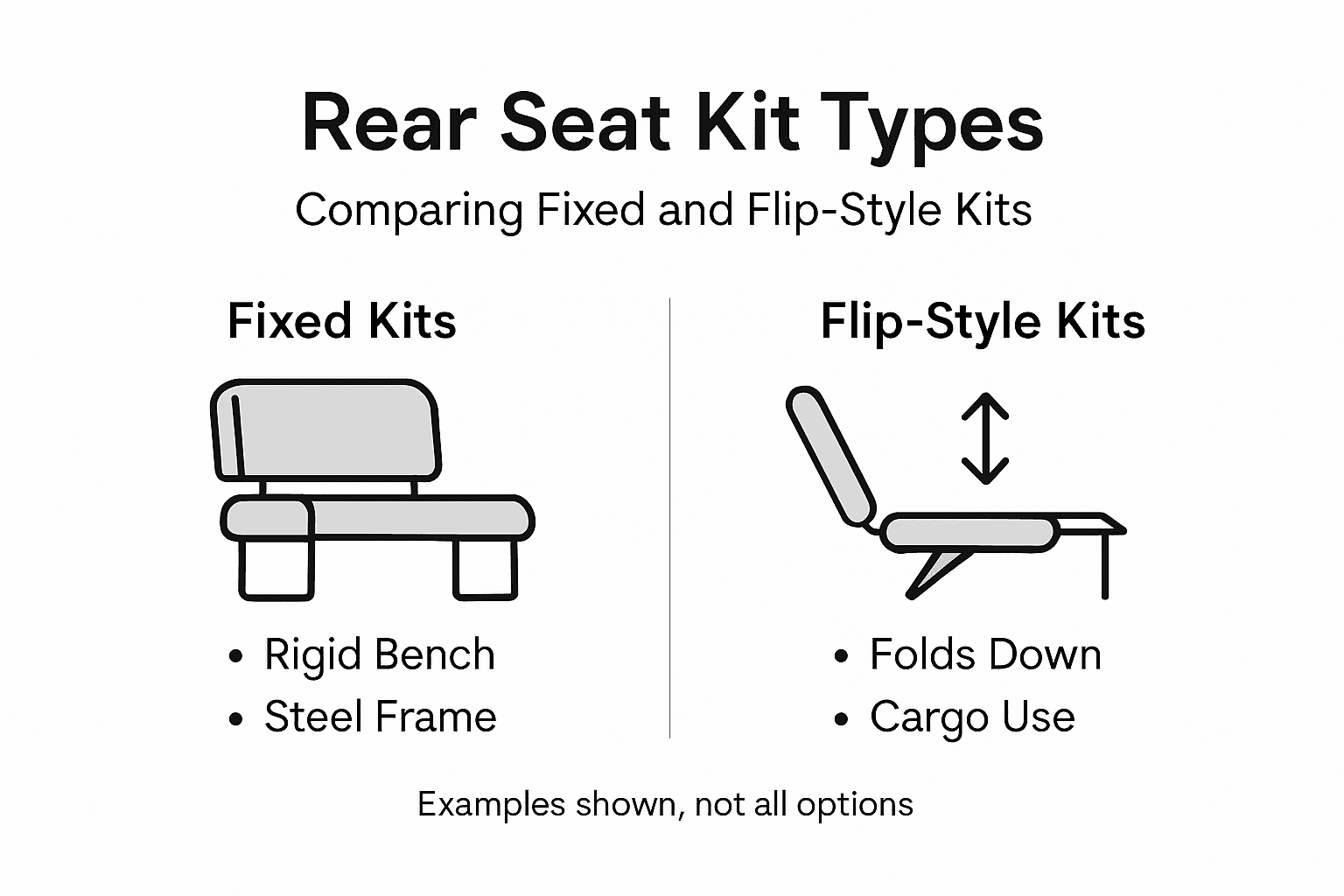
Golf cart rear seat kits are categorized primarily into two main types: fixed rear seats and flip-style convertible seats. Golf cart manufacturers design these configurations to meet diverse transportation needs across recreational and utility environments. Fixed rear seats provide permanent passenger accommodation, while flip-style seats offer flexible cargo and passenger conversion options.
Fixed rear seat kits typically feature a rigid, permanently installed bench-style design constructed from heavy-duty steel, aluminum, or high-impact plastic. These seats are engineered to withstand constant use and harsh outdoor conditions, with most models including padded surfaces, integrated seat belts, and reinforced mounting points. Some advanced configurations incorporate additional safety features like grab bars, non-slip surfaces, and ergonomic contoured designs to enhance passenger comfort and security.
Convertible or flip-style rear seat kits represent a more versatile solution for golf cart owners seeking multiple usage modes. These innovative designs allow users to quickly transform seating configurations from passenger transport to cargo hauling. Typically featuring a hinged mechanism, these seats can be folded flat to create additional storage space or raised to accommodate passengers. Materials like marine-grade vinyl, powder-coated steel, and UV-resistant plastics ensure durability and longevity across different operational environments.

Pro tip: Measure your golf cart’s specific dimensions and intended usage before selecting a rear seat kit to ensure optimal compatibility and functionality.
Here’s a comparison of the two primary types of golf cart rear seat kits:
| Type of Rear Seat Kit | Durability & Materials | Main Advantage | Best Use Scenario |
|---|---|---|---|
| Fixed Rear Seat | Heavy-duty steel or plastic | Always ready for passengers | Resorts, communities |
| Flip-Style Convertible | Marine-grade vinyl, powder-coated steel | Easily swaps to cargo space | Maintenance, landscaping crews |
Installing a rear seat kit requires careful preparation and precise mounting techniques. Service manuals provide comprehensive installation guidelines that help golf cart owners successfully expand their vehicle’s passenger capacity. The process typically involves several critical steps, including assessing the existing golf cart frame, selecting compatible mounting hardware, and ensuring proper alignment and structural integrity.
The installation process varies depending on the specific rear seat kit design, but most follow a standard procedure. Owners begin by removing any existing rear panels or protective coverings from their golf cart. Mounting brackets are then aligned precisely with pre-existing frame holes or specialized mounting points. High-quality kits include detailed hardware packages with bolts, washers, and reinforcement plates specifically designed to distribute weight evenly and prevent structural stress. Some advanced kits feature quick-release mechanisms or adjustable mounting systems that allow for easier installation and future modifications.
Once installed, rear seat kits serve multiple functional purposes beyond simple passenger transportation. Recreational communities, landscaping crews, and property management teams utilize these expanded seating configurations for efficient personnel movement. The versatility of modern rear seat designs allows quick conversion between passenger and cargo modes, enabling users to quickly adapt their golf cart to changing operational requirements. Safety remains a primary consideration, with many kits including integrated seat belts, padded surfaces, and ergonomic designs that minimize passenger fatigue during extended use.
Pro tip: Always test the rear seat kit’s stability and weight distribution before carrying passengers, and periodically inspect mounting hardware to ensure continued safe operation.
Rear seat kits for golf carts involve complex legal and safety considerations that extend beyond simple installation. Federal safety standards provide critical guidelines for evaluating seating system integrity, emphasizing the importance of proper attachment, structural strength, and passenger protection. These regulations require manufacturers and users to ensure that rear seat modifications meet minimum safety performance criteria designed to minimize potential injury risks.
Workplace and recreational environments impose additional safety requirements for golf cart rear seat usage. Different jurisdictions may have specific regulations governing passenger transportation, particularly for commercial or industrial applications. Key legal considerations include weight distribution, maximum passenger capacity, secure mounting mechanisms, and compliance with local transportation safety codes. Insurance providers often require documentation proving that rear seat modifications meet established safety standards, making proper installation and maintenance crucial for liability protection.
Safety protocols for rear seat kit usage involve multiple critical elements. Operators must conduct regular inspections of mounting hardware, checking for signs of structural stress, loose bolts, or material degradation. Training becomes essential, especially in workplace settings where golf carts serve as functional transportation vehicles. Proper passenger boarding and dismounting procedures, weight limit awareness, and understanding vehicle stability characteristics can significantly reduce accident risks. Some jurisdictions mandate formal safety training for operators using modified golf carts with expanded passenger capacities.
Pro tip: Consult local transportation authorities and your insurance provider to understand specific legal requirements for rear seat modifications before installation and use.
Golf cart rear seat kit expenses vary significantly based on design complexity, materials, and installation requirements. Pricing typically ranges from $200 to $800 for aftermarket kits, with professional installation adding another $100 to $300 to the total cost. The investment depends on factors like seat material quality, compatibility with specific golf cart models, and additional features such as padding, seat belts, and convertible configurations.
Maintenance for rear seat kits involves regular inspection and preventive care to ensure longevity and safety. Owners should perform quarterly checks of mounting hardware, looking for signs of rust, loose bolts, or structural wear. Cleaning procedures differ by material type steel frames require different maintenance compared to vinyl or plastic seats. Annual maintenance might include lubricating moving parts for flip-style seats, replacing worn mounting brackets, and checking overall structural integrity. Replacement of individual components is often more cost-effective than purchasing an entirely new rear seat kit.
This table summarizes key ongoing costs and maintenance considerations for golf cart rear seat kits:
| Cost/Maintenance Aspect | Typical Frequency | Example Expense | Impact on Longevity |
|---|---|---|---|
| Hardware inspection | Every 3 months | Cost of bolts/washers | Prevents structural failures |
| Cleaning & care | Monthly or as needed | Cleaning solutions | Preserves seat appearance and material |
| Lubrication/moving parts | Annually | Lubricant products | Keeps convertible mechanisms smooth |
Alternative solutions for expanding golf cart passenger capacity include purchasing a larger pre-configured golf cart with built-in seating or using trailer attachments for additional passenger transport. Some recreational facilities and property management teams opt for multi-passenger golf cart models that come with factory-installed expanded seating configurations. These alternatives can be more expensive initially but may provide more integrated and potentially more reliable passenger accommodation compared to aftermarket rear seat kits.
Pro tip: Compare the total lifecycle cost of aftermarket rear seat kits versus factory-configured multi-passenger golf carts to determine the most cost-effective solution for your specific needs.
Expanding your golf cart’s passenger capacity with a reliable rear seat kit can transform how you move people and gear around. If you want to avoid the hassle of permanent installations that may compromise safety or usability, choosing the right fixed or flip-style convertible rear seat kit is essential. With proper materials and secure mounting, you prevent common issues like instability or quick wear. At Golf Cart Stuff, we understand these challenges and provide high-quality parts to help you customize your cart with confidence.
Browse our selection and discover expertly crafted seat kits plus all the mounting hardware you need for safe and efficient installation. Don’t wait until your next trip or project starts to upgrade your golf cart’s utility. Visit Golf Cart Stuff now and equip your vehicle with the durable comfort and enhanced passenger safety every owner deserves. Start expanding your golf cart’s capacity with trusted parts that meet your exact model requirements.
Golf cart rear seat kits are aftermarket accessories that expand the passenger capacity of golf carts by adding seating configurations, such as a fixed bench or a flip-style convertible seat, allowing for safe and efficient additional passenger transport.
Installing a rear seat kit generally involves removing existing rear coverings, aligning mounting brackets with the cart’s frame, and using provided hardware to securely attach the kit. It’s important to follow the specific installation guidelines included with the kit for safety and compatibility.
Fixed rear seats provide a permanent passenger seating solution, ideal for places like resorts, while flip-style convertible seats offer versatility, allowing users to switch between passenger seating and cargo space as needed, making them suitable for maintenance or landscaping work.
The cost of golf cart rear seat kits varies widely, usually ranging from $200 to $800, depending on features and materials. Professional installation can add an additional $100 to $300 to the overall expense.
Explore our store to see what our products and resources can do for you.

Leave a comment