
Your Cart Is Our Priority
Explore our store to see what our products and resources can do for you.

TL;DR:
- Seatbelts significantly reduce ejection and injury risks in golf carts at any speed.
- Installing proper seatbelts is crucial for safety on off-road and street-legal golf carts.
- Upgrading to quality seatbelts is a simple, cost-effective step towards comprehensive golf cart safety.
Most golf cart owners assume that because their cart tops out at 15 mph, serious injuries simply aren’t possible. That assumption is wrong, and it puts passengers at real risk every single ride. Golf carts tip, slide, and collide more often than people realize, and without a seatbelt, even a minor bump can send a passenger flying. Seatbelts reduce ejection risk and serious injury during accidents in ways that no other single upgrade can match. Whether you ride on a golf course, through a residential neighborhood, or on public roads, this article will show you exactly why seatbelts matter, where they matter most, and how to upgrade your cart the right way.
| Point | Details |
|---|---|
| Seatbelts prevent injuries | Seatbelts are the most effective way to avoid ejection and serious harm during golf cart accidents. |
| Environment affects risks | Street, off-road, and neighborhood use require seatbelts much more than exclusive golf course operation. |
| Upgrade is accessible | Most golf carts can be outfitted with seatbelts using aftermarket kits and straightforward installation. |
| Complementary safety upgrades | Adding seatbelts pairs well with lighting, mirrors, and other features to maximize safety. |
| Compliance is easier | Installing seatbelts helps owners meet regulations for street legal golf carts. |
Here’s a misconception worth addressing head-on: golf carts feel slow, so they feel safe. But “slow” doesn’t mean “safe” when you’re sitting in an open vehicle with no doors, no airbags, and no structural protection around you. The physics are straightforward. At 15 mph, an unrestrained passenger can be ejected with enough force to cause broken bones, head trauma, or worse.
The numbers back this up. Over 15,000 golf cart-related injuries are treated in U.S. emergency rooms each year, and ejection is one of the leading causes of serious harm. Children and older adults are especially vulnerable. A large percentage of those injuries happen not on steep hills or busy roads, but on flat terrain during routine use.
So what does a seatbelt actually do in this context?
“A seatbelt is the single most effective passive safety device you can add to a golf cart. It requires zero action from the passenger during an accident to do its job.”
Golf carts are used in an increasingly wide range of environments. Resorts, retirement communities, campgrounds, warehouses, and public roads all present unique hazards. A cart used only on a manicured fairway faces different risks than one navigating a neighborhood with traffic, pedestrians, and curbs. Yet in both cases, the absence of a seatbelt leaves passengers unnecessarily exposed.
Before you consider any other upgrade, run through a golf cart safety checklist to identify gaps in your current setup. And if you want a deeper look at your cart’s overall condition, a thorough safety inspection guide will walk you through every critical system. Seatbelts are the starting point, not the finish line.
Not all golf cart environments carry the same level of risk. Understanding where your cart operates helps you prioritize the right safety features and meet any legal requirements that apply to your situation.
| Environment | Risk level | Seatbelt required? | Key hazards |
|---|---|---|---|
| Golf course fairways | Low to moderate | Rarely mandated | Uneven terrain, hills, wet grass |
| Residential communities | Moderate | Sometimes required | Pedestrians, intersections, curbs |
| Resorts and campgrounds | Moderate | Varies by property | Mixed traffic, speed variations |
| Off-road and trails | High | Recommended | Rough terrain, steep grades, obstacles |
| Public roads (street legal) | High | Often required | Traffic, posted speed limits, legal liability |
The risk profile changes dramatically once your cart leaves the golf course. Residential neighborhoods introduce intersections, children playing, and other vehicles. Off-road trails add unpredictable terrain and tip-over risk. Public roads bring the highest stakes of all.
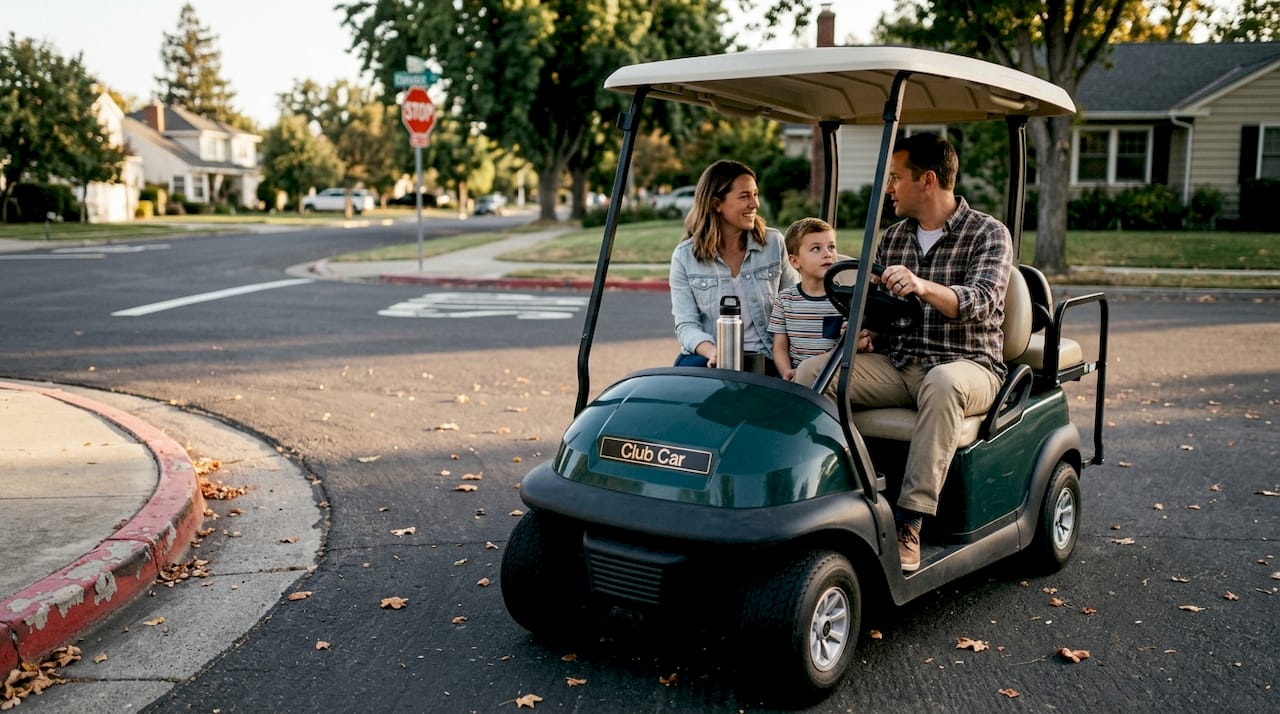
Street legal golf carts require enhanced safety features, including seatbelts, to comply with road regulations. If your cart is registered for road use, a seatbelt isn’t optional. It’s part of what makes the vehicle legal to operate. You can review the full list of street legal requirements to make sure your cart checks every box.
Key takeaways by environment:
Pro Tip: If your cart is ever used outside a controlled golf course environment, install seatbelts before your next ride. The upgrade takes less than an hour and protects every passenger from that point forward.
Not all seatbelts are created equal. The installation quality and belt type directly determine how well they perform when it matters most. Choosing the wrong style or skipping proper mounting hardware can turn a safety feature into a false sense of security.
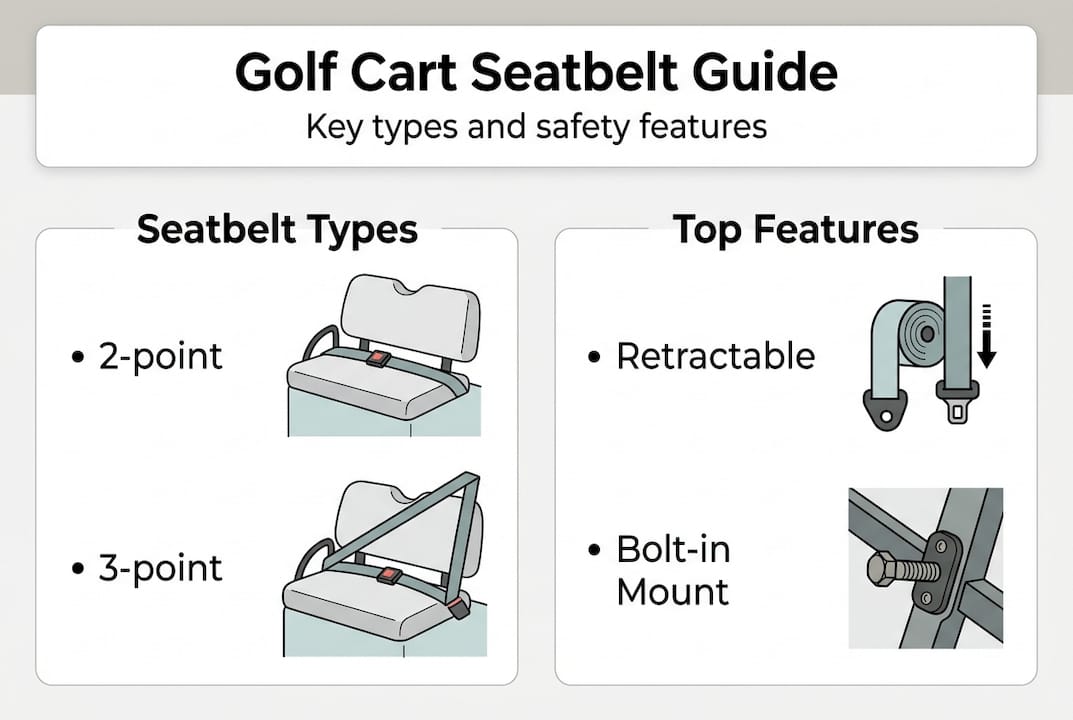
Here’s a breakdown of the main seatbelt types available for golf carts:
| Belt type | Best for | Key advantage |
|---|---|---|
| 2-point lap belt | Basic course use | Simple, low cost |
| 3-point retractable | Street legal, neighborhoods | Shoulder and lap coverage |
| 4-point harness | Off-road, high-performance carts | Maximum restraint |
When evaluating any seatbelt kit, look for these features:
For most golf cart owners, a retractable 3-point seatbelt offers the best balance of protection and ease of use. It mirrors what you’d find in a standard car and provides both shoulder and lap restraint without requiring any extra adjustment from the passenger.
Installing seatbelts correctly matters just as much as choosing the right type. Mounting points must be bolted to the cart’s frame, not to the seat itself. Seats flex and shift under impact. The frame does not. If you’re adding other upgrades at the same time, check out the top golf cart add-ons to plan a complete safety and comfort package. For owners interested in broader customization, golf cart modifications can help you prioritize what to tackle first.
Knowing what to buy is only half the job. Installing seatbelts correctly is what determines whether they actually protect your passengers. Proper seatbelt installation is crucial for effectiveness, and cutting corners here defeats the entire purpose.
Here’s a practical checklist to guide your upgrade:
Common mistakes to avoid:
Pro Tip: After installation, sit in the seat and apply firm forward pressure against the belt. If the mounting point flexes or the buckle shifts, remount before putting passengers in the cart.
Seatbelts work best as part of a broader safety setup. Pair your new belts with golf cart lighting upgrades for visibility at dawn, dusk, and in low-light conditions. Add mirrors and turn signals if your cart operates near other vehicles. And revisit your golf cart seat repair if the seat itself is worn, torn, or improperly secured, since a seatbelt can only do so much if the seat underneath isn’t solid.
After years of watching how golf cart owners approach safety upgrades, one pattern stands out: seatbelts are almost always the last thing people add, if they add them at all. New tires, lifted suspensions, custom wheels, upgraded speakers. Seatbelts? Those come later. Or never.
The real reason isn’t cost. A quality seatbelt kit costs less than a set of floor mats. The reason is perception. Golf carts feel casual. They feel recreational. And that feeling creates a blind spot that no amount of statistics seems to shake until something goes wrong.
The uncomfortable truth is that the environments where golf carts are used are getting more complex every year. More carts on public roads, more mixed-use communities, more off-road trails. The risk profile is rising while the safety mindset hasn’t caught up.
Review your full safety accessories checklist and ask yourself honestly: would your cart pass a safety inspection today? Seatbelts should be the default, not the upgrade you get around to eventually.
You now have the knowledge to make a real difference in how safe your cart is for every passenger who climbs in. The next step is getting the right equipment.
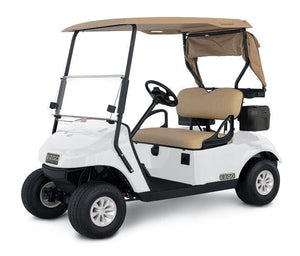
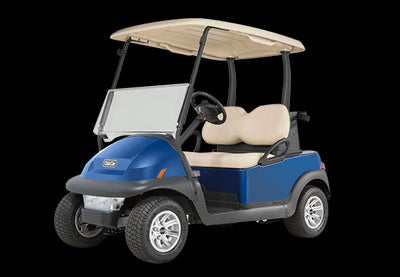
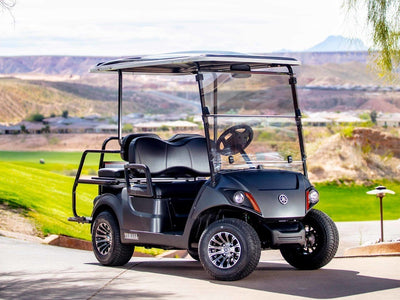
At Golf Cart Stuff, we carry a full selection of seatbelts for golf carts built to fit the most popular models on the market, including Club Car, EZGO, and Yamaha. Whether you need a basic lap belt or a retractable 3-point system, you’ll find options that install cleanly and hold up over time. Browse our complete range of golf cart accessories to add lighting, mirrors, and other safety features in one order. If you’re working on a specific platform, our Club Car DS golf cart parts section has model-specific hardware to make installation straightforward.
Seatbelt requirements vary by location, and most golf courses don’t mandate them, but installing seatbelts is strongly recommended for added protection on hilly or uneven terrain. Once your cart moves off the course, street legal requirements often make seatbelts mandatory.
Most golf cart models can be retrofitted with seatbelts using aftermarket kits, provided the frame has suitable mounting points. Seatbelt installation quality directly affects how well the belts perform, so always follow the manufacturer’s fitment guide for your specific model.
Seatbelt kits for golf carts typically range from $50 to $150 depending on belt type, materials, and included hardware. You can browse current pricing and options for golf cart seat belts to find a kit that fits your budget and cart model.
Beyond seatbelts, the most impactful upgrades are lighting, mirrors, and turn signals for improved visibility and awareness around other vehicles. Golf cart lighting upgrades are especially valuable for carts used in low-light conditions or on public roads.
Seatbelts are often a required component for street legal classification and contribute directly to meeting road safety regulations. Adding them moves your cart closer to full compliance rather than creating any complications with your registration.
Explore our store to see what our products and resources can do for you.

Leave a comment