
Your Cart Is Our Priority
Explore our store to see what our products and resources can do for you.

TL;DR:
- Golf cart suspension relies on springs for load support and shocks for damping impacts, ensuring ride stability. Proper diagnosis involves bounce tests and understanding brand-specific layouts, with upgrades tailored to terrain and usage. Regular inspection and correct part matching prevent costly repairs and optimize suspension performance.
Golf cart suspension is the coordinated system of springs and shock absorbers that manages weight support, absorbs road impacts, and controls ride stability across every terrain you drive. Understanding golf cart suspension explained in full means knowing that springs handle load and initial impact, while shocks control what happens after that impact. EZGO, Club Car, and Yamaha each build their carts with distinct suspension layouts, and those differences directly affect how you diagnose problems, source parts, and plan upgrades. Whether your cart bounces like a trampoline or sags on one side, the fix starts with knowing which component is actually failing.
Golf cart suspension operates through two distinct components that perform separate jobs. Springs support the weight of the cart and passengers while absorbing the initial force of bumps and rough terrain. Shocks, or shock absorbers, control what the spring does after that impact. Without shocks, a spring would keep oscillating long after hitting a bump, turning every small dip into a prolonged bounce.
Springs and shocks work together in a division of labor: springs manage load support, shocks manage motion control. This separation is the key to accurate diagnosis. When you confuse the two roles, you replace the wrong part and the problem persists.
Shocks use hydraulic fluid and a piston moving through that fluid to create resistance. The faster the piston moves, the more resistance it generates. That resistance is what smooths out the rebound after a spring compresses. A healthy shock settles the cart after one bounce. A worn shock lets the cart keep bouncing, which is the clearest sign that the damper has lost its hydraulic integrity.
Springs fail differently. A worn or fatigued spring loses its ability to support load, causing the cart to sag on one corner or ride lower than normal. Sagging indicates a spring issue; excessive bouncing after a bump indicates a shock issue. Keeping these two failure modes separate simplifies every repair decision you make.
Pro Tip: Run a quick bounce test before ordering any parts. Push down hard on each corner of the cart and release. A healthy shock settles after one bounce. Two or more bounces means that shock needs replacement.
Golf cart suspension layouts differ significantly by brand, and knowing your cart’s design determines which parts fit and which upgrades are possible. The three major brands use different front and rear suspension configurations, and mixing up parts between them causes fitment problems and can accelerate wear.
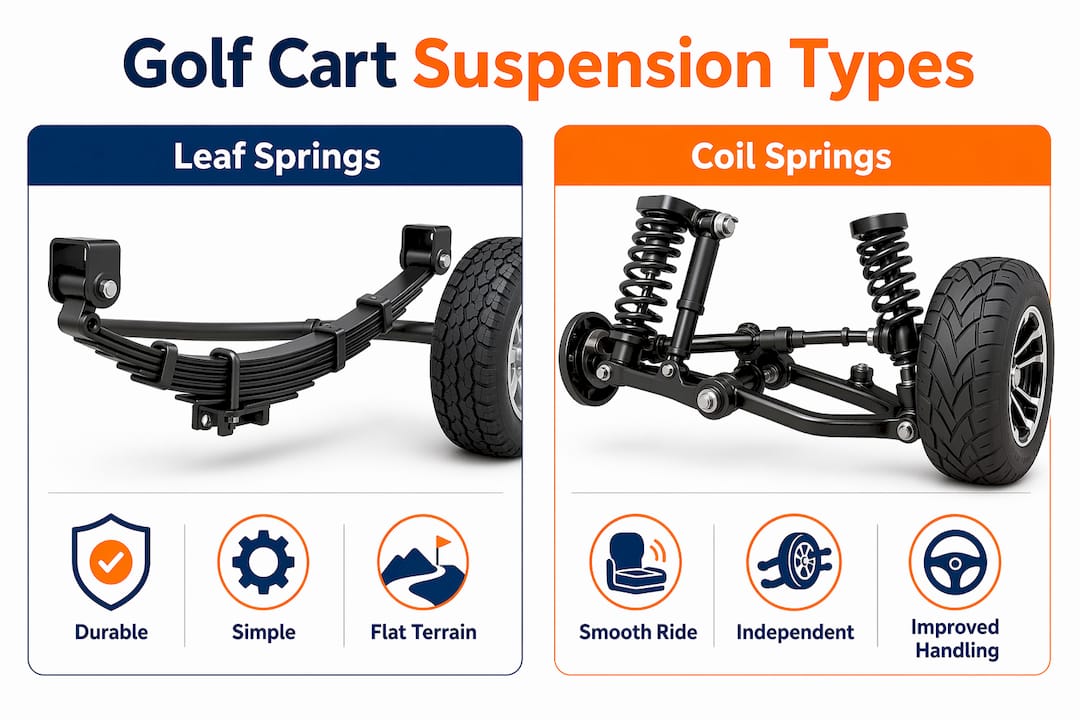
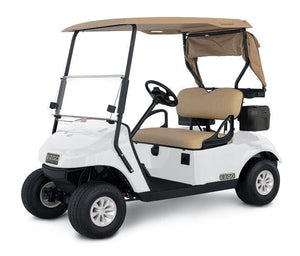
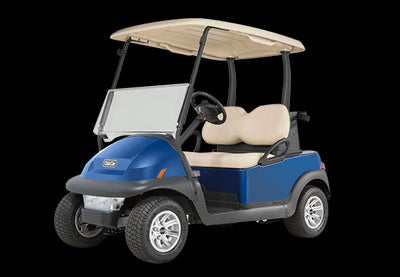
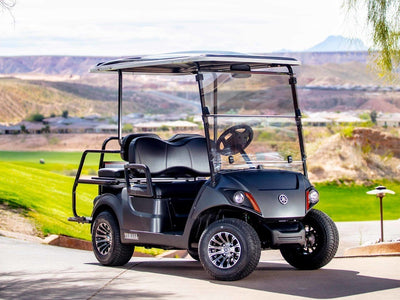
The EZGO TXT uses leaf springs at the front, which is a simpler and more durable design for flat terrain. Club Car and Yamaha both use A-arm control arm setups at the front, which allow for more precise wheel movement and better handling on uneven ground. At the rear, most carts use a solid rear axle paired with leaf springs and shocks. The exception is the Yamaha Drive2, which features independent rear suspension with coil-over shocks, giving it noticeably better ride quality and handling compared to solid axle designs.
Here is a direct comparison of suspension designs across the three major brands:
| Brand | Front suspension | Rear suspension | Ride character |
|---|---|---|---|
| EZGO TXT | Leaf springs | Solid axle, leaf springs and shocks | Firm, durable, basic |
| Club Car DS | A-arm control arms | Solid axle, leaf springs and shocks | Balanced, good parts availability |
| Yamaha Drive2 | A-arm control arms | Independent rear suspension, coil-over | Smoothest ride, most complex |
Independent rear suspension, as found on the Yamaha Drive2, means each rear wheel moves independently rather than being connected by a solid axle. That design absorbs bumps on one side without transferring the impact to the other side of the cart. It produces a noticeably smoother ride but requires more precise parts matching during repairs.
Pro Tip: Always confirm your cart’s model year before ordering suspension parts. Club Car DS parts from 2000 do not always fit a 2010 model, and using the wrong spring rate or shock length creates new problems rather than solving the original one.
Diagnosing suspension problems accurately saves you money and time. The most common symptoms are a rough or jarring ride, the cart leaning noticeably during turns, uneven tire wear, and vibration felt through the steering wheel or floorboard. Each symptom points toward a specific component or area of the suspension.
Start every diagnosis with the tires. Incorrect tire pressure causes vibration and rough rides that mimic suspension failure. Check pressure first and rule it out before touching any suspension component. Uneven tire wear across the width of a tire often points to alignment issues caused by worn suspension components rather than the tires themselves.
Once tires are ruled out, move to the bushings. Leaf spring bushings are rubber or polyurethane sleeves that cushion the connection between the spring and the frame. Worn leaf spring bushings cause vibration and clunking, and you can check them visually for cracking or collapse. Use a pry bar to test for movement at the bushing location. Any noticeable play indicates replacement is needed.
Front-end play is the next check. Grab the front tire with both hands and rock it laterally (side to side) and vertically (top to bottom). Lateral play points to worn kingpin or tie rod end components. Vertical play points to worn spindle bearings or A-arm bushings. Either type of play causes steering vibration and instability at speed.
Here is a quick reference for matching symptoms to likely causes:
Vibration diagnosis gets more accurate when you correlate the location and character of the vibration with specific components. Vibration that appears only at higher speeds and comes through the floorboard usually traces back to the rear axle or rear bushings. Vibration felt in the steering wheel at any speed points to the front end.
Pro Tip: Inspect bushings visually during every seasonal maintenance check. Early bushing wear detection prevents the kind of steering instability that turns a minor repair into a full front-end rebuild.
Suspension upgrades fall into three categories: shock replacement, spring replacement or upgrade, and lift kit installation. Choosing the right upgrade depends on how you use your cart, what terrain you cover, and how much load you regularly carry.
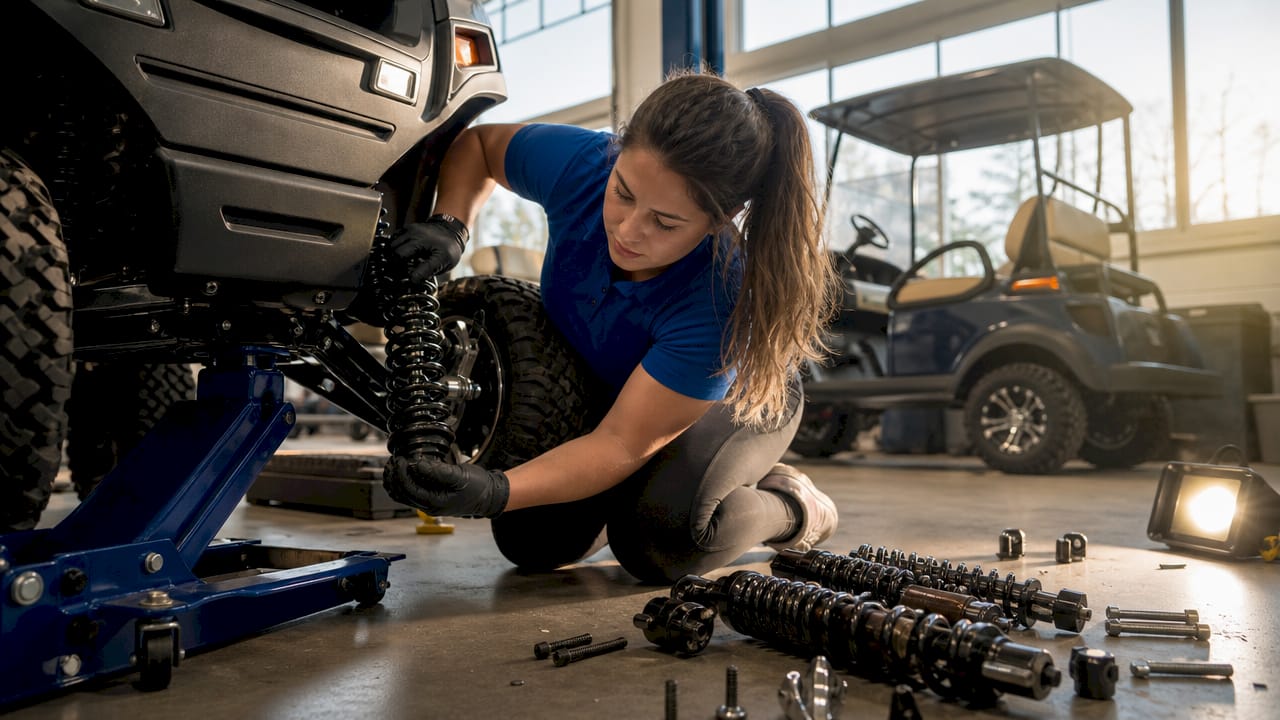
Shock replacement is the most common upgrade. Standard oil-filled shocks work well on smooth terrain and light loads. Gas-charged shocks resist fading under heavy loads and off-road use, providing a firmer and more consistent ride. Gas shocks cost more upfront but last longer under demanding conditions. If you carry passengers regularly or drive on rough terrain, gas shocks are the practical choice.
Spring upgrades make sense when you need to support more weight or want to raise ride height. Heavy-duty springs handle heavier loads without sagging, which is relevant for utility carts or carts used on hilly terrain. Replacing springs alone without addressing worn shocks produces a stiffer ride without improving stability.
Lift kits are the most involved suspension upgrade and directly affect how the cart handles. Here is a comparison of the main lift kit types:
| Lift kit type | Lift height | Complexity | Best use case |
|---|---|---|---|
| Drop axle | 2 to 4 inches | Moderate | Larger tires, general off-road |
| Drop spindle | 3 to 6 inches | Moderate | Increased clearance, street use |
| A-arm kit | 4 to 6 inches | High | Best ride quality, improved handling |
| Long travel kit | 6 or more inches | Very high | Rough terrain, serious off-road |
A-arm lift kits provide the best ride quality and handling improvement of any lift option, though they require more installation work. Drop axle kits are the most accessible starting point for owners who want larger tires without a major mechanical project.
Tire pressure is the simplest adjustment that affects ride quality directly. Running tires at the lower end of the recommended range softens the ride on rough surfaces. Running at the higher end improves handling on smooth pavement. Most golf cart tires specify a range between 15 and 25 PSI, and adjusting within that range costs nothing.
Pro Tip: When installing a lift kit, plan to replace your shocks at the same time. Lifting the cart changes the shock travel geometry, and old shocks rarely perform correctly at the new ride height.
Golf cart suspension works through the coordinated function of springs for load support and shocks for damping, and separating those two roles is the foundation of accurate diagnosis and effective repair.
| Point | Details |
|---|---|
| Springs vs. shocks | Springs support weight and absorb impact; shocks control the rebound to prevent bouncing. |
| Brand-specific designs | EZGO uses leaf spring fronts; Club Car and Yamaha use A-arm setups; Yamaha Drive2 adds independent rear suspension. |
| Bounce test diagnosis | Push each corner down and release. More than one bounce means the shock needs replacement. |
| Upgrade by use case | Gas-charged shocks suit heavy loads and off-road; oil shocks work for light, smooth-terrain use. |
| Lift kit planning | A-arm kits deliver the best ride improvement; always replace shocks when installing any lift kit. |
Roshan here. The single most common mistake I see golf cart owners make is replacing shocks when the springs are the actual problem, or vice versa. The bounce test I described earlier takes about 30 seconds and would prevent most of those unnecessary purchases. People skip it because they assume they already know what’s wrong. They usually don’t.
The second mistake is ignoring brand and model specificity. Matching suspension parts to the exact model and year is not optional. A Club Car DS spring from a 2004 model does not fit a 2015 model without modification, and forcing incompatible parts creates alignment problems that cost more to fix than the original repair. I have seen carts come in with accelerated tire wear and steering drift caused entirely by a wrong-year shock installed by someone who assumed “close enough” was good enough.
Routine inspection matters more than most owners realize. Worn shocks accelerate wear on tires and steering components, so a $60 shock replacement deferred for a season can turn into a $300 front-end repair. Check your bushings visually every spring. Run the bounce test before any long trip. These habits cost you nothing and catch problems before they compound.
For complex upgrades like A-arm lift kits or independent rear suspension work, get professional help unless you have solid mechanical experience. The geometry changes involved in those jobs require precise alignment afterward, and a misaligned cart is harder on tires and harder to steer than one with worn shocks.
— Roshan
If your diagnosis points to worn shocks, fatigued springs, or a lift kit project, Golfcartstuff carries brand-specific suspension components for EZGO, Club Car, and Yamaha carts. Every part is matched to specific models and years, so you get the correct fit without guesswork.
Browse Club Car DS suspension parts, Yamaha G1 through G22 components, or EZGO parts and accessories to find shocks, springs, lift kits, and bushings built for your specific cart. Golfcartstuff stocks both OEM and aftermarket options across all three major brands, giving you the choice between factory specs and performance upgrades depending on your goals and budget.
Golf cart suspension supports the weight of the cart and passengers through springs while controlling ride motion through shock absorbers. The two components work together to absorb impacts and prevent excessive bouncing on uneven terrain.
Push down on each corner of the cart and release. If the cart bounces more than once, the shock absorber on that corner needs replacement. If the cart sits lower than normal or leans without bouncing, the spring is the likely cause.
Leaf springs are flat stacked metal strips used on most EZGO and Club Car models, offering durability and simplicity. Coil springs, used in systems like the Yamaha Drive2’s independent rear suspension, provide a smoother and more controlled ride but require more precise maintenance.
Lift kits change the ride height and suspension geometry, which affects handling and shock travel. A-arm lift kits provide the best ride quality improvement, while drop axle kits offer a simpler installation for owners who primarily want clearance for larger tires.
Inspect bushings visually and run a bounce test at least once per season or before any extended use on rough terrain. Worn shocks left in place accelerate tire wear and steering component damage, turning a minor repair into a more expensive fix.
Explore our store to see what our products and resources can do for you.

Leave a comment