
Your Cart Is Our Priority
Explore our store to see what our products and resources can do for you.

Choosing the right tires for your golf cart can feel overwhelming when faced with so many options and surface types. Whether you stick to pavement, tackle muddy trails, or want gentle navigation across grass, the wrong tire can result in rough rides or damage to your favorite pathways. The good news is there are specific tire types designed for every terrain and driving style, making your decision easier and more effective. This guide will show you which golf cart tires truly shine for pavement, mixed surfaces, mud, grass, and more. You’re about to discover practical tire features that simplify your selection and insights that can improve traction, comfort, and durability for every ride.
| Takeaway | Explanation |
|---|---|
| 1. Choose street tires for pavement use | Street tires provide a smooth, quiet ride and are designed for efficiency on paved surfaces like roads and golf pathways. |
| 2. Opt for all-terrain tires for versatility | All-terrain tires excel in multiple environments, balancing traction on grass, gravel, and paved roads for diverse driving conditions. |
| 3. Use off-road tires for challenging terrain | Off-road tires offer maximum grip and durability for navigating mud, rocks, and uneven trails, transforming your golf cart into an adventure vehicle. |
| 4. Select turf tires to protect grass | Turf tires minimize damage to delicate grass surfaces while ensuring reliable performance on golf courses and lawns. |
| 5. Understand tire construction options | Radial and bias ply tires have different designs impacting handling and durability, so choose based on your driving terrain needs. |
Street tires represent the ideal solution for golf cart owners who primarily drive on smooth pavement surfaces like neighborhood streets and golf course pathways. Unlike rugged off-road tires, these specialized tires are engineered to provide smooth, quiet rides while maintaining excellent traction and durability.
Street tires offer several key advantages for pavement use:
When selecting street tires, golfers and neighborhood cart drivers should focus on specific street tire characteristics that maximize performance. The right tire can significantly improve your golf cart’s handling, comfort, and overall driving experience on paved surfaces.
Most street tires feature a symmetrical tread pattern that provides consistent contact with smooth surfaces. This design helps reduce road noise while ensuring stable handling during turns and straightaways. Modern street tires are constructed with advanced rubber compounds that resist wear and maintain excellent grip in both wet and dry conditions.
Pro tip: Always check your local regulations to ensure your street tires meet neighborhood and golf course requirements for street-legal golf cart operation.
All-terrain tires represent the ultimate solution for golf cart owners who navigate diverse landscapes beyond smooth pavement. These specialized tires are engineered to provide exceptional performance across multiple surface types including grass, gravel, light trails, and paved roads.
Designed with versatile tread patterns, all-terrain tires offer multiple critical advantages:
The unique design of all-terrain tires allows golf cart drivers to transition seamlessly between different environments. Their specialized rubber compounds and sophisticated tread patterns create a hybrid tire that performs admirably on multiple surface types.
All-terrain tires transform your golf cart from a single-purpose vehicle into a versatile transportation tool.
Most all-terrain tires feature deeper, more pronounced treads compared to street tires. These deeper grooves help channel water and debris while providing superior grip on unpredictable surfaces. The increased rubber thickness also contributes to longer tire life and more consistent performance.
Pro tip: Rotate your all-terrain tires every 500-750 miles to ensure even wear and maximize their multi-surface capabilities.
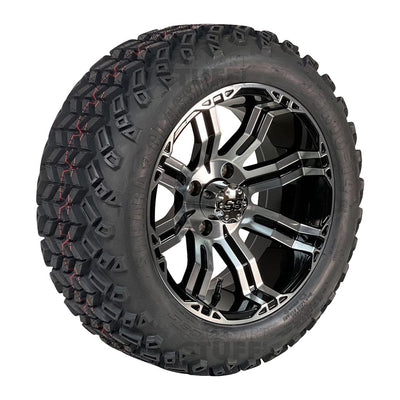
Off-road tires represent the ultimate performance upgrade for golf cart enthusiasts who demand exceptional traction in challenging terrain. These specialized tires are engineered to conquer mud, rocks, and uneven trails with superior grip and durability.
Designed with aggressive tread patterns, off-road golf cart tires offer critical performance advantages:
Off-road tires transform your golf cart from a limited vehicle into an adventure-ready machine.
The key differentiator for off-road tires is their aggressive tread design. Unlike standard tires, these specialized treads feature deeper grooves and more complex patterns that channel mud and debris while providing exceptional grip. The wider spacing between lugs prevents mud and rocks from getting trapped, ensuring consistent traction even in the most challenging conditions.
Most high-performance off-road tires incorporate advanced rubber technologies that resist wear and maintain flexibility across extreme temperatures. This means you can confidently navigate rocky trails, muddy paths, and uneven terrain without compromising your golf cart’s performance.
Pro tip: Inspect your off-road tires regularly for embedded rocks or debris and clean the treads thoroughly after challenging rides to maintain optimal traction.
Turf tires represent the specialized solution for golf cart owners who prioritize grass preservation and smooth course navigation. These unique tires are meticulously designed to minimize damage to delicate grass surfaces while providing reliable traction and performance.
With carefully engineered tread patterns, turf tires deliver exceptional benefits:
Turf tires transform your golf cart from a potential lawn destroyer into a course-friendly vehicle.
The primary distinguishing feature of turf tires is their unique design philosophy. Unlike aggressive off-road tires, these specialized tires feature smooth, rounded profiles with minimal deep treads. This construction allows for even weight distribution and significantly reduces the potential for grass damage during cart operation.
Golf courses and landscapers specifically recommend turf tires because they minimize soil compaction and prevent unsightly grass tears. The soft rubber compounds used in these tires absorb impact and provide a gentler interaction with delicate grass surfaces.
Pro tip: Maintain proper tire inflation and rotate your turf tires regularly to ensure even wear and maximum grass protection.
Low profile tires represent a sophisticated solution for golf cart owners seeking superior handling and a more responsive driving experience. These specialized tires are engineered to provide maximum ground contact and improved stability across various surfaces.
Advanced tire engineering delivers several critical performance advantages:
Low profile tires transform your golf cart’s handling from ordinary to extraordinary.
The primary advantage of low profile tires is their unique design philosophy. By minimizing sidewall height, these tires create a larger and more consistent contact patch with the ground. This means improved steering responsiveness and more precise vehicle control. Golfers and recreational drivers will appreciate the more athletic handling characteristics that come from this innovative tire design.
Unlike traditional taller tires, low profile options distribute the golf cart’s weight more evenly. This results in reduced tire flex during turns and improved overall stability. The stiffer sidewall construction allows for more direct communication between the cart and the driving surface.
Pro tip: Check your low profile tire pressure more frequently, as these tires are more sensitive to inflation changes and can significantly impact handling performance.
High profile tires represent the ultimate solution for golf cart owners seeking maximum comfort and protection in challenging terrain. These robust tires feature substantially taller sidewalls designed to absorb impacts and provide exceptional ride cushioning across uneven landscapes.
Advanced tire technology offers significant performance advantages:
High profile tires transform rough terrain into a comfortable journey.
The key distinguishing feature of high profile tires is their substantial sidewall height. This design provides critical benefits beyond simple cushioning. By creating additional vertical flex, these tires can absorb bumps and vibrations that would typically translate directly into the golf cart’s frame and passenger experience.
Drivers navigating rocky trails, unpaved paths, or agricultural landscapes will appreciate how high profile tires reduce mechanical stress on the entire golf cart system. The extra sidewall height acts like a built-in suspension mechanism, smoothing out potential jarring impacts that could damage vehicle components.
Pro tip: Periodically inspect high profile tire sidewalls for any signs of wear or damage, as their additional flexibility can sometimes mask early structural issues.
Understanding tire construction is crucial for golf cart owners seeking optimal performance across different terrains. Radial and bias ply tires represent two distinct engineering approaches that dramatically impact your cart’s handling, durability, and ride quality.
Advanced tire engineering reveals key differences between these tire types:
Tire construction determines your golf cart’s performance DNA.
Radial tires feature steel belts running perpendicular to the tire’s centerline, creating a more flexible sidewall and more consistent ground contact. This design translates to improved traction, longer tread life, and better overall fuel efficiency. Reduced heat generation makes radial tires ideal for smooth surfaces and moderate terrain.
Bias ply tires, with their crisscrossed diagonal ply layers, create a more rigid tire structure. These tires excel in heavy-load situations and challenging off-road conditions. Their stiffer sidewalls provide exceptional durability in rough environments where puncture resistance matters most.
Pro tip: Match your tire construction to your primary driving terrain to maximize golf cart performance and tire longevity.
Below is a comprehensive table summarizing the various types of golf cart tires discussed throughout the article, highlighting their features, benefits, and ideal applications.
| Tire Type | Features | Best Suited For |
|---|---|---|
| Street Tires | Low rolling resistance; quiet operation; DOT-approved designs; even weight distribution. | Smooth pavement and street courses. |
| All-Terrain Tires | Aggressive treads; durable construction; wider contact patch for better stability. | Mixed-surface transitioning. |
| Off-Road Tires | Deep, directional treads; reinforced sidewalls; suitability for mud evacuation. | Challenging terrain and adventurous trails. |
| Turf Tires | Gentle treads to protect grass; soft rubber compounds; minimal ground pressure. | Golf courses and manicured landscapes. |
| Low Profile Tires | Reduced sidewall height; enhanced cornering abilities; improved ground contact. | Enhanced handling and aesthetic appeal. |
| High Profile Tires | Tall sidewalls for impact absorption; greater ground clearance; smooth rides on uneven surfaces. | Comfort on rough or unpaved terrain. |
| Radial vs. Bias Ply | Radials: Flexible sidewalls, longer tread life. Bias Ply: Stiffer structure for heavy loads and off-road conditions. | Selecting construction based on terrain demands. |
Finding the perfect tires to tackle tough terrain can be challenging for every golf cart owner. Whether you need aggressive off-road tires with reinforced sidewalls or versatile all-terrain options designed to perform on grass, gravel, and pavement, choosing the right type affects your ride comfort, traction, and durability. This article’s detailed breakdown of tire types highlights common pain points like tire wear, insufficient grip on mud or trails, and damage to turf that every driver faces.
Don’t let the wrong tires limit your adventures. Explore the wide selection of premium golf cart tires and accessories at Golf Cart Stuff where you can find everything from low profile tires for enhanced handling to durable high profile tires that provide extra cushioning. Every tire type discussed in the article is available with expert advice to help you make the perfect choice now. Visit Golf Cart Stuff to upgrade your golf cart and conquer any terrain with confidence on your next ride.
Off-road tires are best for challenging terrains, providing maximum grip in mud, rocks, and uneven trails. Choose tires with deep, aggressive treads to prevent slipping and enhance stability.
Check for a more complex tread pattern and deeper grooves on your tires, which indicate they are designed for off-road traction. If your tires have a flatter profile and less aggressive treads, consider upgrading for better performance on rugged surfaces.
Inspect your off-road tires regularly, ideally after every few rides or at least once a month, to identify any embedded debris or wear. This ensures consistent traction and helps prevent sudden tire failure.
Regularly clean your off-road tires to remove mud and debris, and check tire pressure to maintain optimal performance. Rotate your tires every 500-750 miles to ensure even wear, which enhances their lifespan.
While off-road tires can function on paved surfaces, they may wear out faster and produce more noise compared to street tires. If you frequently drive on pavement, consider using hybrid or all-terrain tires for better overall performance.
Consider the specific terrains you’ll be navigating, such as mud or rocky paths, and select an off-road tire with appropriate tread and durability. Read reviews or consult with fellow golf cart owners to ensure your choice meets your driving conditions.
Explore our store to see what our products and resources can do for you.

Leave a comment