

Your Cart Is Our Priority
Explore our store to see what our products and resources can do for you.

Many golf cart owners think voltage is just a number on a battery label, but it actually determines your cart’s power, speed, and overall performance. Misunderstanding voltage can lead to choosing the wrong charger, experiencing unexpected performance drops, or shortening your battery’s lifespan. This guide explains what voltage means for your golf cart, compares the most common systems, and provides practical maintenance tips to keep your cart running efficiently. Whether you own a 36V or 48V system, understanding voltage helps you make informed decisions about upgrades, troubleshooting, and daily care.
| Point | Details |
|---|---|
| Voltage powers your cart | Higher voltage delivers more speed, torque, and hill climbing ability for your golf cart. |
| 36V vs 48V systems | 36V uses six 6-volt batteries while 48V uses eight, with 48V offering better performance and efficiency. |
| Regular voltage checks matter | Monitoring voltage prevents battery damage and identifies electrical issues before they become expensive repairs. |
| Charger compatibility is critical | Always match your charger voltage exactly to your battery system to avoid premature failure. |
| Voltage affects lifespan | Proper voltage management through maintenance and correct charging extends your golf cart’s operational life. |
Golf cart voltage indicates the electrical potential difference across your battery pack, directly affecting how much power reaches the motor. Think of voltage like water pressure in a hose: higher pressure pushes more water through, just as higher voltage delivers more electrical energy to your motor. This fundamental concept shapes everything from acceleration to how far you can travel on a single charge.
Most electric golf carts rely on battery packs made up of multiple 6-volt or 12-volt batteries connected in series. When you wire batteries in series, you add their voltages together to reach your cart’s total system voltage. A typical setup might use six 6-volt batteries (6V × 6 = 36V) or eight 6-volt batteries (6V × 8 = 48V). This modular approach lets manufacturers create different power levels using standardized battery sizes.
Higher voltage systems generally deliver more power to the motor, which translates to improved speed and torque. A 48V system pushes electrons through the motor with greater force than a 36V system, giving you better acceleration and the ability to climb steeper hills without straining. This extra power becomes especially noticeable when carrying passengers or hauling cargo across challenging terrain.
Voltage also determines how your battery interacts with the charger and other electrical components. Your controller, motor, and accessories must all be rated for your system’s voltage to function safely and efficiently. Mixing incompatible voltage ratings can damage components or create safety hazards, which is why understanding your cart’s specifications matters so much.
Pro Tip: Label your battery compartment with your system voltage and the number of batteries to help future maintenance and prevent accidental mismatches when replacing components.
Knowing your golf cart’s voltage helps you diagnose performance problems quickly. If your cart suddenly loses power or runs slower than usual, checking individual battery voltages can reveal which battery is weak or failing. This diagnostic approach saves time and money by pinpointing exact problems rather than replacing entire battery packs unnecessarily. For comprehensive guidance, check out this golf cart battery guide that covers voltage specifications and maintenance schedules.
Key voltage concepts every owner should understand:
36V systems are more common in older or standard golf carts, while 48V systems offer better performance and efficiency for demanding applications. The 36V configuration typically uses six 6-volt batteries arranged in series, providing adequate power for flat terrain and light recreational use. You’ll find 36V setups in many golf course fleet carts and older residential models where basic transportation is the primary goal.
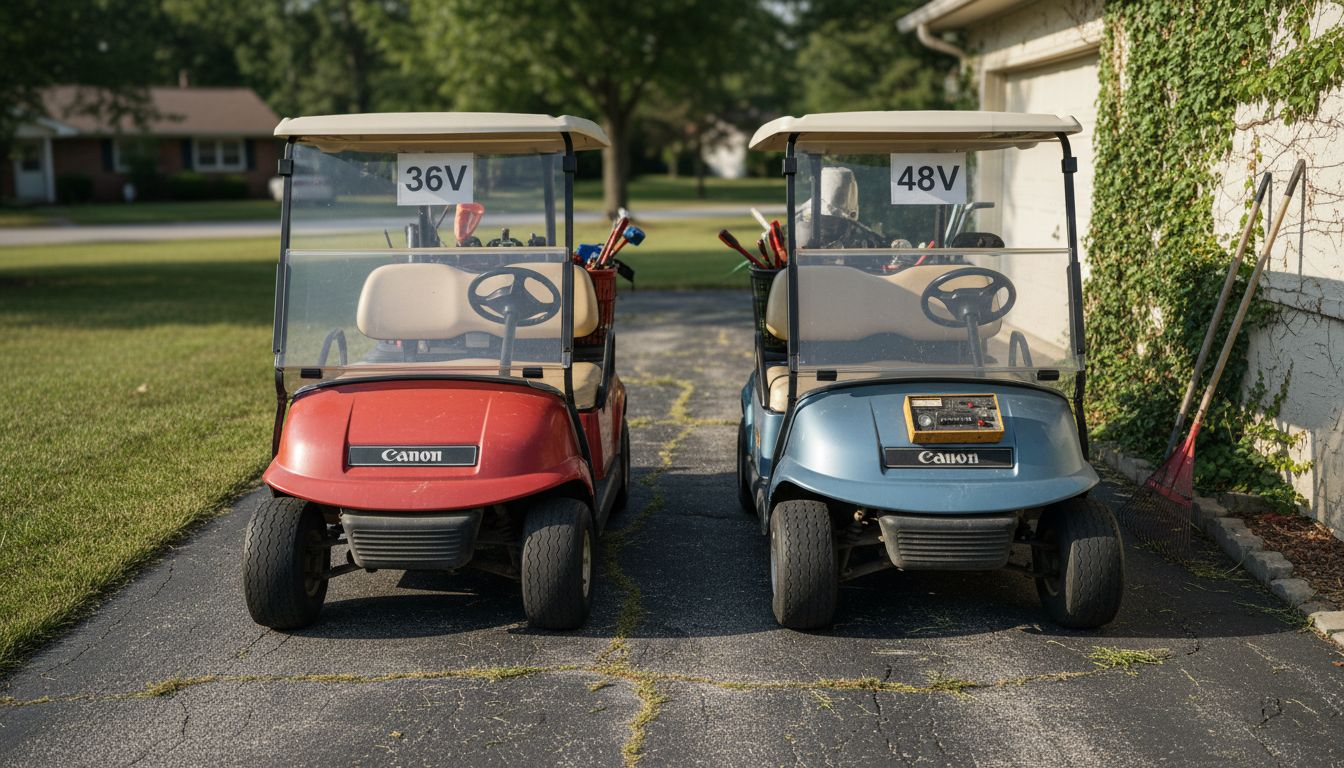
The 48V system uses eight 6-volt batteries and delivers approximately 33% more electrical potential than 36V systems. This extra voltage translates to noticeably better torque, allowing your cart to accelerate faster from a stop and maintain speed on inclines. If you regularly drive on hilly terrain or carry heavy loads, the 48V advantage becomes immediately apparent in real-world performance.
Energy efficiency favors 48V systems under heavy use conditions. Higher voltage allows the motor to draw less current to produce the same power output, which reduces heat buildup and electrical losses in the wiring. Over time, this efficiency can extend battery life and reduce the frequency of charging cycles, though the initial investment in eight batteries costs more than six.
| Feature | 36V System | 48V System |
|---|---|---|
| Battery count | Six 6-volt batteries | Eight 6-volt batteries |
| Typical top speed | 12 to 14 mph | 15 to 19 mph |
| Hill climbing | Adequate for gentle slopes | Excellent for steep terrain |
| Initial cost | Lower (fewer batteries) | Higher (more batteries) |
| Efficiency | Good for light use | Better for heavy use |
| Common applications | Golf courses, flat neighborhoods | Hilly areas, utility work |
Cost and weight differences influence which system makes sense for your situation. A 36V system requires two fewer batteries, reducing both purchase price and total cart weight by roughly 80 to 120 pounds. This weight savings can improve efficiency on flat ground and makes the cart easier to maneuver. However, the performance limitations may frustrate owners who later want more power or speed.
Pro Tip: Before upgrading from 36V to 48V, verify that your motor, controller, and charger can handle the higher voltage, as many components are voltage-specific and require replacement during conversion.
Choosing between systems depends on your specific usage patterns and terrain. Flat golf course paths rarely demand the extra power of 48V systems, making 36V a cost-effective choice. Conversely, hilly neighborhoods, off-road trails, or commercial applications benefit significantly from 48V performance. Consider where you drive most often and whether you prioritize initial savings or long-term performance when making your decision. This 36v vs 48v golf cart voltage guide provides detailed comparisons to help you choose the right system.
Factors to evaluate when comparing systems:
Low or inconsistent voltage immediately impacts your cart’s speed and acceleration, often signaling battery wear or wiring problems that need attention. When voltage drops below optimal levels, the motor receives less electrical energy and struggles to deliver normal performance. You might notice sluggish starts, reduced top speed, or difficulty climbing hills that previously caused no issues. These symptoms tell you it’s time to investigate your electrical system.
Regular voltage checks prevent battery damage and ensure maximum performance throughout your cart’s lifespan. Using a multimeter, you can measure individual battery voltages to identify weak cells before they fail completely. Testing takes just minutes but provides valuable data about your battery pack’s health and helps you plan replacements strategically rather than dealing with unexpected breakdowns.
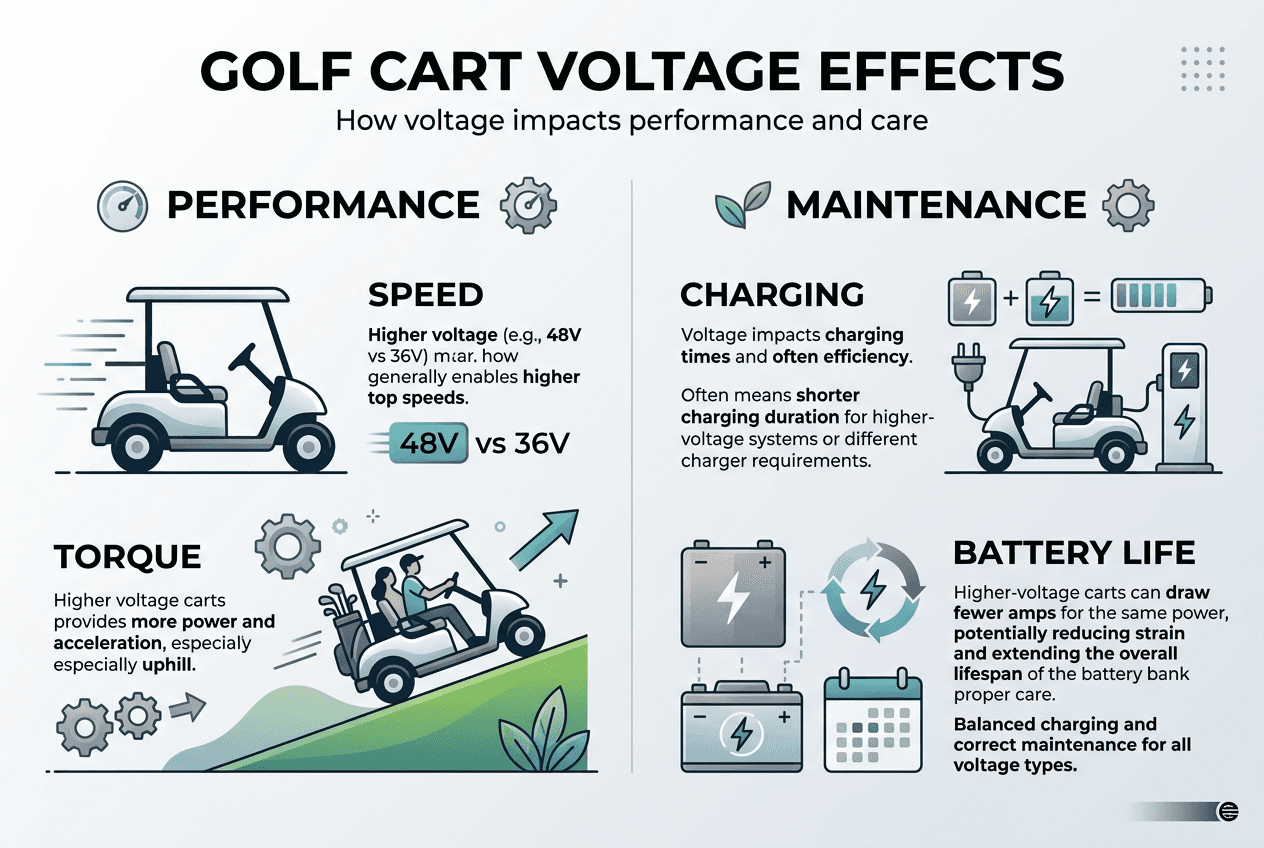
Proper charging according to your system’s voltage specifications prevents premature battery failure and maintains consistent performance. Using the correct charger ensures batteries receive the right voltage and current throughout the charging cycle, which preserves their chemical composition and extends useful life. Overcharging or undercharging from incorrect voltage settings damages battery plates and reduces capacity over time.
Maintaining clean connections and terminals prevents voltage drops that rob your cart of power. Corrosion on battery terminals creates resistance that reduces voltage reaching the motor, similar to how a kinked hose reduces water flow. Cleaning terminals with a wire brush and applying protective spray takes minimal effort but significantly improves electrical conductivity and system reliability.
Pro Tip: Keep a voltage log for each battery in your pack, recording readings monthly to spot declining performance trends before they cause problems.
Troubleshooting voltage issues systematically:
Voltage-related motor issues can often be diagnosed and fixed with simple diagnostics rather than expensive component replacements. Many performance problems stem from poor connections or a single weak battery rather than motor failure. By methodically checking voltage at different points in your electrical system, you can isolate problems and avoid unnecessary repairs.
Follow manufacturer voltage guidelines when selecting chargers and replacement batteries to ensure compatibility and optimal performance. Mixing battery types or using incorrect charger settings compromises your entire system and voids warranties. Stick with recommended specifications even if alternatives seem cheaper, as the long-term costs of premature failure far exceed any initial savings. For comprehensive maintenance strategies, review this golf cart maintenance guide and this golf cart motor troubleshooting guide.
Common voltage-related problems and solutions:
Using a charger designed for your cart’s specific voltage extends battery life and prevents damage from incorrect charging profiles. A 36V charger delivers different voltage and current characteristics than a 48V charger, tailored to the specific needs of each battery configuration. Attempting to charge a 48V system with a 36V charger won’t fully charge the batteries, while using a 48V charger on a 36V system can overcharge and destroy batteries.
Smart chargers automatically adjust to your system’s voltage requirements and prevent overcharging by monitoring battery state throughout the charging cycle. These intelligent devices detect when batteries reach full charge and switch to maintenance mode, delivering just enough current to offset self-discharge. This automation protects batteries from the damage caused by continuous charging and eliminates the need to manually disconnect the charger.
Avoiding chargers with incompatible voltage ratings reduces the risk of battery damage and potential safety hazards. Even if a charger physically connects to your cart, incorrect voltage can cause excessive heat, battery swelling, or even fires in extreme cases. Always verify voltage compatibility before purchasing any charging equipment, and never assume that a connector match means voltage compatibility.
Pro Tip: Write your cart’s voltage on the charger plug with permanent marker to prevent accidentally using the wrong charger if you own multiple carts or borrow equipment.
Voltage optimization tips for better battery health:
| Cart Voltage | Charger Voltage | Battery Configuration | Charging Time |
|---|---|---|---|
| 36V | 36V | Six 6-volt batteries | 6 to 8 hours |
| 48V | 48V | Eight 6-volt batteries | 8 to 10 hours |
| 36V | 36V | Three 12-volt batteries | 6 to 8 hours |
| 48V | 48V | Four 12-volt batteries | 8 to 10 hours |
Regular voltage monitoring during charging helps you catch problems early and maintain optimal battery performance. Most quality chargers have indicator lights showing charging status, but using a multimeter to spot-check voltage provides more precise data. If batteries aren’t reaching expected voltage levels after a full charge cycle, you may have a failing battery or charger issue that needs attention.
Temperature affects charging efficiency and battery voltage readings significantly. Cold batteries accept charge more slowly and may not reach full voltage, while hot batteries can overcharge and suffer damage. Ideally, charge your cart in a temperature-controlled space between 50°F and 80°F for best results and longest battery life.
Proper storage between uses maintains voltage stability and prevents sulfation that reduces battery capacity. If you won’t use your cart for weeks or months, charge batteries to about 60% capacity and disconnect them to prevent parasitic drain from accessories. Check voltage monthly during storage and recharge if readings drop significantly, as deeply discharged batteries can become permanently damaged. For detailed charger selection guidance, visit this resource on choosing the right golf cart charger.
Now that you understand how voltage impacts your golf cart’s performance and maintenance needs, you can make smarter decisions about care and upgrades. GolfCartStuff.com offers comprehensive resources covering everything from battery selection to troubleshooting guides, helping you keep your cart running efficiently throughout 2026 and beyond.

Whether you operate a 36V or 48V system, you’ll find expert advice, detailed tutorials, and quality accessories designed specifically for your voltage configuration. Browse articles on battery maintenance, charger selection, and performance optimization written by golf cart specialists who understand the challenges owners face. Shop trusted products including voltage-compatible chargers, battery maintenance tools, and replacement parts that meet manufacturer specifications. Visit GolfCartStuff.com to access these resources and discover how proper voltage management transforms your golf cart experience.
Golf cart voltage measures the electrical potential difference across your battery pack, determining how much power reaches the motor. Most electric golf carts operate at either 36 volts or 48 volts, achieved by connecting multiple 6-volt or 12-volt batteries in series. This voltage level directly affects your cart’s speed, acceleration, and ability to handle hills or heavy loads.
Count the batteries in your cart and check their individual voltage ratings, which are labeled on top of each battery. Six 6-volt batteries connected in series create a 36V system, while eight 6-volt batteries make a 48V system. You can also find voltage specifications in your owner’s manual or on a label near the battery compartment that lists system voltage.
No, you must always use a charger that matches your cart’s exact system voltage to avoid damaging your batteries. A 36V charger won’t fully charge a 48V system, leaving batteries undercharged and reducing their lifespan. Conversely, using a 48V charger on a 36V system overcharges batteries, causing excessive heat, shortened life, and potential safety hazards.
Reduced speed or sluggish acceleration often indicates voltage drops from weak batteries or poor connections. You might also notice dim headlights, frequent stalling on hills, or the cart struggling to start. Regular voltage testing with a multimeter helps catch these issues early, before minor problems escalate into expensive repairs or complete battery failure.
Check individual battery voltages monthly during regular use and before extended storage periods to catch problems early. After charging, healthy 6-volt batteries should read between 6.3V and 6.4V at rest. If any battery reads significantly lower than others in the pack, it may be failing and should be tested under load or replaced to prevent damage to remaining batteries.
Explore our store to see what our products and resources can do for you.

Leave a comment