
Your Cart Is Our Priority
Explore our store to see what our products and resources can do for you.

Many golf cart owners assume their vehicles need minimal upkeep, but this misconception leads to unexpected breakdowns and expensive repairs. Without consistent care, batteries degrade faster, mechanical components fail prematurely, and what could have been a 20-year investment barely lasts seven. Regular maintenance isn’t just about preventing problems. It’s about maximizing performance, extending lifespan, and saving thousands in replacement costs. This guide reveals exactly how routine upkeep transforms your golf cart from a temperamental machine into a reliable workhorse that delivers peak performance year after year.
| Point | Details |
|---|---|
| Battery longevity | Regular maintenance extends battery life by 2-3 years, cutting replacement costs by 30-40%. |
| Breakdown prevention | Consistent upkeep reduces unexpected failures by 50%, keeping your cart running smoothly. |
| Cost savings | Early issue detection slashes repair expenses by up to 60% compared to emergency fixes. |
| Lifespan extension | Proper care increases gas cart lifespan from 7-8 years to over 20 years with routine servicing. |
Your battery is the heart of your golf cart, and neglect kills it faster than anything else. Sulfation occurs when lead-acid batteries sit discharged or partially charged for extended periods, forming hardened crystals on the plates that reduce capacity and eventually render the battery useless. Deep discharge cycles without proper recharging accelerate this degradation, cutting battery life by years. Regular golf cart maintenance significantly extends battery life by up to 2-3 years, reducing replacement costs by 30-40%.
Charging habits make or break battery longevity. Always charge your cart after each use, even short trips, to prevent sulfation buildup. Avoid letting batteries sit below 50% charge for extended periods. Use the correct charger for your battery type and never interrupt charging cycles midway, as this confuses the charger’s algorithm and leads to incomplete charging. For lead-acid batteries, ensure you’re using a charger with an automatic shutoff to prevent overcharging, which boils off water and damages plates.
Critical maintenance tasks keep batteries healthy and performing at peak capacity:
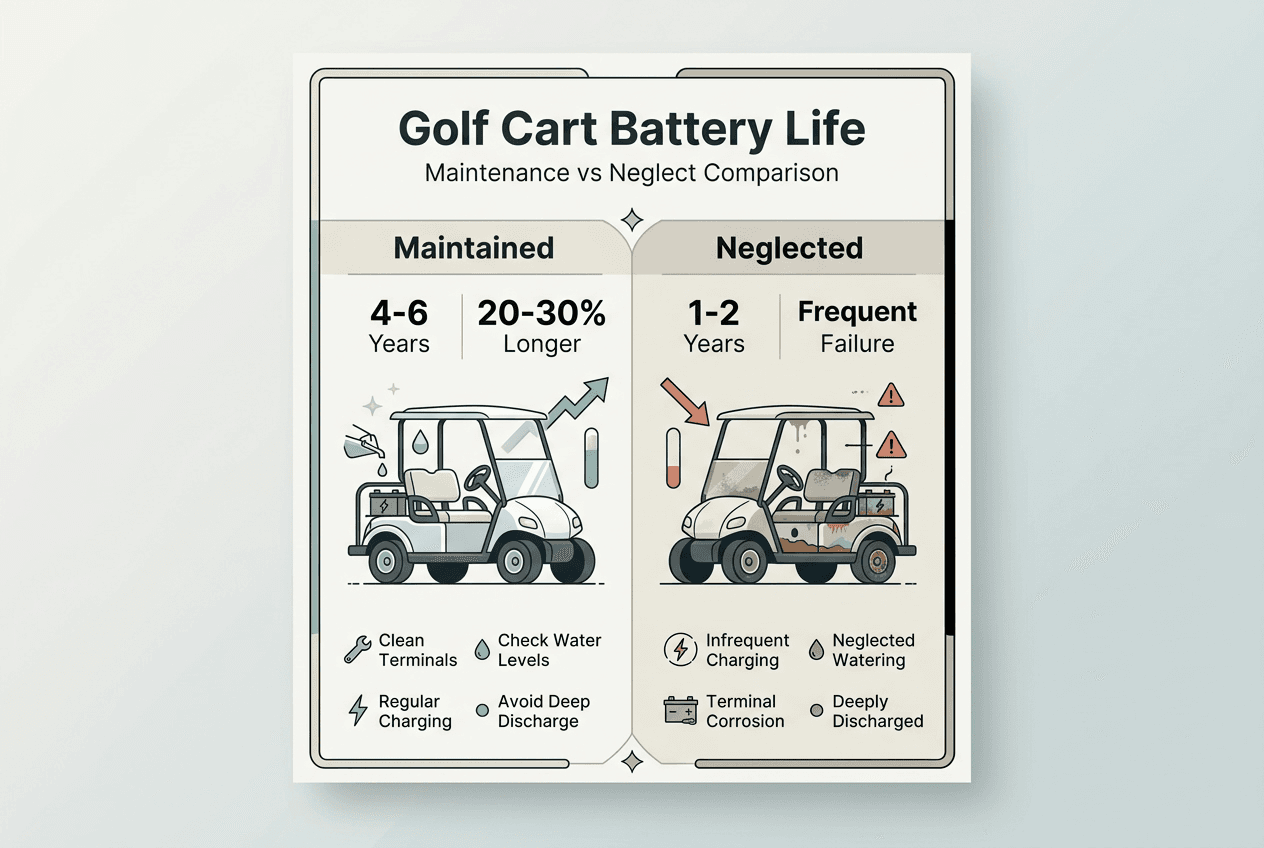
Battery type dramatically affects lifespan expectations. Lead-acid batteries typically last 4-6 years with proper maintenance, while lithium batteries last 8-10 years or more. The difference comes down to chemistry and maintenance demands. Lead-acid requires constant water level monitoring and suffers from sulfation, while lithium batteries need minimal intervention but cost significantly more upfront.
| Battery Type | Lifespan (Maintained) | Lifespan (Neglected) | Key Maintenance |
|---|---|---|---|
| Lead-Acid | 4-6 years | 2-3 years | Water checks, terminal cleaning, proper charging |
| Lithium | 8-10+ years | 5-7 years | Proper charging, temperature control |
| AGM | 5-7 years | 3-4 years | Voltage monitoring, charging discipline |
Proper charging practices and desulfation prevent sulfate buildup, extending battery life 20-30%. Understanding how to maintain your golf cart battery and following golf cart charger maintenance protocols ensures you get maximum value from your investment. Compare options thoroughly using a golf cart battery lifespan comparison before making replacement decisions.
Pro Tip: Schedule battery terminal cleaning every three months on your calendar to prevent corrosion from degrading connections and reducing charging efficiency.
Mechanical breakdowns rarely happen without warning. They’re almost always the result of ignored maintenance signals and skipped inspections. Consistent maintenance reduces unexpected breakdowns by up to 50%, transforming your cart from unreliable to dependable. The difference between a cart that leaves you stranded and one that runs flawlessly comes down to systematic inspection routines.
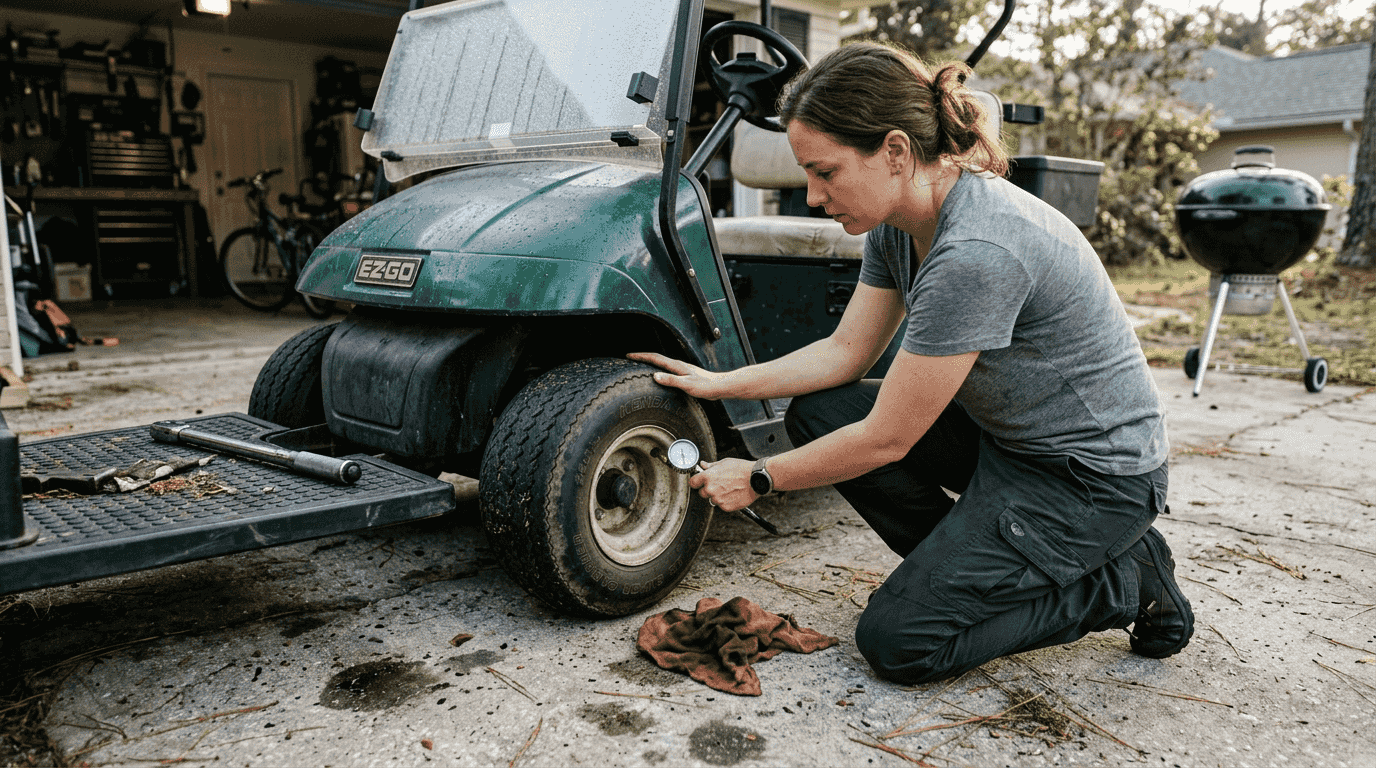
Daily inspections prevent immediate issues like flat tires and brake problems before they strand you mid-round. Before each use, walk around your cart and check these critical points:
Monthly maintenance prevents the gradual wear that leads to expensive repairs. Monthly greasing and fuel line checks prevent premature wear and fire risks that could total your cart. Grease all moving parts including steering components, suspension joints, and wheel bearings. For gas carts, inspect fuel lines for cracks, bulges, or soft spots that indicate deterioration. Check fuel filters and replace them if they show debris buildup.
Quarterly servicing keeps gas carts running smoothly and safely. Change oil and oil filters every three months or 50 hours of operation, whichever comes first. Inspect spark plugs for fouling or electrode wear, replacing them annually even if they look acceptable. Clean or replace air filters to maintain proper fuel mixture and prevent engine damage from debris ingestion. Check belt tension and condition, replacing any belts showing cracks or glazing.
Common failure causes stem from predictable patterns. Neglect tops the list, with owners assuming their cart will run forever without intervention. Harsh weather accelerates wear on seals, gaskets, and electrical connections, yet many owners never adjust their maintenance schedule for climate. Ignoring warning signs like unusual noises, reduced power, or starting difficulties allows small problems to cascade into major failures. A $50 belt replacement becomes a $500 motor rebuild when ignored.
Understanding step by step golf cart maintenance procedures and using a golf cart motor troubleshooting guide helps you catch problems early. Professional servicing twice yearly catches issues your inspections might miss, providing peace of mind that your cart is truly road-ready.
Pro Tip: Establish a maintenance schedule calendar with phone reminders to avoid missing critical upkeep tasks that prevent expensive breakdowns.
Environmental conditions and usage patterns dramatically alter maintenance demands and component longevity. A cart stored in Arizona faces completely different challenges than one in coastal Florida, yet many owners follow generic maintenance schedules that don’t account for their specific conditions. Understanding these variables helps you tailor your routine for maximum effectiveness.
| Condition | Battery Impact | Mechanical Impact | Maintenance Frequency |
|---|---|---|---|
| High Heat (90°F+) | Accelerated water loss, faster sulfation | Fluid breakdown, seal degradation | Weekly water checks, monthly fluid inspection |
| Cold (Below 32°F) | Reduced capacity, slower charging | Thickened lubricants, brittle plastics | Battery warmers, synthetic fluids, pre-use checks |
| High Humidity | Corrosion on terminals and connections | Rust on metal components, mold in upholstery | Bi-weekly terminal cleaning, rust prevention spray |
| Coastal Salt Air | Rapid electrical corrosion | Accelerated rust on frame and fasteners | Weekly washing, monthly corrosion treatment |
Temperature, humidity, and storage conditions influence battery lifespan significantly, changing expected longevity by 20-40%. Batteries stored in unconditioned garages where temperatures swing from freezing to sweltering age faster than those kept in climate-controlled spaces. Heat accelerates chemical reactions inside batteries, speeding degradation. Cold reduces available capacity and makes charging less efficient.
Storage practices directly impact component health beyond just batteries. Carts left outdoors face UV damage to seats and dashboards, weather-induced electrical corrosion, and accelerated tire dry rot. Indoor storage protects against these issues but requires proper ventilation to prevent moisture buildup that causes mold and corrosion. Covering your cart with a breathable cover provides protection while allowing moisture to escape.
Usage patterns that accelerate wear and increase maintenance demands include:
Charge habits combined with temperature extremes create the perfect storm for battery degradation. Ignoring maintenance can reduce battery life by up to 60%, turning an eight-year lithium battery into a three-year disappointment. Charging in extreme cold or heat stresses cells and reduces cycle life. Letting batteries sit discharged in hot weather accelerates sulfation exponentially compared to moderate conditions.
Adapt your maintenance schedule based on local climate and usage intensity. Desert owners need more frequent water checks and cooling system maintenance. Coastal owners require aggressive corrosion prevention. Heavy users should double the frequency of brake and tire inspections. Understanding your golf cart voltage guide helps you monitor battery health accurately, while reviewing battery lifespan comparison data sets realistic expectations for your specific conditions.
Knowing what to do matters little without a systematic approach to actually doing it. Creating and following structured maintenance schedules transforms good intentions into consistent action that protects your investment. The financial benefits of scheduled maintenance versus emergency repairs are staggering, with proactive care costing a fraction of reactive fixes.
Monthly and quarterly maintenance checklist:
Daily quick checks before each use:
Record keeping provides invaluable insight into your cart’s health over time. Maintain a simple log noting date, task performed, parts replaced, and any observations about performance or unusual conditions. This history helps identify patterns like recurring problems that indicate deeper issues. It also proves invaluable when selling your cart, demonstrating to buyers that you’ve maintained it properly.
Early detection of problems saves up to 60% in repair costs compared to waiting until complete failure. A worn belt caught during inspection costs $30 and 15 minutes to replace. That same belt breaking on the course leads to a tow, emergency service call, and potential damage to the motor or controller, easily exceeding $500. The math overwhelmingly favors prevention.
Proper maintenance can extend gas golf cart lifespan from 7-8 years to 20+ years, representing thousands in avoided replacement costs. Consider a $8,000 cart that lasts eight years with minimal care versus 20 years with proper maintenance. The maintained cart costs $400 per year of ownership, while the neglected one costs $1,000 annually. Factor in the $200-300 yearly maintenance investment, and you still save $400 per year while enjoying better performance and reliability.
Pro Tip: Invest in quality replacement parts early to prevent more expensive repairs later, as cheap components often fail quickly and can damage other systems.
Recognize signs to replace golf cart batteries before they leave you stranded, and follow the comprehensive step by step golf cart maintenance guide to ensure you’re covering all critical systems. These resources provide the detailed procedures that turn maintenance from overwhelming to manageable.
Maintaining your golf cart doesn’t have to feel complicated or overwhelming when you have the right resources and quality parts at your fingertips. Golf Cart Stuff serves as your complete hub for maintenance tips, detailed guides, and accessories that make upkeep easier and more effective. Whether you need replacement batteries, chargers, or maintenance tools, you’ll find everything required to keep your cart running at peak performance.
Explore comprehensive resources at Golf Cart Stuff including detailed checklists for prolonging your cart’s life and expert advice on troubleshooting common issues. The step by step golf cart maintenance guide walks you through every procedure, while charger maintenance tips ensure your charging system delivers reliable performance. Subscribe for ongoing updates, seasonal maintenance reminders, and product recommendations tailored to your cart’s specific needs.
Daily quick checks before each use prevent immediate problems, while monthly inspections catch developing issues early. Quarterly servicing for gas carts includes oil changes and comprehensive system checks. Electric carts need monthly battery maintenance and quarterly professional inspections. Consistency matters more than perfection, so establish a realistic schedule you’ll actually follow rather than an ambitious one you’ll abandon.
Reduced battery range compared to normal performance indicates declining battery health requiring immediate attention. Unusual noises like grinding, squealing, or knocking signal mechanical problems that worsen rapidly if ignored. Brake pedal feel changes, including sponginess or reduced stopping power, demand immediate inspection for safety. Slow acceleration or reduced top speed suggests motor, controller, or drivetrain issues needing prompt diagnosis.
Gas golf carts can last 20+ years with proper maintenance, compared to 7-8 years if neglected, matching or exceeding electric cart longevity. The key difference lies in maintenance complexity, as gas carts require more frequent oil changes, spark plug replacements, and fuel system care. Electric carts have fewer moving parts but demand disciplined battery maintenance. Both types reward consistent care with decades of reliable service.
Lead-acid batteries last typically 4-6 years and require monthly water level checks, regular terminal cleaning, and careful charging discipline. Lithium batteries can last 8-10 years or more with proper maintenance but cost significantly more upfront and need specialized chargers. AGM batteries fall between these options, offering maintenance-free operation with moderate lifespan. Choose based on your budget, usage patterns, and willingness to perform regular maintenance tasks.
Explore our store to see what our products and resources can do for you.

Leave a comment