
Your Cart Is Our Priority
Explore our store to see what our products and resources can do for you.

TL;DR:
- Marine grade materials are engineered to resist salt air, UV radiation, moisture, and chemicals, significantly extending outdoor golf cart lifespans. They are essential for coastal or humid environments, preventing rapid corrosion and deterioration seen with standard parts and offering up to four times longer durability. Proper selection and maintenance of marine-grade components ensure reliable performance and reduce long-term repair costs.
Marine grade materials are components engineered to withstand salt air, UV radiation, moisture, and chemical exposure far beyond what standard materials can handle. Golf cart owners who operate in coastal areas, humid climates, or simply outdoors year-round face accelerated wear that standard parts cannot resist. Choosing marine grade materials for your golf cart is not a luxury upgrade. It is the most direct way to extend lifespan, cut maintenance costs, and keep your cart running reliably in conditions that destroy ordinary components within a single season.
Marine grade is not just a marketing label. It is a rigorous engineering standard covering UV stability, salt spray endurance, and chemical resistance to fuels, oils, and bilge fluids. That last point surprises most cart owners. Materials that resist fuel and oil contamination hold up far better in the varied environments where golf carts actually operate, including marinas, coastal resorts, and outdoor event venues.
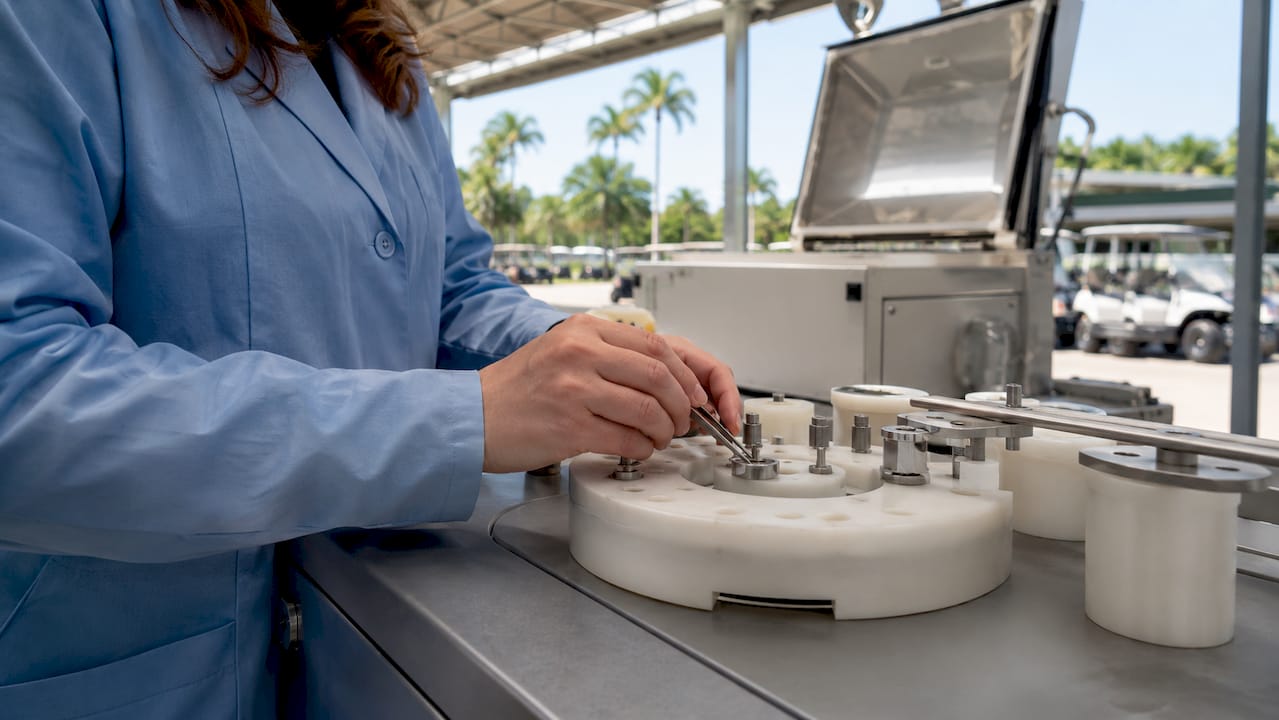
Standard materials are built for controlled conditions. Marine grade materials are built for the worst case. The difference shows up in every component category: metals, vinyl upholstery, plastics, wiring, and fasteners. Each one degrades faster when exposed to salt air and UV without the correct engineering behind it.
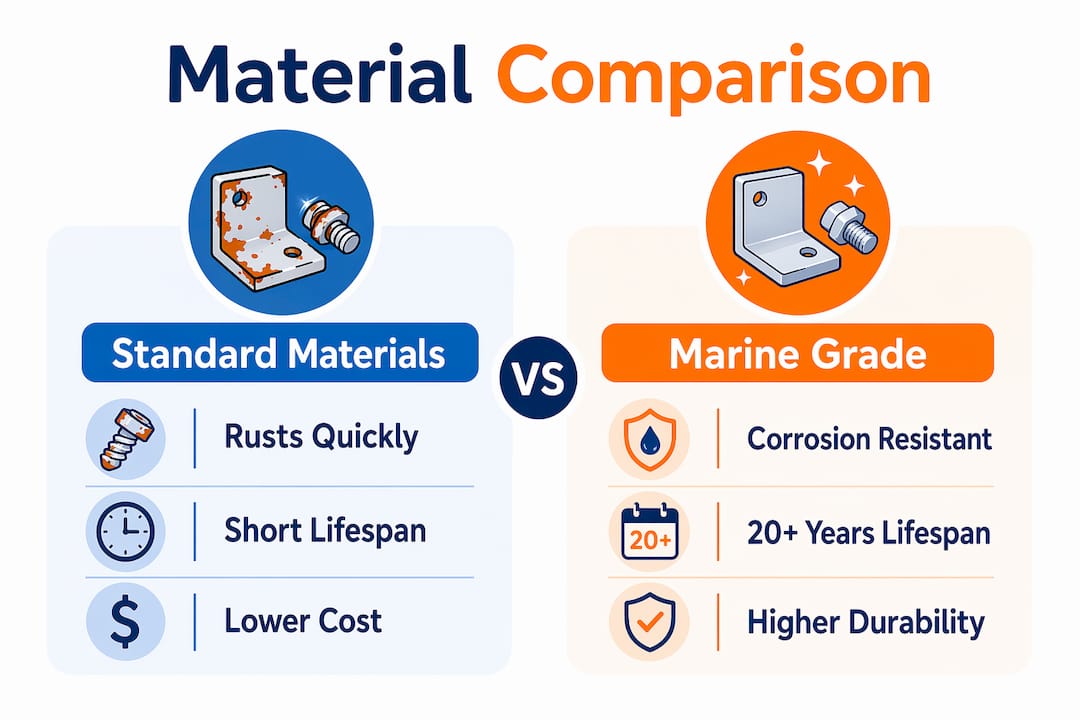
The payoff is measurable. High-quality marine grade investments last over 20 years, compared to roughly 5 years for standard equivalents. That is a four-to-one lifespan advantage before you factor in the labor and parts cost of repeated replacements.
| Category | Standard materials | Marine grade materials |
|---|---|---|
| Steel hardware | Rusts within 1–2 seasons in coastal air | 316 stainless resists pitting and oxidation |
| Seat upholstery | Cracks and fades after UV exposure | Marine vinyl with UV coating and mildew-resistant backing |
| Wiring | Open connectors corrode and short | Sealed harnesses with waterproof connectors |
| Plastics | Brittle after UV exposure | UV-stabilized UHMW and HDPE resist cracking |
| Frames | Standard steel corrodes rapidly near salt air | Marine aluminum or coated steel resists corrosion |
Pro Tip: When shopping for replacement hardware, look for the “316” marking stamped on stainless steel bolts and brackets. Grade 304 stainless is common and cheaper, but it lacks the molybdenum content that prevents pitting in salt environments.
Salt air accelerates steel corrosion by 20% or more compared to inland environments. That rate compounds over time. A bolt that would last a decade inland may fail in two years near the coast. Once one corroded fastener fails, it puts stress on surrounding components, triggering a chain reaction of failures through the frame and drivetrain.
UV radiation is the second major threat. Sunlight breaks down the polymer chains in standard vinyl upholstery and plastic body panels. The result is cracking, fading, and brittleness that makes seats uncomfortable and panels structurally weak. Standard vinyl often fails after a single outdoor season, while marine-grade vinyl with UV-protective coatings and mildew-resistant backings holds up for years under the same conditions.
Moisture compounds both problems. Humidity and standing water create the conditions mildew needs to grow inside seat cushions and under upholstery. Standard vinyl has no mildew-resistant treatment, so the damage is invisible until the seat is already compromised. Marine vinyl eliminates this risk at the material level.
Electrical systems face a specific threat that many owners overlook. Moisture and salt residue corrode open wire connectors, causing shorts and intermittent failures that are expensive to diagnose. Sealed wiring harnesses with waterproof connectors are the direct solution. Carts built for coastal use include these protections as standard, not as optional upgrades.
Marine grade materials apply across every major system in a golf cart. Knowing where each one matters most helps you prioritize upgrades.
Frame and structural components
Aluminum frames resist corrosion without any coating because aluminum forms a natural oxide layer that blocks further oxidation. Steel frames require marine-grade coatings or powder coat treatments to achieve comparable protection. For coastal owners, aluminum is the stronger long-term choice. Marine plastics like UV-stabilized UHMW and HDPE offer an additional option for non-load-bearing panels, providing corrosion immunity and abrasion resistance that metals cannot match in salt environments.
Seat upholstery
Marine vinyl at 0.6mm thickness balances flexibility with abrasion resistance. Thinner vinyl tears under regular use. Thicker vinyl becomes stiff and difficult to work with during installation. The 0.6mm standard is the result of decades of marine upholstery practice, and it translates directly to golf cart seat covers.
Hardware and fasteners
Wiring and electrical connections
Selecting the right materials is only half the job. Maintenance determines whether those materials actually reach their potential lifespan.
Verify material certifications before buying. For stainless steel, confirm the 316 grade marking. For marine plywood, look for BS 1088 certification, which guarantees waterproof glue and void-free construction. These standards exist because marine grade is a defined specification, not a vague claim any manufacturer can make.
Switch to marine-grade lubricants on all moving parts. Apply them to hinges, pedals, and steering joints. Standard lubricants like WD-40 dry out quickly outdoors and offer no corrosion protection. Marine-grade lubricants contain corrosion inhibitors that keep metal surfaces protected between applications.
Apply corrosion inhibitor spray to steel frame sections twice a year. Focus on joints and welds where moisture collects. These are the first points to corrode because water sits in them longer than on flat surfaces.
Inspect vinyl upholstery for needle holes and seam separation. Marine vinyl does not stretch, so needle holes from sewing are permanent. A compromised seam lets moisture into the foam cushion underneath, which accelerates mildew growth even in marine-grade vinyl.
Avoid cheap imitations. Products labeled “marine style” or “weather resistant” are not the same as certified marine grade. The price difference between genuine marine vinyl and a budget alternative is small compared to the cost of replacing a seat cover every season.
Pro Tip: Buy marine grade components once and buy them right. The buy-once strategy that experts recommend for boat owners applies equally to golf carts. A corroded bolt that fails can damage surrounding assemblies, turning a $2 fastener into a $200 repair.
Marine grade materials are the most cost-effective long-term choice for any golf cart used outdoors, because they resist the corrosion, UV damage, and moisture that destroy standard components within a few seasons.
| Point | Details |
|---|---|
| Lifespan advantage | Marine grade components last over 20 years versus roughly 5 years for standard equivalents. |
| Corrosion risk is real | Salt air accelerates steel corrosion by 20% or more, making coastal use especially damaging. |
| 316 stainless is non-negotiable | Its molybdenum content prevents pitting that standard stainless steel cannot resist. |
| Marine vinyl outperforms standard | UV coatings and mildew-resistant backings keep seats intact through years of outdoor exposure. |
| Maintenance extends the investment | Marine-grade lubricants and annual corrosion inhibitor applications protect components between replacements. |
I have seen a lot of golf carts come through in rough shape, and the pattern is almost always the same. The owner bought standard parts to save money upfront, and within two or three seasons the hardware was pitting, the seat covers were cracking, and the wiring was throwing intermittent faults. By the time they added up the replacement costs, they had spent more than a full marine grade build would have cost from the start.
The mistake I see most often is treating corrosion as a cosmetic problem. A little surface rust on a bolt looks minor. But rust expands as it progresses, and it transfers to the surrounding material. One corroded bracket can seize a joint, crack a frame section, or make a simple repair into a full disassembly. Corrosion prevention is the most critical factor in material choice for coastal carts, and it consistently outweighs initial cost as a decision driver.
The other common mistake is mixing marine grade and standard components. You cannot protect a cart with marine vinyl seats and standard steel fasteners. The fasteners will fail first, and the moisture they let in will damage the surrounding structure regardless of how good the upholstery is. Marine grade works as a system. Every component in a high-exposure area needs to meet the same standard.
My honest recommendation: start with the hardware and wiring. Those are the components that fail silently and cause the most collateral damage. Upgrade the upholstery second. If you are doing a full build or a major restoration, go marine grade across the board and do not look back.
— Roshan
Golf cart owners who want to upgrade to durable, weather-resistant components do not have to search far. Golfcartstuff carries parts for the most popular cart brands, including Club Car and Yamaha, with options suited for outdoor and coastal use.
Whether you need replacement hardware, seat covers, or wiring components, the Club Car DS parts catalog at Golfcartstuff covers a wide range of compatible components. Yamaha owners can find durable replacement parts in the Yamaha golf cart parts section. For a broader look at weather-resistant accessories across all cart models, the golf cart accessories collection is a practical starting point. Upgrading your cart with the right components now saves you from repeated repairs later.
Marine grade means a component is engineered to resist salt air, UV radiation, moisture, and chemical exposure. It is a defined engineering standard, not just a water-resistant label.
Yes, especially in coastal or humid environments. 316 stainless steel contains 2% molybdenum, which prevents the pitting corrosion that standard stainless steel cannot withstand outdoors.
Marine grade components last over 20 years with proper maintenance, compared to roughly 5 years for standard materials in the same outdoor conditions.
Yes. Marine vinyl at 0.6mm thickness is the standard for golf cart seat covers. Because needle holes in marine vinyl are permanent, adjust your sewing machine settings before starting and plan your cuts carefully.
Marine grade materials benefit any cart used outdoors regularly. UV radiation and moisture affect carts in all climates, and the extended lifespan of marine grade components makes them cost-effective even away from salt air.
Explore our store to see what our products and resources can do for you.

Leave a comment