
Your Cart Is Our Priority
Explore our store to see what our products and resources can do for you.

Most golf cart owners think custom wheels are just for looks, but high quality wheels can actually increase your resale value by 5-15% while improving acceleration and braking. Custom wheels reduce unsprung weight, enhance handling, and make your cart stand out. This guide explains how the right wheels benefit both your daily ride and your investment, helping you choose upgrades that deliver real performance gains and financial returns.
| Point | Details |
|---|---|
| Custom wheels boost resale value | Quality wheels increase resale prices by 5-15% depending on design and cart condition. |
| Lightweight materials improve performance | Aluminum wheels reduce unsprung weight by up to 30%, enhancing acceleration and braking. |
| Material choice affects durability and style | Aluminum offers design variety and weight savings while steel provides cost-effective durability. |
| Proper fitment prevents problems | Correct wheel offset and size ensure safe handling and prevent premature wear. |
| Combined upgrades maximize returns | Pairing custom wheels with tires and visual enhancements commands 10-15% higher resale prices. |
Custom wheels transform both how your golf cart performs and how it looks. The material you choose makes a huge difference in actual ride quality, not just appearance.
Aluminum wheels reduce unsprung weight by up to 30%, leading to better acceleration and braking. This weight reduction happens because aluminum is significantly lighter than steel while maintaining structural integrity. Your cart responds faster when you press the pedal, and stopping distances shorten noticeably on hills or wet surfaces.
The performance gains are measurable. Reducing unsprung weight by 1 kg can improve acceleration by 0.1-0.2 seconds and fuel efficiency by 1-2%. For electric carts, this translates to extended battery range per charge. Gas powered carts see reduced fuel consumption over time.
Beyond performance, custom wheels dramatically upgrade your cart’s visual appeal:
Different types of golf cart wheels for performance offer varying benefits depending on your priorities. Split spoke designs maximize airflow to brakes while solid face wheels protect components from debris.
Pro Tip: Choose wheels that balance lightweight benefits with durability for your specific use case. Street driven carts need stronger construction than carts used only on smooth golf courses.
“The right wheel choice transforms both performance and appearance. Owners who invest in quality aluminum wheels report noticeable improvements in handling and acceleration, plus they receive more compliments at every outing.”
Wheel material directly impacts both your cart’s performance and your styling options. Understanding these differences helps you make the best choice for your needs and budget.
Steel wheels represent the traditional option. They’re heavier, which increases unsprung weight and reduces acceleration responsiveness. Design options are limited, typically restricted to basic painted finishes. However, steel wheels cost less upfront and handle rough terrain abuse without cracking.
Aluminum wheels offer lighter weight and more styling options compared to steel. The weight savings improve every aspect of performance from acceleration to battery life. Aluminum also allows manufacturers to create intricate designs that enhance your cart’s appearance significantly.
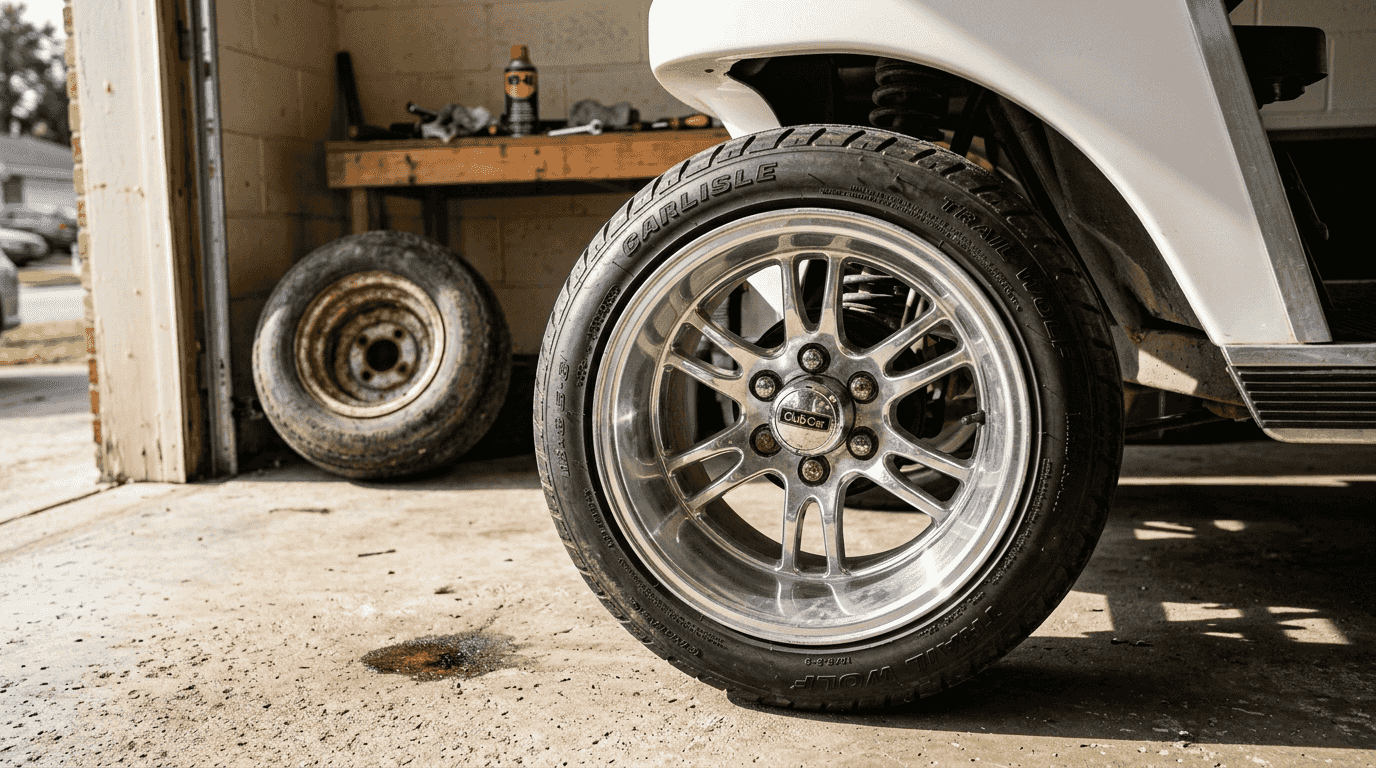
Here’s how the materials compare:
| Feature | Steel Wheels | Aluminum Wheels |
|---|---|---|
| Weight | Heavy (8-12 lbs) | Light (5-7 lbs) |
| Performance Impact | Minimal | Significant improvement |
| Design Options | Limited | Extensive variety |
| Cost | Lower | Higher |
| Durability | Excellent for abuse | Good with proper care |
| Corrosion Resistance | Requires paint | Naturally resistant |
Your choice depends on three priorities: performance needs, aesthetic preferences, and budget constraints. Off-road carts handling rough trails may benefit from steel’s toughness. Street carts and show vehicles gain more from aluminum’s performance and style advantages.
Wheel offset matters just as much as material. Incorrect offset causes the wheel to sit too far in or out, creating handling problems and potential damage. Check your cart’s specifications before purchasing to ensure proper fitment.
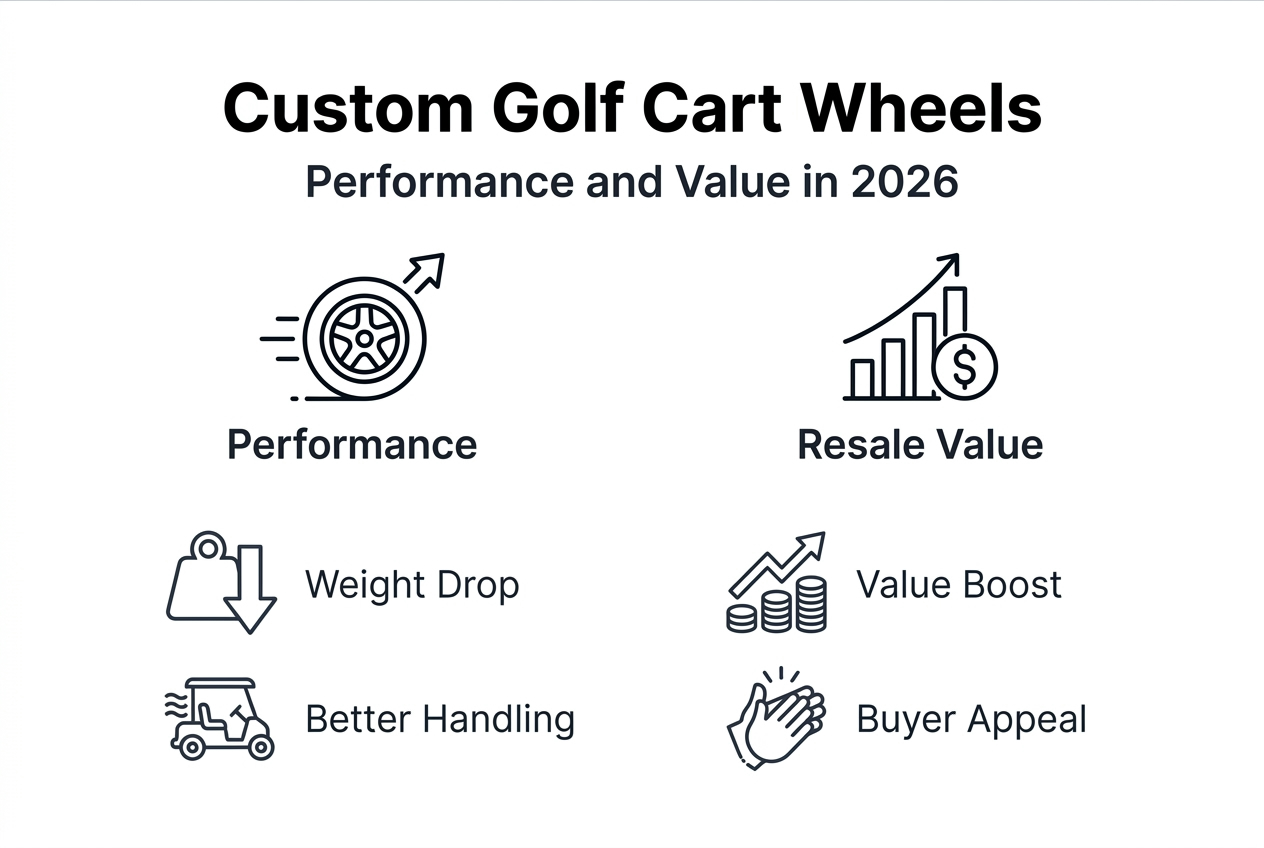
Pro Tip: Verify wheel offset and bolt pattern against your cart’s specifications using manufacturer documentation or by measuring your current wheels. Common golf cart wheel questions answered in detail can prevent costly fitment mistakes.
Finish options for aluminum wheels include polished, painted, powder coated, and machined surfaces. Polished finishes require more maintenance but deliver maximum shine. Powder coating provides durability with color variety. Machined finishes offer a two-tone appearance that highlights spoke designs.
Custom wheels significantly impact your golf cart’s resale price, but the increase depends on several factors working together. Market data shows clear patterns in what buyers value most.
Golf carts with custom wheels and additional upgrades command 10-15% higher resale prices. The key word is “additional” because wheels alone don’t maximize returns. Buyers want complete packages that demonstrate overall care and thoughtful upgrades.
Custom wheels alone increase resale value by 5-15%, depending on design and cart condition. Premium aluminum wheels with popular finishes like chrome or matte black achieve the higher end of this range. Basic steel upgrades fall toward the lower end.
Buyers specifically look for these wheel characteristics:
The condition factor cannot be overstated. Scratched, corroded, or damaged custom wheels actually decrease value compared to well maintained stock wheels. Buyers interpret poor wheel condition as evidence of overall neglect.
Here’s what drives the highest resale premiums:
| Upgrade Combination | Typical Value Increase | Buyer Appeal |
|---|---|---|
| Custom wheels only | 5-8% | Moderate |
| Wheels plus lifted suspension | 12-15% | High |
| Wheels, tires, and seat upgrade | 15-20% | Very high |
| Complete custom package | 20-25% | Maximum |
Wheel offset and size correctness matter enormously to informed buyers. Improper fitment signals amateur installation and potential hidden damage. Buyers who understand golf carts will walk away from deals with offset problems or oversized wheels rubbing on cart components.
Best golf cart add-ons 2026 work synergistically with custom wheels to maximize resale returns. LED lighting, upgraded seats, and custom paint or wraps create a complete package that commands premium pricing.
“Buyers consistently pay 10-15% more for carts with tasteful, well-maintained custom wheels paired with complementary upgrades. The key is creating a cohesive look that suggests quality throughout, not just bolt-on accessories.”
Timing your sale matters too. Spring and early summer see peak golf cart demand, maximizing your upgraded cart’s selling price. Clean, photograph, and list your cart emphasizing the custom wheels and performance benefits in your description.
Selecting custom wheels requires more than picking a style you like. Several technical factors determine whether wheels improve or harm your cart’s performance and value.
Wheel offset represents the distance from the wheel’s mounting surface to its centerline. Incorrect wheel offset can cause rubbing, poor handling, and premature wear. Too much positive offset pushes wheels inward, causing brake clearance problems. Too much negative offset pushes wheels outward, stressing suspension components and causing tire rub on turns.
Follow this process to choose correctly:
Wheel size affects both performance and clearance. Larger wheels look impressive but may require suspension modifications to prevent rubbing. Diameter increases also change your cart’s gearing ratio, potentially reducing acceleration or top speed.
Material selection balances multiple factors. Lightweight aluminum alloys improve performance but should be balanced with durability needs. Off-road use demands stronger construction than smooth pavement driving. Consider your typical terrain and load requirements.
Common pitfalls to avoid:
Matching wheels with tires requires coordinated planning. Choosing golf cart tires and wheels together ensures proper fitment and optimal performance. Tire width must match wheel width within manufacturer specifications. Diameter changes affect speedometer accuracy and may require recalibration.
Pro Tip: Before purchasing, consult golf cart wheel sizing explained guides and measure your existing wheels carefully. Photograph your current setup including visible offset and clearances to reference when shopping.
Bolt pattern verification prevents the most common mistake. Golf carts typically use 4-bolt patterns, but the diameter between bolts varies by manufacturer. A 4/4 pattern differs from a 4/110 pattern despite both having four bolts. Measure center to center across opposite bolts for accuracy.
Finish durability matters for long term satisfaction. Chrome looks stunning but requires regular maintenance in humid climates. Powder coated finishes resist corrosion better while offering color variety. Machined aluminum provides an attractive compromise with moderate maintenance needs.
You now understand how the right wheels enhance both performance and resale value. The next step is finding quality options that match your cart’s specifications and your style preferences.
Exploring custom golf cart wheels designed specifically for your cart model ensures proper fitment and maximum benefits. Quality retailers provide detailed specifications including offset, bolt pattern, and recommended tire sizes to prevent common mistakes. Expert guidance helps you avoid compatibility issues while choosing wheels that deliver real performance improvements.
Browsing different types of golf cart wheels reveals options you might not have considered. Split spoke designs, solid faces, and machined finishes each offer distinct advantages depending on your priorities. Detailed product descriptions and customer reviews provide real world insight into durability and appearance.
Pairing your wheel choice with compatible tires maximizes your upgrade investment. Comprehensive golf cart tires and wheels guide resources walk you through creating the perfect combination for your specific needs. Whether you prioritize off-road traction, smooth street riding, or maximum style, coordinated wheel and tire packages deliver better results than random selections.
Yes, lighter wheels reduce unsprung weight improving acceleration and braking performance. Proper offset optimization enhances steering response and cornering stability. However, incorrect fitment can create handling problems, so verifying specifications against your cart’s requirements is essential before purchasing.
Aluminum alloys offer light weight and good durability when properly manufactured. They resist corrosion naturally and provide extensive design options. Steel wheels offer more cost effective durability for rough terrain but sacrifice performance due to increased weight. Choose based on your typical use conditions and performance priorities.
Custom wheels can increase resale value by 5-15%, with combined upgrades raising it to 10-15%. The actual increase depends on wheel quality, design appeal, and overall cart condition. Premium aluminum wheels in popular styles with complementary upgrades like lifted suspension or custom seats command the highest premiums from buyers.
Consider wheel width, diameter, and offset matched to compatible tire sizes for safe handling and proper clearance. Verify that tire width falls within the wheel manufacturer’s recommended range. The right combo of golf cart tires and wheels improves both performance and aesthetics while preventing rubbing or suspension stress.
Explore our store to see what our products and resources can do for you.

Leave a comment