
Your Cart Is Our Priority
Explore our store to see what our products and resources can do for you.

Navigating rocky trails or uneven acres often leaves standard golf carts scraping the ground and struggling for traction. For many North American golf cart owners, enhancing performance means more than just adding power—it starts with a golf cart lift kit that increases ground clearance and makes larger tires possible. Understanding how these kits affect handling, comfort, and safety helps you customize your cart with confidence and avoid compatibility headaches down the road.
| Point | Details |
|---|---|
| Golf Cart Lift Kits Enhance Performance | Lift kits increase ground clearance, making golf carts capable of handling rough terrain and larger obstacles more effectively. |
| Different Kit Types for Varying Needs | Spacer, spring, shock extension, and coil-over kits offer varying heights and performance impacts, allowing customization based on terrain and budget. |
| Installation Matters | Professional installation ensures compatibility and prevents safety issues; DIY attempts without proper kits can lead to costly repairs. |
| Understand Costs and Risks | Budget for lift kits and installation, as improper choices can lead to higher long-term expenses due to repairs or warranty voids. |
A golf cart lift kit is essentially a suspension upgrade that physically raises your cart’s body higher off the ground. Think of it as giving your cart stilts. The modification increases ground clearance so you can tackle rougher terrain without scraping the underside on obstacles like rocks, roots, or uneven ground.
Most lift kits work by replacing or extending your cart’s suspension components. They typically include new springs, shocks, or spacers that lift the entire frame upward. The result? Your golf cart sits several inches higher than stock, which might sound minor until you’re actually navigating trails or rough property.
Here’s what actually changes when you install one. Your cart gains the ability to clear larger obstacles and navigate steep inclines with less risk of damage. Off-road capability jumps significantly. You also get better sight lines from the elevated seating position, which matters when you’re driving through thick brush or uneven terrain.
The performance shift is real but not magical. Your cart won’t suddenly climb mountains, but it stops bottoming out on rutted paths. It maintains better traction on uneven ground. The ride quality often improves too, especially on rough terrain where the increased suspension travel absorbs impacts more effectively.
Different lift kits offer different heights. Some raise your cart 4 inches, others go up to 12 inches or more. The height you choose depends on your terrain, budget, and how much you want to change your cart’s appearance. A modest 4-inch lift handles most rough terrain nicely. Going higher looks more dramatic and tackles extreme conditions, but it also affects handling and fuel efficiency slightly.
Pro tip: Before buying any lift kit, measure your cart’s current height and existing tire size, then verify the kit is compatible with your specific model and year to avoid costly returns.
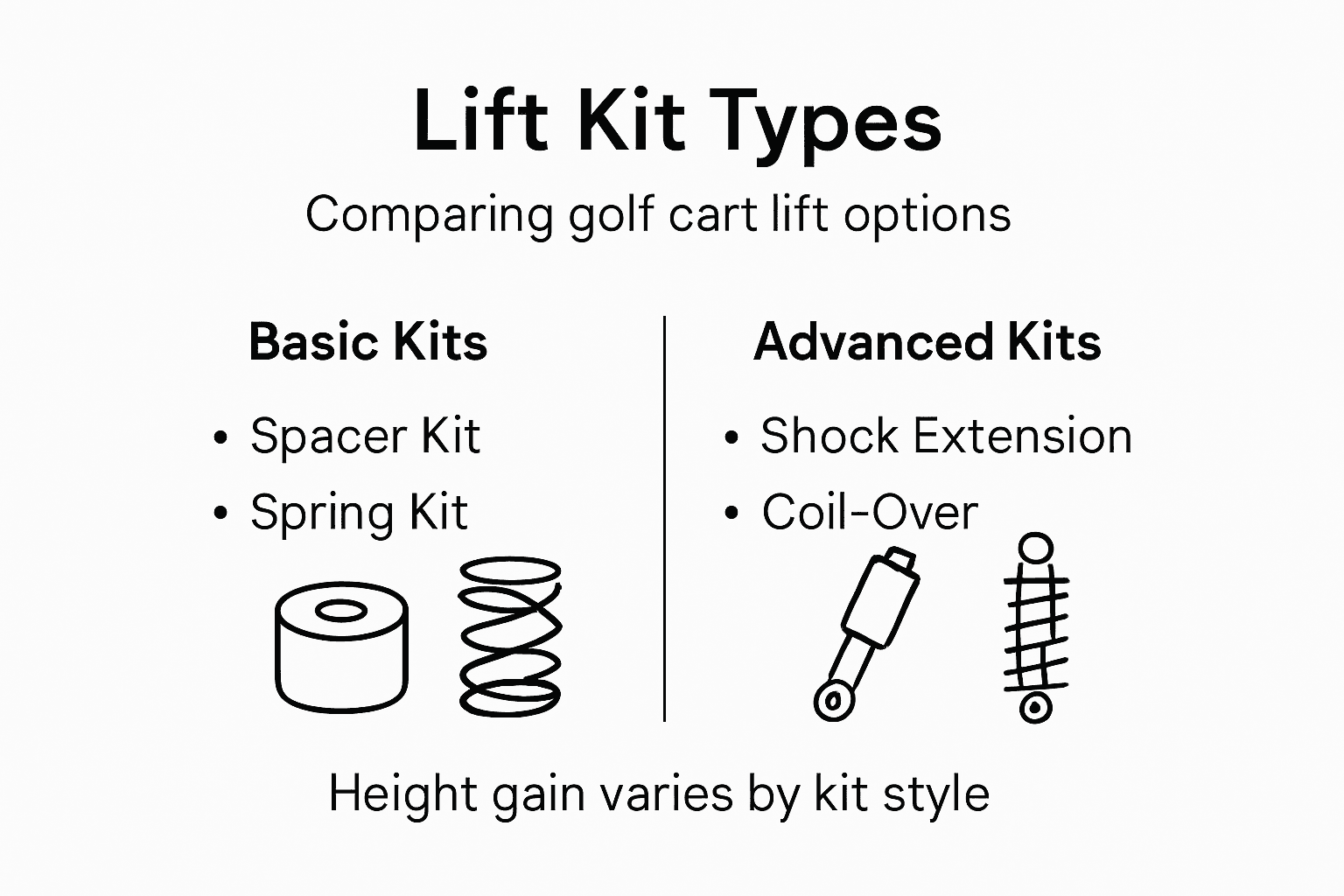
Not all lift kits are created equal. The main types differ in how they work, how much they cost, and what results you get. Understanding these differences matters because picking the wrong type wastes money and leaves you frustrated.
Spacer Lift Kits are the simplest and most affordable option. They use rubber or metal spacers placed between your existing suspension components to add height. Think of it like adding shims under your cart’s frame. Installation takes a few hours, and you can do it yourself with basic tools. The tradeoff? You get modest height increases, usually 2 to 4 inches, and the ride quality stays about the same as stock.
Spring Lift Kits replace your cart’s factory springs with higher-rated springs that sit taller. These provide more ground clearance and actually improve ride quality on rough terrain because the stronger springs handle impacts better. You’ll typically gain 4 to 6 inches of height. Installation requires removing suspension parts, so you might want professional help here.
Shock Extension Kits work by extending your shock absorbers to allow greater suspension travel. Your cart sits higher and handles bumps more effectively. These kits usually deliver 4 to 8 inches of lift and improve comfort noticeably on uneven ground. They cost more than spacers but deliver better performance for serious off-road use.
Coil-Over Lift Kits represent the premium option. They replace your entire suspension with adjustable coil-over units that let you dial in exactly how high you want to sit and how firm or soft the ride feels. Height gains reach 6 to 12 inches. You’ll pay significantly more, and installation requires technical expertise.
Choosing between them comes down to your budget, terrain, and how much you care about ride quality. Light property maintenance? Spacers work fine. Frequent rough terrain? Springs or shocks deliver better value. Extreme off-roading or want maximum customization? Consider tips for selecting the right lift kit to match your specific needs.
Pro tip: Compare the suspension geometry changes each kit type creates, as some designs affect steering and handling differently depending on your cart’s wheelbase and weight distribution.
Here’s a comparison of lift kit types and their main considerations:
| Lift Kit Type | Approx. Height Gain | Performance Impact | Installation Complexity |
|---|---|---|---|
| Spacer | 2–4 inches | Minor ride improvement | Simple, basic tools |
| Spring | 4–6 inches | Enhanced ride comfort | Moderate, requires tools |
| Shock Extension | 4–8 inches | Superior off-road control | Advanced, alignment needed |
| Coil-Over | 6–12 inches | Fully adjustable ride | Technical, expert skills |
A lift kit transforms what your golf cart can actually do. Beyond just looking taller, it opens up new possibilities for how you use your cart on your property and beyond.
The most obvious benefit is off-road capability. Raising your cart improves ground clearance so you navigate over rocks, roots, and ruts without slamming the undercarriage. This matters if you maintain trails, manage acreage, or simply want to explore rougher terrain without worry. Your cart stops bottoming out, which saves repair costs down the road.
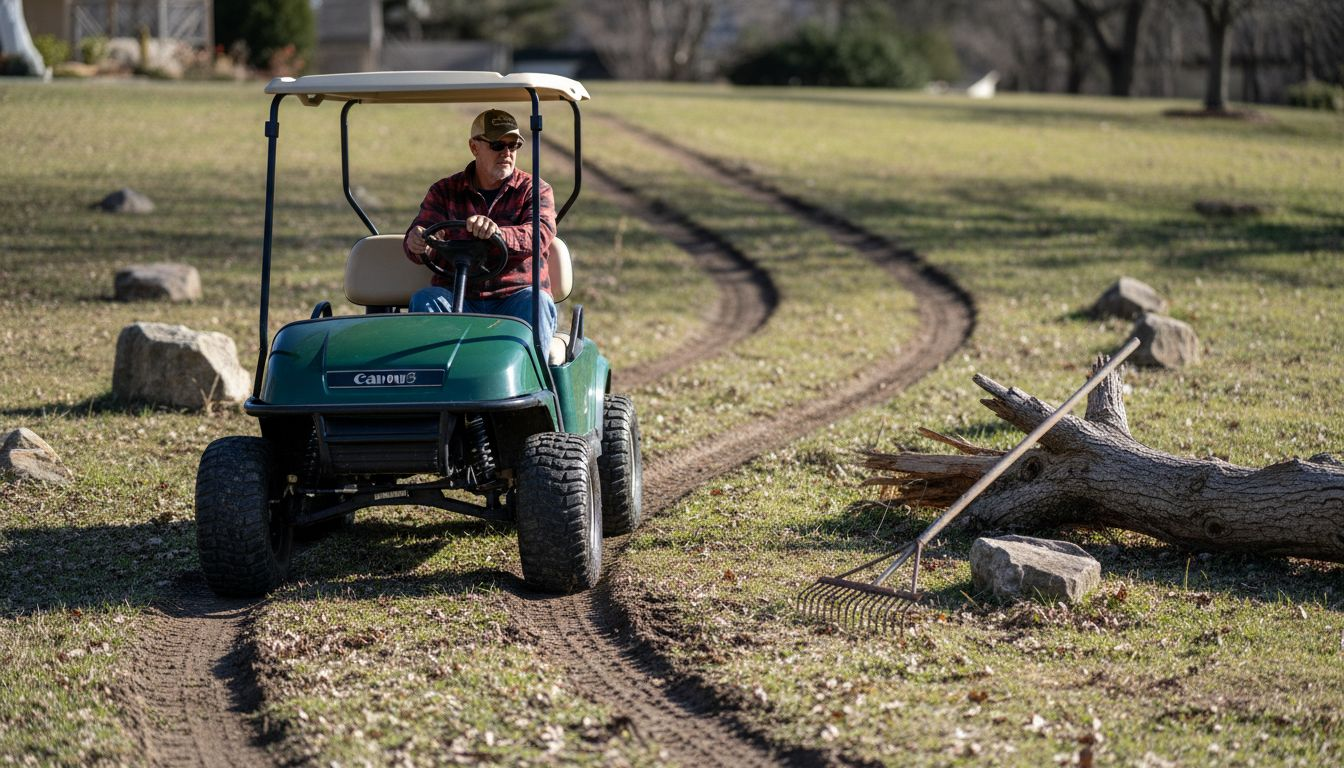
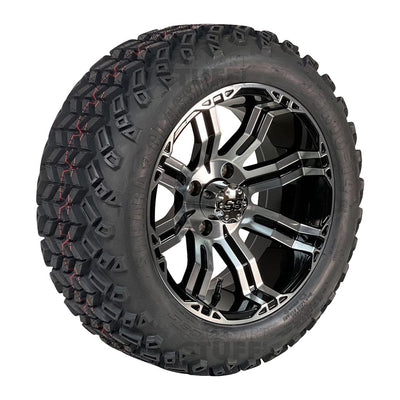
Larger tires become possible with lift kits. Stock carts sit low, which limits tire size. A lifted cart accommodates bigger rubber, and that changes everything. Larger tires provide better traction on loose terrain, climb steeper slopes, and roll over obstacles more easily. They also improve handling on uneven ground because the taller sidewalls absorb impacts better than narrow stock tires.
Comfort improves noticeably on rough property. Many lift kits include upgraded suspension components that handle bumps and jolts more effectively. Your cart soaks up impacts instead of transferring them to your spine. If you spend hours driving your cart maintaining your land or simply enjoying it, this matters. The ride feels smoother and less jarring.
Visibility gets better too. Sitting higher means you see over tall grass and brush. You spot obstacles before hitting them. This is especially valuable when navigating dense areas or uneven terrain where sight lines matter.
Practically speaking, lifted carts handle slopes and inclines better. The increased ground clearance prevents high-centering on uneven terrain. Your cart maintains traction and stability climbing hills that would challenge a stock model. This opens up more of your property for actual use.
Pro tip: After installing a lift kit, always recalibrate your speed expectations and practice on gentle terrain first, as the higher center of gravity changes how your cart handles turns and braking compared to stock configuration.
Installing a lift kit isn’t a casual weekend project. The process requires attention to detail and proper sequencing to avoid costly mistakes or safety issues. Success depends on two things: following the right steps and confirming compatibility with your specific cart.
Compatibility comes first. Your golf cart’s year, make, and model determine which kits actually fit. A 2015 Club Car needs different components than a 2018 Yamaha Drive. Attempting to force an incompatible kit wastes money and creates handling problems. Always verify your cart’s specifications against the kit’s requirements before purchasing anything.
The installation process itself varies by kit type. Professional lift kits include engineered installation instructions that detail the exact sequence for adding height safely. Spacer kits involve placing rubber or metal shims between suspension components. Spring replacements require removing the old springs and installing rated ones. Shock extensions need careful alignment to function properly. Each type demands different tools and expertise.
Most lift kit installations follow this general sequence. You’ll lift the cart securely on jack stands. Next, you remove the suspension components specified in the instructions. Install the new parts or spacers in the exact positions outlined. Torque all bolts to manufacturer specifications. Finally, test the cart on flat ground before driving normally.
Professional installation matters more than you might think. Improper installation causes uneven height, handling issues, and premature wear. Your cart’s suspension geometry changes when you lift it. Getting the angles right requires technical knowledge. A professional knows what problems to watch for and can catch them before they cause damage.
Compatibility extends beyond the kit itself. Larger tires sit on lifted carts, but oversized rubber can rub or bind. Brake lines, fuel lines, and electrical components need clearance verification. Your cart’s weight distribution changes with height, affecting steering and stability. Professionals account for all these factors during installation.
Pro tip: Document your cart’s original suspension measurements and alignment angles before installation, then compare them after to verify the kit installed correctly and your cart handles as designed.
Lifting your golf cart sounds simple until something goes wrong. The risks are real, the costs can escalate quickly, and some mistakes are expensive to fix. Knowing what to avoid saves money and keeps you safe.
DIY lifting without proper kits causes serious problems. Improper lifting can lead to structural damage and instability. Welding random blocks under your frame, stacking spacers unevenly, or using parts from different manufacturers creates handling nightmares. Your cart sits lopsided, the frame twists, and steering becomes unpredictable. You’ve now created a vehicle that’s genuinely unsafe to drive.
Incompatible kits are another major trap. Buying a generic lift kit for your specific cart model is tempting when it saves money. But generic kits don’t account for your cart’s unique geometry. They cause brake lines to stretch, suspension angles to misalign, and components to wear prematurely. What seemed like savings becomes an expensive repair bill within months.
Costs vary dramatically by quality. Budget spacer kits run $300 to $500. Mid-range spring kits cost $800 to $1,500. Premium coil-over systems reach $2,000 to $4,000 or higher. Professional installation adds another $500 to $1,500 depending on complexity. Cheap kits often sacrifice safety for price. Higher quality kits use better materials and engineering, reducing the chance of failure and premature wear.
Cutting corners creates cascading problems. Using uncertified components, skipping alignment after installation, or ignoring the manufacturer’s torque specifications seems fine initially. Then your cart handles poorly on slopes. Tires wear unevenly. Brake performance suffers. You end up replacing parts years earlier than expected. The money you saved upfront multiplies into losses.
Vehicle warranty complications matter too. Installing an unapproved lift kit voids your cart’s warranty. If something breaks later, you’re paying out of pocket even if it’s not related to the lift.
Below is a quick reference to the risks and potential costs involved with golf cart lift kits:
| Risk/Cost Factor | Potential Issue | Estimated Cost Range |
|---|---|---|
| Incompatible Kit | Handling problems, repairs needed | $300–$2,000+ |
| DIY Without Proper Kit | Structural damage, instability | High, may exceed $1,000 |
| Professional Installation | Safer handling, warranty retention | $500–$1,500 installation |
| Cutting Corners | Premature wear, frequent repairs | Repeated unexpected costs |
Pro tip: Request quotes from at least two professional installers and compare their recommended kit brands, warranty offerings, and post-installation alignment services before committing to the cheapest option.
If you are ready to overcome issues like limited ground clearance, poor off-road performance, or uncomfortable rides on rough terrain the right golf cart lift kit is the solution you need. This article highlights key challenges such as finding compatible lift kits, enhancing suspension performance, and improving visibility and stability on uneven ground. Our collection at GolfCartStuff provides carefully selected parts designed to meet those exact needs including spacer lifts, spring upgrades, and advanced coil-over kits that improve ride quality and handling.
Don’t let low clearance or rough terrain hold you back any longer. Explore our wide range of golf cart lift kits and accessories tailored to fit your model perfectly and avoid costly installation mistakes. Take the next step to transform your golf cart’s performance today by visiting GolfCartStuff. Enhance your ride quality and enjoy smoother, safer drives immediately.
A golf cart lift kit is a suspension upgrade that raises the cart’s body higher off the ground, increasing ground clearance and allowing you to navigate rougher terrain without damaging the undercarriage.
There are four main types of lift kits: Spacer Lift Kits, Spring Lift Kits, Shock Extension Kits, and Coil-Over Lift Kits, each offering different height increases, performance impacts, and installation complexities.
Lift kits improve off-road capability, allow for larger tires, enhance ride comfort on rough terrain, and provide better visibility, ultimately enabling your cart to navigate steep inclines and challenging landscapes more effectively.
Before installing a lift kit, check compatibility with your golf cart’s make and model, consider the installation process complexity, and ensure that you will be able to accommodate any changes in tire size and cart handling after the lift is installed.
Explore our store to see what our products and resources can do for you.

Leave a comment