

Your Cart Is Our Priority
Explore our store to see what our products and resources can do for you.

TL;DR:
- Wheel spacers move wheels outward, enhancing stability and allowing larger tire fitment.
- Proper installation, including hub-centric design and correct torque, is essential for safety.
- Excessive or improper spacer use can cause vibration, bearing wear, and safety hazards.
Most golf cart owners assume wheel spacers are a cosmetic upgrade, something to make the cart look wider and meaner. That assumption costs people real money and real safety. Wheel spacers are a functional modification that directly affects how your cart handles slopes, corners, and rough terrain. They also determine whether your new set of larger tires will actually fit without rubbing. This article breaks down exactly how spacers work, which sizes suit which situations, how to install them correctly, and what risks to avoid. Whether you ride a Club Car, EZGO, or Yamaha, the information here applies directly to your setup.
| Point | Details |
|---|---|
| Boosts stability | Wheel spacers widen your golf cart’s stance and help prevent tipping on uneven terrain. |
| Enables bigger tires | Spacers create extra clearance for larger wheels and tire upgrades without rubbing. |
| Safety requires best practices | Proper installation, material choice, and torque checks are essential to avoid vibration or other hazards. |
| Risks and legal issues | Improper spacer use can increase component wear or void warranties, so always follow manufacturer guidelines. |
A wheel spacer is a machined disc that mounts between your cart’s hub and the wheel. It physically moves the wheel outward from the vehicle’s centerline, widening the overall track width. That wider stance is the foundation of every benefit spacers provide, from better cornering to improved fitment for larger tires.
Wheel spacers widen the cart’s stance by pushing wheels outward, typically 1 to 3 inches per side. That means a cart running 1.5-inch spacers on both sides gains 3 inches of total track width. Run 2-inch spacers and you add 4 inches. That number matters a lot when you’re trying to fit aftermarket wheels or prevent body rub on lifted carts.
Spacers come in a few key configurations. The most important specs to understand are:
Here’s a quick reference for common spacer sizes and their typical use cases:
| Spacer size (per side) | Total track width gain | Best use case |
|---|---|---|
| 1 inch | 2 inches | Mild stability improvement, stock tires |
| 1.5 inches | 3 inches | Larger tires, moderate lift kits |
| 2 inches | 4 inches | Aggressive tires, improved cornering |
| 3 inches | 6 inches | Off-road builds, maximum clearance |
Spacers are widely used across all major cart brands. EZGO, Club Car, and Yamaha all have spacer options designed specifically for their bolt patterns and hub dimensions. If you’re upgrading tires, reviewing golf cart tire sizing first helps you select the right spacer thickness to avoid clearance issues. For a broader look at wheel and tire combinations, the wheel and tire guide covers fitment details that pair directly with spacer selection.
Once you understand what spacers do mechanically, the performance benefits become obvious. A wider stance lowers the cart’s effective center of gravity relative to its track width. That single change improves stability on side slopes, reduces the tendency to tip during sharp turns, and makes the cart feel planted on uneven ground.

Wheel spacers provide clearance for bigger tires and wheels, improved stability, and better cornering. That’s not marketing language. It’s a direct mechanical result of moving mass outward from the centerline. Owners who have made the switch consistently report better cornering and no tipping with spacers installed, especially on hilly terrain or grass surfaces.
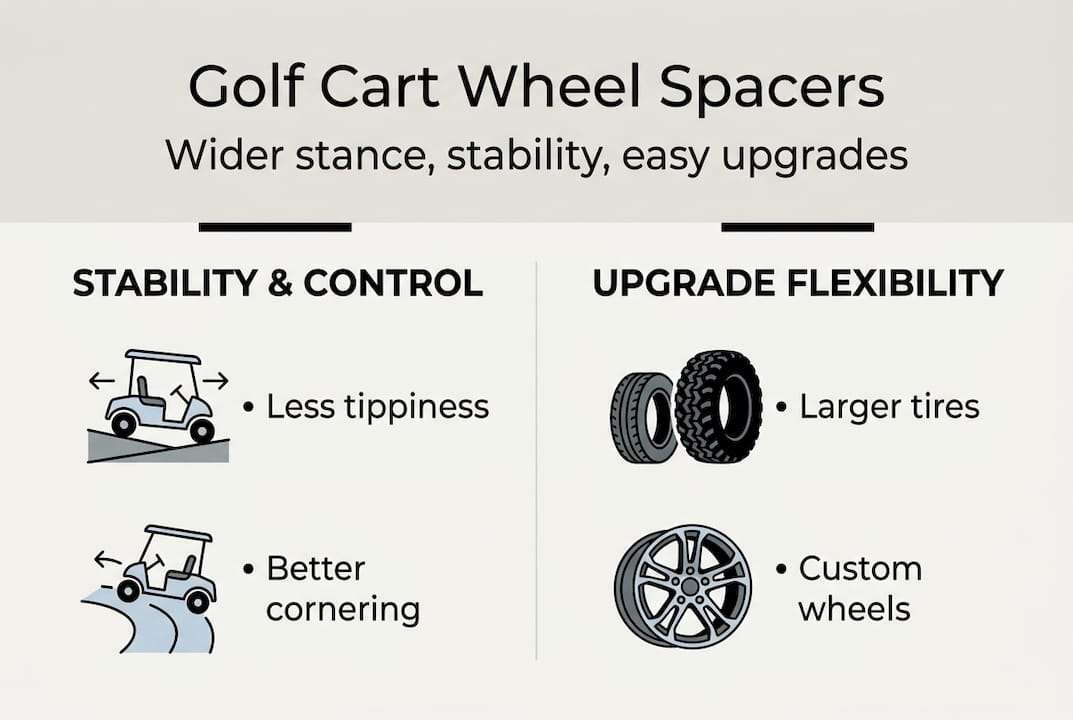
Here’s how different spacer sizes compare in real-world performance:
| Spacer size | Stability gain | Clearance for upgrades | Risk level |
|---|---|---|---|
| 1 inch | Moderate | Limited | Low |
| 1.5 to 2 inches | Significant | Good for most lifts | Low to moderate |
| 3 inches | Maximum | Ideal for large tires | Higher |
Beyond stability, spacers open up your upgrade path in a meaningful way:
Pro Tip: For most recreational and neighborhood cart owners, 1.5 to 2-inch spacers hit the sweet spot. You get meaningful stability and clearance without the added stress on bearings that comes with 3-inch setups.
If you’re considering custom golf cart wheels alongside your spacers, pairing them correctly maximizes both aesthetics and performance. Browsing wheel and tire combos that are pre-matched for fitment saves time and reduces guesswork when planning your build.
Installing wheel spacers is a manageable DIY project for most cart owners, but it requires attention to detail. Skipping steps or using the wrong torque spec turns a simple upgrade into a safety problem. Follow this process carefully.
Material matters more than most people realize. Spacers made from 6061-T6 aircraft-grade aluminum offer the right balance of strength and weight. This alloy handles the shear forces and vibration cycles that come with regular driving without cracking or deforming.
“Use aircraft-grade aluminum and hub-centric designs for safe spacer installation. Recheck torque after 25 to 50 miles of driving.”
Pro Tip: If you’re unsure about your torque wrench calibration or the correct spec for your cart model, a quick visit to a local shop for the final torque step is worth the peace of mind. The tire installation guide covers torque specs in more detail, and the safety inspection guide gives you a full checklist to run after any wheel modification.
Spacers are not a set-it-and-forget-it upgrade. They introduce mechanical changes that require ongoing attention. Ignoring maintenance or cutting corners on installation creates real hazards.
The most common problems come from improper installation. Improper install leads to wobble, vibration, and safety hazards. It also increases stress on wheel bearings and suspension components, and may void your warranty or violate local regulations. Stacking multiple spacers together is never recommended.
Here’s what to watch for and avoid:
“Avoid stacking spacers. Always use a single spacer of the correct thickness and verify local regulations before modifying your cart’s track width.”
Regular maintenance is straightforward. Check lug nut torque every few months or after any rough terrain use. Inspect the spacer surface for cracks or corrosion annually. If you’re unsure whether your current tire setup is compatible with your spacer choice, reviewing the tire sizing guide helps you confirm clearances before problems develop.
Most spacer guides focus on size charts and installation steps. What they miss is the pattern we see repeatedly from owners who upgrade without a clear plan. They chase the biggest spacer available, assume more is always better, and end up with accelerated bearing wear or a cart that handles worse than stock.
The reality is that benefits peak at 1 to 2 inches for most cart owners. Larger 3-inch setups carry higher risks and are only justified when the build specifically demands maximum clearance for oversized tires or aggressive off-road use. Experts consistently emphasize hub-centric fit and proper torque as the two factors that determine whether a spacer upgrade succeeds or fails.
Quality and fit beat size every time. A properly torqued 1.5-inch hub-centric spacer from a reputable brand outperforms a cheap 3-inch lug-centric spacer in every measurable way. If you want to explore types of golf cart wheels that pair well with spacers, starting with wheel offset and bolt pattern compatibility saves you from expensive trial and error. The best upgrade is the one that fits correctly, torques properly, and gets rechecked after the first drive.
Understanding how spacers work is the first step. Finding quality parts that match your specific cart model is what turns that knowledge into a real upgrade.

At Golf Cart Stuff, we carry a full range of golf cart accessories designed to complement wheel and tire upgrades across all major brands. Whether you’re building out a Club Car and need Club Car DS parts, or you’re working on a Yamaha and need Yamaha G1-G22 parts, we have the components to support your build. Browse our catalog before your next upgrade and get the right parts the first time.
Wheel spacers widen the golf cart’s stance for improved stability, better cornering, and to allow fitment of larger tires or suspension upgrades.
Yes. Spacers provide clearance for bigger tires and wheels, making it possible to install larger sizes without rubbing against the body or suspension components.
Properly installed spacers are generally safe, but improper installation or stacking spacers can cause vibration, accelerate bearing wear, and create serious handling hazards.
Spacers may void your warranty or violate local regulations, so always check your manufacturer’s documentation and community rules before installing.
Recheck torque after 25 to 50 miles of initial driving, then periodically based on how often and how hard you use the cart.
Explore our store to see what our products and resources can do for you.

Leave a comment