
Your Cart Is Our Priority
Explore our store to see what our products and resources can do for you.

Many golf cart owners believe that matching only the rim diameter is enough when selecting new tires. This misconception overlooks critical factors like width and aspect ratio that directly impact safety, handling, and battery efficiency. Understanding the complete tire size notation empowers you to choose tires that optimize your cart’s performance while avoiding fitment problems and premature wear.
| Point | Details | |-------|---------|| | Tire size format includes three critical measurements | Diameter, width, and rim size must all match your cart’s specifications for safe installation. | | Correct rim diameter matching prevents safety hazards | The rim size must exactly match the tire’s specified diameter to ensure proper bead seating. | | Width and aspect ratio affect performance tradeoffs | Wider tires improve traction but reduce battery range by 5-7% due to increased rolling resistance. | | Upgrading tire size impacts multiple systems | Larger tires increase ground clearance up to 3 inches but affect speedometer accuracy and efficiency. | | Manufacturer specs guide safe tire selection | Always consult your cart’s specifications and measure existing tires before purchasing replacements. |
Golf cart tires use a specific labeling format that communicates essential fitment information. A tire size like 18x8.50-8 tells you the diameter, width, and rim size in a compact notation. Each number serves a distinct purpose in ensuring your tires fit safely and perform optimally.
Correct tire sizing directly influences your cart’s handling characteristics, ride comfort, and safety margins. Installing tires that don’t match your wheel specifications can lead to bead seating failures, air leaks, or even tire separation during operation. These risks make understanding tire dimensions essential for every golf cart owner and dealer.
Different tire types serve specific purposes. Turf tires minimize grass damage on golf courses, street tires provide smooth rides on paved surfaces, and all-terrain options handle mixed conditions. Each type comes in various sizes to match different wheel configurations and performance needs.
Key considerations when evaluating tire sizes:
The standard format for golf cart tire sizes follows a simple pattern: Diameter x Width - Rim Size. Taking 18x8.50-8 as an example, the first number (18) represents the overall tire diameter in inches when properly inflated. This measurement determines how tall your cart sits and affects gear ratios.
The middle number (8.50) indicates the tire’s width measured from sidewall to sidewall. Width directly impacts your cart’s footprint on the ground, influencing traction and stability through turns. Wider tires spread vehicle weight over a larger area but create more rolling resistance.
The final number after the dash (8) specifies the rim diameter in inches. This dimension must match your wheel exactly for proper installation. Tire size notation like 18x8.50-8 specifies diameter, width, and rim size needed for proper fit, and mismatching any component creates safety risks.

Some tires use alternative formats like 205/50-10, where 205 represents width in millimeters, 50 indicates the aspect ratio (sidewall height as a percentage of width), and 10 shows rim diameter. Understanding both formats helps when comparing options across brands and styles.
Pro Tip: Always verify all three measurements when shopping for replacement tires, not just the diameter. A tire with the correct diameter but wrong rim size won’t fit your wheels safely.
Common size combinations and their applications:
Understanding these expert explanations of rim compatibility prevents costly purchasing mistakes and ensures your tires integrate properly with your cart’s existing components.
Tire diameter changes create multiple effects throughout your golf cart’s systems. Increasing diameter raises the cart’s center of gravity and ground clearance, useful for navigating rough terrain or obstacles. However, larger tires can increase ground clearance by up to 3 inches but reduce battery range by about 5-7% due to increased rotational mass.
Speedometer accuracy suffers when you deviate from factory tire sizes. Larger diameter tires cover more ground per revolution, making your speedometer read lower than your actual speed. This discrepancy affects range calculations and can lead to unexpected battery depletion on longer trips.
Width modifications influence how your cart handles in various conditions. Wider tires provide better traction on loose surfaces like sand or gravel by distributing weight over a larger contact patch. The tradeoff comes in increased rolling resistance, which forces your motor to work harder and drains batteries faster.
Aspect ratio determines sidewall height relative to tire width. Lower aspect ratios (40-50) create stiffer sidewalls that improve cornering response but transmit more road imperfections to passengers. Higher ratios (60-70) offer cushier rides by absorbing bumps through flexible sidewalls.
Performance considerations for different scenarios:
Balancing these factors requires understanding your primary use case and accepting reasonable compromises. Following proper golf cart tire installation tips ensures your chosen size performs as expected.
The belief that rim diameter alone determines proper fitment causes numerous installation failures. While rim size matching is critical, ignoring width specifications can result in tires that rub against cart bodies or suspension components during turns. This oversight leads to premature wear and potential safety hazards.
Many owners assume automotive tires work as direct replacements for golf cart tires. Automotive tires typically use different load ratings, pressure specifications, and construction methods unsuited for golf cart weights and speeds. Installing car tires voids most manufacturer warranties and creates liability concerns.
“Using automotive tires on golf carts compromises safety systems designed specifically for low-speed vehicle dynamics and weight distributions.”
The notion that wider tires always improve performance oversimplifies complex tradeoffs. While width enhances traction, it simultaneously increases rolling resistance, reduces efficiency, and may require suspension modifications. Understanding these common questions about golf cart wheels and tires prevents expensive mistakes.
Some believe tire pressure requirements remain constant across all sizes. In reality, different tire dimensions require specific pressures to maintain proper contact patches and wear patterns. Overinflation causes center tread wear, while underinflation accelerates shoulder degradation.
Frequently misunderstood points:
These myths persist because they contain partial truths that mislead without complete context. Educating yourself on all sizing factors protects your investment and ensures safe operation.
The rim diameter must exactly match the tire’s specified rim size to prevent bead seating problems which create unsafe conditions. The bead represents the inner edge of the tire that locks onto the rim’s lip. Mismatched dimensions prevent proper seating, allowing air leaks or complete tire separation.
Bead seating depends on precise diameter matching and appropriate tire pressure during installation. Professional installers use specific techniques to ensure beads seat fully on both sides of the rim. DIY installations require careful attention to manufacturer guidelines to achieve safe, reliable results.
Rim width also influences tire performance, though it offers slightly more flexibility than diameter. Most tires specify an acceptable rim width range, typically spanning 1-2 inches. Installing tires on rims outside this range affects sidewall angles, contact patch shape, and overall handling characteristics.
Manufacturer specifications provide definitive compatibility information for your specific cart model. These documents detail approved tire sizes, pressure ranges, and any restrictions on aftermarket modifications. Deviating from these specs may void warranties or create insurance complications after accidents.
Compatibility verification checklist:
Pro Tip: Mark your existing tire and rim sizes with permanent marker on the wheel well before removal to ensure exact replacement matching during future service.
Understanding proper golf cart wheel sizing prevents compatibility issues before they occur. Consulting rim and tire compatibility experts provides additional assurance when planning modifications or upgrades.
Standard 18x8.50-8 tires represent the baseline configuration for many golf carts, offering balanced performance across efficiency, comfort, and handling metrics. This size maintains factory speedometer accuracy, minimizes drivetrain stress, and delivers predictable battery range. Most replacement scenarios benefit from sticking with original specifications.
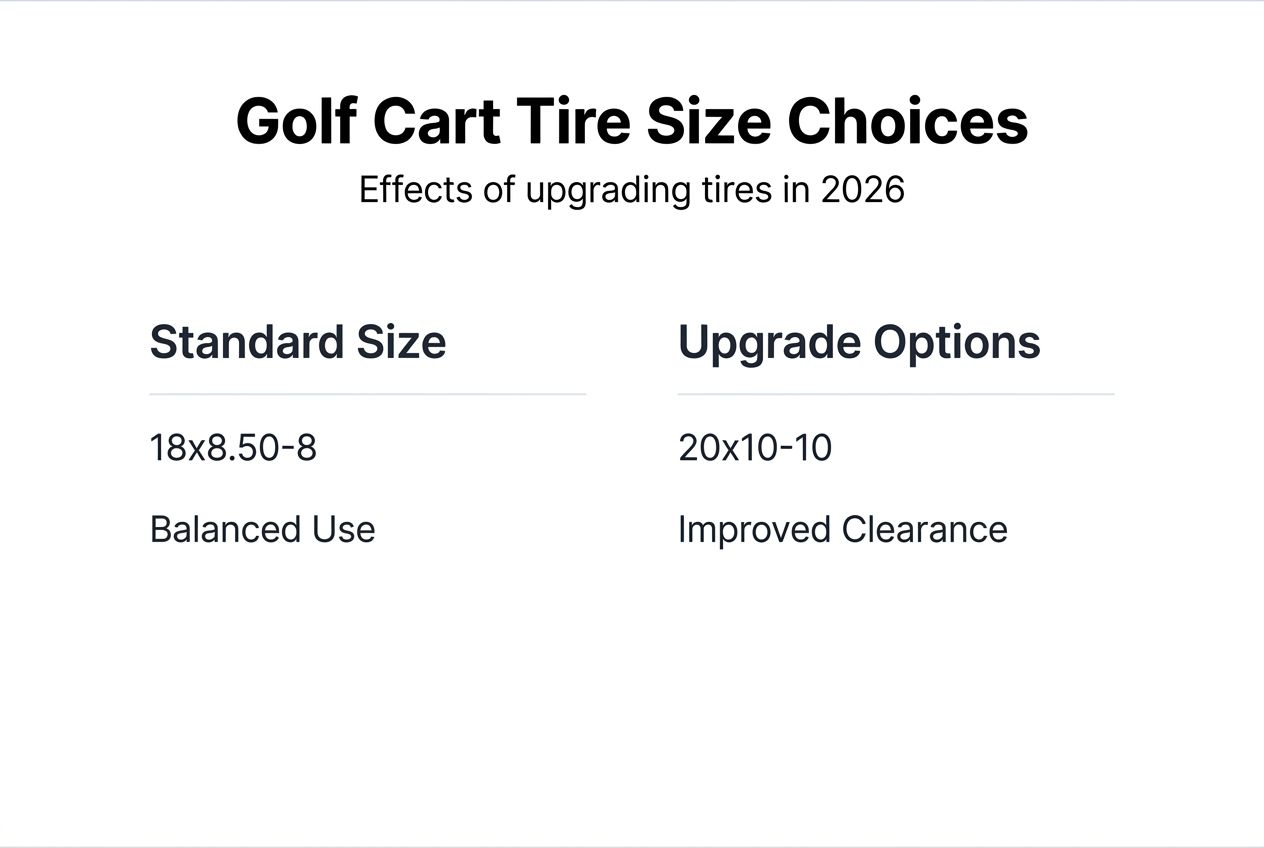
Upgrading to 20x10-10 tires increases ground clearance significantly, improving capability over roots, rocks, and uneven terrain. The larger diameter raises your cart approximately 2-3 inches, changing its appearance and center of gravity. However, this modification increases rolling resistance by 8-12%, reducing battery range and accelerating component wear.
Wider 18x9.50-8 alternatives maintain stock diameter while enhancing traction through increased contact patch area. This compromise delivers better grip in loose conditions without drastically affecting speedometer readings. The modest width increase still impacts efficiency, typically reducing range by 3-5% compared to narrower options.
| Tire Size | Ground Clearance | Traction | Battery Impact | Best Use Case |
|---|---|---|---|---|
| 18x8.50-8 | Standard | Good | None | General purpose, golf courses |
| 20x10-10 | +2-3 inches | Excellent | -5-7% range | Off-road, trail riding |
| 18x9.50-8 | Standard | Better | -3-5% range | Mixed terrain, street use |
| 22x11-10 | +3-4 inches | Best | -8-10% range | Extreme off-road, lifted carts |
Each upgrade path requires evaluating your primary use case against performance tradeoffs. Off-road enthusiasts benefit from larger, wider tires despite efficiency losses. Golf course operators prioritize turf protection and range, favoring conservative sizing.
Upgrade considerations extend beyond tire selection to include:
Exploring popular golf cart upgrades helps contextualize tire sizing within broader modification strategies for achieving specific performance goals.
Successful tire selection begins with accurate measurement of your current setup. Use a tape measure to determine diameter from ground to tire top, then double that figure for total diameter. Measure width at the tire’s widest point, and identify rim diameter from markings on the wheel itself.
Pro Tip: Photograph your current tire sidewalls before shopping to reference exact specifications when comparing online or in-store options, eliminating guesswork.
Common measurement mistakes to avoid:
Following this systematic approach, detailed in comprehensive golf cart tire installation guides, ensures you select compatible tires that meet your performance expectations and safety requirements.
Mastering golf cart tire sizing empowers you to make informed decisions that enhance safety, performance, and longevity. The three-part notation system of diameter, width, and rim size provides all necessary information for selecting compatible options that match your cart’s specifications and intended use.
Correct sizing prevents dangerous installation failures while optimizing handling characteristics and battery efficiency. Whether maintaining stock configurations or upgrading for specific applications, understanding how each dimension affects performance helps you balance tradeoffs intelligently. Measuring existing tires accurately and consulting manufacturer specifications protects your investment and ensures compliance with warranty terms.
Avoid common misconceptions by recognizing that rim diameter alone doesn’t guarantee proper fitment. Width, aspect ratio, load rating, and construction type all contribute to safe, effective tire selection. When uncertain about compatibility or modification impacts, seeking expert guidance prevents costly mistakes and potential safety hazards.
Your golf cart deserves tires that match its capabilities and your performance expectations. Armed with this knowledge, you can confidently navigate tire selection, communicate effectively with dealers, and maintain optimal cart performance for years of reliable service.
Ready to put your newfound tire knowledge into action? Explore our comprehensive selection of premium golf cart tires engineered for exact fit and superior performance across all terrain types. Every product includes detailed compatibility information to match your cart’s specific model and rim configuration.
Our top golf cart upgrades and accessories collection features carefully curated options that complement proper tire sizing for enhanced safety and ride quality. Find everything from precision tire pressure gauges to professional-grade installation tools that simplify maintenance.
Need guidance on installation techniques or tire selection for your specific application? Our detailed tire installation guide walks you through each step with expert tips for professional results. Browse GolfCartStuff today to discover products backed by knowledgeable support and fast shipping to keep your cart performing at its best.
Aspect ratio represents sidewall height as a percentage of tire width. A 50 aspect ratio on a 205mm wide tire means the sidewall measures 102.5mm tall (205 x 0.50). Lower ratios create sportier handling with stiffer sidewalls, while higher ratios provide cushier rides by absorbing more road imperfections.
Automotive tires are not designed for golf cart applications and should never be used as replacements. Car tires use different load ratings, pressure specifications, and construction methods unsuited for golf cart weight distributions and low-speed dynamics. Installing automotive tires voids warranties and creates serious safety risks.
Check tire pressure before each use or at minimum weekly for carts in regular service. Proper inflation maintains optimal contact patches, prevents uneven wear, and ensures safe handling. Most golf cart tires require 18-22 PSI, but always follow the specific pressure listed on your tire sidewalls.
Yes, installing tires with different diameters directly impacts speedometer readings. Larger tires make speedometers read lower than actual speed because they cover more ground per revolution. A 10% diameter increase typically causes 10% speedometer error, affecting range estimates and potentially violating local speed regulations.
Start by consulting your cart manufacturer’s approved tire size list to understand acceptable ranges. Measure current tires accurately and verify exact rim diameter compatibility before purchasing. Consider professional installation for proper bead seating and balancing, especially when upgrading to significantly larger or wider options. Always test-drive in a safe area after installation to verify handling characteristics meet your expectations.
Explore our store to see what our products and resources can do for you.

Leave a comment