
Your Cart Is Our Priority
Explore our store to see what our products and resources can do for you.

TL;DR:
- The golf cart hub connects the wheel to the axle, transferring power and housing the bearing.
- Different hub types and compatibility vary by brand and model, requiring careful measurement and verification.
- Regular inspection, cleaning, and timely upgrades ensure safety, performance, and prevent costly repairs.
The golf cart hub is one of those parts that most owners never think about until something goes wrong. It sits quietly between your axle and wheel, doing critical work every single time you drive. Treat it like a simple bolt-on piece and you’re setting yourself up for wobbling wheels, costly repairs, or worse, a safety hazard on the course. Understanding what your hub actually does, how to spot problems early, and when to upgrade can save you real money and real headaches. This guide covers function, types, maintenance, and compatibility so you walk away knowing exactly what to do.
| Point | Details |
|---|---|
| Critical role in cart | The hub connects your wheel to the axle and directly impacts safety and drive quality. |
| Compatibility matters | Not all hubs fit every make or model—using the correct type prevents serious issues. |
| Spot signs early | Watching for symptoms like wobble or noise can save you from major breakdowns. |
| Maintenance pays off | Routine cleaning and checks add years to your hub’s life and boost cart performance. |
| Upgrades enhance ride | Swapping to advanced hubs can improve durability and give your cart a performance edge. |
At its most basic level, the golf cart hub is the central mounting point where your wheel attaches to the axle. But calling it just a “mounting point” undersells what it actually does. The hub is responsible for transferring rotational power from the axle to the wheel, keeping the wheel properly aligned, and housing the bearing that allows smooth, low-friction rotation. Without a functioning hub, your wheel has no reliable connection to the drivetrain.
The attachment point between wheel and axle is essential for transferring power from the motor through the drivetrain to the ground. If you’ve ever looked at golf cart electrical basics and wondered where mechanical and electrical systems meet, the hub is a key part of that story. Power generated by the motor, managed by the golf cart controller, ultimately reaches the road surface through the hub and wheel assembly.
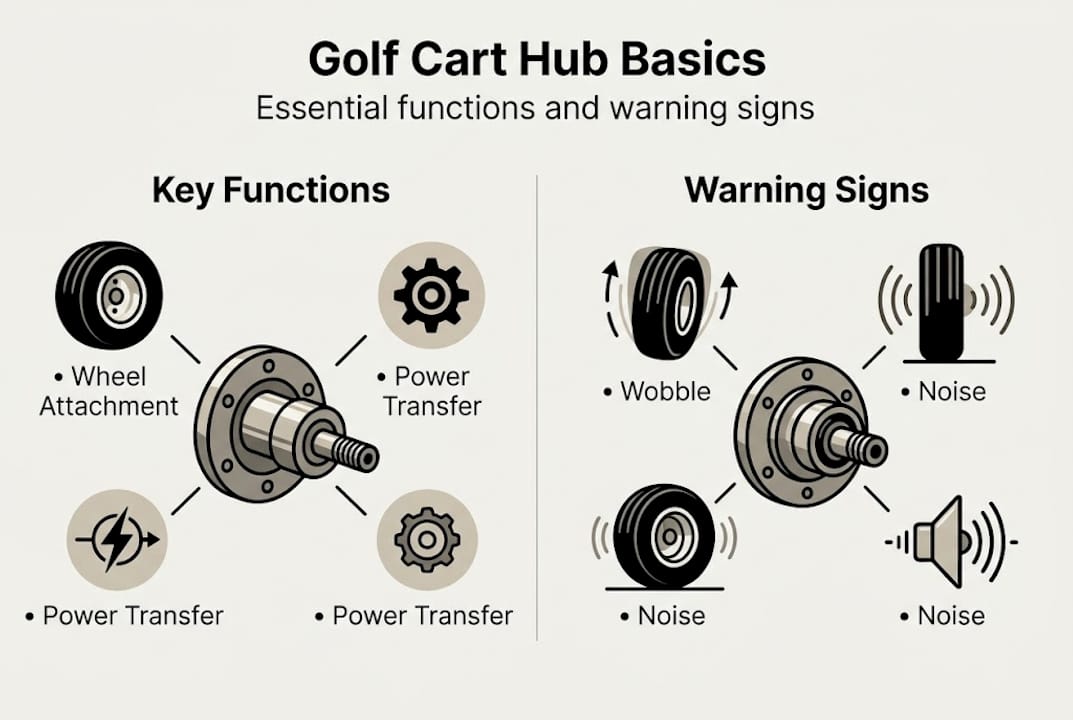
How the hub fits into the drivetrain:
| Component | Role | Connects to |
|---|---|---|
| Motor | Generates rotational power | Controller, axle |
| Axle | Transfers torque outward | Hub |
| Hub | Mounts wheel, houses bearing | Axle, wheel |
| Wheel/Tire | Contacts ground surface | Hub |
| Bearing | Reduces friction in hub | Hub housing |
Golf cart hubs come in three main design types, and knowing which one you have matters for replacement and upgrades:
Hub integrity is not optional. A cracked, corroded, or improperly fitted hub puts every other wheel component at risk. The bearing wears faster, the wheel can develop play, and at speed, a failed hub can cause a complete wheel separation.
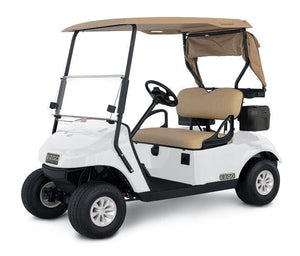
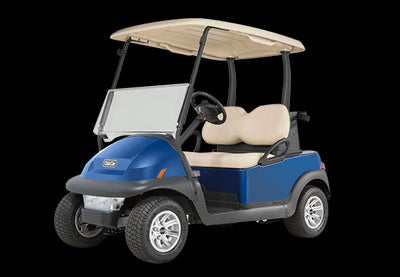
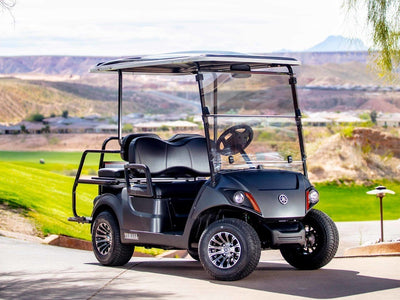
Not every hub fits every cart, and this is where a lot of owners make expensive mistakes. Hub design varies significantly between Club Car, Yamaha, and EZGO models, and even within the same brand, different model years can use different hub specifications.
Comparison of hub types:
| Hub type | Fit security | Durability | Typical price range | Best for |
|---|---|---|---|---|
| Solid | Moderate | High | Low | Stock, light use |
| Splined | Very high | Very high | Medium-High | Performance, utility |
| Keyed | High | Medium-High | Medium | Frequent wheel swaps |
Here’s how the major brands generally align with hub types:
Not all hubs are interchangeable across brands; using the wrong hub can damage wheels or axles. Checking hub cap sizes is also part of compatibility since the hub outer diameter determines which cap fits flush.
How to identify your hub type:
Pro Tip: Always pull up the manufacturer’s parts diagram for your specific model year before ordering. Hub specs can change mid-production run, and a hub that fits a 2018 model may not fit a 2020 version of the same cart.
Your cart will usually tell you when a hub is struggling. The problem is that most owners attribute these symptoms to tires, bearings, or alignment before they think to check the hub itself. Catching hub problems early keeps a small repair from turning into a full wheel assembly replacement.
Common warning signs to watch for:
Common symptoms include unusual wheel wobble, noises, or extra vibration, and these same diagnostic principles apply directly to hub failures. The golf cart motor troubleshooting process often reveals hub problems because motor strain increases when wheel rotation is compromised.

Hub-related failures account for a significant share of wheel assembly problems in golf carts that skip regular inspections. The risk compounds because a failing hub accelerates bearing wear, which then accelerates axle wear, turning a $40 hub replacement into a $200 repair job.
Pro Tip: If you notice any of these symptoms, don’t wait for your next scheduled service. Pull the wheel and inspect the hub that same day. Early action almost always means a simpler, cheaper fix.
The good news is that hubs are low-maintenance components when you give them consistent attention. A few simple steps done regularly will keep them performing well for years, even on carts that see heavy daily use.
Basic hub maintenance routine:
Routine hub checks and lubrication can significantly extend hub life, and the step-by-step maintenance approach works just as well for hubs as it does for batteries and brakes. For a broader look at keeping your cart in top shape, the maintenance essentials guide covers the full picture.
Industry consensus is clear: Inspect your hubs every time you rotate or change tires. That’s the single most effective habit for catching hub problems before they escalate.
Benefits of upgrading to heavy-duty or performance hubs:
If you’re planning golf cart upgrades like a lift kit, larger tires, or a motor swap, upgrading the hubs at the same time is a smart move. Stock hubs on modified carts are often the first thing to fail under increased stress.
Here’s what we see constantly: owners spend serious money on lift kits, custom wheels, and upgraded motors, then bolt everything onto the original stock hubs without a second thought. It’s one of the most common and most avoidable mistakes in cart customization.
The hub is the literal connection between your investment and the ground. A $500 wheel set mounted on a worn, undersized hub is a liability, not an upgrade. We’ve seen carts come in for “mysterious vibration” that turned out to be a hub that had been failing quietly for two seasons.
Smart cart owners treat hub quality as the starting point for any upgrade plan, not an afterthought. Before you invest in new wheels or tires, check your hubs. Before you add a lift, upgrade your hubs to match the new load requirements. The golf cart upgrades guide will tell you what’s possible, but the hub is what makes it reliable.
“The biggest difference between a fun day and a breakdown often comes down to your hub.”
Preventive hub maintenance delivers a safety payoff that most owners only appreciate after they’ve skipped it once.
Now that you know exactly what your hub does and what to look for, the next step is making sure you have the right parts for your specific cart. Whether you’re replacing a worn hub or planning a full upgrade, having the correct fit for your make and model is everything.
We carry a wide selection of Club Car DS parts and Yamaha G1-G22 hubs along with universal options for other makes. Every product is sourced for verified compatibility, so you’re not guessing at fitment. Browse our full range of golf cart accessories to find hubs, hub caps, and related components that match your cart. Our team is ready to help you confirm compatibility and choose the right upgrade path for your goals.
A golf cart hub connects the axle to the wheel, allowing power transfer and enabling smooth motion. It also houses the wheel bearing, which reduces friction and keeps rotation consistent.
Common symptoms include wheel wobble, noises, or vibration during driving. Visible cracking, corrosion, or a wheel that pulls to one side are also strong indicators of hub failure.
Not all hubs are interchangeable across brands, and using the wrong hub can cause damage or unsafe conditions. Always verify axle diameter, taper, and bolt pattern before purchasing a replacement.
Upgraded hubs offer increased durability, improved performance under higher loads, and enhanced safety for both stock and customized carts. They also support larger wheel and tire combinations that stock hubs cannot handle safely.
Routine hub checks and lubrication should happen every 6 to 12 months depending on how often you use your cart. Inspect the hub any time you remove a wheel for tire changes or other repairs.
Explore our store to see what our products and resources can do for you.

Leave a comment