

Your Cart Is Our Priority
Explore our store to see what our products and resources can do for you.

Regenerative braking converts a moving vehicle’s kinetic energy into electrical energy and sends it back to the battery instead of wasting it as heat. Every time you lift off the accelerator or press the brake pedal, the electric motor reverses its role, acting as a generator to slow the wheels and recharge the battery at the same time.
A few quick facts to orient the rest of this guide:
When you drive normally, the electric motor converts battery power into rotational force that turns the wheels. The moment you lift your foot off the accelerator, or press the brake pedal, the motor reverses its role: the spinning wheels now drive the motor shaft instead of the other way around. That mechanical input forces the motor to generate alternating current, which the inverter converts to direct current and routes back to the battery pack.
Think of it like pedaling backward on a bicycle connected to a small dynamo. The resistance you feel is the generator working, and that resistance is what slows the vehicle.
The energy path looks like this:
Wheels → motor/generator → inverter/controller → battery → reuse on the next acceleration
“Regenerative braking converts kinetic energy that would otherwise be lost as heat into electrical energy by running the vehicle’s electric motor as a generator during deceleration.” — Wikipedia, Regenerative braking
The inverter is the critical translator in that chain. It manages the direction of current flow and matches the voltage the battery management system will accept. Without it, the generated electricity would be incompatible with the battery’s chemistry and charge limits.
Pro Tip: If your EV or hybrid has selectable regen levels (often labeled B, L, or numbered paddles), start with a moderate setting and work up. Strong regen feels like light braking the moment you lift off the throttle, which takes a few drives to get used to.
Regen does not operate in isolation. A coordinated set of hardware and software components decides, in real time, how much braking torque comes from the motor and how much comes from the hydraulic friction system.
The vehicle’s central control unit reads pedal input, vehicle speed, battery SOC, and wheel-slip data simultaneously. For a gentle stop from city speeds, it may apply regen only. As deceleration demand increases, it adds hydraulic pressure. At very low speeds, below roughly low speeds depending on the platform, regen torque drops off because the motor cannot generate meaningful current at low RPM, so friction brakes take over entirely.
| Condition | Primary braking source | Notes |
|---|---|---|
| Light deceleration, battery has room | Regen (motor/generator) | Maximum energy recovery |
| Moderate braking, battery near full | Friction brakes | BMS limits charge acceptance |
| Hard/emergency braking | Friction brakes (dominant) | ABS may override regen |
| Very low speed (under ~5–10 mph) | Friction brakes | Motor RPM too low for useful regen |
| Highway coasting, no slowdown needed | Neither (coasting) | Kinetic energy preserved |
One side effect drivers notice is a slightly nonlinear pedal feel. Because the control unit is constantly shifting the ratio of regen to friction braking, the relationship between pedal pressure and deceleration can feel different from a conventional car, especially at the transition point.
Pro Tip: If the pedal feel in your hybrid or EV feels inconsistent, check whether a recent software update changed the regen blending calibration. Manufacturers push OTA updates that adjust this behavior.
Not every system works the same way. The implementation depends on the vehicle’s powertrain, battery chemistry, and intended use case.
Vehicle class matters here. BEVs use regen as their primary deceleration tool. PHEVs and full HEVs blend it with engine braking. E-scooters and small electric vehicles may have basic regen built into the motor controller, or none at all depending on the platform.
The technology shows up across a wider range of vehicles than most people realize.
Statistic callout: Regenerative braking effectiveness varies widely depending on vehicle type, driving cycle, and battery state-of-charge. Urban driving cycles consistently show higher recovery than highway cycles because frequent deceleration events give the system more opportunities to capture energy.
There is no single universal number, and anyone who gives you one without context is oversimplifying. Regenerative braking effectiveness varies with driving conditions, vehicle class, battery SOC, and the control strategy the manufacturer programs.
Researchers define regeneration efficiency as energy added to the battery divided by the mechanical energy available at the driven wheels. That formula, described in detail by EVKX.net’s regen calculations guide, highlights where losses occur: conversion losses in the motor, inverter losses, battery acceptance losses, and control-strategy losses all chip away at the theoretical maximum before a single watt-hour reaches storage.
| Driving condition | Typical recovery outcome | Key limiting factor |
|---|---|---|
| Urban stop-and-go | Higher recovery | Frequent deceleration events |
| Mixed city/suburban | Moderate recovery | Variable stop frequency |
| Highway cruise | Low to minimal recovery | Few deceleration events |
| Battery near full SOC | Minimal recovery | BMS charge limit |
| Emergency/hard braking | Partial recovery | Friction brakes dominate |
The main factors that determine how much energy you actually get back:
The practical takeaway: focus on driving conditions rather than chasing a specific efficiency percentage. City driving with a partially depleted battery is where regen earns its keep.
Regen rewards a specific driving style. A few adjustments make a measurable difference.
Pro Tip: On a vehicle with paddle-shifter regen control, use the stronger regen setting on the approach to a long downhill and switch to lighter regen or coasting once you reach a steady descent speed. You capture energy on the way in without fighting the system on the way down.
Myth: Regen always gives big range gains. Reality: The benefit is real but context-dependent. Highway driving with a full battery produces almost no recovery. City driving with a depleted battery produces the most. Expecting dramatic range increases on every trip leads to disappointment.
Myth: Regen replaces your friction brakes. Reality: It does not, and it cannot. Every regen system requires friction brakes for emergency stops, low-speed completion of stops, and ABS function. Regen reduces brake wear significantly, but your pads and rotors are still there and still necessary.
Myth: You should always use maximum regen. Reality: Strong regen on a highway converts kinetic energy to electricity and back again, losing energy at each conversion step. Coasting is more efficient when you do not need to slow down. Match the regen level to the driving situation.
Myth: Regen works the same at all speeds. Reality: At very low speeds, the motor generates minimal current. Friction brakes complete every stop below roughly 5–10 mph regardless of the regen setting.
Myth: A full battery means more regen. Reality: The opposite is true. A full battery cannot accept charge, so the BMS disables or severely limits regen. Starting a trip with a full charge actually reduces regen availability until the battery depletes enough to accept current again.
Golf cart owners often ask whether their cart has regen or can be upgraded to use it. The honest answer depends on the specific platform.
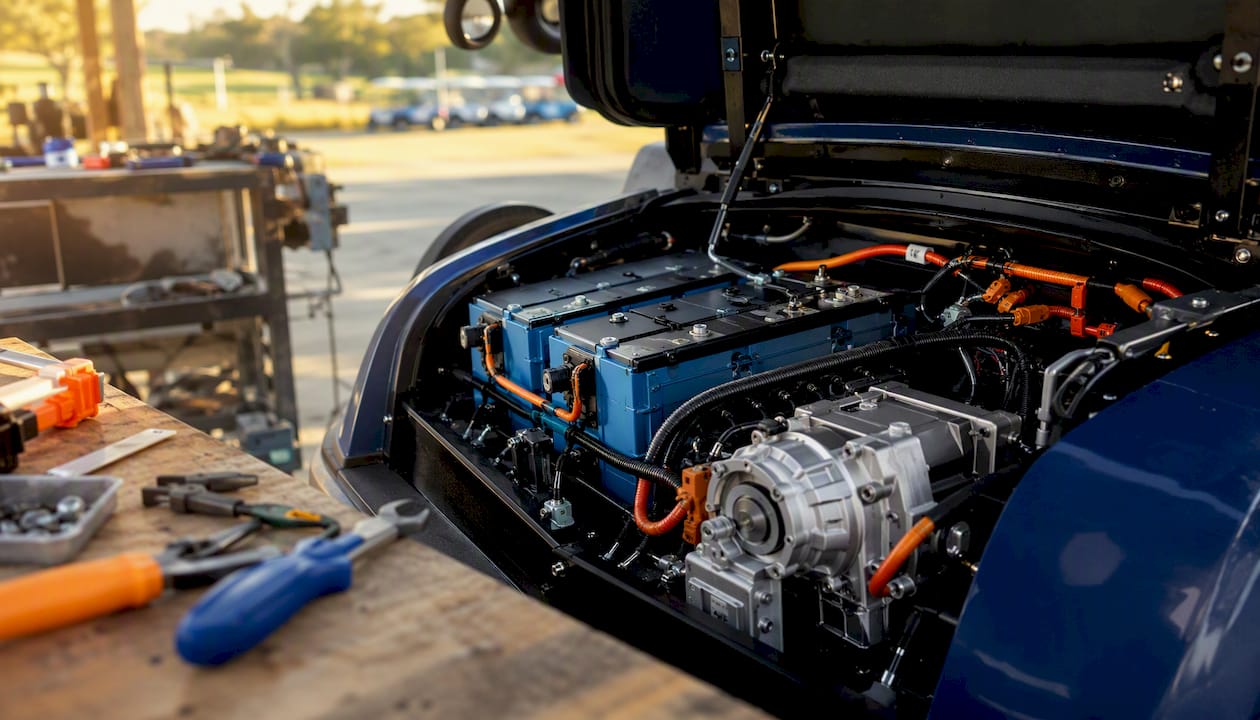
Modern electric golf carts with AC motor systems and lithium battery packs are the most likely to include some form of regen. The controller in an AC-motor cart can reverse current flow during deceleration, and a lithium pack accepts charge efficiently. Older carts with DC series-wound motors and lead-acid batteries typically do not support regen because the motor controller cannot reverse current flow and the battery chemistry handles rapid charge cycles poorly.
Practical checks for small-EV and golf cart owners:
On the maintenance side, a golf cart with active regen will see reduced wear on its mechanical brakes, which is a real cost saving over time. That said, brake system condition still needs regular inspection because friction brakes remain the safety backstop regardless of regen capability.
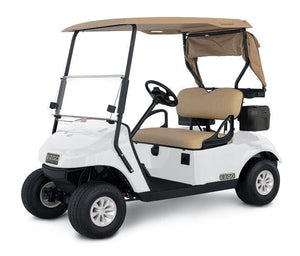
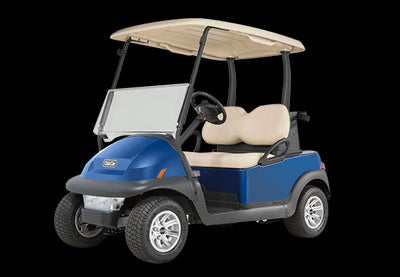
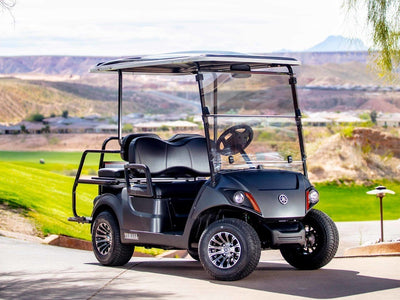
For golf cart owners looking to upgrade components or check compatibility, Golfcartstuff carries parts for EZGO, Club Car, and Yamaha platforms. Browse golf cart accessories and parts or check the lithium battery collection if you are considering a battery upgrade that would support regen.
Regenerative braking converts kinetic energy into stored electrical energy during deceleration, extending range and reducing brake wear, but its effectiveness depends heavily on battery state-of-charge, vehicle speed, and driving conditions.
| Point | Details |
|---|---|
| Core definition | Regen turns deceleration into electricity by running the motor as a generator and routing current to the battery. |
| When it helps most | Stop-and-go city driving with a partially depleted battery maximizes energy recovery. |
| Main limitation | A full battery disables regen; low speeds and emergency stops always require friction brakes. |
| Driving tip | Anticipate stops early and coast on highways rather than forcing regen when no slowdown is needed. |
| Golf cart relevance | AC motor systems with lithium packs support regen; older DC motor carts with lead-acid batteries typically do not. |
Most explainers on regenerative braking focus on Tesla range numbers or Prius fuel economy, which is fine, but it leaves golf cart owners and small-EV enthusiasts with a lot of unanswered questions. The technology is the same at its core; the constraints are just different at smaller scale. A 48V lithium pack on a Club Car behaves differently from a 400V pack in a passenger EV, and the controller that manages regen on a golf cart is a fraction of the complexity of what you find in a full-size BEV. That does not make regen irrelevant for small vehicles. It means the compatibility questions matter more, not less.
What I find underappreciated is the brake wear benefit. Golf cart owners who upgrade to a regen-capable AC system and lithium pack often notice their mechanical brakes last noticeably longer. That is a real, tangible saving that does not get talked about enough in the small-EV space. If you have questions about whether your cart’s components support regen, or you are looking for compatible parts, reach out to Golfcartstuff directly.
The sources below were used to build this guide. Consumer-facing explainers are marked (consumer); technical or research sources are marked (technical/research).
For model-specific regen behavior, always consult your vehicle’s owner manual first. Manufacturer calibrations vary significantly, and a setting that maximizes recovery on one platform may behave differently on another.
Explore our store to see what our products and resources can do for you.

Leave a comment