
Your Cart Is Our Priority
Explore our store to see what our products and resources can do for you.

TL;DR:
- Golf cart brakes are essential for safety, with worn or neglected systems increasing stopping distances by up to 50 percent. Regular inspection, paired with timely part replacement, prevents costly repairs and reduces accident risk in all riding conditions. Upgrading to disc brakes improves stopping power and heat dissipation, especially for heavier or hill-descending carts.
Golf cart brakes are the single most critical safety component on your cart, directly controlling whether you stop safely or collide with a person, vehicle, or obstacle. Understanding why golf cart brakes matter goes far beyond basic mechanics. Worn or neglected brakes increase stopping distances by 20–50%, turning a routine stop into a dangerous situation. Whether you drive on a golf course, in a neighborhood, or on a street-legal route, your braking system is what stands between a safe ride and a serious accident.
Golf cart brakes are defined as the mechanical or hydraulic system that converts kinetic energy into friction to bring the cart to a stop. Most owners treat brakes as a background concern until something goes wrong. That is exactly when accidents happen.
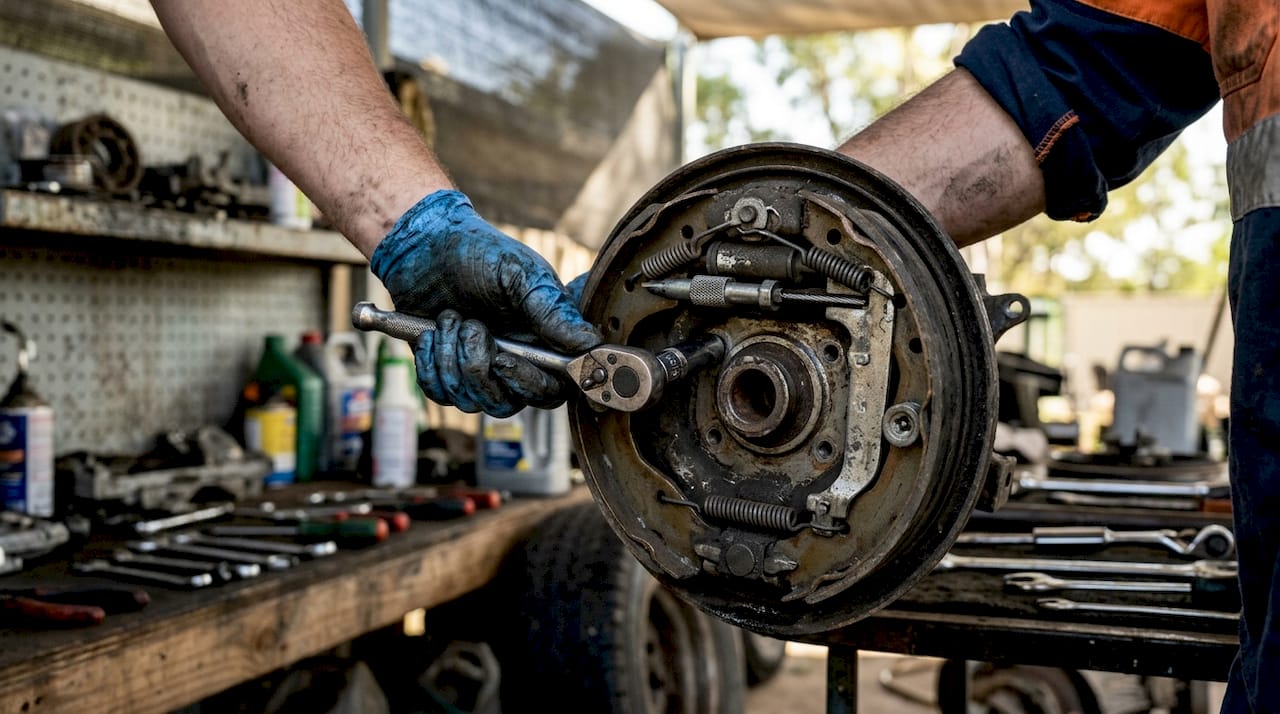
The two main brake types on golf carts are mechanical drum brakes and hydraulic disc brakes. Drum brakes are the most common system, using curved brake shoes that press outward against the inside of a drum attached to the wheel hub. Disc brakes use a caliper to clamp a rotor, generating friction with far more consistency under heat and load.
Here is how the core components work together:
Electric AC motor carts add another layer. Regenerative braking captures energy during deceleration and feeds it back to the battery. This process reduces mechanical brake wear by 30–50% and can increase range by 15%. Owners of electric carts with regenerative systems still need mechanical brakes for full stops, but their shoes and cables last significantly longer.
Understanding how your braking system is built tells you exactly where it can fail and why staying ahead of that failure protects everyone on board.
Brake problems rarely appear without warning. The issue is that most owners dismiss early signals until the system fails completely.
The most common warning signs include:
Thermal fade is a specific risk that drum brake owners on hilly terrain need to understand. When you ride the brakes down a long slope, the drum heats up and the friction coefficient of the shoe drops. The pedal feels normal, but the actual stopping force is reduced. Disc brakes handle heat far better because the rotor is exposed to airflow on both sides.
Dragging brakes caused by seized adjusters or binding cables create a different problem. The cart moves, but the brakes never fully release. This overheats the motor, drains the battery faster, and compounds repair costs well beyond the brakes themselves.
Pro Tip: Press your brake pedal firmly before every ride and note how far it travels before engaging. A change of more than half an inch from your normal baseline is your cue to inspect the cables and shoes immediately.
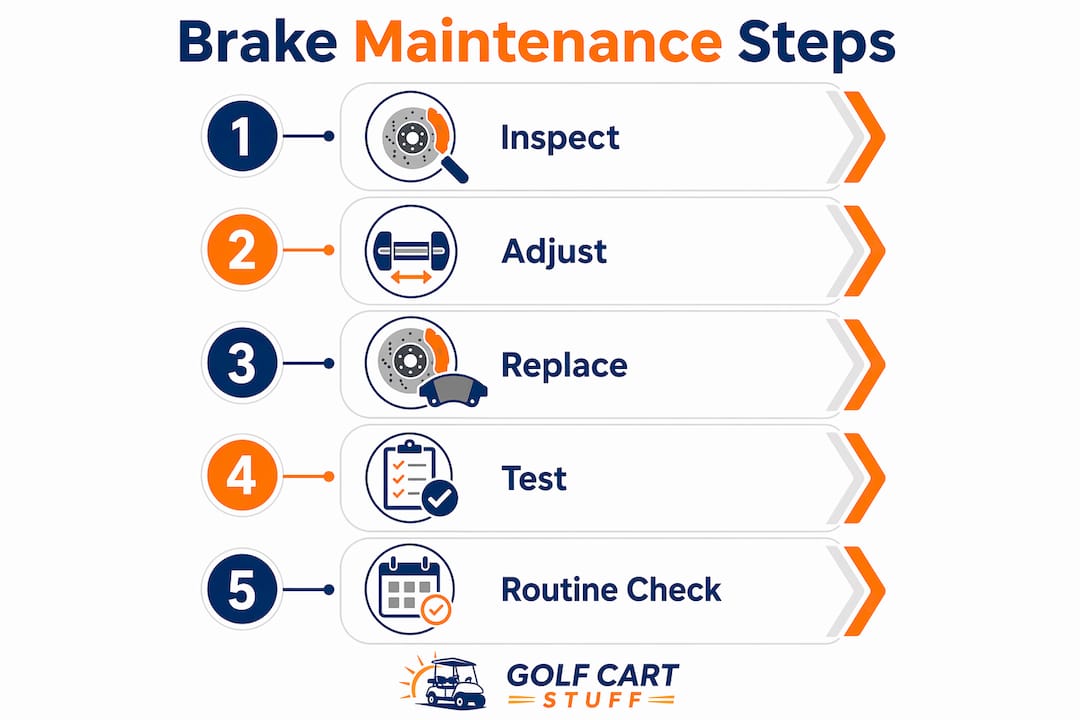
A consistent maintenance schedule is the most cost-effective thing you can do for your cart’s safety. The industry standard is to inspect brakes every 6 months or every 250–300 hours of use. That interval catches wear before it becomes damage.
Follow this sequence for a thorough brake inspection and service:
The cost math here is straightforward. A routine shoe replacement and cable adjustment runs around $30 in parts. Ignoring those early warning signs until the drum is scored or the cable snaps can push repair costs past $400. The full maintenance guide at Golfcartstuff walks through each step in detail for the most common cart models.
Pro Tip: If your cart sits unused for weeks at a time, cables can seize from moisture and corrosion even without heavy use. A quick pedal check and visual cable inspection every month takes less than two minutes and catches problems before they become expensive.
Drum brakes are adequate for light use on flat terrain. They become a genuine safety liability in specific situations, and knowing those situations helps you decide whether an upgrade is worth the investment.
Disc brakes deliver roughly 40% better stopping power than drum systems and maintain consistent pedal feel even under heat. That performance gap matters most in three scenarios:
Disc brake upgrades also reduce long-term maintenance demands. Hydraulic systems do not rely on cables that stretch and corrode. Pad wear is visible without removing the wheel, and adjustment is minimal compared to drum systems. The upfront cost of a disc brake conversion is higher, but the ongoing maintenance cost is lower.
Before upgrading, check your local regulations. Street-legal carts in many states must meet specific braking performance standards. Confirm that your chosen disc brake kit meets those requirements. The off-road and street-legal accessories page at Golfcartstuff lists upgrade components with compatibility details for common cart models.
For owners considering broader performance changes, a golf cart upgrade checklist helps prioritize which modifications deliver the most safety and performance return.
Consistent brake maintenance is the single most effective action golf cart owners can take to prevent accidents, reduce repair costs, and extend the life of every component in the braking system.
| Point | Details |
|---|---|
| Stopping distance risk | Worn brake shoes increase stopping distances by 20–50%, directly raising accident risk. |
| Inspection schedule | Inspect brakes every 6 months or 250–300 hours to catch wear before it becomes damage. |
| Cost of neglect | Minor maintenance costs around $30; ignoring warning signs can push repairs past $400. |
| Replace shoes in pairs | Replacing only one side causes uneven braking and pulling during stops. |
| Disc brake advantage | Disc brakes deliver roughly 40% better stopping power and resist thermal fade on hills. |
I have seen the same pattern repeat itself more times than I can count. An owner notices the pedal feels a little soft, figures it is fine, and keeps driving. Three months later, they are dealing with scored drums, a seized cable, and a repair bill that could have been avoided entirely with a $30 shoe replacement and 20 minutes of work.
The warning signs are not subtle once you know what to look for. A spongy pedal is not a quirk. Grinding is not a sound you wait on. These are the brake system telling you, clearly, that something needs attention right now. The owners who treat those signals as urgent spend far less money over the life of their cart than those who wait.
One thing most articles miss is the drag problem. Brakes that never fully release are not just a stopping issue. They heat the motor, drain the battery, and wear the shoes unevenly, all at the same time. I have seen carts lose meaningful range just from a slightly binding cable that the owner never noticed because the cart still moved fine.
My honest recommendation is this: make the monthly pedal check a habit. It takes less time than checking your tire pressure. If the pedal feels different from last month, investigate before you ride. That one habit prevents the majority of brake-related failures I have seen. Pair it with a proper six-month inspection, replace shoes in pairs every time, and your braking system will outlast most other components on the cart.
— Roshan
Keeping your brakes in top condition starts with having the right parts on hand before a problem forces you to stop riding.
Golfcartstuff stocks brake shoes, cables, drums, and hardware for the most popular cart models, including Club Car DS replacement parts and Yamaha G1-G22 components. Whether you are doing a routine shoe swap or a full cable replacement, the parts are priced for owners who maintain their carts regularly, not just when something breaks. Ordering is straightforward, and the product listings include compatibility details so you get the right fit the first time.
Golf cart brakes are the primary system preventing collisions and passenger injuries. Worn shoes alone can increase stopping distances by 20–50%, making the difference between avoiding an obstacle and hitting it.
The standard interval is every 6 months or every 250–300 hours of use. Carts used on hills or with heavy loads should be checked more frequently.
A spongy pedal means the brake cables have stretched or the shoes have worn down, increasing pedal travel before the brakes engage. Adjusting the cables or replacing the shoes restores normal stopping power.
Disc brakes are worth the investment for heavier carts, street-legal use, or hilly terrain. They deliver roughly 40% better stopping power than drum systems and require less ongoing maintenance.
Yes. Dragging brakes caused by binding cables or seized adjusters overheat the motor and drain the battery faster, compounding repair costs well beyond the brake components themselves.
Explore our store to see what our products and resources can do for you.

Leave a comment