
Your Cart Is Our Priority
Explore our store to see what our products and resources can do for you.

TL;DR:
- Regenerative braking in golf carts converts kinetic energy into electrical energy during deceleration, extending range and reducing brake wear. It complements friction brakes but cannot replace them, especially during hard stops or at low speeds. Proper maintenance of batteries and braking components maximizes regen efficiency and prolongs the cart’s lifespan.
Regenerative braking in golf carts is defined as a system that converts kinetic energy into electrical energy during deceleration and routes it back into the battery. Instead of wasting that energy as heat through friction brakes, the traction motor switches to generator mode and recaptures it. The result is a measurable boost in battery range, reduced wear on mechanical brake components, and steadier speed control on slopes. Golf cart owners with AC motor systems or SEPEX DC drives benefit most from this technology, and understanding how it works helps you get more out of every charge.
Regenerative braking is the industry term for what many owners call “regen.” The core process is straightforward. When you release the accelerator or apply the brakes, the traction motor switches to generator mode, converting the cart’s forward momentum into electrical current that flows back into the battery.
The controller manages this entire sequence. It monitors your speed, throttle position, and battery state, then decides how much braking force the motor should provide. The motor creates resistance as it generates electricity. That resistance is what you feel as the cart slows down.
Not every golf cart supports regen equally. SEPEX DC or AC drive systems typically support regenerative braking, while classic series DC motors do not handle it well. If your cart’s documentation mentions “regenerative braking” or “downhill assist,” your system is equipped for it.
The process follows a clear sequence every time you decelerate.
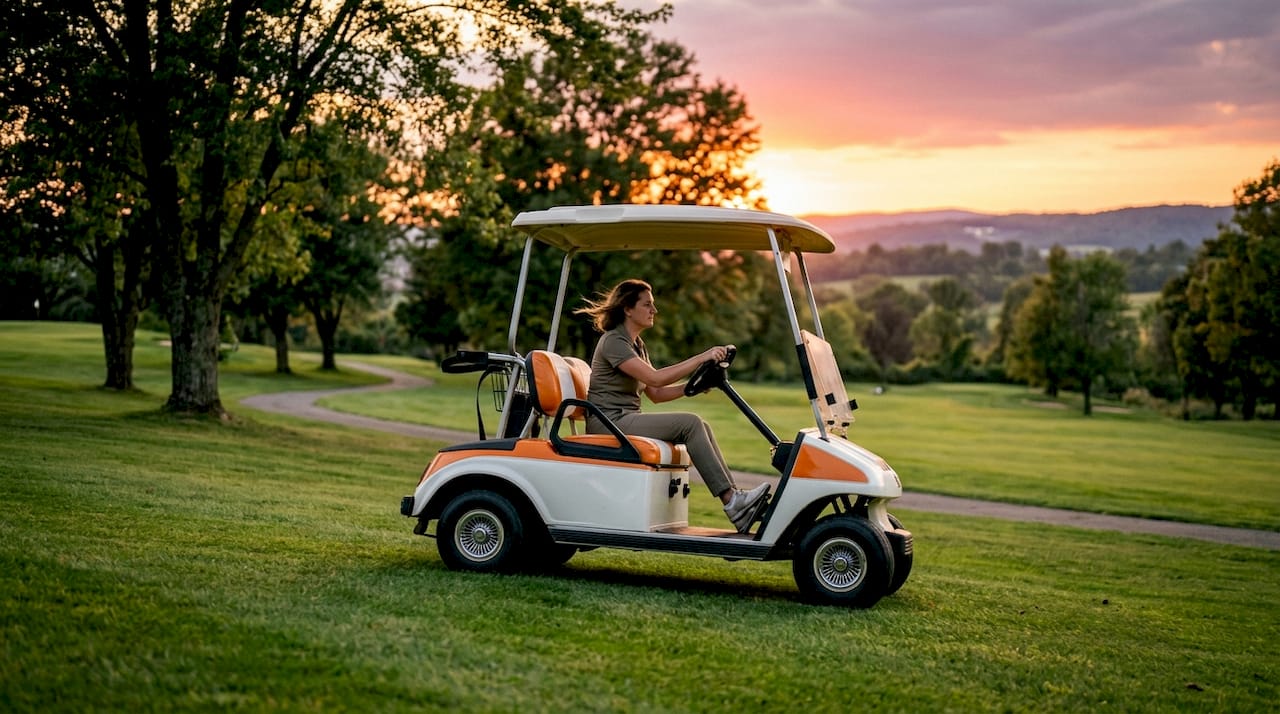
A practical example: you are driving downhill on a golf course. You ease off the throttle and the cart slows steadily. That familiar engine-braking sensation comes from the motor generating electricity, not from friction pads clamping down. The friction brakes only kick in harder if you need to stop quickly.
Pro Tip: If your cart feels like it barely slows when you lift off the throttle, check your battery state of charge. A nearly full battery limits regen engagement because the system has nowhere to send the recovered energy.
The practical advantages of golf cart energy recovery show up in three areas: range, maintenance costs, and ride quality.
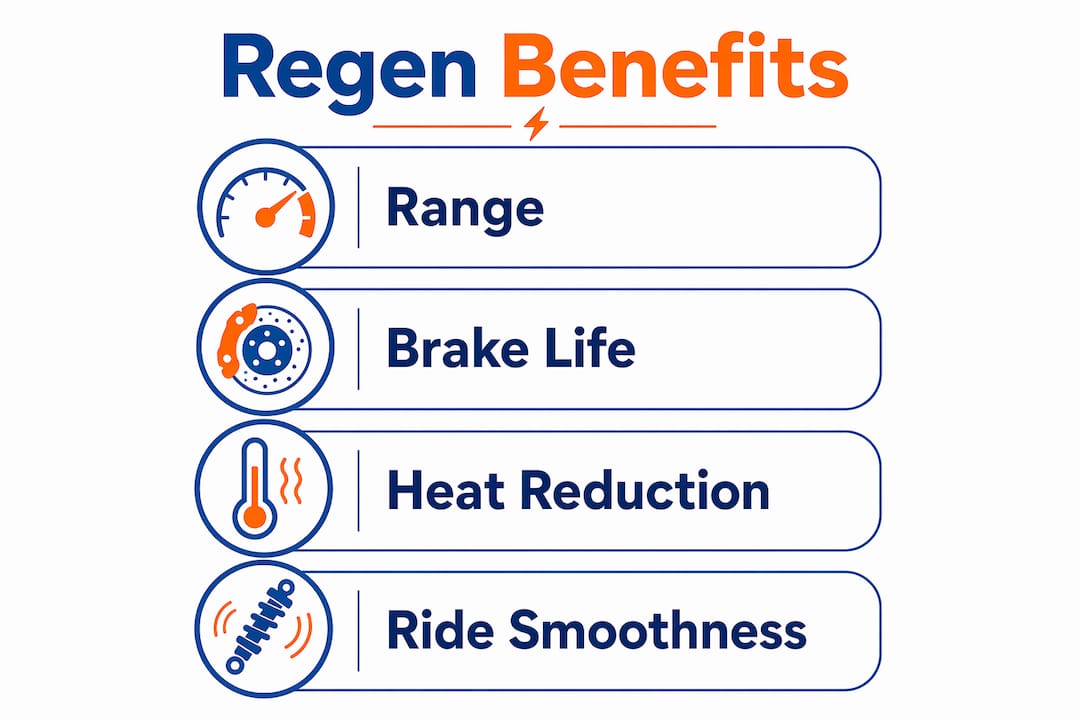
Range extension. Regenerative braking extends cart range by approximately 15% compared to carts without regen. On a course with frequent stops and rolling terrain, that difference adds up to real extra distance per charge.
Reduced brake wear. Mechanical brake components last significantly longer on regen-equipped carts. Regenerative braking reduces mechanical brake wear by 30–50%, which means fewer brake shoe replacements and lower maintenance costs over time. AC motor carts benefit most from this reduction.
Thermal management. Friction brakes generate heat every time they engage. Regen shifts much of that braking load to the motor, keeping friction brake components cooler on extended routes. Cooler components wear more slowly and perform more consistently.
Slope control. Regen provides steadier speed control on slopes by continuously absorbing energy as the cart descends. Owners report more confidence on hilly courses because the cart resists runaway acceleration without requiring constant brake pedal pressure.
Here is a quick summary of the core benefits:
Understanding the difference between regen and friction braking clarifies why both systems are necessary.
| Feature | Regenerative braking | Friction braking |
|---|---|---|
| Energy outcome | Recovers energy back to battery | Dissipates energy as heat |
| Brake wear | Minimal wear on mechanical parts | Gradual wear on pads and shoes |
| Stopping power | Limited at low speeds and full battery | Full stopping power in all conditions |
| Slope control | Continuous resistance on descents | Requires active pedal pressure |
| Maintenance need | Low for brake components | Regular inspection and replacement |
Friction brakes work by pressing pads or shoes against a drum or rotor. That contact generates heat and slows the cart. Every stop burns off a small amount of brake material. Over thousands of stops, those components wear down and need replacement.
Regen cannot fully replace friction brakes. General EV research confirms that low speeds, strong braking demand, and battery constraints all require friction brakes to provide the remaining stopping force. The two systems work together, not in competition.
The blended braking approach is what makes modern electric golf carts feel smooth. The controller calculates how much braking torque the motor can safely provide, then assigns the rest to friction brakes. You feel one consistent deceleration, even though two separate systems are working simultaneously.
Pro Tip: Never assume regen will stop your cart in an emergency. Always maintain your friction brakes in good working order. Regen is a supplement, not a replacement.
Regen effectiveness is not constant. Several conditions change how much energy the system recovers on any given ride.
Battery state of charge. A fully charged battery cannot accept more energy. When the pack is near 100%, the controller limits or disables regen entirely. You will notice less engine-braking feel right after a full charge. As the battery depletes, regen engagement increases.
Battery temperature. Cold batteries resist accepting charge current. In cooler weather, the controller reduces regen to protect the cells from damage. This is normal behavior, not a fault. Friction brakes compensate automatically.
Controller software. The controller’s logic governs the torque split between regen and friction at all times. Rule-based controls reduce regen under specific conditions for safety and battery longevity. Keeping your controller firmware updated, where applicable, maintains optimal blending behavior.
Friction brake condition. Even with regen reducing wear, friction brakes still need regular inspection. Worn brake shoes reduce the system’s ability to supplement regen during hard stops. Follow a golf cart maintenance checklist to catch brake wear before it becomes a safety issue.
Maintenance tips to keep regen performing well:
Regenerative braking in golf carts works by switching the traction motor to generator mode during deceleration, recovering kinetic energy into the battery while friction brakes handle what regen cannot.
| Point | Details |
|---|---|
| Core function | The traction motor generates electricity during deceleration and sends it back to the battery. |
| Range and wear gains | Regen extends range by approximately 15% and reduces brake wear by 30–50%. |
| Blended braking | Friction brakes always supplement regen at low speeds, during hard stops, and when the battery is full. |
| Battery conditions matter | A full or cold battery limits regen engagement; friction brakes automatically compensate. |
| Maintenance still required | Regen reduces brake wear but does not eliminate the need for regular friction brake inspection. |
I have talked with a lot of golf cart owners who bought a regen-equipped cart expecting it to feel like a Tesla. They lift off the throttle on a downhill and expect the cart to nearly stop on its own. That is not how it works, and the gap between expectation and reality leads to frustration.
What regen actually does is quietly save your brakes and add a bit of range every single ride. You will not feel it dramatically on flat ground. You will notice it most on courses with real elevation changes, where the cart holds its speed on descents without you riding the brake pedal. That is the system working exactly as designed.
The owners who get the most from regen are the ones who also take care of their batteries. A well-maintained battery pack accepts more recovered energy and keeps regen active across a wider range of charge levels. Neglect the battery and you lose most of the benefit.
My honest advice: treat regen as a brake wear reducer and a minor range extender. Keep your friction brakes in good shape regardless. Check your battery health every season. Do those three things and regenerative braking will quietly extend the life of your cart for years.
— Roshan
Whether your cart uses regen or conventional friction brakes, the mechanical components underneath still need attention. Golfcartstuff carries parts for Club Car, Yamaha, and other popular models so you can keep your braking system in top condition.
From brake shoes and drums to controller components, Golfcartstuff stocks what you need to maintain peak performance. Browse Club Car DS parts for one of the most popular regen-compatible platforms, or shop Yamaha G1-G22 parts if you run a Yamaha model. Keeping your braking components fresh protects your investment and makes sure regen and friction braking work together the way they should.
Golf cart regen refers to regenerative braking, a system where the traction motor switches to generator mode during deceleration and sends recovered energy back to the battery. It reduces brake wear and extends range on every ride.
No. Regenerative braking supplements friction brakes but cannot replace them. At low speeds, during hard stops, and when the battery is full, friction brakes provide the remaining stopping force.
A fully charged battery cannot accept more energy, so the controller limits regen engagement to protect the cells. As the battery depletes during your ride, regen strength increases.
Golf carts with AC motor drives or SEPEX DC drive systems typically support regenerative braking. Classic series DC motor carts generally do not. Check your cart’s documentation for terms like “regenerative braking” or “downhill assist” to confirm.
Regenerative braking reduces mechanical brake wear by 30–50%, with AC motor carts seeing the greatest benefit. Regular brake inspections are still necessary because friction brakes remain active during hard stops and low-speed braking.
Explore our store to see what our products and resources can do for you.

Leave a comment