

Your Cart Is Our Priority
Explore our store to see what our products and resources can do for you.

TL;DR:
- Regular maintenance is essential to prevent small golf cart issues, especially with batteries and brakes, from becoming expensive repairs. Following a structured checklist and maintaining detailed logs prolongs the cart’s lifespan and ensures safety. DIY upkeep covers most tasks, but professional help is recommended for complex repairs, with quality parts supporting long-term reliability.
Most golf cart problems don’t happen suddenly. They build up quietly through missed oil changes, ignored battery water levels, and brake cables that went a season too long without lubrication. A solid golf cart maintenance checklist takes that guesswork off the table. It gives you a repeatable process for catching small issues before they become expensive repairs. Whether you’re running an electric cart or a gas model, this guide covers every major system, organized so you can work through it without needing a mechanic’s background.
| Point | Details |
|---|---|
| Battery care is non-negotiable | For electric carts, proper charging and watering routines directly determine range and lifespan. |
| Tire pressure affects more than comfort | Correct PSI prevents handling problems and reduces unnecessary stress on the drivetrain. |
| Frequency matters as much as tasks | Grouping checks by daily, monthly, and annual intervals keeps maintenance manageable and consistent. |
| Logs protect your investment | Recording service dates and work done helps with diagnostics, warranties, and resale value. |
| DIY covers most tasks | Most routine checks cost far less when done yourself, with professional service reserved for complex work. |
The powertrain is where electric and gas carts diverge completely, so this section splits into two tracks. Whatever type you own, this is the area that rewards consistent attention the most.
Battery care is the single most important maintenance task for electric golf carts, directly affecting range, hill-climbing ability, and total lifespan. Here’s what to do on a regular basis:
Pro Tip: Use an auto-shutoff battery watering kit. It attaches to all cells at once and stops flow when each cell reaches the correct level, eliminating the risk of overfilling.
These three systems work together to keep the cart safe and predictable to drive. Neglecting any one of them puts stress on the others.
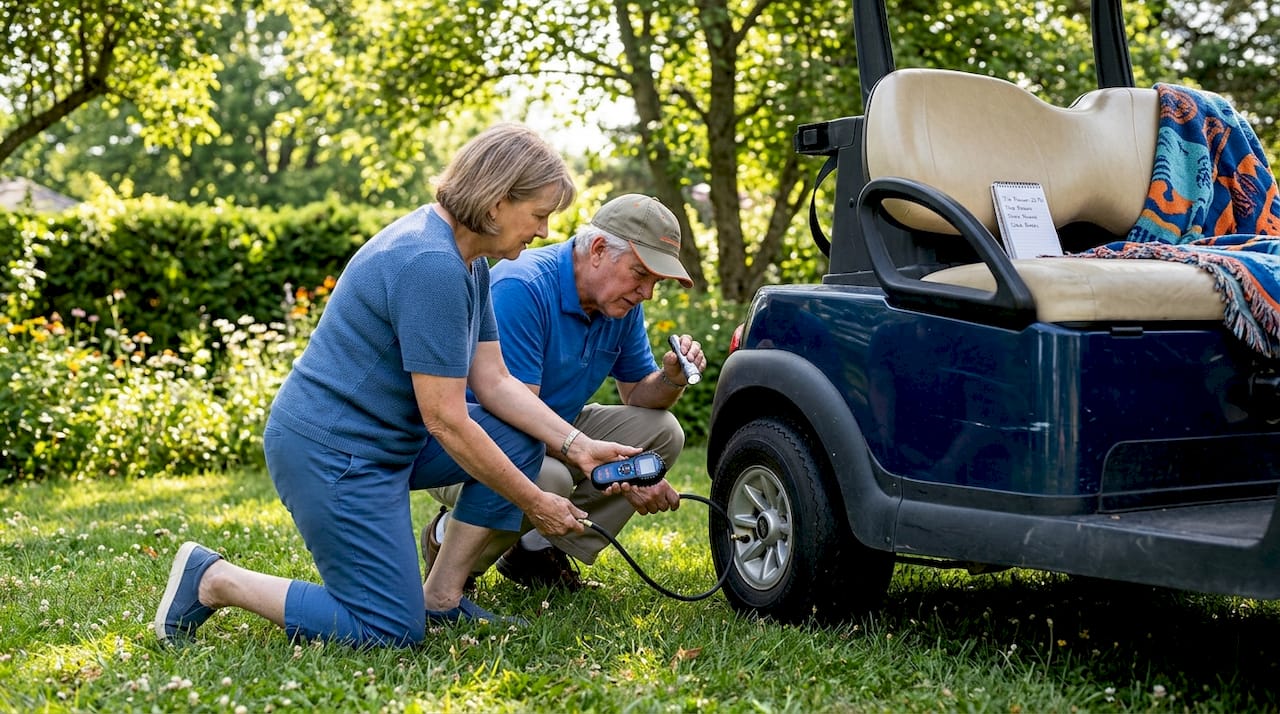
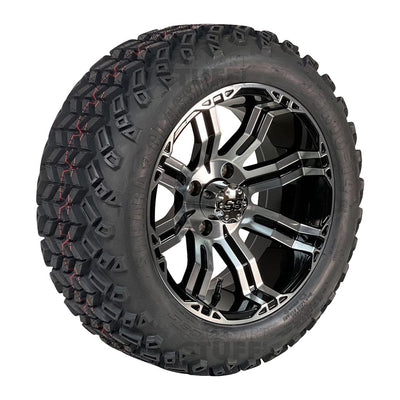
Tire pressure is the most frequently overlooked item on any golf cart inspection checklist. Maintain 18 to 22 PSI and check it weekly with a dedicated gauge. Low pressure causes sluggish handling and accelerates wear on wheel bearings. High pressure makes the ride harsh and reduces traction.
Pro Tip: Keep a compact tire gauge in your cart’s storage compartment. A 10-second pressure check before each ride catches problems before they become flat tire situations out on the course.
Brake safety checks should cover three specific things: pedal firmness, brake fluid level in the master cylinder, and parking brake holding strength. A spongy pedal usually means air in the hydraulic line. A soft parking brake that lets the cart roll on a slight slope needs cable adjustment right away.
The electrical system on a golf cart is simpler than a car’s, but it still deserves a structured look every month.
Appearance maintenance isn’t vanity. Regular cleaning removes corrosive materials before they damage components you can’t see.
Pro Tip: Apply a UV-protectant spray to plastic body panels and seat vinyl once per season. Sun damage makes plastics brittle and seats crack far sooner than they should, especially in southern climates where UV exposure is intense year-round.
The best golf cart upkeep guide isn’t just a list of tasks. It’s a system for knowing when to do each one without relying on memory.
Maintenance tasks are best organized into four intervals: weekly, monthly, every three months, and annually. Here’s a practical breakdown:
Service every 100 to 200 hours of use is a reliable rule for gas carts. Electric carts follow calendar-based intervals more closely since hours vary widely by owner.
| Task | DIY Cost | Professional Cost |
|---|---|---|
| Spring tune-up (full) | $25 to $75 | $100 to $200 |
| Battery terminal cleaning | Under $10 | Included in service |
| Brake adjustment | $10 to $20 | $40 to $80 |
| Tire rotation and pressure | Under $5 | $20 to $40 |
Professional spring tune-ups cost between $100 and $200 and cover most of the checks above. DIY handles the same ground for $25 to $75. Most owners can manage everything except controller repairs and brake hydraulic work without professional help.
Maintaining detailed service logs is something certified technicians consistently recommend. Write down the date, what was serviced, and anything that looked worn or unusual. It shortens diagnosis time when something does go wrong, and it protects you if warranty questions ever come up.
For spring recommissioning after winter storage, walk through a complete golf cart inspection list before the first ride: battery charge, tire pressure, brakes, lights, fluid levels, and a slow test drive in a safe area to confirm everything responds correctly. Golfcartstuff’s golf cart winterizing guide includes a parallel checklist for putting the cart away that makes spring startup significantly easier.
I’ve seen a lot of electric carts come in for expensive battery pack replacements that could have been avoided entirely. The owners weren’t negligent people. They just assumed the cart would tell them when something was wrong, like a car warning light. Golf carts don’t work that way.
In my experience, the gap between carts that run reliably for eight or ten years and carts that need major work by year four comes down almost entirely to battery care and brake attention. Everything else matters, but those two areas decide the outcome. A missed watering cycle here and there won’t kill a battery immediately, but it compounds. Six months of that pattern and you’ve shortened a pack’s life by a year or more.
What I’ve also found is that owners who keep written logs fix problems faster when they do appear. When a cart starts pulling to one side or losing range suddenly, a log that shows the last brake adjustment or the last full charge test cuts diagnostic time in half. It’s not about being obsessive. It’s about having data instead of guessing.
My honest take: view this golf cart inspection checklist not as a to-do list, but as a protection plan for something you’ve already invested in. The carts that get consistent, year-round maintenance routines outlast the ones that don’t by a wide margin. That’s not an opinion. That’s just what the math shows over time.
— Roshan
Following this checklist only works when you have quality parts to back it up. Golfcartstuff stocks a wide range of genuine replacement components and maintenance accessories for the most popular cart brands on the market.
Whether you need Club Car DS parts for a brake or suspension repair, or you’re shopping for Yamaha cart parts to get ahead of a tune-up, Golfcartstuff has the inventory to match your specific model and year. You’ll also find cart accessories like tire pressure gauges, battery terminal protectant spray, and battery meters that make routine checks faster and more reliable. Every part comes from trusted manufacturers, and the Golfcartstuff team is available to help you confirm the right fit before you order.
Check water levels in lead-acid batteries once a month. Always run a full charge cycle first, then add distilled water only if the cell plates are exposed.
Most golf cart tires run best at 18 to 22 PSI, though you should confirm the specific range printed on the tire sidewall for your model.
Yes. Tasks like battery watering, terminal cleaning, tire pressure checks, lubrication, and brake testing are all straightforward DIY work. Reserve professional service for hydraulic brake repairs and controller issues.
Reduced range on electric carts, sluggish acceleration on gas carts, spongy brakes, or unusual noises during turns are clear signs a full inspection and tune-up are overdue.
Detailed service logs help technicians and owners diagnose problems faster, support warranty claims, and give you a clear picture of what’s been done and what’s coming due.
Explore our store to see what our products and resources can do for you.

Leave a comment