

Your Cart Is Our Priority
Explore our store to see what our products and resources can do for you.

TL;DR:
- Proper winterization of a golf cart involves cleaning, battery maintenance, tire inflation, and choosing suitable storage.
- Electric and gas carts have different prep needs, like fuel stabilizer for gas models and full battery care for electric ones.
- Long-term storage strategies focus on indoor environment, humidity control, and regular inspections to prevent damage and costly repairs.
Leaving your golf cart unprepared for winter is one of the most expensive mistakes an owner can make. Dead batteries, corroded terminals, cracked seats, and flat-spotted tires are just a few of the repairs waiting for you come spring if you skip proper winterization. The good news is that a few focused hours of prep work now can save you hundreds of dollars in repairs later. This guide walks you through every step, from gathering the right tools to choosing the best storage environment, so your cart comes out of winter ready to roll.
| Point | Details |
|---|---|
| Preparation prevents problems | Gather the right tools and know your golf cart’s systems before starting winterization. |
| Batteries need special care | Charging, disconnecting, and cleaning batteries significantly reduces winter storage issues. |
| Environment matters | Store your golf cart in a dry, protected place to avoid rust and electrical damage. |
| Don’t skip the reactivation check | A careful inspection before first use each spring ensures safe and smooth operation. |
Before you get started, it’s essential to gather everything you’ll need for a smooth and effective winterization. Showing up halfway through the process without the right supplies means you’re leaving your cart vulnerable. Proper tools and storage materials make winterizing safer and more effective, so take inventory before you touch the cart.
Here’s what you’ll want on hand:
| Tool/Material | Recommended | Optional |
|---|---|---|
| Smart battery charger | Yes | No |
| Tire pressure gauge | Yes | No |
| Fuel stabilizer | Yes (gas) | No |
| Distilled water | Yes (electric) | No |
| Cart cover | Yes | No |
| Pest deterrent spray | No | Yes |
| Silicone spray for seals | No | Yes |
| Foam tire supports | No | Yes |
Storage location matters a lot. Indoor options like a garage or shed are ideal, offering protection from freezing temperatures and moisture. If you’re storing outdoors, a heavy-duty cover is non-negotiable. Browse golf cart storage ideas to find options that fit your property.
Gas and electric carts have different prep priorities. Electric carts need heavy focus on battery health, while gas carts require attention to fuel, oil, and the engine. Check through a full accessories checklist to make sure you’re not missing any cart-specific items.
Pro Tip: Buy your supplies at least one week before you plan to winterize. Last-minute runs to the hardware store often result in substitutions that don’t do the job as well.
Now that you’re equipped and ready, it’s time to work through each part of the process. Following precise steps prevents damage and extends your cart’s life well into future seasons.
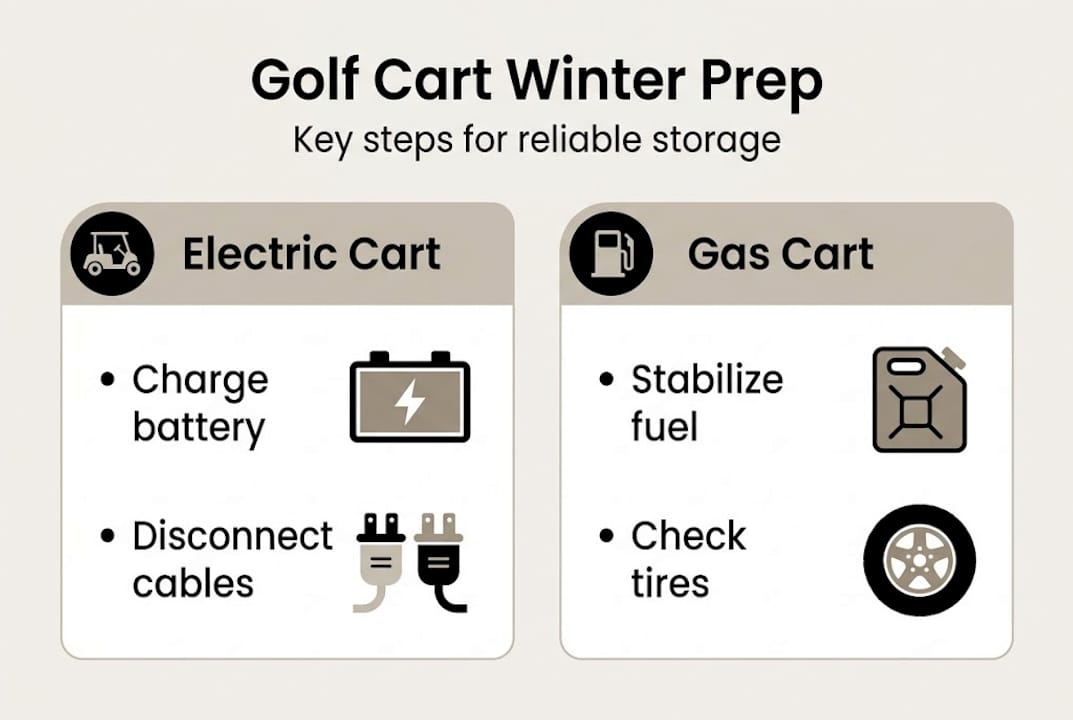
| Task | Electric cart | Gas cart |
|---|---|---|
| Battery full charge | Required | Check 12V battery |
| Disconnect battery | Required | Required |
| Fuel stabilizer | Not needed | Required |
| Oil change | Not needed | Recommended |
| Distilled water check | Required | Not needed |
| Lubrication | Required | Required |
Detailed maintenance steps show that proper prep work extends cart lifespan by up to 25%, making this checklist one of the highest-value activities you can do as an owner.
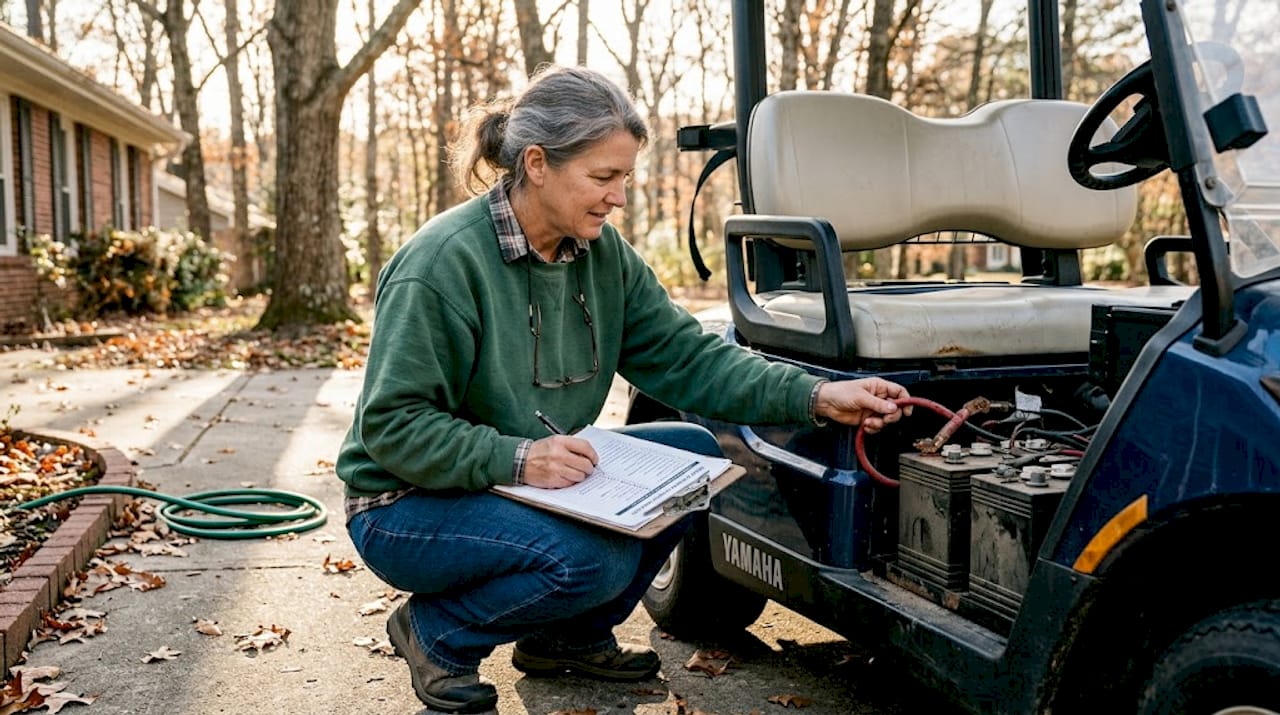
Pro Tip: Take photos of your battery connections and cable routing before disconnecting anything. When spring comes, you’ll have a clear reference for reconnection.
With the golf cart prepped, choosing the correct storage environment is just as important for long-term protection. Proper storage environment is essential for preventing rust, corrosion, and electrical damage during the months your cart sits idle.
Indoor storage advantages:
Outdoor storage considerations:
The ideal storage temperature range is between 50°F and 70°F with humidity below 60%. Extreme cold accelerates battery discharge and can cause fluid to thicken or freeze. High humidity invites rust and mold inside upholstery.
Safety note for gas cart owners: Always store your gas golf cart in a well-ventilated area. Even with the engine off, fuel fumes can accumulate in enclosed spaces and create a serious fire or health hazard. Never store a gas cart in a sealed room.
For safe golf cart storage over winter, invest in a cover that fits snugly over the entire cart, including the roof, front, and rear sections. A loose cover flaps in the wind and can scratch the paint.
Even with good intentions, it’s easy to overlook details. Here are frequent issues and quick solutions.
Skipping steps, especially battery care and storage precautions, can lead to costly repairs that far outpace what winterization costs in time and materials.
Common mistakes owners make:
Troubleshooting quick fixes:
A thorough maintenance guide can also walk you through more complex electrical or mechanical issues that may surface after extended storage.
Pro Tip: Keep a simple maintenance log, a notebook or a phone note works fine, where you record dates, fluid levels, battery readings, and any issues found. This habit alone saves most owners significant diagnostic time and money year over year.
Once winter is over, starting up your golf cart requires just as much attention as when you put it away. Proper reactivation prevents lingering issues from winter storage from becoming real problems once you’re back on the course.
Follow these steps when bringing your cart out of storage:
Visit your guide on preparing for golf cart season for a deeper look at full reactivation, including when to schedule a professional inspection if you’ve been storing for more than six months.
Most winterization guides stop at batteries and a quick wash. That covers the basics, but diligent owners know there’s more to long-term cart health than hitting the obvious checkboxes each fall.
The two most overlooked areas are ongoing humidity control and a consistent inspection schedule throughout winter, not just before and after. Humidity creep inside a covered cart causes slow rust on exposed metal and mold in seat seams. A simple silica gel pack placed inside the cart can make a measurable difference. Checking on the cart once a month, even just lifting the cover and eyeballing the battery and tires, catches developing problems early.
Another point most guides ignore: deep dive on golf cart maintenance practices that span the full year reduce winter repair bills more than any single storage tip. A well-maintained cart going into winter has far fewer issues coming out. Think of winterization not as a standalone task but as one phase of a year-round care habit. The owners who rarely face expensive repairs are almost always the ones keeping logs and running inspections on a schedule.
You’re now fully prepared, but don’t forget the right parts and accessories can make winterization and post-winter startup much smoother. Whether you need a new battery charger, a weatherproof cart cover, or replacement cables, having quality components on hand before you need them keeps the process stress-free.
At GolfCartStuff.com, we carry everything from covers and chargers to complete drivetrain components for most major brands. Browse our full range of golf cart accessories for seasonal prep essentials. If your cart needs replacement parts, check our catalog of Club Car parts or shop Yamaha golf cart parts to find exactly what your model requires before spring arrives.
Battery maintenance is the single most critical step, as a fully charged and properly disconnected battery prevents the most common and costly winter storage damage.
It is possible, but outdoor storage risks include rust, battery drain, and weather damage, so a high-quality cover and full winterization prep are non-negotiable.
Proper tire inflation to the recommended PSI, combined with moving the cart slightly every few weeks, is the most effective prevention method.
Yes, gas carts need fuel stabilizer and an oil change while electric carts require thorough battery care, as both cart types have distinct storage priorities that can’t be swapped.
Explore our store to see what our products and resources can do for you.

Leave a comment