
Your Cart Is Our Priority
Explore our store to see what our products and resources can do for you.

TL;DR:
- Using your golf cart year-round accelerates wear on seats, electrical parts, and the frame due to weather exposure. Selecting the right enclosure, such as track-style or OEM kits made from marine-grade fabric, ensures durability and proper fit, especially in harsh climates. Proper measurement and understanding of enclosure types improve long-term protection, comfort, and investment value for frequent riders.
If you use your golf cart year-round, weather exposure is not just inconvenient. It shortens the life of your seats, electrical components, and frame. Looking at real examples of golf cart enclosures before you buy is the smartest way to avoid a costly mismatch. There are more options out there than most owners realize, from factory-fit OEM kits to universal over-the-top designs. This article walks you through what to look for, what the most popular enclosure types actually look like in practice, and how to match the right solution to how you actually use your cart.
| Point | Details |
|---|---|
| Material matters most | Look for marine-grade fabric for year-round durability in all weather conditions. |
| OEM kits need verification | Some factory kits cover only 3 sides; always confirm what is and is not included before purchasing. |
| Track-style panels outperform flaps | Rail-mounted sliding panels reduce wind intrusion and make daily entry far more convenient than snap-on alternatives. |
| Size matching is non-negotiable | Enclosures are sized for 2-, 4-, and 6-passenger carts; a size mismatch means poor seals and wasted money. |
| Scenario drives selection | Your climate, cart model, and how often you ride determine which enclosure type delivers the best value. |
Before you look at specific products, you need a framework. Not every enclosure works for every cart, and the wrong choice leaves you with gaps, flapping panels, and a frustrating installation experience.
Here is what to prioritize when comparing your options:
Pro Tip: Before buying, measure your roof length and note your cart’s make, model, and passenger count. Bring those numbers to your purchase decision the way you would bring measurements to buy window blinds. Guessing leads to returns.
Track-style enclosures are the gold standard for daily usability. They mount directly to your cart’s roof using an integrated track or rail system. The panels slide and roll up along that track instead of being held by loose snaps or hooks.
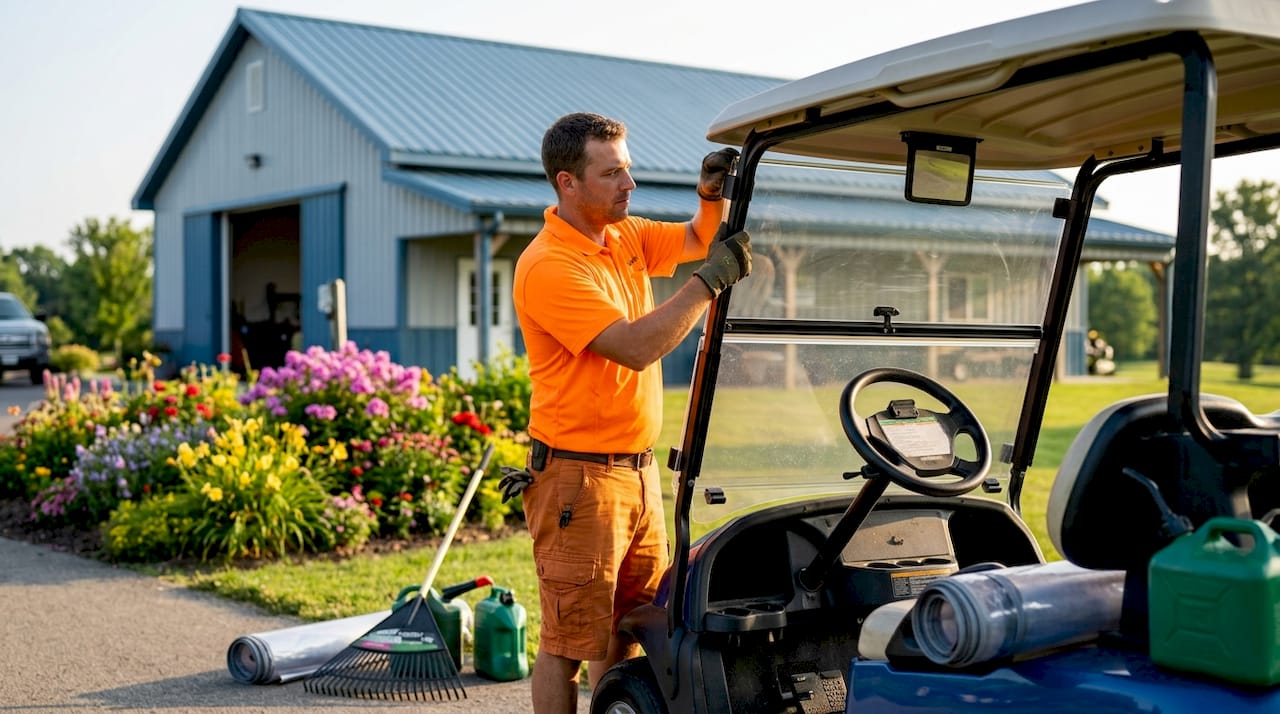
The practical benefit is real. Rail-mounted sliding panels significantly improve wind resistance compared to flap-style attachments. When you stop at a tee box in a 25-mph gust, you notice the difference immediately. The panels stay sealed rather than billowing inward.
The trade-off is cost and cart-specific compatibility. Track-style systems are generally more expensive and are designed for specific roof profiles. If you own a Club Car Precedent or EZGO RXV with a standard OEM roof, you will find plenty of options. Less common models may have fewer choices.
Best for: Frequent riders in windy or wet conditions who want a secure, repeatable setup.
Universal enclosures skip the track system and rely on straps, snaps, and zippers to attach around the roof perimeter. The Classic Accessories Deluxe Golf Car Enclosure is a well-known retail example. It fits 2-, 4-, and 6-person carts, including long-roof versions, and markets itself as a full-protection solution for the elements.
These work well for occasional use. They are affordable, widely available, and go on without specialized tools or skills. The downside is seal quality. Because they are designed to fit a range of cart dimensions, there are almost always small gaps at the corners or along the roof edge. In a light drizzle, that is fine. In a heavy rain with wind, you will feel it.
Best for: Budget-conscious owners who ride occasionally and want basic rain and wind protection without a major investment.
OEM kits are made by the same manufacturer as your cart and designed to integrate with existing roof structures, seat kits, and body dimensions. The EZGO 6-passenger enclosure kit is a practical example. It is a 116-inch black enclosure built for carts with an OEM hard top and RFS Pro rear seat. It covers three sides of the cart.
That last detail is important. Many buyers assume OEM means complete. It does not. This kit requires a separate roof and windshield purchase to create full coverage. Missing that detail leads to real frustration after delivery.
OEM kits use high-quality materials and deliver the tightest possible fit because they are engineered around your exact cart configuration. They also hold up better over time. The trade-off is price and the need to verify exactly what is included before placing your order. Always read the product details line by line.
Pro Tip: When ordering an OEM kit, check whether your cart’s rear seat kit affects roof dimensions. Enclosure compatibility is often tied to specific seat configurations, so rear seat installation details matter.
Best for: Owners who want the best possible fit and are willing to pay for quality and long-term durability.
Zippered door designs sit between track-style and universal snap-on options in terms of convenience and sealing quality. The panels attach around the roof perimeter, and entry is handled through one or two large zippered door openings on the front or sides.
Good zippered enclosures feature roll-up panels and adjustable closures that let you crack the sides open for airflow without fully removing the enclosure. This matters in spring and fall when temperatures fluctuate. You can start a round with the sides closed and roll them halfway up by the back nine.
The key quality indicator is zipper gauge. Thin, lightweight zippers fail quickly under repeated use. Look for heavy-duty YKK-style zippers or equivalent. A zipper that breaks mid-season turns a good enclosure into a frustrating liability.
Best for: Riders in climates with variable weather who need both protection and ventilation flexibility across the same ride.
Golf cart screen enclosures use mesh fabric instead of solid panels. They block insects, reduce direct sun exposure, and allow airflow while still creating a defined barrier around the cart. These are popular in Florida, Arizona, and similar environments where heat is the primary concern and rain protection is secondary.
Screen designs are not weatherproof in any serious sense. A screen enclosure will not keep you dry. What it does is make a hot afternoon far more bearable and keep bugs out during evening rides on residential properties or golf communities.
Some owners combine a screen enclosure for warm months with a solid-panel enclosure for wet or cold seasons. Storing two lightweight enclosures is more practical than it sounds, especially if both designs use compact fold-down storage.
Best for: Warm-climate owners who prioritize airflow and insect protection over rain and wind resistance.
Custom enclosures are built to your exact cart dimensions, roof type, and feature preferences. You specify the material weight, color, access points, window placement, and closure style. The result is a product that fits like it was made for your cart because it was.
Custom enclosure designs cost significantly more and require lead time. They make the most sense when you have a non-standard cart configuration, an extended roof, an aftermarket body kit, or specific requirements that off-the-shelf products cannot meet. Owners who have modified their carts with custom body kits often find that factory-sized enclosures simply do not align with their modified rooflines.
If you go this route, work with a manufacturer that requires precise measurements and photographs of your specific setup. Vague orders lead to vague results.
Best for: Modified cart owners, fleet operators with unusual configurations, and anyone whose cart does not fit standard enclosure sizing.
Side curtains are not full enclosures. They are individual panels that attach to one or more sides of an existing roof structure to block wind and rain from specific directions. Think of them as modular weather protection you can expand over time.
Many cart owners start with a front curtain and add side panels later. This approach lets you build weather protection gradually based on how you actually ride. If you almost always face headwinds on your course, a front curtain alone handles 80% of your exposure.
Side curtains are also the most affordable entry point. A quality front curtain for a standard 2-passenger cart can run under $75, making them a low-risk way to test whether enclosure protection matters enough to you before committing to a full kit.
Best for: New enclosure users, budget-conscious riders, and anyone who wants modular control over their weather protection setup.
| Type | Fit quality | Weather protection | Ventilation | Price range | Best for |
|---|---|---|---|---|---|
| Track-style | Excellent | High | Moderate | $$$$ | Frequent riders, windy areas |
| Universal over-the-top | Moderate | Moderate | Low | $$ | Occasional use, tight budget |
| OEM factory kit | Excellent | High | Moderate | $$$$ | Model-specific buyers |
| Zippered door | Good | Good | High | $$$ | Variable weather climates |
| Screen enclosure | Good | Low | Excellent | $$ | Warm, dry climates |
| Custom enclosure | Excellent | High | Custom | $$$$$ | Modified or non-standard carts |
| Side curtain add-ons | Moderate | Low-Moderate | High | $ | Beginners, budget buyers |
The comparison table tells you what each type offers. What it cannot tell you is which one fits your life. Here is how to match the options to real-world scenarios:
Pro Tip: Pair your enclosure with marine-grade seat covers to protect upholstery from the moisture that still sneaks in around edges. Enclosures reduce exposure significantly, but they do not eliminate it entirely.
Good golf cart weather protection is always a system. The enclosure is the main layer, but seat covers, floor mats, and proper storage complete the job.
I have watched a lot of cart owners buy the wrong enclosure for the same reason. They buy for the feature list instead of the daily experience.
In my experience, the single most underrated feature in any enclosure is the entry and exit mechanism. You will open and close that enclosure dozens of times per week. Track-style sliding panels make that feel effortless. A stiff zipper or a flap held by four snaps makes it feel like a chore, and chores get skipped. When people stop putting their enclosure on consistently, they tell me it was a bad product. Usually, the product was fine. The access design just did not match how they actually use their cart.
I have also seen buyers disappointed by OEM kits they did not fully read. The three-side coverage issue with many factory kits is genuinely confusing if you are not looking for it. Buyers see “OEM” and assume complete. That assumption costs real money.
My honest recommendation is this: if you ride more than twice a week in any weather, spend the extra money on a track-style or OEM kit with verified full coverage. If you ride occasionally and mostly want something to protect the cart while parked, a quality universal-fit option gets the job done.
And do not overlook accessories. A good enclosure combined with the right interior add-ons can genuinely transform how comfortable your cart feels to ride in. That comfort changes how often you use it.
— Roshan
Golfcartstuff carries enclosure options and compatible accessories for the most popular cart brands on the road today. Whether you own an EZGO, Club Car, or Yamaha, the catalog is built around model-specific fit.
For EZGO owners, the EZGO parts and accessories section covers OEM-compatible enclosure kits and the add-ons that complete them. Club Car owners can browse dedicated Club Car DS parts for enclosure solutions matched to their specific model. Yamaha riders will find their fit in the Yamaha golf cart parts catalog. Not sure where to start? The full golf cart accessories collection gives you everything in one place, from enclosures to seat covers to weather protection add-ons.
The main types are track-style, over-the-top universal, OEM factory kits, zippered door designs, screen enclosures, and custom-built options. Each differs in fit quality, weather protection level, and price.
Not always. Many OEM kits, like the EZGO 6-passenger kit, cover only three sides and require a separate roof and windshield purchase. Always verify the full contents before ordering.
Look for marine-grade fabric, which is built for daily outdoor exposure and resists fading, tearing, and moisture penetration better than standard polyester alternatives.
Measure your roof length, note your cart’s make, model, year, and passenger count, then match those specs to the enclosure’s listed compatibility. A mismatch in roof size leads to poor sealing and a frustrating fit.
Yes, if the enclosure is made from durable, weatherproof materials and designed for your specific cart. Track-style and OEM kits with solid panel coverage are the most practical choices for year-round use across different climates.
Explore our store to see what our products and resources can do for you.

Leave a comment