
Your Cart Is Our Priority
Explore our store to see what our products and resources can do for you.

Many golf cart owners mistake storage covers for enclosures, missing out on year-round riding opportunities. A golf cart enclosure is a driveable protective shell that shields you from rain, wind, cold, and sun while you ride, unlike storage covers that only protect parked carts. This guide breaks down enclosure types, materials, legal requirements, and installation tips to help you choose the right weather protection for extended cart enjoyment.
| Point | Details |
|---|---|
| Year-round riding | Enclosures extend your riding season by 3-4 months in harsh weather climates. |
| Multiple styles available | Choose from soft over-the-top, hinged, track-style, or portable designs based on your needs. |
| Material matters | Options range from vinyl and canvas to fiberglass, affecting durability and protection level. |
| Legal compliance required | Street use typically requires hard enclosures with DOT windshields, mirrors, and turn signals. |
| Installation varies | Soft enclosures install in 15-45 minutes DIY, while hard cabs need professional fitting. |
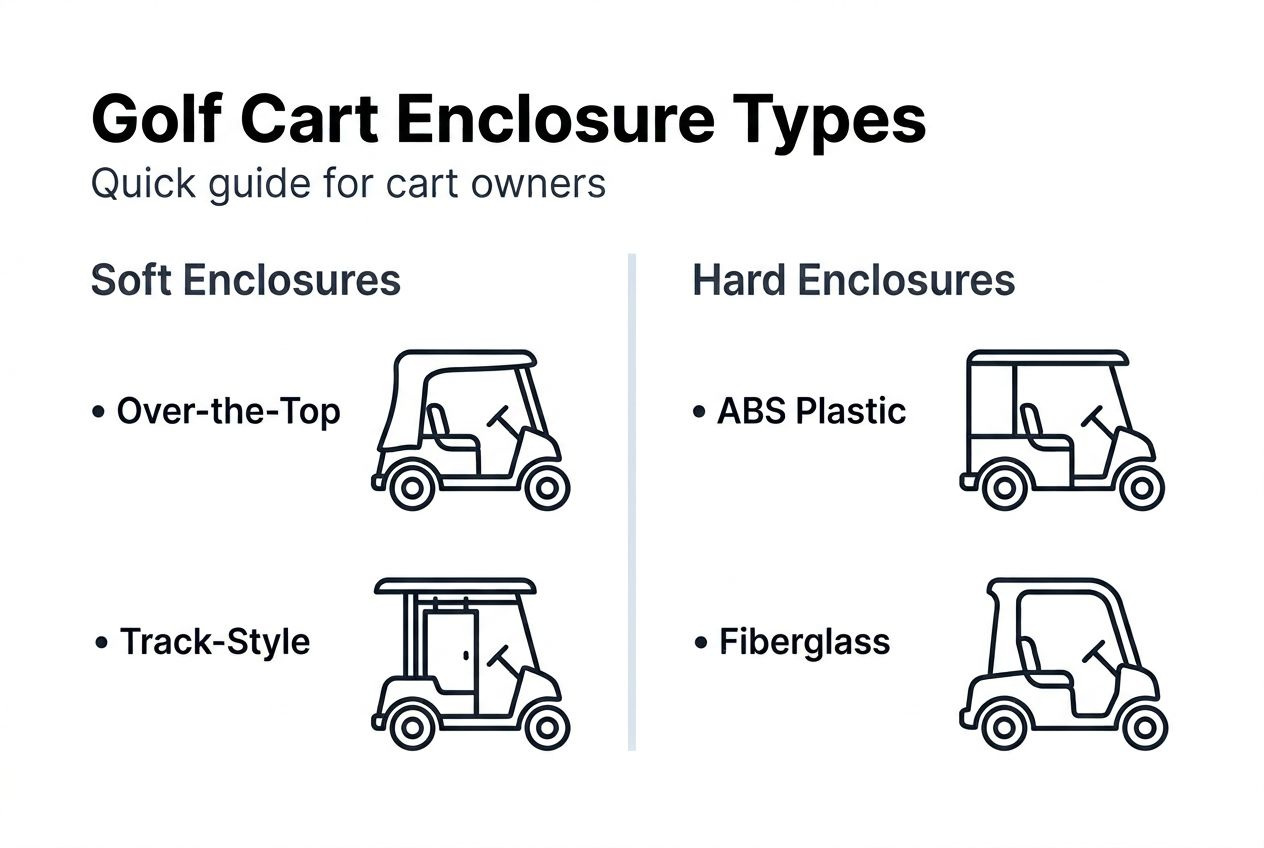
Selecting the right enclosure starts with understanding your options. There are primarily four types: Over-the-Top, Hinged, Track-Style, and Portable, each serving different needs and budgets.
Over-the-Top (Classic) Enclosures
These soft enclosures stretch over your golf cart’s existing frame like a fitted cover. They’re budget-friendly, starting around $35-$200, and install without tools in about 30 minutes. Made from vinyl or canvas, they typically last 1-3 years with regular use. Perfect for occasional riders or those testing enclosures before committing to premium options.
Hinged Door Enclosures
Hinged models add convenience with zippered or magnetic doors that swing open easily. Priced between $200-$800, they offer modular sections you can remove individually based on weather needs. You get better ventilation control and easier entry than over-the-top styles. Expect 3-5 years of use with proper care.
Track-Style Enclosures
These premium soft enclosures slide along installed tracks for custom fit and quick removal. Costing $500-$1,500, they provide superior wind resistance and cleaner appearance than traditional soft covers. The track system ensures consistent fit without sagging. Lifespan reaches 5-8 years, making them excellent value for frequent riders.
Portable Soft Enclosures
Designed for temporary protection, these lightweight enclosures install and remove in minutes without permanent mounting. Ideal for unexpected weather or seasonal use. Prices range from $75-$300, with 2-4 year lifespans depending on storage and handling.
| Enclosure Type | Price Range | Lifespan | Installation |
|---|---|---|---|
| Over-the-Top | $35-$200 | 1-3 years | 15-30 min DIY |
| Hinged | $200-$800 | 3-5 years | 30-45 min DIY |
| Track-Style | $500-$1,500 | 5-8 years | 45 min-2 hours |
| Portable | $75-$300 | 2-4 years | 10-20 min DIY |
| Hard Enclosure | $1,500-$3,000 | 15+ years | Professional |
Pro Tip: Match your enclosure type to riding frequency and local climate. Daily riders in harsh weather benefit from track-style or hard enclosures, while occasional users save money with over-the-top models.
For comprehensive comparisons of golf cart enclosure types, explore detailed reviews that break down performance in various weather conditions.
Material choice directly impacts how well your enclosure performs and how long it lasts. Understanding these differences helps you avoid premature replacements and maintenance headaches.
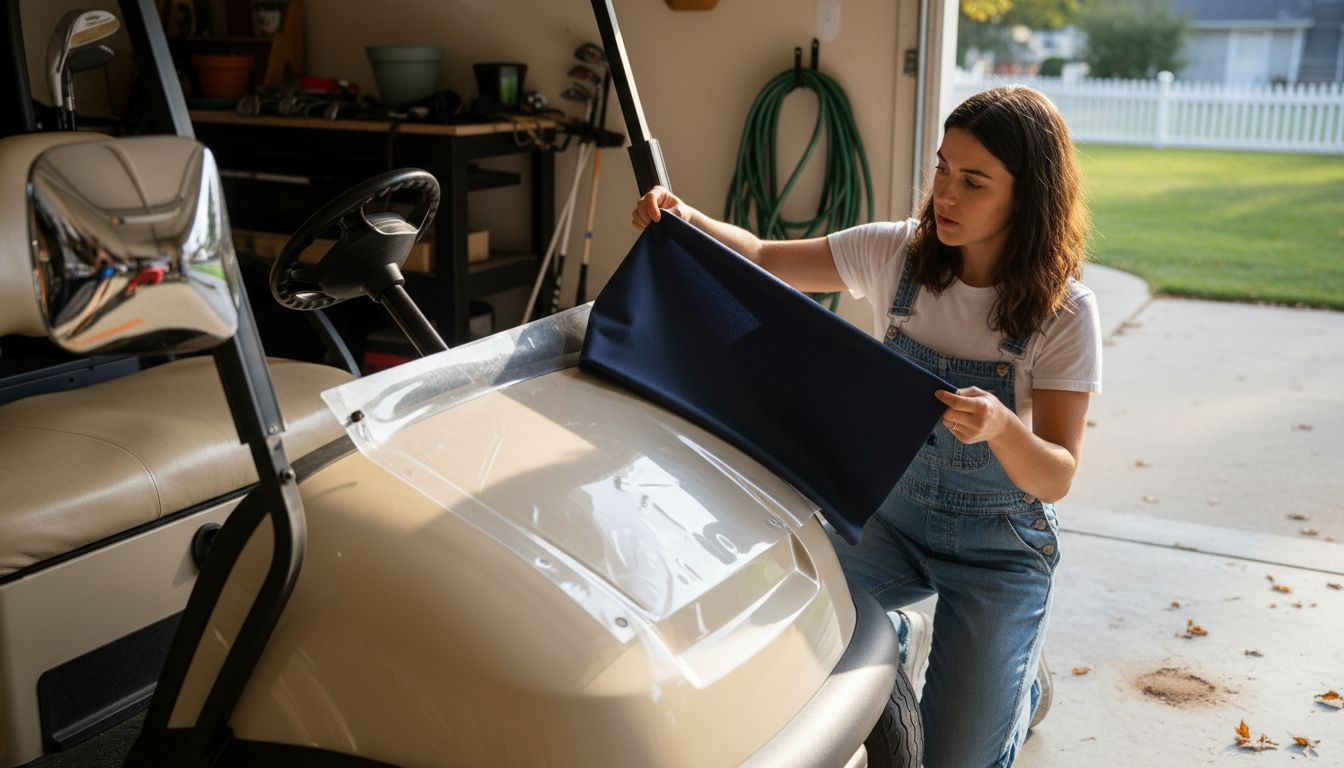
Soft Materials: Vinyl and Canvas
Vinyl enclosures offer basic weather protection at affordable prices. Standard vinyl handles light rain and wind but degrades faster under intense UV exposure. Expect 1-2 years in sunny climates without protective treatments. Canvas provides slightly better breathability and resists mildew better than vinyl, lasting 2-3 years with regular cleaning.
Premium Fabric: Sunbrella
Sunbrella fabric delivers exceptional UV resistance and color retention. This solution-dyed acrylic material resists fading, mildew, and weather damage for 5-7 years. While costing 40-60% more upfront, Sunbrella reduces replacement frequency and maintenance time significantly. The fabric breathes naturally, preventing interior condensation common with vinyl.
Hard Materials: ABS Plastic and Fiberglass
ABS plastic enclosures provide rigid protection with moderate weight. They resist impacts better than soft materials and insulate against temperature extremes. Fiberglass offers superior strength and durability, lasting 15+ years with minimal maintenance. Hard enclosures typically include integrated windshields, doors, and weatherproof seals.
Maintenance Implications
Pro Tip: Choose Sunbrella fabric if you want the flexibility of soft enclosures without constant maintenance. The extra cost pays for itself through extended lifespan and preserved appearance.
Investing in an enclosure transforms your golf cart from fair-weather transportation to reliable year-round mobility. Enclosures extend riding seasons by shielding you from conditions that would otherwise keep your cart parked.
Extended Riding Season
Enclosures add 3-4 months of comfortable riding annually in regions with cold winters or rainy seasons. You can commute in spring showers, enjoy fall foliage rides, and run errands during light winter weather. This extended usability increases your return on investment significantly.
Weather Protection Benefits
Cart Preservation
Enclosures protect more than passengers. Your cart’s dashboard, seats, and electronics stay dry and clean, preventing premature wear. Steering wheels avoid sun cracking, and metal components resist rust from moisture exposure. This preservation boosts resale value by keeping your cart looking newer longer.
Golf cart owners who install quality enclosures report using their carts 3-4 additional months yearly, protecting both riders and cart components from rain, wind, UV rays, and debris while significantly extending the vehicle’s serviceable life and resale value.
Beyond weather protection, enclosures improve comfort through temperature regulation. Enclosed carts retain heat in cold weather and can be ventilated strategically in warm conditions. This controlled environment makes longer trips more enjoyable and practical.
Learn more about protecting your investment with golf cart storage covers that complement enclosure protection when your cart sits unused.
Clearing up confusion about enclosures prevents costly mistakes and helps you set realistic expectations before purchasing.
Misconception: Enclosures and Covers Are Interchangeable
Many assume storage covers and enclosures serve the same purpose. Storage covers protect parked carts from dust, rain, and sun but must be removed before driving. Enclosures are engineered for safe operation, with visibility panels, secure attachment points, and ventilation that won’t obstruct driving.
Misconception: All Enclosures Require Professional Installation
While hard enclosures need professional fitting, most soft enclosures install easily without special tools. Over-the-top models typically require 15-45 minutes and basic instructions. You stretch the material over your cart’s frame and secure it with straps or snaps. Track-style enclosures need track installation first but subsequent enclosure attachment remains simple.
Misconception: Any Enclosure Makes Your Cart Street Legal
Adding an enclosure doesn’t automatically qualify your cart for street use. Legal requirements include DOT-approved windshields, turn signals, mirrors, seat belts, and specific lighting. Most soft enclosures lack these features. Only properly equipped hard enclosures or specially designed street-legal soft enclosures with required safety elements meet regulations.
Other Common Misunderstandings
If you plan to drive your enclosed cart on public roads, understanding legal requirements prevents tickets and safety hazards.
Required Safety Features for Street Legality
Most jurisdictions mandate specific equipment before allowing golf carts on streets. Your enclosure must include or accommodate a DOT-approved windshield made from safety glass or approved polycarbonate. You need functional side mirrors providing adequate rear visibility. Turn signals, brake lights, and headlights must be visible and operational. Seat belts for all passengers are typically required.
Why Hard Enclosures Meet Legal Standards Better
Hard enclosures come engineered with integrated safety features. They include proper windshield mounting, mirror attachment points, and structural support for lighting systems. Soft enclosures rarely accommodate these requirements without extensive modification. The rigid structure also provides crash protection that soft materials cannot offer.
Typical Local Regulations
Check your specific state and municipal codes before purchasing. Requirements vary significantly between locations. Some areas prohibit golf carts on any public roads regardless of equipment. Others allow full street access with proper safety features.
Consequences of Non-Compliance
Operating a non-compliant enclosed cart risks traffic citations, vehicle impoundment, and liability in accidents. Insurance may not cover incidents involving illegally operated vehicles. You could face personal injury liability if passengers are hurt due to missing safety equipment.
Explore the advantages of street legal golf carts and understand what makes a golf cart street legal before investing in enclosures for road use. Review street legal golf cart basics for comprehensive compliance guidance.
Proper installation ensures your enclosure performs as designed, while regular maintenance extends its useful life and maintains appearance.
Installing Soft Enclosures (Over-the-Top Style)
Installation typically takes 15-45 minutes for standard over-the-top designs without drilling required. Track-style models need track mounting first but enclosure attachment follows similar steps.
When to Hire Professionals
Hard enclosures require professional installation due to precision fitting, drilling into cart frames, and electrical integration for lighting and heating systems. Attempting DIY installation risks improper sealing, structural weakness, and voided warranties. Budget $200-$500 for professional installation of hard cabs.
Maintenance Best Practices
Pro Tip: Premium fabrics like Sunbrella resist mildew naturally and require only occasional soap-and-water cleaning, saving hours of maintenance annually compared to standard vinyl.
Troubleshooting Common Issues
Sagging corners indicate loose straps or stretched material. Re-tension all attachment points evenly. Water leaks at seams suggest worn weatherstripping or improper panel overlap. Apply seam sealer designed for your material type. Difficult zippers benefit from silicone spray lubricant applied monthly.
For detailed windshield installation that complements your enclosure setup, review our golf cart windshield installation guide. Regular maintenance extends enclosure life just as overall cart care does, so explore our step-by-step maintenance guide for comprehensive cart preservation.
Selecting the ideal golf cart enclosure balances your specific needs, local climate, budget, and intended use. Review the critical factors to make an informed decision that maximizes value and satisfaction.
Consider how frequently you’ll use your cart in various weather conditions. Daily riders justify premium track-style or hard enclosures through extended use and durability. Occasional users benefit from affordable over-the-top models that provide adequate protection without major investment.
Match material choice to your climate. Hot, sunny regions demand UV-resistant fabrics like Sunbrella. Rainy areas need waterproof vinyl or hard enclosures with proper sealing. Cold climates benefit from insulated hard cabs that retain heat effectively.
Budget for total cost of ownership, not just purchase price. A $150 vinyl enclosure lasting two years costs more annually than a $800 Sunbrella model lasting six years. Factor in maintenance time and replacement frequency.
Top Considerations for Final Selection
Consult with installation professionals for hard enclosures to ensure proper fitting and warranty compliance. Test visibility through windows before finalizing soft enclosure purchases when possible.
Now that you understand enclosure types, materials, and installation requirements, finding the right protection for your golf cart becomes straightforward. GolfCartStuff offers diverse enclosure options from budget-friendly soft covers to premium weatherproof solutions designed for year-round riding comfort.
Our customer support team helps match your specific cart model, climate needs, and budget with ideal enclosure choices. Beyond enclosures, explore complementary accessories including windshields, maintenance products, and seasonal protection items that keep your cart performing optimally throughout the year.
Visit GolfCartStuff to browse featured enclosures, compare specifications, and access installation guides that make protecting your golf cart investment simple and effective.
A golf cart enclosure is a driveable protective shell that shields you and passengers from weather while operating the cart. Storage covers are designed only for parked carts, protecting against dust and moisture when the vehicle sits unused. You must remove storage covers before driving, while enclosures remain attached during operation with proper visibility panels.
Verify your enclosure includes a DOT-approved windshield, functional turn signals, side mirrors, and seat belts for all passengers. Check that brake lights and headlights meet local visibility requirements. Since street legal requirements vary by jurisdiction, confirm your specific state and municipal regulations before operating on public roads.
Most soft over-the-top enclosures install easily in 15-45 minutes without special tools or drilling. You simply stretch the material over your cart’s frame and secure it with included straps or snaps. Hard enclosures require professional installation due to precise fitting, frame drilling, and electrical integration. Review our enclosure installation tips for detailed guidance.
Lifespan varies significantly by material and quality. Basic vinyl over-the-top enclosures last 1-3 years with regular use. Premium Sunbrella fabric models provide 5-7 years of protection. Hard enclosures made from ABS plastic or fiberglass can last 15+ years with minimal maintenance. Proper care, including regular cleaning and off-season storage, extends any enclosure’s useful life.
Enclosures effectively protect against moderate rain, wind, cold, and sun exposure. Hard enclosures with insulation perform best in temperature extremes, providing warmth in winter and cooler conditions in summer when ventilated properly. Soft enclosures offer adequate protection in mild to moderate weather but may struggle in severe storms, heavy snow, or extreme heat. Match your enclosure type to typical local weather patterns for best results.
Explore our store to see what our products and resources can do for you.

Leave a comment