
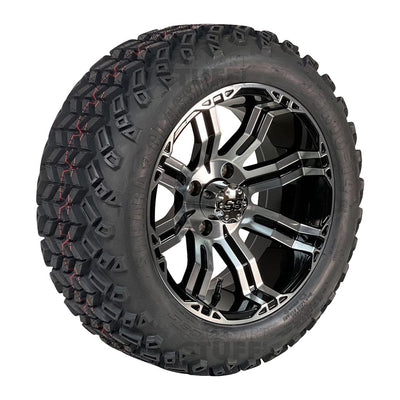
Your Cart Is Our Priority
Explore our store to see what our products and resources can do for you.

Over 80% of new golf carts in 2026 feature advanced lithium-ion batteries providing 50% more range than traditional lead-acid alternatives. The golf cart accessories market is valued at approximately USD 428.7 million in 2025 and expected to grow to USD 884.4 million by 2035 at a CAGR of 7.5%, driven by electrification and smart technology integration. This guide explores the latest trends shaping your cart customization choices in 2026.
| Point | Details |
|---|---|
| Market Growth | Accessories market nearly doubles from 2025 to 2035 with 7.5% CAGR. |
| Universal Accessories | 49% market share comes from accessories compatible with all cart types. |
| Battery Innovation | Lithium-ion batteries offer 5 to 15 times longer life cycles and 2 to 4 hour charging. |
| Safety Focus | Street-legal accessories including lights, mirrors, and seatbelts are increasingly essential. |
| Customization Trends | Performance upgrades blend with style personalization for enhanced utility and expression. |
Expanding electric golf cart fleets and technological innovations drive a growing accessories market valued at USD 428.7 million in 2025. Consumer preferences are shifting rapidly toward electrification, smart connectivity, and eco-friendly solutions that reduce environmental impact while enhancing performance. The demand for customization has never been stronger as owners seek to optimize their carts for specific purposes ranging from neighborhood transportation to off-road adventures.
Four key pillars define the 2026 accessory landscape:
These categories represent not just isolated upgrades but an integrated approach to transforming golf carts into versatile, high-performing vehicles. The market’s near doubling over the next decade reflects genuine consumer demand for accessories that solve real problems while expressing personal preferences. Understanding these trends helps you make informed decisions about which upgrades deliver the best value for your specific needs and budget.
Battery technology represents the most significant performance breakthrough in modern golf carts. Lithium-ion batteries offer 5 to 15 times longer cycle life and up to 60 miles per charge, with faster charging and less maintenance compared to lead-acid alternatives. This translates to tangible benefits in daily use, from reduced charging downtime to lower lifetime operating costs.
| Feature | Lead-Acid | Lithium-Ion |
|---|---|---|
| Cycle Life | 500 to 1,000 cycles | 5,000 to 7,500 cycles |
| Charging Time | 8 to 12 hours | 2 to 4 hours |
| Weight | 350 to 450 lbs | 100 to 150 lbs |
| Maintenance | Monthly water checks | Nearly zero |
| Range per Charge | 20 to 30 miles | 40 to 60 miles |
Smart Battery Management Systems now come standard on premium lithium installations. These systems monitor individual cell health, temperature, and charge distribution through Bluetooth-connected smartphone apps. You receive real-time alerts about potential issues before they become failures, extending battery lifespan significantly.
Key advantages driving adoption include:
Pro Tip: Monitor your battery health weekly through the BMS app, especially during extreme temperature months. Setting charge completion notifications prevents overcharging that degrades lithium cells over time.
The shift to lithium technology creates ripple effects throughout the accessory market. Lighter batteries allow for larger tire installations and performance upgrades without exceeding weight limits. Faster charging enables accessories like high-power audio systems and refrigeration units that would quickly drain lead-acid batteries.
Electric golf carts dominate market growth due to emission regulations and consumer preference for eco-friendly vehicles. Fleet operators at golf courses and resorts accelerate this transition, replacing gas models with electric alternatives that reduce noise pollution and eliminate fuel costs. State and local emission standards increasingly restrict internal combustion engines in recreational vehicles, making electric the only viable option in many jurisdictions.
Market dynamics reveal clear trends:
Electrification shapes accessory compatibility in fundamental ways. Electric carts require different mounting systems for batteries, controllers, and wiring harnesses compared to gas models. Universal accessories that work across both platforms command premium pricing and represent 49% of market share due to their versatility. You need to verify compatibility before purchasing major upgrades to avoid costly installation issues.
The electric golf cart market growth creates opportunities for smart technology integration impossible with gas engines. Regenerative braking systems, programmable speed modes, and diagnostic interfaces leverage electric drivetrains to enhance user control and maintenance efficiency. These features represent the future of golf cart ownership, making electric models the logical choice for anyone planning long-term customization.
Rising state laws enable golf carts on roads up to 35 mph with required safety features, expanding their utility beyond golf courses into neighborhood transportation. This regulatory shift drives demand for street-legal accessory kits that transform recreational vehicles into compliant road-going alternatives. Understanding what makes a golf cart street-legal prevents fines and ensures passenger protection.
Essential street-legal accessories include:
Advanced safety features go beyond minimum legal requirements. Backup cameras eliminate blind spots when reversing in crowded parking areas. Reinforced roll bars and side panels protect occupants during collisions or rollovers. Parking brake systems with visual indicators prevent unintended movement on inclines.

Compliance varies significantly by state and municipality. Some jurisdictions require vehicle identification numbers and registration, while others permit golf carts only on designated low-speed roads. Verifying local regulations before investing in street-legal modifications saves money and legal headaches.
Pro Tip: Always verify your specific county and city street-legal regulations before purchasing accessories. State laws set minimums, but local ordinances often add requirements like maximum speed governors or daytime-only operation restrictions.
Safety upgrades improve more than legal compliance. They protect your investment by reducing accident severity and insurance premiums. Proper lighting systems make carts visible to other drivers during dawn and dusk hours when visibility drops. These practical benefits justify safety accessory costs beyond mere regulatory checkbox completion.
Performance and aesthetic accessories transform basic golf carts into personalized machines reflecting individual tastes and functional needs. Lift kits improve ground clearance by 4 to 6 inches, allowing installation of larger all-terrain tires that handle rough trails and uneven surfaces. This upgrade appeals to off-road enthusiasts using carts on hunting properties or rural acreage where stock suspension bottoms out.
| Feature | Stock Suspension | 6-Inch Lift Kit |
|---|---|---|
| Ground Clearance | 4 to 5 inches | 10 to 11 inches |
| Tire Size Capacity | 18 to 20 inches | 22 to 25 inches |
| Off-Road Capability | Limited | Excellent |
| Installation Cost | Included | $800 to $1,500 |
| Handling Impact | Stable | Requires adjustment |
LED lighting upgrades deliver both practical and aesthetic benefits. Underbody accent lighting creates eye-catching effects at night events while headlight conversions to LED bulbs increase visibility by 200% compared to halogen alternatives. Energy efficiency matters more on electric carts where every watt saved extends driving range.
Customization categories experiencing strong growth include:
The line between functional and aesthetic accessories blurs as consumers demand products serving multiple purposes. A quality sound system enhances entertainment but also provides navigation prompts and phone call handling. Custom seats look distinctive while reducing back pain during extended use. This dual-purpose approach drives purchasing decisions as buyers maximize value from each upgrade.
The market projected to grow from USD 428.7 million in 2025 to USD 884.4 million by 2035 at 7.5% CAGR reflects fundamental economic and lifestyle shifts. Rising disposable income in North America and emerging markets enables discretionary spending on recreational vehicle customization. Golf carts transition from purely utilitarian transport to lifestyle accessories expressing personal identity and recreational priorities.
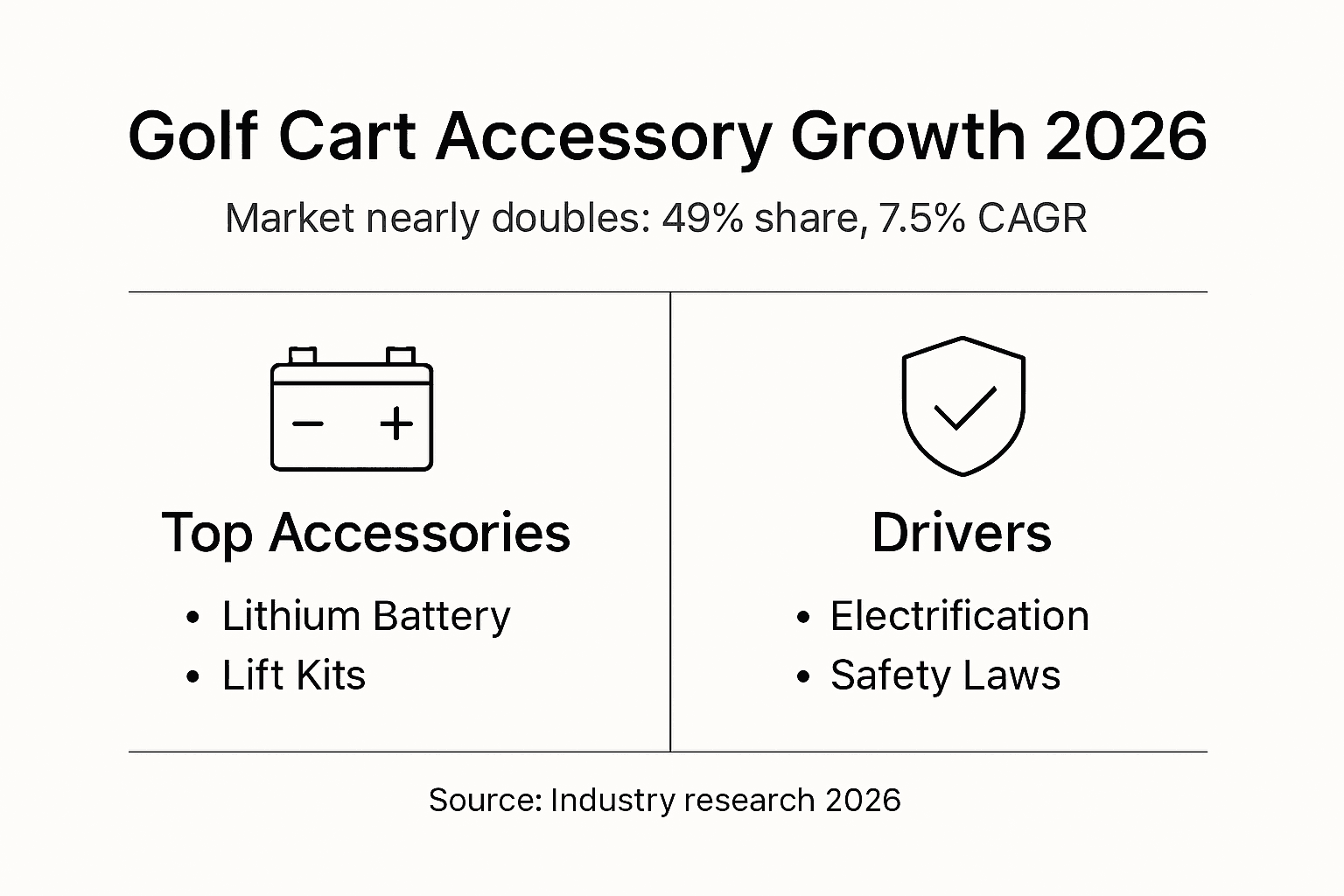
| Market Segment | 2025 Value | 2035 Projection | Growth Rate |
|---|---|---|---|
| Universal Accessories | $210 million | $433 million | 7.5% CAGR |
| Electric-Specific | $130 million | $280 million | 8.4% CAGR |
| Safety & Compliance | $55 million | $110 million | 7.2% CAGR |
| Performance Upgrades | $33.7 million | $61.4 million | 6.8% CAGR |
The universal accessory segment accounts for approximately 49% market share due to broad compatibility and cost-effectiveness. Manufacturers investing in universal designs capture wider customer bases without maintaining separate product lines for gas and electric models. This economies of scale benefit translates to lower prices and faster innovation cycles.
Regional growth patterns show North America maintaining market leadership while Asia-Pacific experiences fastest expansion rates. Retirement communities in Florida, Arizona, and California drive domestic demand as aging populations adopt golf carts for mobility and social activities. International markets in Southeast Asia and Latin America discover golf cart utility for resort transportation and gated community transit.
Economic drivers powering market expansion include:
These converging factors create sustained growth trajectory independent of short-term economic fluctuations, making accessories a stable investment category for both consumers and manufacturers.
Misconceptions about accessory costs, performance, and practicality create hesitation preventing beneficial upgrades. Separating fact from fiction helps you make confident decisions based on accurate information rather than outdated assumptions.
Myth: Lithium batteries cost too much for average cart owners. Fact: Prices drop 5 to 10% annually while lifespan advantages deliver lower total cost of ownership. A $2,500 lithium battery lasting 10 years costs less per year than $800 lead-acid batteries replaced every 3 years.
Myth: Electric carts lack power compared to gas models. Fact: Advanced AC motors provide superior torque and smoother acceleration. Electric systems deliver instant maximum torque while gas engines require RPM buildup, making electrics feel more responsive in real-world use.
Myth: Customization serves only aesthetic purposes without practical benefits. Fact: Many popular accessories enhance safety, utility, and comfort. Lift kits enable off-road capability, LED lighting improves visibility, and ergonomic seats reduce fatigue during extended use.
Myth: Installing accessories voids manufacturer warranties. Fact: Federal law protects your right to modify vehicles. Manufacturers cannot void entire warranties due to aftermarket parts unless they prove the specific part caused the failure.
Myth: Universal accessories work equally well on all cart types. Fact: While marketed as universal, some products require adapter brackets or modifications for proper fitment. Always verify compatibility with your specific make, model, and year before purchasing.
Understanding these realities empowers smarter investment decisions. The initial sticker shock of premium accessories often masks long-term value propositions that become apparent through extended ownership. Researching actual performance data rather than relying on anecdotal impressions reveals which upgrades deliver measurable benefits for your usage patterns.
Selecting appropriate accessories requires systematic evaluation of your cart type, primary use cases, and budget constraints. Following a structured decision framework prevents impulse purchases that deliver minimal value.
Assess your cart specifications: Document make, model, year, voltage system, and current battery type. Electric carts specify 36V, 48V, or 72V systems affecting accessory compatibility.
Define primary usage scenarios: Identify whether you primarily use your cart for golf rounds, neighborhood errands, off-road recreation, or beach access. Each purpose prioritizes different accessory categories.
Prioritize core functional upgrades: Address batteries, safety equipment, and performance basics before cosmetic enhancements. A reliable power system and legal compliance create foundations for further customization.
Research compatibility requirements: Verify accessories work with your specific cart without requiring expensive adapter brackets or professional modification. Manufacturer websites list compatible models.
Budget for complete installation: Factor in mounting hardware, wiring harnesses, and professional labor if you lack mechanical experience. DIY installation saves money but risks improper fitment.
Plan upgrade sequences: Spread major purchases across multiple months or years to manage cash flow. Completing related upgrades together often reduces total installation costs.
Installation considerations vary by complexity. Simple accessories like mirror mounts and cup holders require basic hand tools and 30 minutes. Complex upgrades including lift kits, battery conversions, and lighting systems demand mechanical knowledge, specialized tools, and 4 to 8 hours of labor.
Pro Tip: Install monitoring apps and perform monthly accessory inspections to catch loose fasteners, frayed wiring, and component wear before failures occur. Preventive maintenance extends accessory lifespan by 40% compared to reactive repairs.
Key safety protocols include:
Consult local regulations when planning street-legal modifications. Many jurisdictions require inspections certifying safety equipment meets standards before issuing road-use permits. Working with experienced installers familiar with local requirements streamlines approval processes.
Finding quality accessories requires researching retailer reputations, reading verified customer reviews, and comparing warranty terms. Established online retailers offer broader selections than local dealers while providing detailed specifications and compatibility information. Choosing the right upgrades transforms your cart into a reliable, personalized vehicle matching your exact needs.
Ready to transform your golf cart with cutting-edge accessories backed by expert guidance? Explore our comprehensive collection of top-rated upgrades covering batteries, lighting, lift kits, and safety equipment. Our detailed modification guides walk you through installation steps with professional tips ensuring successful upgrades.
Whether you’re building an off-road beast or optimizing for neighborhood cruising, our specialized resources help you select compatible accessories matching your vision and budget. Browse products from trusted manufacturers, compare specifications side by side, and access installation support ensuring your upgrades deliver maximum value and performance.
Lithium-ion battery conversions lead sales due to extended range and lower maintenance. LED lighting kits, lift kits with all-terrain tires, and street-legal safety packages follow closely as top sellers.
Yes, lithium batteries deliver 5 to 15 times longer lifespan than lead-acid alternatives, offsetting higher upfront costs through reduced replacement frequency. Total ownership costs favor lithium after year three of typical use.
Verify your cart’s make, model, year, and voltage system before purchasing. Consult manufacturer compatibility charts and confirm mounting requirements match your cart’s frame design and electrical system capacity.
Most states require headlights, taillights, turn signals, rearview mirrors, seatbelts, and audible horn. Specific requirements vary by jurisdiction, so check local DMV regulations before purchasing street-legal kits.
Simple accessories like mirrors and lighting require only basic tools and mechanical aptitude. Complex upgrades including lift kits, battery conversions, and electrical system modifications benefit from professional installation ensuring safety and proper function.
Universal accessories offer broader compatibility and lower costs but may require adapter brackets for optimal fit. Model-specific products integrate seamlessly without modifications, justifying premium pricing for perfect fitment and appearance.
Explore our store to see what our products and resources can do for you.

Leave a comment