
Your Cart Is Our Priority
Explore our store to see what our products and resources can do for you.

TL;DR:
- A golf cart Hydrolink system automates battery watering, eliminating manual errors and improving battery lifespan.
- It features auto-shutoff valves, safety flame arrestors, and requires matching the correct kit to your battery voltage and cell count.
- Using Hydrolink significantly reduces maintenance, water waste, and battery failures, making it a vital upgrade for serious cart owners.
Most golf cart owners spend more time thinking about tire pressure than battery water levels. That’s a problem. Flooded lead-acid batteries need consistent, accurate watering to deliver full performance and lifespan, and manual methods leave too much room for error. A golf cart hydrolink system solves that directly. It automates the watering process, removes the guesswork, and protects your battery investment without requiring you to become a battery technician. This guide explains exactly how it works, why it matters, and how to get the most out of it.
| Point | Details |
|---|---|
| Hydrolink is a watering system | It delivers water automatically to each battery cell, eliminating manual filling errors. |
| Kits are voltage-specific | You must match your Hydrolink kit to your cart’s battery voltage (36V or 48V) and cell count. |
| Safety is built in | Dual flame arrestors make it the safest way to water lead-acid batteries in a golf cart. |
| Battery life improves significantly | Proper watering through Hydrolink can reduce battery failures by around 40% in regular use. |
| Use only approved water supplies | Only Flow-Rite water supply systems are compatible. Non-approved sources void the warranty. |
A golf cart hydrolink system is a single-point battery watering system designed specifically for flooded lead-acid batteries. Instead of removing each battery cap individually and guessing at water levels with a flashlight and a funnel, the Hydrolink system connects all your battery cells through a network of tubing, fill ports, and automatic shut-off valves. You connect one water source, and the system distributes water to every cell that needs it. Cells that are already at the correct level receive nothing. That precision is the core value of hydrolink technology in golf carts.
Here’s what a standard kit includes:
The system is compatible with common battery voltages including 36V and 48V setups. The kit you choose depends on both your pack voltage and the individual battery cell count, which we’ll cover in the compatibility section. If you’ve been confused about the difference between a golf cart hydraulic system (which handles suspension or braking) and a Hydrolink watering system, those are completely separate things. Hydrolink is purely about battery maintenance.
Understanding how a golf cart hydrolink works removes any hesitation about using it. The process is straightforward once you see the sequence.
You should always water your batteries after charging, not before. Charging causes the electrolyte to expand. Filling before a charge cycle can cause overflow and acid spillage on your battery tray and cables.
Pro Tip: Use only distilled water in your Hydrolink system. Tap water contains minerals that accelerate plate corrosion and reduce battery life faster than inconsistent watering ever would.
Maintenance checks on the system itself are minimal. Inspect the tubing connections for cracks every three to four months, confirm the fill ports seat cleanly on the batteries, and verify your water reservoir or pump is functioning before each watering session.
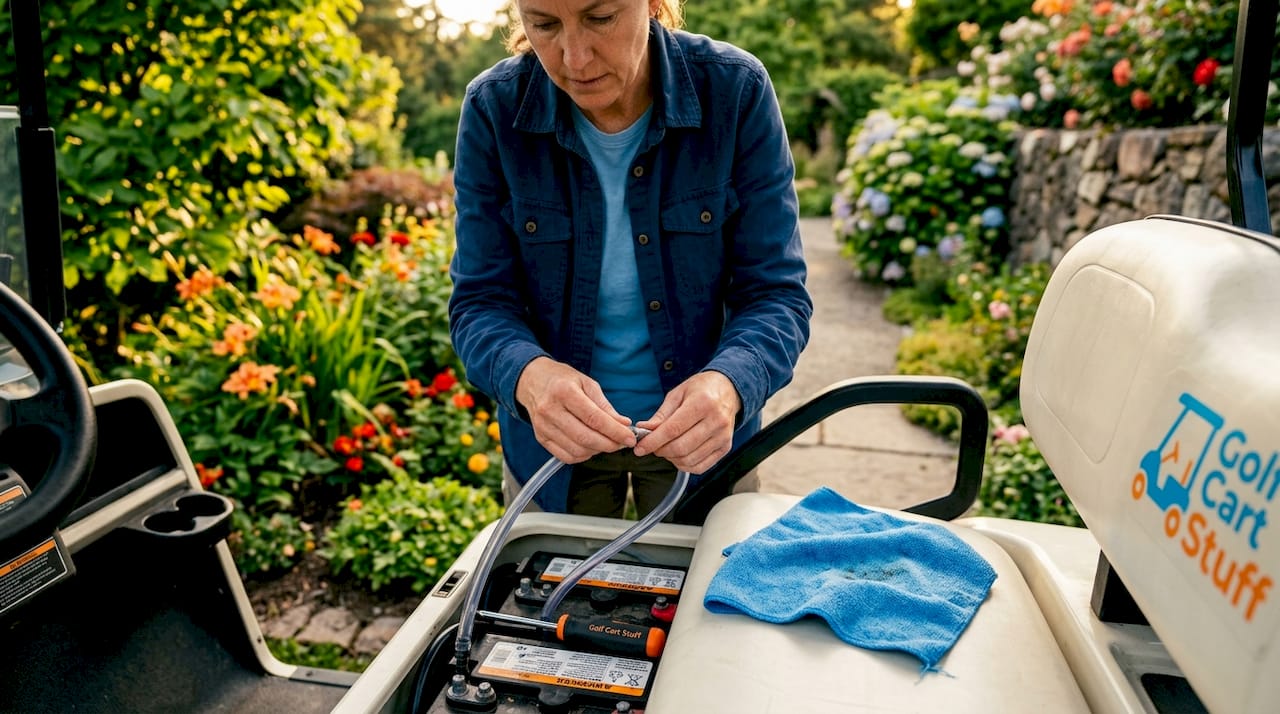
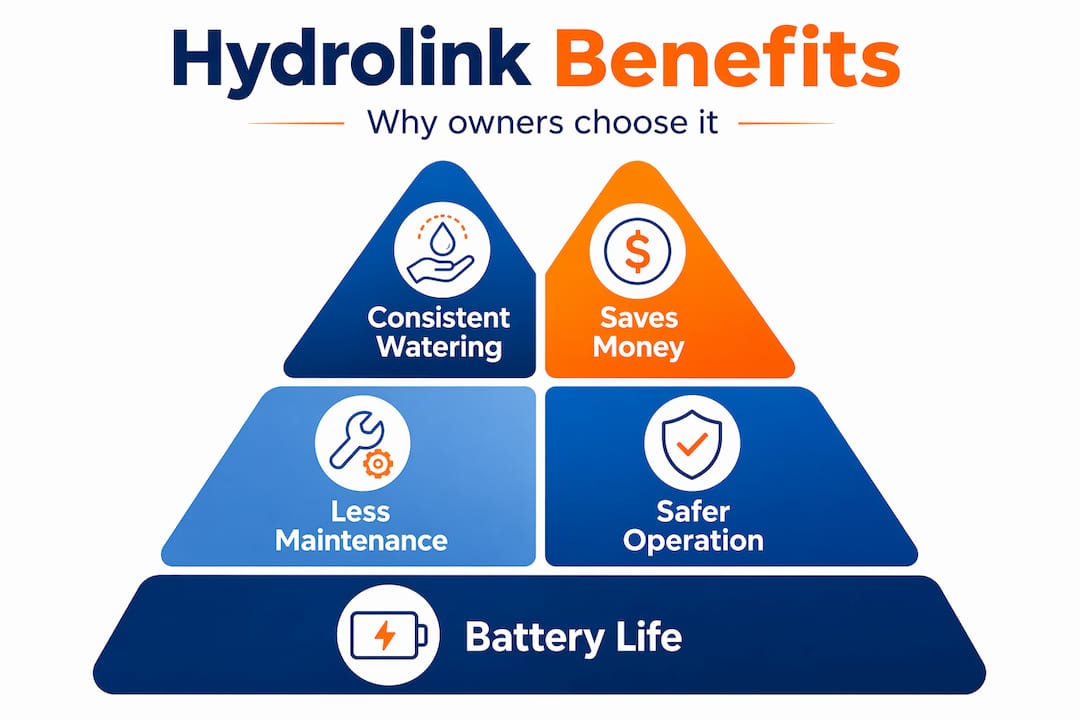
The case for Hydrolink goes well beyond convenience. There are measurable, documented reasons why golf courses and serious cart owners have adopted it.
The benefits of golf cart hydrolink use compound over time. A battery pack that costs $800 to $1,200 to replace can last years longer with proper hydration. The cost of a Hydrolink kit pays for itself well within the first battery replacement cycle it helps you avoid.
Pairing your Hydrolink system with regular monitoring of battery charge levels gives you a complete picture of your battery health between full maintenance sessions.
Not all Hydrolink kits are interchangeable. The right kit depends on your specific battery pack configuration, and buying the wrong one means the tubing routing won’t fit and the port count will be off.
| Kit Type | Voltage | Battery Type | Cells Covered | Notable Features |
|---|---|---|---|---|
| HydroLink 36V Kit | 36V | 6V batteries (6 batteries) | 18 cells | Standard fill ports, tubing, hand pump option |
| HydroLink 48V (6V) Kit | 48V | 6V batteries (8 batteries) | 24 cells | Extended tubing, auto-shutoff valves |
| HydroLink 48V (8V) Kit | 48V | 8V batteries (6 batteries) | 18 cells | Flow-Rite compatible, hand pump option, MSRP approx. $299 |
| HydroLink 48V (12V) Kit | 48V | 12V batteries (4 batteries) | 12 cells | Fewer ports, shorter tubing run |
To find your configuration, check the battery label for voltage and count the total number of batteries in the pack. Then cross-reference with the 36V vs 48V guide to confirm your setup before purchasing.
One compatibility rule is non-negotiable: HydroLink requires use with approved Flow-Rite water supply systems only. Using a non-Flow-Rite water source voids the warranty and can cause improper fill pressure, which defeats the entire purpose of the auto-shutoff valves. Flow-Rite manufactures both the Hydrolink-branded kits under Trojan Battery and their own branded versions under the Flow-Rite name. Either works, as long as the water supply component is from the approved lineup.
Getting your Hydrolink system installed correctly the first time saves significant frustration down the road. The installation itself is not complicated, but a few details matter.
Pro Tip: Label each battery and its corresponding fill port during installation. If you ever need to replace a port or trace a leak, having a numbered diagram of your battery layout saves time and prevents mistakes.
Here are the most important practical considerations:
Reviewing battery care best practices alongside your Hydrolink routine gives you a fuller maintenance program that extends both the batteries and the watering system itself.
I’ve watched more battery packs get killed by bad watering than by any other single cause. Overwatering is actually more common than underwatering, because owners feel like they’re doing the right thing by topping everything off. What they’re really doing is diluting the electrolyte and pushing acid out of the cells where it corrodes everything it touches.
The misconception I hear most often is that battery maintenance is just about charging. People invest in a quality charger, feel good about that decision, and completely ignore the water levels for months. The charger keeps the pack alive, but slow dehydration is still killing the plates underneath. By the time performance drops noticeably, the damage is already irreversible.
In my experience, Hydrolink systems change the entire dynamic because they make correct watering the path of least resistance. You don’t need to remember the right fill level, carry a flashlight, or worry about spilling acid on your hands or the cart frame. You connect the pump, and the system does the rest correctly every single time.
The investment question is straightforward to me. A quality Hydrolink kit costs less than a single battery replacement. If it extends the life of your pack by even one additional year, you’ve more than recovered the cost. For serious cart owners, this isn’t a luxury upgrade. It’s the maintenance foundation everything else rests on.
— Roshan
Once you understand your battery configuration and which Hydrolink kit fits your cart, the next step is sourcing the right parts from a supplier who actually stocks what you need. Golfcartstuff carries an extensive inventory of golf cart battery accessories and maintenance components for all major cart brands. Whether you’re running a Club Car, Yamaha, or EZGO, you’ll find compatible parts without hunting across a dozen different sites. Browse Club Car DS parts or Yamaha golf cart parts to find components that match your model. If you need a broader search across accessories and maintenance tools, the full golf cart accessories catalog is the place to start.
A golf cart Hydrolink system is a single-point battery watering system that automatically fills each cell of a flooded lead-acid battery pack to the correct electrolyte level. It uses auto-shutoff valves, tubing, and fill ports to replace manual watering.
Most carts need watering every two to four weeks, though hotter climates and heavier use increase that to every two weeks. A typical 48V system uses 8 to 16 oz of distilled water per month.
No. Hydrolink systems are only compatible with approved Flow-Rite water supply systems. Using a non-approved source voids the warranty and can cause improper fill pressure and system malfunction.
Yes, but you must purchase the correct kit for your specific voltage and battery cell count. Kits are not interchangeable across different configurations, so verify your pack setup before ordering.
Yes. Proper Hydrolink maintenance reduces battery failures by around 40% in regular use and can extend overall battery lifespan by 20 to 30% by preventing sulfation, stratification, and overwatering damage.
Explore our store to see what our products and resources can do for you.

Leave a comment