
Your Cart Is Our Priority
Explore our store to see what our products and resources can do for you.

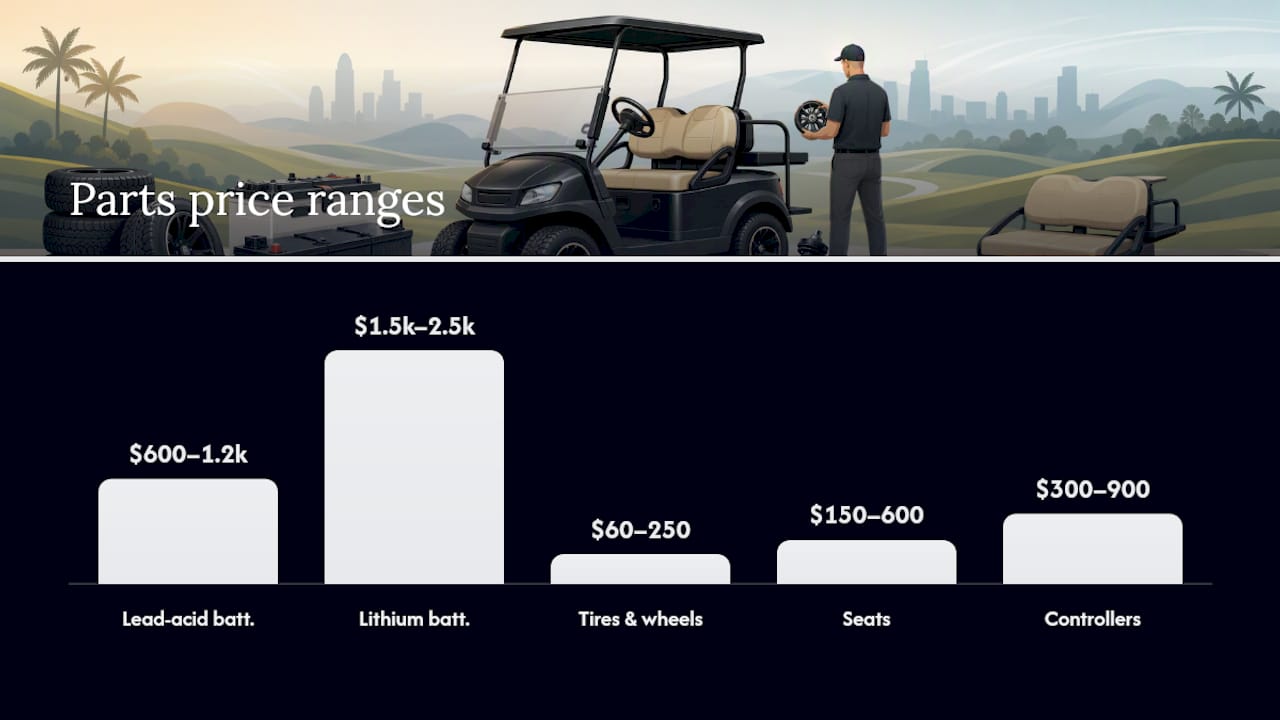
A replacement golf cart battery pack runs $600 to $2,500 in 2026, tires land between $60 and $250 each, seats cost $150 to $600, and a controller upgrade can hit $300 to $900. The single biggest force behind those numbers isn’t inflation in the usual sense. It’s tariffs on imported components, some stacked as high as 100% to 600%, plus raw-material costs that climbed roughly 18% across the industry.
If you’re budgeting for repairs or an upgrade on an E-Z-GO, Club Car, or Yamaha, spend on safety-critical systems first: brakes, steering, and batteries. Cosmetic upgrades like body kits and lighting can wait.
Statistic: Imported golf cart components have gotten up to 25% more expensive, a direct result of 2026 tariff policy hitting parts sourced overseas.
Pro Tip: If your budget is tight, don’t split it evenly across every part on your wish list. Fix brakes and steering first, upgrade the stereo last.
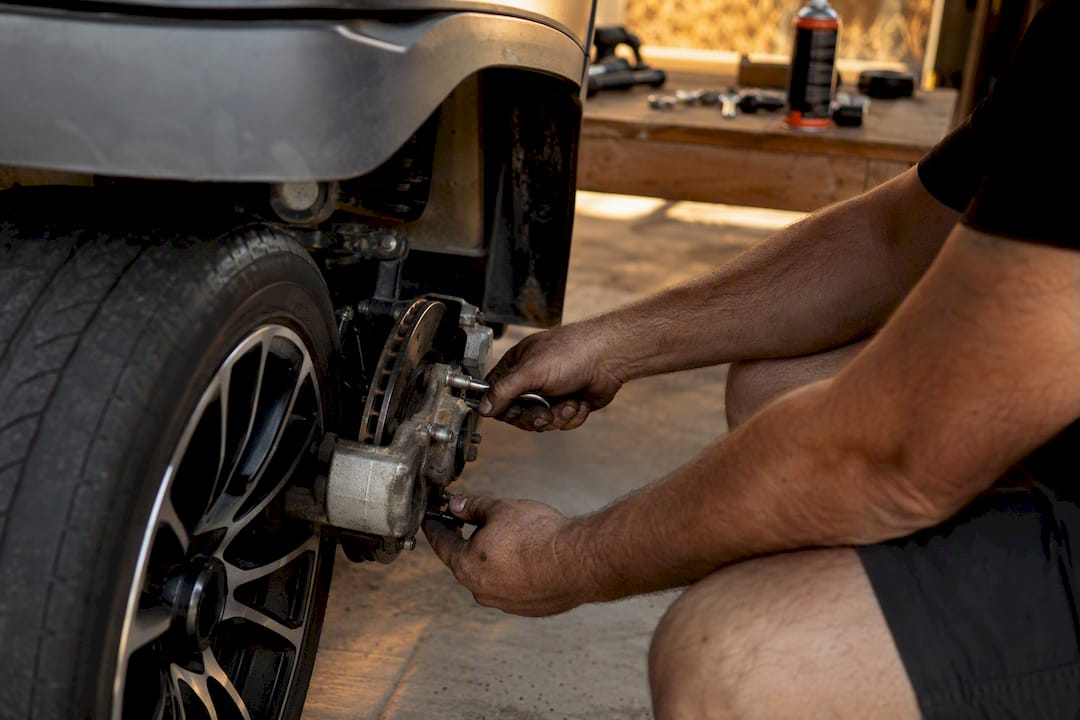
Tariffs and battery technology, not general inflation, are the two biggest levers behind 2026 golf cart parts pricing in the United States.
| Point | Details |
|---|---|
| Tariffs drive the biggest swings | 2026 duties on imported components reach 100% to 600%, raising costs on motors, controllers, and batteries. |
| Battery choice sets long-term cost | Lithium adds $1,500 to $3,000 upfront but lasts far longer than lead-acid, changing the real cost per year. |
| Safety parts come first | Spend on brakes, steering, and batteries before cosmetic upgrades like body kits or lighting. |
| OEM protects critical systems | Use OEM for controllers and battery systems; trusted aftermarket works fine for seats and cosmetics. |
| Golf Cart Stuff stocks by brand and model | Fitment guides and in-stock inventory for E-Z-GO, Club Car, and Yamaha parts reduce wrong-order risk and wait times. |
Prices vary by part type, brand platform, and whether you buy OEM or aftermarket. Here’s what U.S. buyers should expect to pay for the most commonly replaced components, parts only, before labor.
| Part Type | Retail Cost Range (Parts) | Installation/Labor | OEM vs Aftermarket | Warranty/Lifespan |
|---|---|---|---|---|
| Batteries (lead-acid) | $600–$1,200 | $50–$150 | OEM matches voltage exactly; aftermarket often cheaper but shorter cycle life | 1–3 years / 4–6 years lifespan |
| Batteries (lithium) | $1,500–$2,500+ | $100–$250 | Aftermarket lithium can rival OEM if from a reputable maker | 3–5 years / 8–10 years lifespan |
| Tires & wheels | $60–$250 each | $10–$30 per tire | Aftermarket dominates this category with wide quality range | 2–4 years tread life |
| Seats | $150–$600 | $50–$150 | OEM guarantees factory fit; aftermarket varies in stitching quality | 3–5 years |
| Windshields | $80–$300 | $30–$80 | Aftermarket acrylic is common and reliable for most uses | 2–5 years |
| Lift kits | $150–$600 | $100–$300 | OEM-approved kits protect suspension warranty | 5+ years |
| Controllers/motors | $300–$900 | from low to mid hundreds | OEM strongly recommended for controllers due to voltage matching | 2–4 years |
| Chargers | a few hundred dollars | $20–$50 (self-install typical) | Aftermarket chargers work but confirm amperage matches your pack | 2–4 years |
Lithium battery packs explain most of the spread in that battery row. Lithium systems typically add $1,500 to $3,000 over lead-acid, but they also last two to three times longer, which changes the real cost-per-year math even when the upfront number looks steep.
Pro Tip: Always cross-reference your cart’s serial number or model plate before ordering a controller. A wrong voltage match can fry your motor within days.
Six factors explain nearly all of the price spread you’ll see between two versions of the same part. Understanding them helps you predict where money is being spent and where you can safely cut corners.
Statistic: A motor that cost $250 two years ago can now run closer to $320 to $350 once you factor in the roughly 25% jump in imported component costs layered on top of tariff surcharges.
Hire a professional for anything touching brakes, steering linkage, or your battery bank’s wiring. A miswired battery pack can cause a fire; a loose steering component can cause a wreck. Cosmetic swaps are fair game for a Saturday-afternoon DIY project.
Pro Tip: Order your parts and book installation at the same shop when possible. It shortens the warranty claim process if something fails, since you won’t be pointing fingers between a parts seller and an installer.
Start with the parts that keep you safe, not the parts that make your cart look good. That single rule saves more money over five years than any coupon code.
Pro Tip: Pair a manufacturer’s parts warranty with a shop’s installation warranty. If a part fails within the covered window, you want both warranties working together, not one canceling out the other.
In-stock parts ship in 2 to 5 business days. Anything custom, special-order, or tied to a specific model year takes longer, and 2026 tariff-driven supply disruptions have stretched some of those timelines further.
Order custom work early, and confirm stock status with your dealer before you cancel any other service appointment you’ve scheduled around the repair.
Before you check out, confirm your cart’s exact model, year, and voltage platform. A Club Car DS and a Club Car Precedent look similar but rarely share body panels or lift kit hardware.
Pro Tip: Photograph your cart’s serial number plate and save it to your phone. You’ll need it for nearly every parts lookup, and it saves you from digging through the glovebox every time you order.
Golf Cart Stuff stocks parts for E-Z-GO, Club Car, and Yamaha carts specifically because fitment mistakes are the most common (and most expensive) buying error we see. Verified fitment guides exist to stop a customer from ordering a 48V charger for a 72V cart.
Stocking parts ahead of demand is the practical way to blunt the impact of tariffs that are largely out of any single buyer’s control.
If you know what your cart needs, don’t waste time hunting across marketplaces with inconsistent fitment listings. Golf Cart Stuff organizes parts by brand and model, so a Club Car owner and a Yamaha owner each land on the right page in one click, not five.
Start with Club Car DS golf cart parts if you drive a DS-platform cart, or head to Yamaha golf cart parts for batteries, seats, and chargers across G1 through current models. Looking for lights, mirrors, or dash kits instead of a repair part? The golf cart accessories collection covers comfort and cosmetic upgrades in one place. Planning a street-legal build? Check the off-road and street-legal accessories page for compliance kits before you order lighting or mirrors piecemeal. Every listing includes fitment details up front, and returns are straightforward if a part doesn’t match your model. Pick your category, confirm your cart’s voltage and year, and place your order today.
Explore our store to see what our products and resources can do for you.

Leave a comment