
Your Cart Is Our Priority
Explore our store to see what our products and resources can do for you.

TL;DR:
- IQ systems use computerized pulse-width modulation for smoother, more efficient golf cart operation.
- Upgrading to IQ improves acceleration, stability, fault detection, and energy management.
- Regular maintenance and proper component compatibility are key for optimal IQ system performance.
Most golf cart owners assume their cart’s controller is just a simple on/off switch with a speed dial. That assumption costs them real performance. A golf cart IQ system is a completely different animal, one that monitors, adjusts, and communicates with your cart in real time. Where a basic controller just delivers power, an IQ system thinks. If you’ve been troubleshooting sluggish acceleration, unexplained power loss, or limited speed control, understanding the IQ system might be the single most useful thing you do for your cart this year.
| Point | Details |
|---|---|
| IQ system overview | An IQ system is a smart controller that enhances golf cart precision and diagnostics. |
| Performance gains | Upgrading to an IQ system improves acceleration, handling, and troubleshooting. |
| Troubleshooting tips | Most IQ issues stem from wiring or sensor faults and can often be fixed at home. |
| Upgrade steps | Proper parts and installation are key for successfully adding or maintaining an IQ system. |
The name says it all. IQ stands for Intelligent Quiet, and it refers to the computerized controller architecture used in modern golf carts, most notably Club Car models. This isn’t just a fancier version of a series controller. The IQ system is a computerized controller that improves operational precision and diagnostics in ways a traditional controller simply cannot match.
A series controller works by inserting resistance into the circuit to control motor speed. It’s mechanical, predictable, and limited. An IQ system, by contrast, uses pulse-width modulation (PWM), which means it rapidly switches power on and off to the motor at varying frequencies. The result is smoother power delivery, better efficiency, and far less heat buildup.
The key components of an IQ system include:
Here’s a quick comparison to help frame the difference:
| Feature | Series controller | IQ system |
|---|---|---|
| Speed control method | Resistor-based | Pulse-width modulation |
| Diagnostic capability | None | Built-in error codes |
| Acceleration quality | Jerky | Smooth |
| Energy efficiency | Lower | Higher |
| Programmability | No | Yes |
Understanding your golf cart electrical system basics is essential before attempting any work on an IQ system. The interconnected nature of sensors, wiring, and the controller means one weak link can create cascading problems.
Pro Tip: If you’re buying a used golf cart, always check whether it has an IQ system. Carts with IQ controllers are significantly easier to diagnose and tune, and they hold their value better over time.
Now that you know what an IQ system is, let’s see exactly how it can elevate your golf cart’s performance.
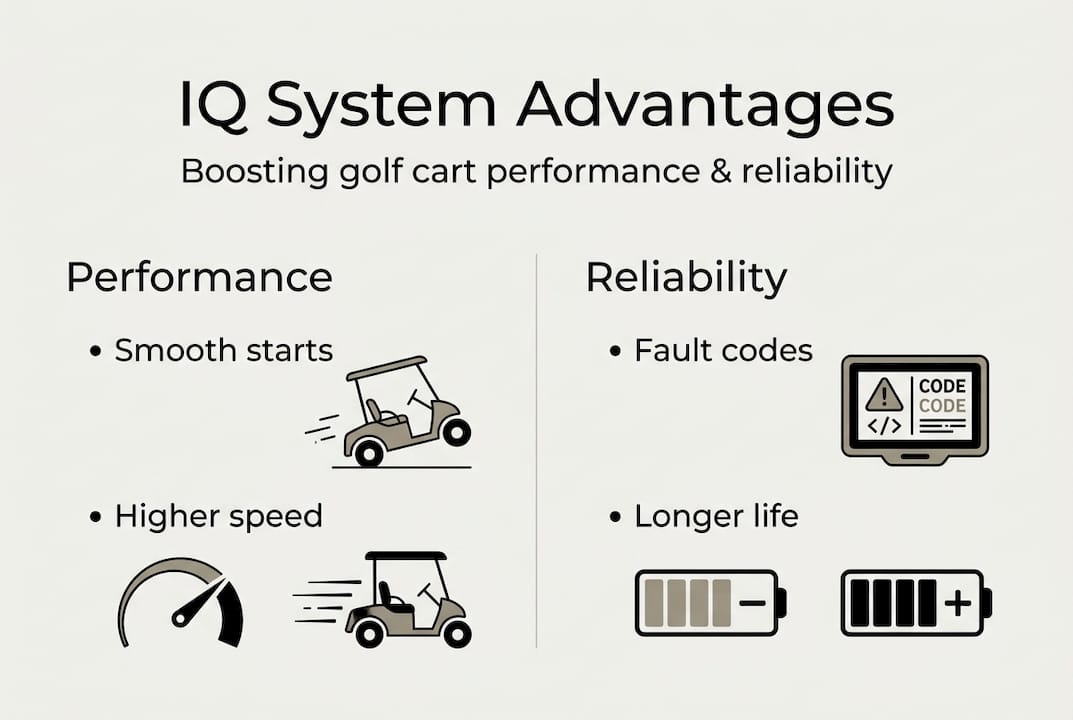
Upgrading from series to IQ systems can boost acceleration and deliver smoother torque across the full speed range. That’s not just marketing language. On hilly terrain, a series controller often struggles because it can’t adapt quickly to changing load demands. An IQ system reads motor feedback continuously and adjusts power delivery in milliseconds.
Here’s what that means in practice:
Comparing IQ to non-IQ carts side by side makes the case clearly:
| Performance area | Non-IQ cart | IQ-equipped cart |
|---|---|---|
| Start smoothness | Abrupt | Progressive |
| Top speed consistency | Variable | Stable |
| Error detection | Manual inspection | Automatic fault codes |
| Maintenance frequency | Higher | Lower |
| Customization options | Limited | Extensive |
For owners pursuing performance-enhancing golf cart modifications, starting with the IQ controller is the smartest first move. Everything else, from upgraded tires to lifted suspensions, works better when the power delivery is precise and predictable.
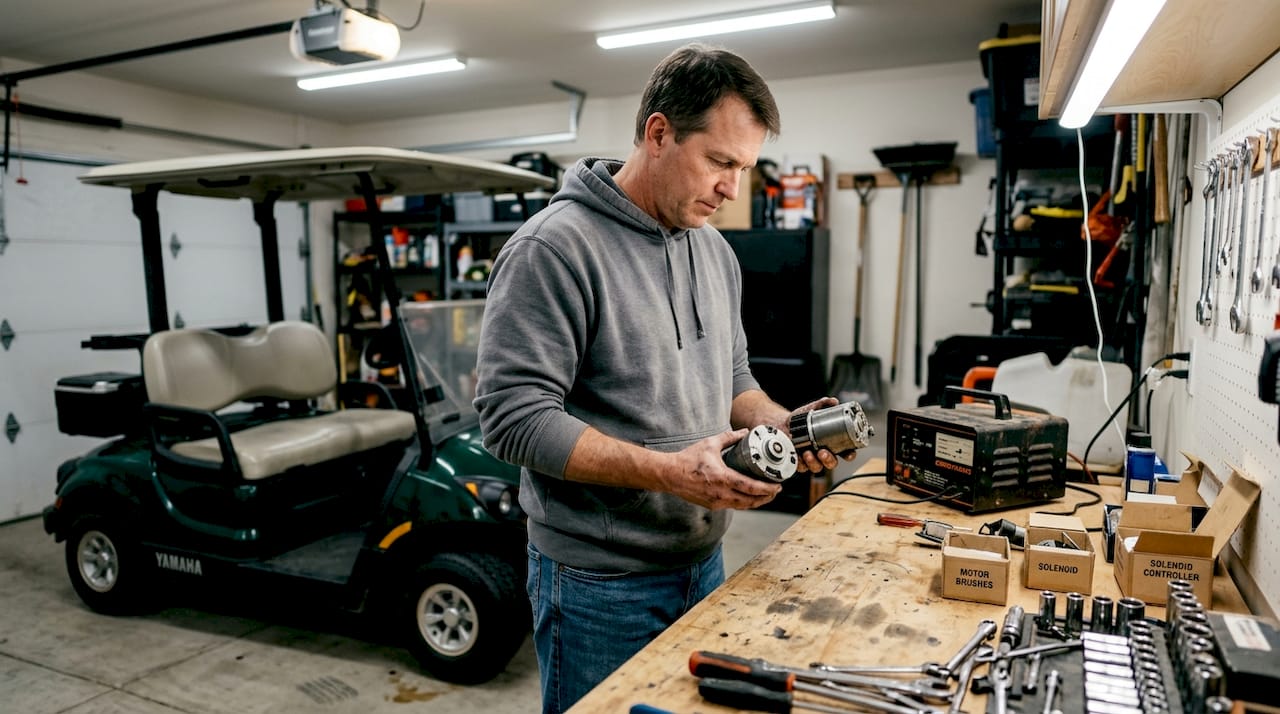
When you pair an IQ system with choosing the right golf cart motor for your use case, the results are significantly better than either upgrade alone.
Pro Tip: Combine your IQ controller upgrade with a motor rewind or high-torque motor swap. The IQ system will optimize power delivery to the new motor in ways a series controller never could, giving you a performance increase that’s greater than the sum of its parts.
Once you adopt or upgrade to an IQ system, it’s critical to understand its unique troubleshooting needs.
“85% of golf cart motor and controller issues can be resolved by following basic troubleshooting steps.”
That statistic holds true for IQ systems as well, but the process is more structured because the system actually tells you what’s wrong. IQ system failures most often result from harness corrosion or faulty sensor input, not catastrophic controller failure. That’s actually good news because both are fixable without replacing the whole unit.
Common symptoms to watch for include:
When symptoms appear, follow this diagnostic sequence:
Many motor-controller issues can be resolved with this first-fix approach, saving you significant repair costs. When the issue persists after covering all five steps, that’s the right moment to consult a certified golf cart technician.
For more complex fault tracing, the golf cart motor troubleshooting guide walks through error codes specific to Club Car IQ models and explains exactly what each code means for your repair plan.
Beyond fixing typical issues, an upgrade or regular maintenance routine sets you up for years of smooth operation.
Upgrading an older series cart to a full IQ system is a meaningful project. It’s not a simple plug-and-play swap. You’re replacing the controller, updating the wiring harness, and adding sensors that didn’t exist in the original design. Properly maintaining an IQ system after installation extends its service life and avoids costly repairs down the line.
Before you begin an upgrade, confirm these items are ready:
Once installed, consistent maintenance keeps everything running at peak performance:
Exploring top add-ons for upgrading your golf cart alongside an IQ install can modernize the whole experience. Pairing new electronics with golf cart dash upgrades gives you both performance and a cockpit that actually lets you monitor what the IQ system is doing.
Pro Tip: Always disconnect the main battery pack before performing any work on the IQ controller or its connected sensors. The system holds residual charge even when the key is off, and contact with live terminals can damage both you and the controller.
Here’s the perspective that most articles skip: IQ systems benefit casual, everyday owners far more than fleet operators. Fleet managers have technicians and replacement budgets. The solo owner who uses their cart on weekends? They’re the one who suffers most when a simple problem goes undiagnosed for weeks.
The biggest myth we keep hearing is that IQ is “only for high-end carts.” That thinking leads owners to avoid upgrades that would genuinely transform their experience. A formerly unreliable cart with a corroded series controller becomes a low-maintenance, predictable machine after an IQ retrofit. We’ve seen it consistently.
That said, IQ upgrades aren’t always the right move. If your cart is more than 20 years old and you use it three times a year, the cost-to-benefit math doesn’t work in your favor. But for anyone using their cart regularly on varied terrain, the IQ system is the smartest single investment available. The deep dive into golf cart controllers shows just how far the technology has advanced from basic resistor setups.
If you’re ready to experience the advanced reliability and functionality of an IQ system, finding the right parts for your specific cart makes all the difference. Not every IQ component works across every model, and using the wrong controller or sensor can create new problems instead of solving old ones.
At GolfCartStuff.com, we carry model-specific IQ system upgrades for the most popular carts on the market. Browse Club Car DS IQ-compatible parts or shop Yamaha IQ-compatible parts to find exactly what fits your build. And if you’re accessorizing beyond the controller, our full range of accessories for IQ golf carts covers everything from dash mounts to wiring tools. Always verify compatibility with your cart’s existing electronics before ordering.
IQ systems are typically labeled on the controller serial number plate, or you can look for a controller with digital plugs and programmable settings rather than resistor-based wiring.
Yes, but upgrading to IQ requires swapping multiple electrical components, including the controller, wiring harness, and compatible sensors, to achieve full IQ functionality.
IQ provides advanced performance benefits including more precise speed control, built-in diagnostic fault codes, and smoother acceleration compared to standard resistor-based controllers.
Not all golf cart models support IQ systems. Always check your cart’s make, year, and model specifications for compatibility before purchasing any IQ components or controller upgrades.
Explore our store to see what our products and resources can do for you.

Leave a comment