
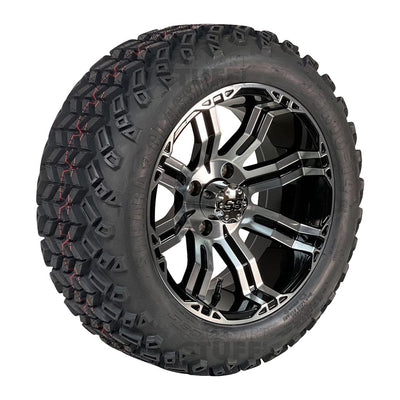
Your Cart Is Our Priority
Explore our store to see what our products and resources can do for you.

Run your golf cart tires between 15 and 22 PSI cold if they’re stock turf tires, which covers most carts rolling off the factory line today. That’s the starting point, not the final word: your owner’s manual and the tire sidewall always override any general number, because the exact figure depends on your platform, tire type, and load. Check pressure cold, before the cart has moved that day, using a real low-pressure gauge rather than whatever’s hanging on the wall at a gas station.
Correct golf cart tire PSI depends on tire type and platform, runs 15 to 22 PSI for most stock turf tires, and must always be checked cold against the owner’s manual or sidewall rating.
| Point | Details |
|---|---|
| Know your baseline range | Stock turf tires typically run 15 to 22 PSI; low-profile street tires need 20 to 25 PSI. |
| Always check cold | Wait several hours after driving, since heat can add 2 to 4 PSI to a hot reading. |
| Respect the sidewall max | Treat sidewall PSI as a structural ceiling and run 3 to 5 PSI below it for daily driving. |
| Track temperature swings | Expect roughly 1 PSI of change per 10°F, and check weekly during big seasonal shifts. |
| Shop model-specific tools | Golfcartstuff sells low-pressure gauges, compressors, and model-fit tires for EZGO, Club Car, and Yamaha carts. |
Owner manuals and tire sidewalls remain the final authority. Guides from Golf Cart Tips, Carts and Parts, and Golf Cart Search informed the ranges above.
Golf cart tire pressure isn’t one-size-fits-all, because suspension geometry, axle load, and sidewall construction all shift what “correct” means for a given setup. A Club Car riding on stock turf tires and a lifted cart wearing 23 inch off-road rubber have almost nothing in common pressure-wise, even though they’re both technically golf carts.
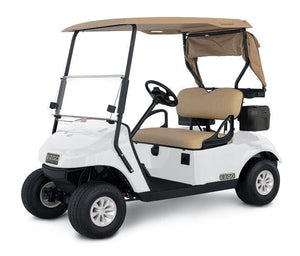
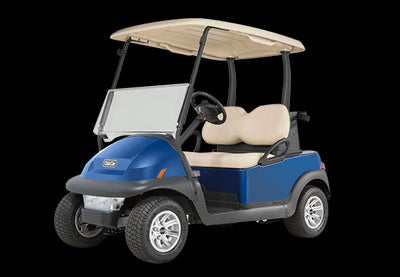
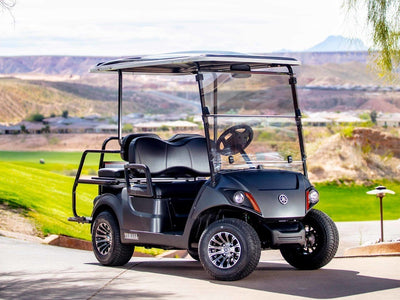
Stock turf tires on platforms like Club Car DS and Precedent models often run 15 to 18 PSI, while EZGO TXT carts tend to sit a touch higher at 15 to 20 PSI, and some Yamaha packages call for 16 to 22 PSI depending on trim. Low-profile street tires, the kind you’d see on a cart built for neighborhood cruising, need considerably more air. Golfnio’s maintenance guide puts low-profile street tires around 20 to 25 PSI, since their shorter sidewalls flex less and need the extra pressure to carry the same load without excessive heat buildup.
| Tire type / platform | Typical cold PSI range |
|---|---|
| Stock turf, most platforms | 15 to 20 PSI |
| Stock turf, higher-spec packages | 18 to 22 PSI |
| Low-profile street | 20 to 25 PSI |
| All-terrain / off-road | 12 to 18 PSI |
| 10-inch wheel upgrades, general use | 20 to 25 PSI |
If you’ve swapped to non-factory tires, the sidewall’s max rating becomes your ceiling, not your target. Run 3 to 5 PSI below that maximum for everyday driving, since sidewall max is a structural limit rather than a comfortable operating pressure. Checking your tire size against the right fit before you set pressure saves you from guessing on a tire that was never designed for your cart’s axle load.
“Cold” means the tire hasn’t been driven on in at least a few hours, or you’re checking first thing before the day’s first trip. Heat from driving can add 2 to 4 PSI to a reading, so setting pressure right after a spin leaves you underinflated once the tire cools back down.
Pro Tip: Skip the pencil gauge from your junk drawer and the free air pump at the gas station. Both are calibrated for 30 to 60 PSI passenger car tires and routinely misread anything under 25 PSI. A digital gauge rated for 0 to 60 PSI, paired with a small portable compressor, gives you readings you can actually trust at golf cart pressures.
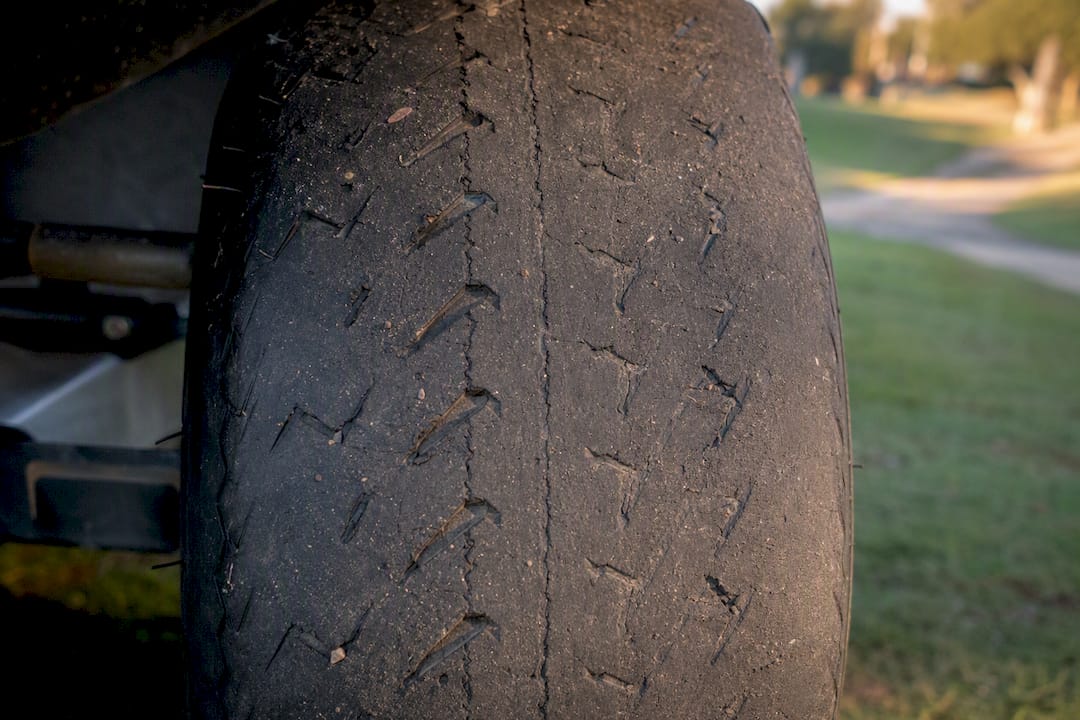
Underinflated tires flex more with every rotation, which raises rolling resistance and generates heat that breaks down the tire’s internal casing over time. You’ll also notice mushier handling and longer stopping distances, since a soft tire doesn’t respond to steering or brake input as precisely as one holding correct pressure.
Overinflated tires cause the opposite problem: they wear hardest down the center of the tread, ride harsher over bumps, and lose traction on wet grass or turf because less rubber actually contacts the ground. The trade-off between the two runs through basic physics. Rolling resistance drops as pressure rises, which can stretch your battery charge further, but that same firmness costs you grip and comfort on grass.
Carrying four passengers or towing a small trailer changes what your tires need. Bump pressure up 2 to 4 PSI within your manual’s approved range when you’re loaded heavier than usual, since more weight means more sidewall flex at any given pressure.
Soft, wet turf is the opposite case. Dropping 1 to 3 PSI, only if your manual allows it, widens the tire’s contact patch and improves grip on grass that would otherwise let a firmer tire spin or dig in.
Ambient temperature has a direct, predictable effect on tire pressure. Golfnio’s guide confirms the rule of thumb most techs use: expect roughly 1 PSI of change for every 10°F shift in outside temperature. That’s basic gas behavior. Charles’s law explains why air pressure inside a sealed tire rises and falls with temperature, which is exactly what’s happening between a cool morning and a hot afternoon.
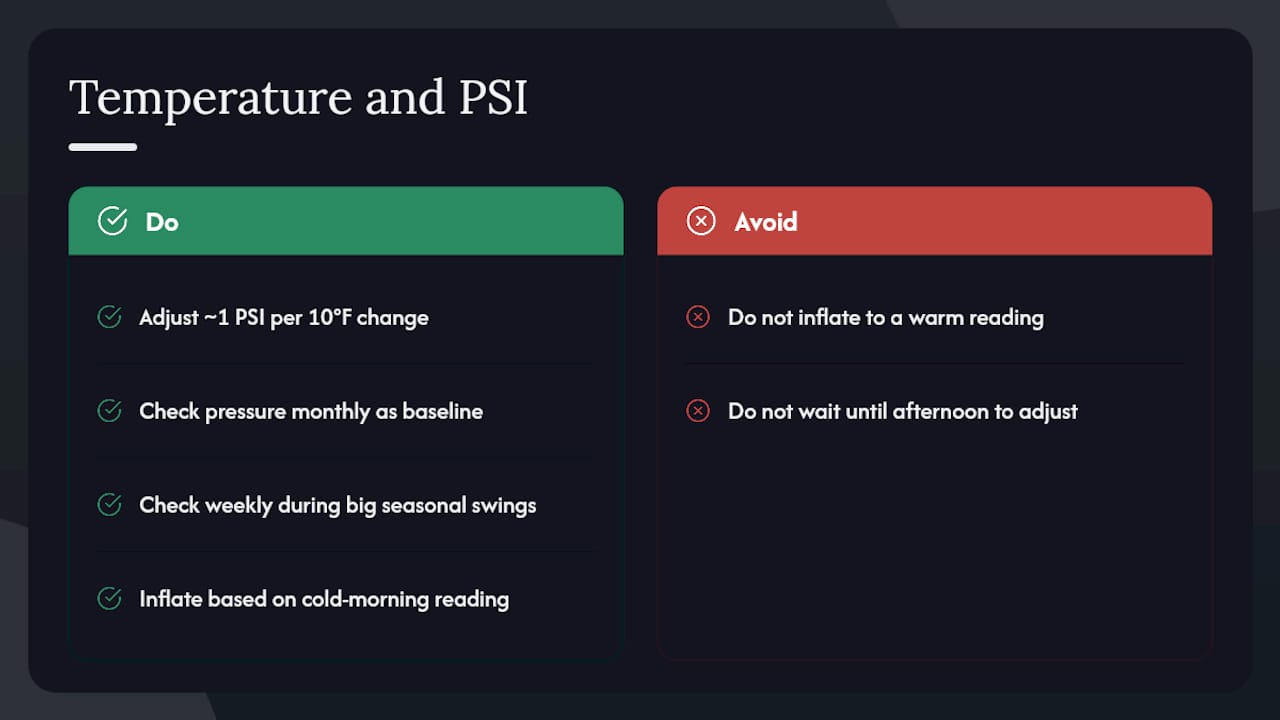
Check pressure monthly as your baseline, and bump that to weekly if you’re moving through a big seasonal swing, like the jump from winter mornings into summer afternoons, or if the cart sits outdoors exposed to temperature extremes. If your tires read low on a cold morning, that’s the number to act on. Don’t wait until afternoon and inflate to a warm reading, because you’ll end up overinflated once temperatures drop again overnight.
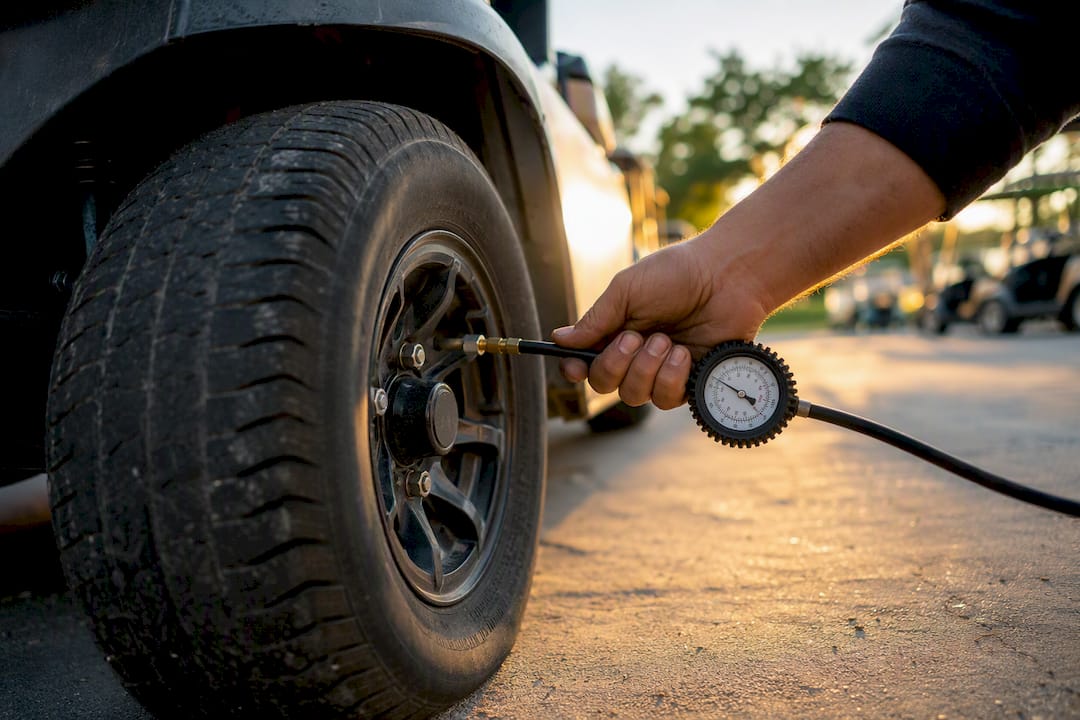
Tires lose air naturally through the rubber itself, not just through leaks, so a monthly check catches slow losses before they become a real problem.
Rotating tires on a regular schedule also spreads wear more evenly, which is worth pairing with your maintenance checklist so pressure checks don’t become the only thing on your radar.
Golfcartstuff has spent years building out detailed product pages and how-to guides for EZGO, Club Car, and Yamaha owners, not just selling tires blind. Roshan, who writes the site’s tire and wheel guides, covers installation and sizing in depth, so you can match PSI recommendations to the exact tire you’ve got mounted, not a generic average.
Most owners overinflate without realizing it, usually because they check pressure right after driving on a hot afternoon. Build the cold check into a monthly habit and lean on your care guide for the rest.
— Roshan
A gauge that misreads by 5 PSI at golf cart pressures isn’t a minor inconvenience. It’s the difference between a tire that lasts three seasons and one that’s cracking at eighteen months. Golfcartstuff stocks accurate low-pressure gauges, portable compressors, and model-specific tires sized for your exact cart, so you’re not stuck guessing with tools built for a pickup truck.
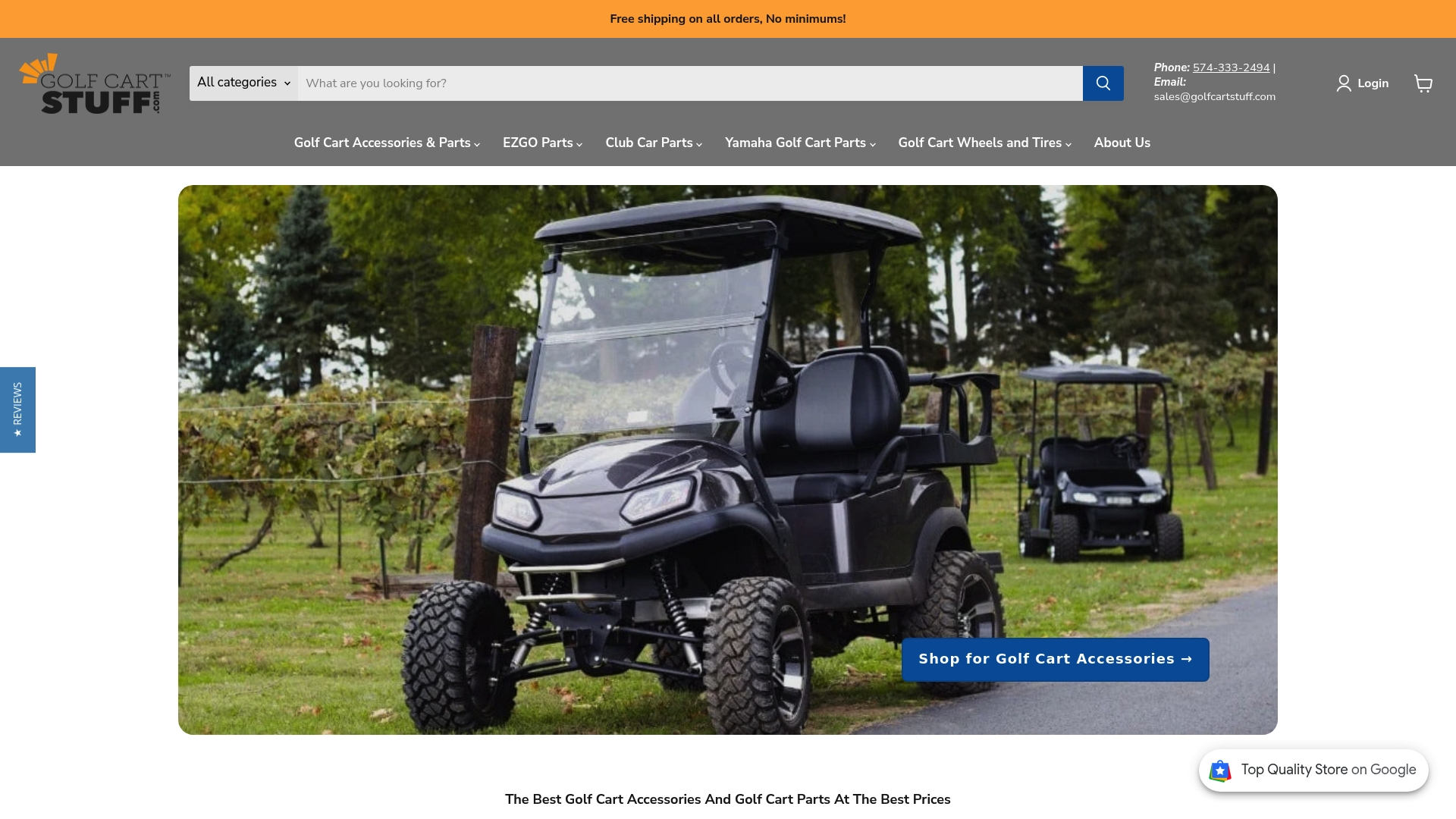
Browse the golf cart accessories collection for gauges and pumps rated for the 15 to 25 PSI range your cart actually runs. If you’re shopping for tires to match, Golfcartstuff carries model-specific options for Club Car, EZGO, and Yamaha platforms, sized and rated so the PSI numbers in this guide actually apply to what’s on your cart.
Explore our store to see what our products and resources can do for you.

Leave a comment