
Your Cart Is Our Priority
Explore our store to see what our products and resources can do for you.

TL;DR:
- A golf cart tow run switch switches the electrical system between run and tow modes to protect components during towing or maintenance. It isolates the motor and controller in tow mode, preventing damage from power feedback and wheel resistance issues. Regular inspection, proper usage, and testing help extend the switch’s lifespan and ensure safe operation.
A golf cart tow run switch is a safety device that toggles the cart’s electrical system between two modes: “Run” for normal driving and “Tow” for safe transport or maintenance. The Run/Tow switch isolates the motor and controller from the battery pack, protecting your cart’s core electrical components from damage. Every electric golf cart owner needs to understand this switch. Getting it wrong costs you a motor, a controller, or both.
The tow run switch is a two-position control device built into your cart’s electrical system. In “Run” mode, the switch connects the battery pack to the motor and controller, enabling full power flow and normal operation. In “Tow” mode, it cuts that connection entirely, disengaging the motor so the cart can be pushed or towed without electrical feedback damaging the system. Think of it like a circuit breaker with a purpose: it does not just stop power, it protects every component downstream.
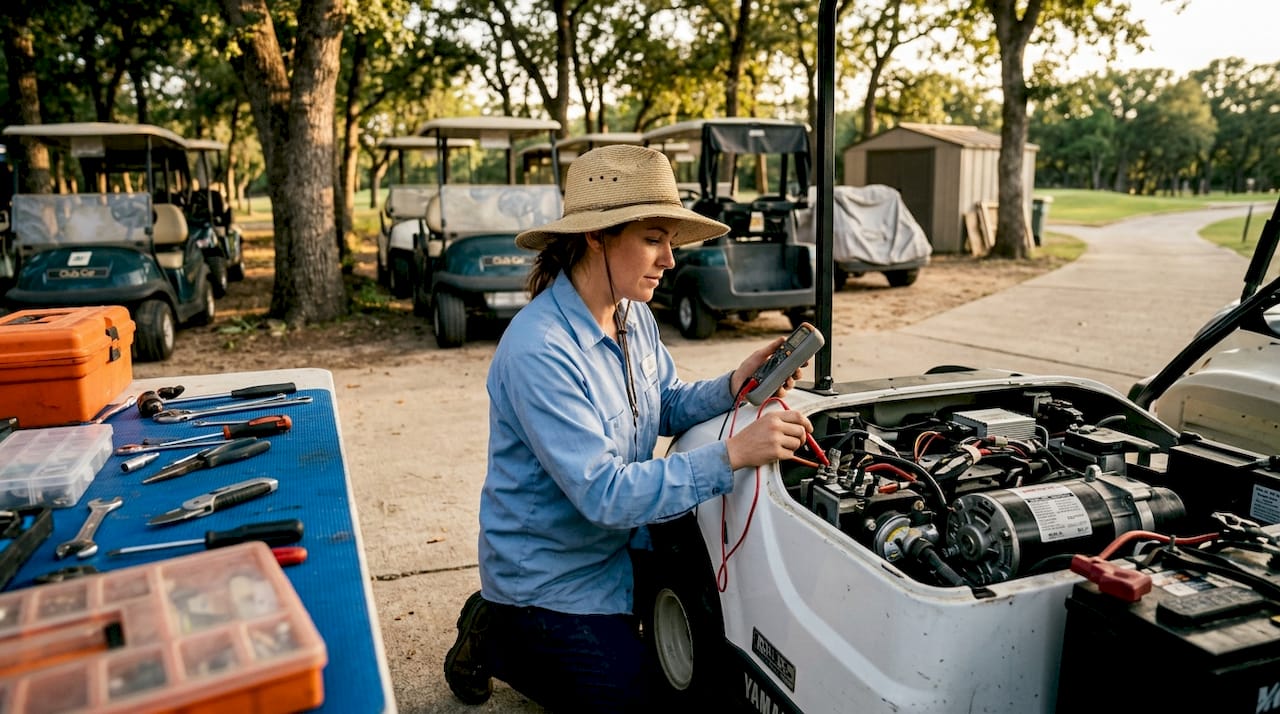
The switch also plays a role in wheel behavior. When set to “Tow,” the motor disengages and the wheels roll freely, which is exactly what you need when loading the cart onto a trailer or pushing it into a garage. In “Run” mode, the motor’s regenerative resistance is active, which means the wheels resist free movement. That resistance is normal during operation but becomes a problem the moment you try to tow the cart without switching modes.
Switch designs and locations vary by manufacturer and model, but most follow a predictable pattern. Common locations include:
Toggle switches are the most common design. Push-button versions appear on newer models. If you cannot locate the switch on your cart, check your owner’s manual first. The manual will show the exact position for your specific model year. The golf cart electrical components diagram in your manual is the fastest way to find it without guessing.
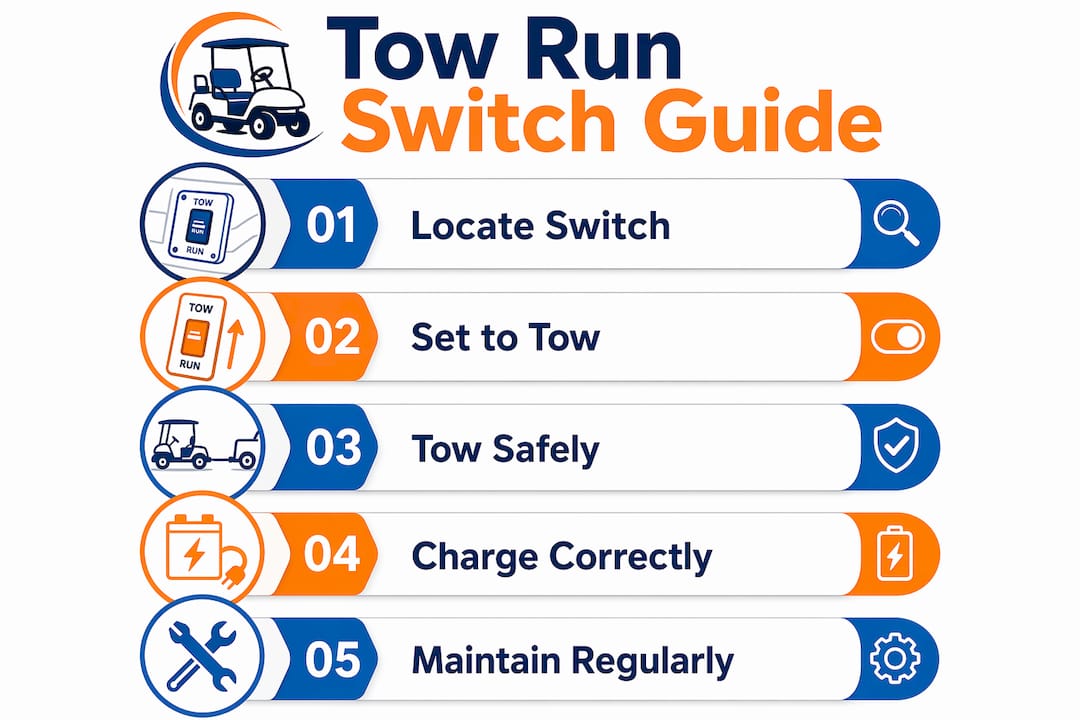
Tow mode exists for one core reason: to protect your cart’s motor and controller from power feedback during situations where the wheels move without driver input. Towing a golf cart in Run mode causes motor overheating and electrical damage because the spinning wheels generate back-voltage that feeds into the controller. That feedback can fry the controller in a single tow event.
Use Tow mode in these situations:
Pro Tip: Before you disconnect a single battery cable for any reason, flip the switch to Tow. This one habit prevents the majority of accidental electrical damage during DIY maintenance.
The charging question is where most owners get confused. A common belief holds that you must always charge in Tow mode, but this varies by manufacturer. Some onboard chargers require Run mode to communicate with the battery management system. Charging in the wrong mode for your specific cart can cause the charger to misread battery state, which risks battery sulfation over time. Check your owner’s manual for the correct charging mode. Do not assume one rule applies to every cart.
A failing switch shows clear symptoms. The most definitive sign is a cart that moves while the switch is set to Tow mode. A golf cart moving in Tow mode means the switch has failed and needs immediate replacement. Other symptoms include:
To test the switch, use a voltmeter or continuity tester. Testing with a voltmeter involves checking for voltage continuity across the switch terminals in each position. In Run mode, you should see continuity. In Tow mode, continuity should be absent. If the readings do not match those expectations, the switch has failed internally.
Pro Tip: Before replacing the switch, check the wiring connections at the switch terminals. Corrosion or a loose wire causes the same symptoms as a failed switch and takes two minutes to fix with a wire brush and a screwdriver.
Refer to your cart’s wiring repair guide when tracing switch-related faults through the broader electrical system. A faulty switch rarely fails in isolation. Corrosion at the terminals often spreads to adjacent connectors, so inspect the full circuit while you have access.
Preventive care keeps the switch working reliably for years. The switch itself is a simple device, but it operates in a harsh environment: heat, vibration, moisture, and battery off-gassing all degrade contacts over time. Build these habits into your regular maintenance routine:
Leaving the switch in Run mode during storage depletes the battery because the motor circuit remains active. A drained battery that sits for weeks sulfates, which permanently reduces capacity. That single habit, switching to Tow before storage, protects both the switch and the battery pack.
The golf cart electrical components that depend on the switch, including the motor, controller, and battery, all perform better when the switch operates cleanly. A corroded or intermittent switch introduces voltage irregularities that stress the controller. Replacing a $15 switch is always cheaper than replacing a $300 controller. For a full maintenance checklist that covers the switch alongside every other electrical component, the step-by-step maintenance guide at Golfcartstuff is worth bookmarking.
The tow run switch is the single most important safety control on an electric golf cart, and using it correctly protects the motor, controller, and battery from preventable damage.
| Point | Details |
|---|---|
| Switch function | The tow run switch isolates the motor and controller from the battery in Tow mode. |
| Always use Tow for transport | Towing in Run mode causes motor overheating and controller damage from power feedback. |
| Charging mode varies | Check your owner’s manual before charging; wrong mode risks battery sulfation. |
| Test with a voltmeter | A cart moving in Tow mode means the switch has failed and needs replacement now. |
| Inspect every three months | Clean terminals and check connections regularly to prevent corrosion-related failures. |
I have seen this pattern more times than I can count. An owner calls about a dead controller or a battery that will not hold a charge, and after a few questions, the culprit is always the same: the tow run switch was either ignored, misused, or never understood in the first place.
The switch gets overlooked because it looks trivial. It is a small toggle with two positions. Owners assume it is just for towing and never think about it again. But that mindset is exactly what leads to a $400 repair bill. The switch touches every major electrical component on the cart. When it fails or sits in the wrong position, the damage spreads.
My honest advice: add the switch to your pre-ride checklist the same way you check tire pressure or brake function. Confirm it is in Run before you drive. Confirm it is in Tow before you park, store, or work on the cart. That 10-second habit is the cheapest insurance you will ever buy for your cart. And if you are ever unsure whether your switch is working correctly, test it with a voltmeter before assuming the problem lies elsewhere. A bad switch mimics a dead battery, a failed controller, and a motor fault all at once. Rule it out first.
— Roshan
When a tow run switch fails, getting the right replacement part for your specific model matters. A generic switch may fit physically but fail to match the voltage rating or terminal configuration your cart requires.
Golfcartstuff carries replacement parts for Club Car DS models, including electrical components that match OEM specifications. Browse the full Club Car DS parts catalog for switches, wiring harnesses, and controller components. Yamaha owners can find compatible parts across multiple model years in the Yamaha golf cart parts section. Golfcartstuff also stocks a wide range of golf cart accessories to support ongoing maintenance and performance upgrades.
The tow run switch controls whether the cart’s motor and controller are connected to the battery. “Run” enables normal operation, while “Tow” isolates the motor circuit for safe transport or maintenance.
Most switches sit under the seat near the battery bank or motor controller. Location varies by model, so check your owner’s manual for the exact position on your cart.
Towing in Run mode causes motor overheating and controller damage from electrical feedback generated by the spinning wheels. Always set the switch to Tow before towing or trailering.
This depends on your cart’s manufacturer. Some chargers require Run mode to communicate with the battery system. Charging in the wrong mode can cause battery sulfation, so consult your owner’s manual before charging.
A cart that moves while in Tow mode is the clearest sign of switch failure. Other signs include no power in Run mode, intermittent cutouts, and faster-than-normal battery drain during storage.
Explore our store to see what our products and resources can do for you.

Leave a comment