
Your Cart Is Our Priority
Explore our store to see what our products and resources can do for you.

TL;DR:
- Diagnosing golf cart noises involves listening carefully to abnormal sounds and testing related components to identify faults accurately. Different sounds such as clicking, grinding, buzzing, or humming point to specific systems like the solenoid, motor, or wiring, guiding effective troubleshooting. Proper use of a multimeter, load testing, and waveform analysis prevents unnecessary part replacements and ensures precise repairs.
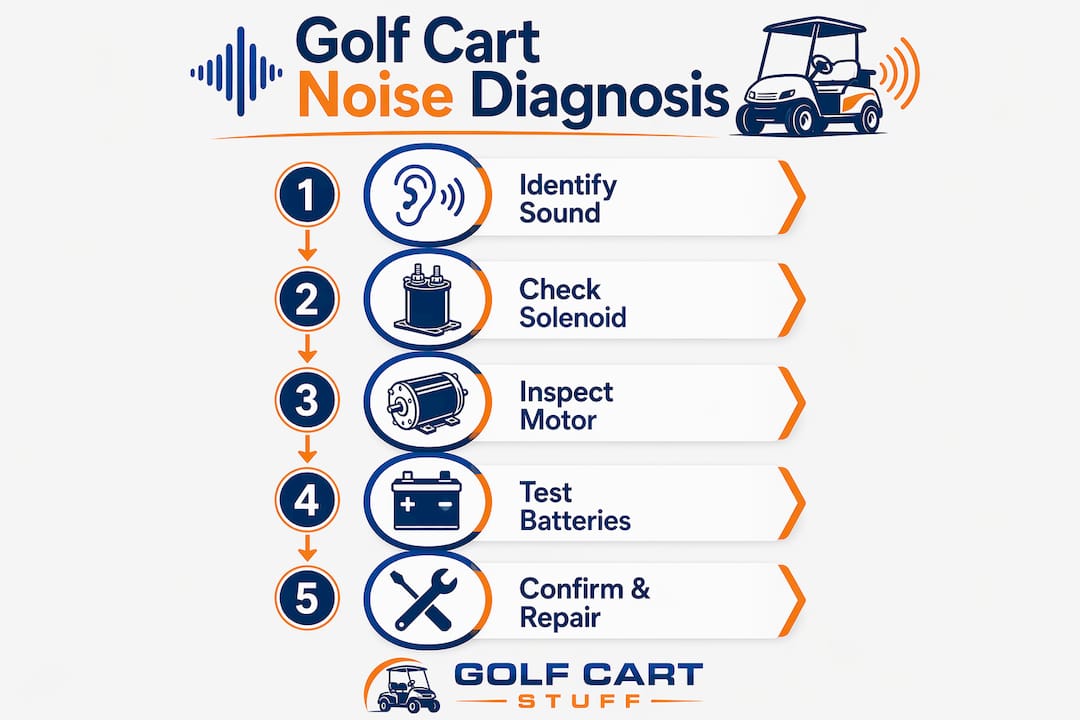
Diagnosing golf cart noises is the process of listening carefully to abnormal sounds, narrowing down their origins, and methodically testing related mechanical and electrical components for faults. A clicking solenoid, a grinding motor, or a buzzing controller each tells a different story, and reading those stories accurately prevents you from replacing parts you don’t need. This guide walks you through the exact steps to identify and resolve the most common golf cart noise issues, covering the solenoid, motor, battery pack, and wiring systems used in Club Car DS, EZGO, and Yamaha carts.
The first step in any golf cart noise troubleshooting process is categorizing the sound before touching a single component. Sounds fall into four broad types: clicking, grinding or whining, buzzing or humming, and intermittent or rapid clicking. Each category points to a different system.
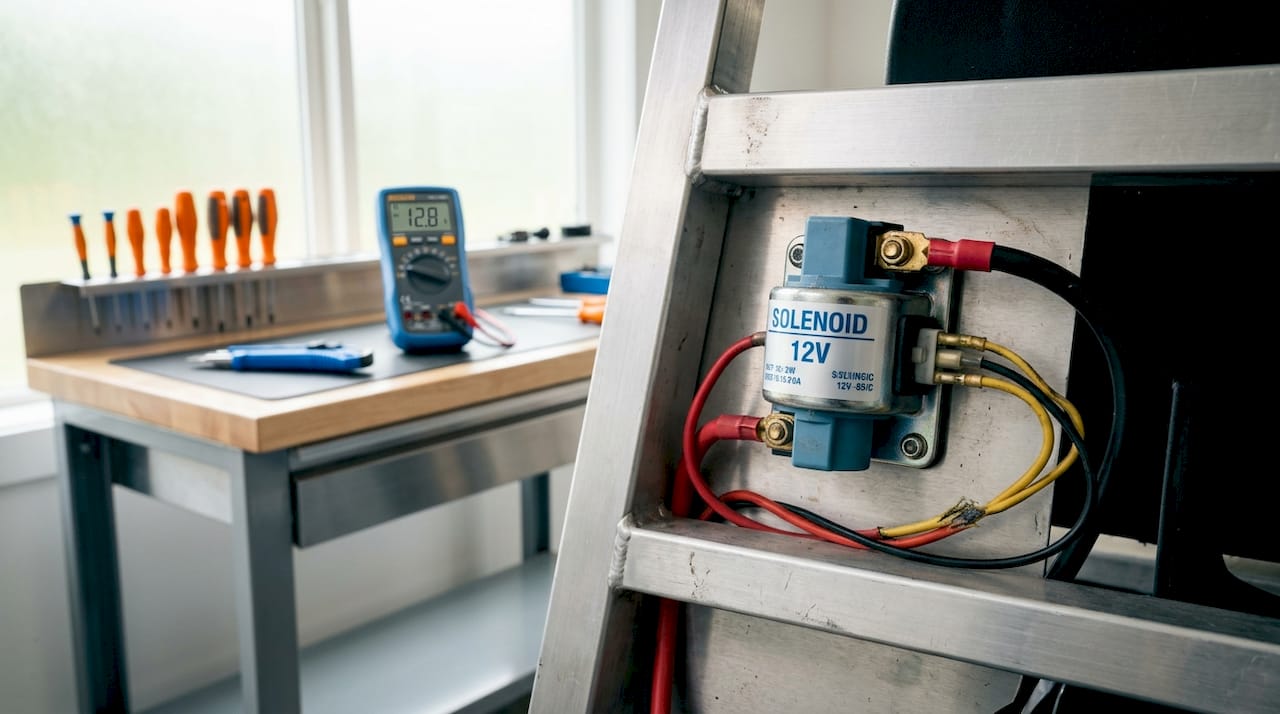
Clicking noises are almost always solenoid related. A single, clean click when you press the accelerator means the solenoid coil is energizing. No click at all points to a control circuit or coil failure. Rapid clicking without movement is the classic symptom of low battery voltage causing the solenoid to chatter rather than hold.
Grinding or whining during movement signals internal motor mechanical failures. Bad bearings or damaged armature are the most common culprits. A healthy motor runs smooth and quiet, so any grinding is a red flag that demands immediate attention.
Buzzing or humming without movement often points to the motor or controller. Motor brushes, commutator wear, and controller wiring are the first things to inspect when the cart hums but refuses to move. This symptom is frequently misread as a solenoid fault, which leads to unnecessary part swaps.
Burning smells accompanying any of the above sounds indicate electrical contact overheating or motor thermal damage. Treat a burning smell as an emergency stop signal. Continuing to operate the cart risks permanent motor or controller damage.
One detail most owners miss: load-dependent buzzing that disappears when coasting almost always originates in the motor bearings, while a steady directional vibration that persists regardless of load points to an axle or hub issue. That single distinction saves hours of misdiagnosis.
Attempting golf cart sound diagnosis without the right tools produces guesswork, not answers. Gather these before you start:
Pro Tip: Have a helper present when testing under load. One person presses the accelerator while the other listens and probes. This two-person method catches intermittent noises that disappear the moment you stop moving.
A golf cart maintenance checklist run before diagnostics also rules out simple causes like loose body panels or debris caught in the wheel well, both of which mimic mechanical noises convincingly.
The solenoid is the most commonly misdiagnosed component in golf cart electrical systems. Follow this sequence to test it correctly.
| Voltage drop reading | Solenoid condition | Recommended action |
|---|---|---|
| 0.0 to 0.1V | Contacts in good condition | No action needed |
| 0.2 to 0.4V | Contacts beginning to wear | Monitor; plan replacement |
| 0.5 to 1.0V | Contacts failing | Replace solenoid soon |
| Above 1.0V | Contacts failed | Replace immediately |
Pro Tip: Testing solenoid voltage drop rather than relying on audible clicks alone reduces misdiagnosis and prevents unnecessary part replacement. The click tells you the coil works. The voltage drop tells you whether the contacts work.
For a full walkthrough of solenoid replacement after diagnosis, the solenoid replacement guide at Golfcartstuff covers the process step by step.
Motor noise diagnosis requires you to distinguish between load-dependent sounds and sounds that persist regardless of load. That distinction is the core of accurate golf cart motor troubleshooting.
| Noise type | Behavior | Most likely cause |
|---|---|---|
| Buzzing under load, quiet coasting | Load-dependent | Motor bearing wear |
| Grinding during movement | Constant | Armature or bearing damage |
| Directional vibration | Steady, one side | Axle shaft or wheel bearing |
| Humming, no movement | Stationary | Controller or brush fault |
The motor troubleshooting guide at Golfcartstuff covers brush inspection, commutator cleaning, and when a full motor rebuild is the right call versus a direct replacement.
Battery and wiring problems are the most underestimated source of noisy golf cart symptoms. Corroded terminals or loose cables create voltage drops that cause the solenoid to click repeatedly without engaging the motor, a symptom that looks exactly like a solenoid failure.
Start with a visual inspection of every battery terminal and cable connection. Green or white corrosion on terminals adds resistance to the circuit. A connection that looks solid can still be loose enough to cause intermittent voltage drops under load. Tug each cable firmly at the terminal to confirm it is tight.
Pro Tip: Upgrading to 2-gauge welding cable for main battery connections eliminates a surprising number of intermittent noise and power loss complaints. The charger and battery management relationship also matters. An undercharging situation degrades battery health faster than almost any other factor.
Preventive maintenance that includes regular electrical checks catches corroded connections and weak batteries before they escalate into motor or controller damage.
Accurate golf cart noise diagnosis requires matching the sound type to the correct component, then confirming the fault with a multimeter before replacing any part.
| Point | Details |
|---|---|
| Categorize the sound first | Clicking, grinding, buzzing, and humming each point to different components. |
| Test voltage drop on the solenoid | Readings above 0.5V confirm failing contacts; above 1V means replace immediately. |
| Use load vs. coast comparison for motors | Buzzing that stops when coasting confirms motor bearing wear, not axle or wheel issues. |
| Check batteries before condemning solenoid | Low pack voltage causes clicking without movement and is the most common misdiagnosis. |
| Inspect wiring under load | Voltage drops that appear only when flexing cables confirm broken conductors or loose terminals. |
The most expensive mistake I see golf cart owners make is replacing the solenoid based on a click sound alone. A click means the coil works. It says nothing about the contacts. I have watched owners go through two or three solenoids before someone finally measured the voltage drop and found the real problem was a single dead battery pulling the pack voltage below the solenoid’s hold threshold.
The second mistake is ignoring the location of the sound. Owners often label everything as “grinding” and start pulling motors. Careful listening while a helper drives the cart tells you whether the noise is centered on the motor, offset to one wheel, or coming from the front suspension entirely. A wheel bearing on a Club Car DS sounds remarkably similar to a motor bearing under light load. The difference shows up the moment you put the cart in tow mode and push it by hand.
My honest recommendation: spend ten minutes with a multimeter before you spend a dollar on parts. The diagnostic steps in this guide cost nothing but time, and they will point you to the right component with confidence. When the diagnosis is genuinely unclear, a qualified golf cart technician with oscilloscope access can read controller fault codes that no amount of listening will reveal. Knowing when to call in professional help is not a failure. It is the most cost-effective decision you can make.
— Roshan
Once you have identified the faulty component, getting the correct replacement part for your specific cart model matters more than most owners realize. Golfcartstuff stocks genuine solenoids, motors, battery cables, and wiring kits matched to the three most common platforms on the road today.
Whether you drive a Club Car DS, need EZGO replacement parts, or are sourcing components for a Yamaha model, Golfcartstuff provides detailed compatibility guides alongside every product listing so you order with confidence. The customer support team can also help you match parts to your cart’s year and model when the listing leaves any doubt. Accurate diagnosis plus the right part equals a repair that sticks.
A single click when you press the accelerator means the solenoid coil is energizing correctly. Rapid clicking without movement points to low battery voltage preventing the solenoid contacts from holding.
Grinding or whining during movement, buzzing that stops when coasting, and visible brush wear below 0.25 inches are the primary signs of motor failure. A damaged armature or bad bearings are the most common internal causes.
Yes. Low battery voltage causes the solenoid to click repeatedly without engaging the motor, which many owners mistake for a solenoid fault. Test each battery individually under load before replacing any electrical component.
Place multimeter probes across the two large solenoid terminals while the cart is engaged. A reading of 0.0 to 0.1V confirms good contacts. Any reading above 0.5V indicates failing contacts that require solenoid replacement.
Accelerate and then coast at the same speed. Motor bearing noise disappears when coasting because the motor is no longer under load. Axle and wheel bearing noise persists regardless of whether you are accelerating or coasting.
Explore our store to see what our products and resources can do for you.

Leave a comment