



Your Cart Is Our Priority
Explore our store to see what our products and resources can do for you.

A smoking golf cart battery is a genuine emergency, not a wait-and-see problem. Hydrogen gas from lead-acid cells can ignite, and lithium packs in thermal runaway can escalate to open flame within minutes. Stop the cart, remove the key, unplug the charger if it’s safe to reach, and get people away from the compartment. Everything else, including ventilation and calling a technician, comes next.
TL;DR:
- Smoky batteries require immediate shutdown, safe removal of the key, and evacuation from the area to prevent fire or toxic gas exposure.
- Lead-acid batteries overcharge and vent hydrogen sulfide gas, while lithium packs often fail with burning plastic smells and thermal runaway signs.
- Visual signs like swelling, cracks, or persistent sulfur odors indicate serious damage, requiring replacement rather than repair.
- Regular maintenance, including terminal cleaning, water level checks, and using compatible chargers, drastically reduces smoking incidents.
- Proper diagnosis involves monitoring temperature, voltage, and BMS alarms, with professional help needed if experiencing thermal runaway or case rupture.
The first minute matters more than any diagnosis. Follow these steps in order, without stopping to figure out why it’s happening.
Pro Tip: Keep a small ABC fire extinguisher mounted near where you charge your cart, not just in the garage generally. Ten feet of distance can be the difference between grabbing it in time and watching the compartment go up.
Golf cart batteries that smell like they’re burning are signaling something has already gone wrong internally, and a burning smell almost always means overheating, an acid leak, or an electrical fault rather than something benign.
Smoke and odor tell you which chemistry you’re dealing with and roughly how urgent the situation is. Lead-acid and lithium batteries fail in different ways, and reading the signs correctly changes what you do next.
Lead-acid batteries are the classic six-volt or twelve-volt flooded cells found in most older carts. When they overheat or overcharge, the electrolyte inside starts to boil, and that process releases hydrogen sulfide gas, which smells like rotten eggs. A faint sulfur smell during charging can be normal for flooded lead-acid batteries, but a strong or persistent version of that smell means something is actively going wrong.
The root causes behind these signs are usually mechanical or electrical, not just “an old battery.” Overcharging from a mismatched or failing charger is the most common trigger. A cracked case, whether from age, impact, or freeze damage, lets electrolyte escape and air in, which accelerates internal corrosion and heat buildup.
Lithium batteries fail differently, and often faster. Instead of a sulfur smell, you’ll typically notice something closer to burning plastic, along with hissing or a slow puffing of the cell casing. That combination is a warning sign of separator failure inside the cell or the early stages of thermal runaway, where one damaged cell heats its neighbors until the whole pack is involved. If your cart has a battery management system, error codes or unexplained alarms right before smoke appears are not something to dismiss as a glitch.
Sulfur odors generally point to lead-acid overcharging, while burning-plastic smells more often trace back to lithium separator failure or melting insulation, and that distinction should guide which extinguisher type you reach for.
Electrical and system faults cause smoke in both chemistries. Loose battery lugs create resistance at the connection point, and that resistance turns into heat. Enough heat melts insulation, and melted insulation smells sharp and acrid, closer to burning rubber than sulfur. Corroded terminals do the same thing over time. In many cases, loose or corroded connections are a common source of the burning smell and can be fixed with proper tightening and cleaning, though melted posts or scorched cable ends mean the damage has already progressed past a simple fix.
Wrong-voltage or malfunctioning chargers deserve their own mention because they’re an easy mistake to make and a common cause of repeat smoking incidents. Plugging a 36-volt charger into a 48-volt system, or using an old-style charger with no automatic shutoff, pushes current into batteries long after they’re full.
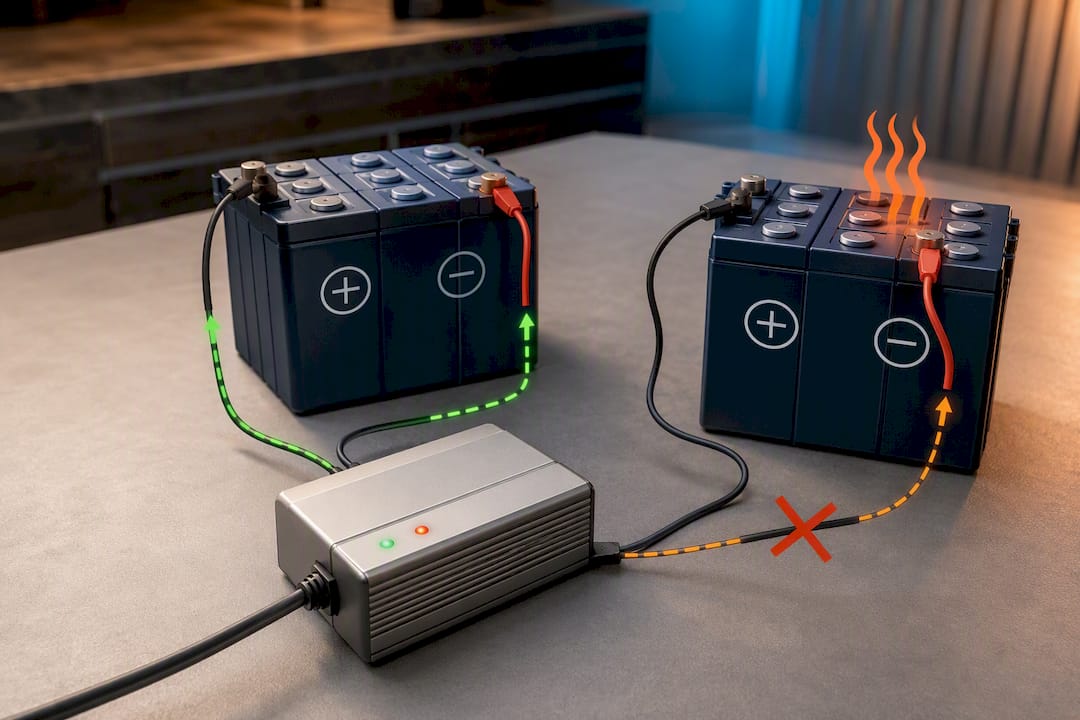
Environmental conditions amplify all of the above. A sealed garage in July traps heat that a battery pack would otherwise shed. Poor airflow around the compartment means a battery running slightly hot stays hot instead of cooling between charge cycles, and that repeated thermal stress shortens the life of even a well-maintained pack.
Diagnosis only starts once the immediate danger has passed. Work from the least invasive checks to the most technical, and stop the moment you hit a threshold that calls for a professional.
A pack sitting near or above that 125°F threshold for more than a few minutes, without an obvious external cause like direct sun exposure, has moved past “monitor it” territory. That’s the point to stop testing and start calling for help.
Some smoking incidents end with a cleaned terminal and a new charger. Others end with the whole pack going in a recycling bin. The difference comes down to a few clear triggers.
Nearly every smoking incident traces back to one of a handful of preventable habits. Fix these and you eliminate most of the risk before it ever starts.
Start with the charger, because it’s the single highest-leverage fix available. Multi-stage smart chargers with temperature compensation cut gassing and overcharge risk significantly compared to older manual chargers that don’t know when to stop pushing current. Never substitute an automotive charger for a golf cart charger. The voltage curves and charge profiles aren’t the same, and that mismatch is a common root cause of exactly the overcharging problems that lead to smoke.
Routine charger maintenance and a consistent watering and cleaning schedule for flooded batteries do more to prevent smoking incidents than almost anything else an owner can control. Add an infrared thermometer and a basic multimeter to your toolbox, check terminal temperature and voltage every few weeks, and you’ll catch a developing problem while it’s still a five-minute fix instead of a fire.
Pro Tip: Write the date on a piece of tape on your battery case every time you water it or check terminals. A pack that’s overdue by two months looks obviously different from one you serviced last week, and that visual cue catches neglect before it becomes smoke.
Most smoking incidents we hear about trace back to a charger mismatch or a connection nobody checked in over a year. That’s the pattern worth remembering more than any single statistic: neglect compounds quietly until it doesn’t.
Our guides on charger maintenance and general troubleshooting cover the exact checks outlined above in more depth, including how to read charger output specs against your battery’s rated voltage.
Buy parts from a reliable retailer when you’ve already isolated the problem to a battery, cable, or charger and know the fix. Call a certified technician instead when you’re not sure whether a pack is safe to handle, or when a lithium system has thrown a BMS alarm. If you’re unsure which battery or charger fits your cart’s make, model, and year, customer support teams can help confirm fitment before you order.
If your diagnosis points to a battery that needs replacing, buying the wrong voltage or chemistry is the fastest way to end up back here with another smoking compartment. Replacement batteries, matched chargers, and battery meters are available that are built for the specific electrical systems these carts run, not generic automotive equivalents.

Match voltage and chemistry to your existing pack before you order anything. A 48V lithium system and a 48V flooded lead-acid system are not interchangeable just because the voltage number matches. If you drive a Club Car, our Club Car DS parts collection covers batteries, chargers, and the cables and terminals that tend to fail first. Yamaha owners can check the Yamaha G1-G22 parts collection for model-specific electrical components, and our general accessories collection covers battery meters and other diagnostic tools worth keeping in the garage.
If you’re not sure which battery your cart needs, reach out through the product pages for fitment confirmation before you check out.
Power down the cart, remove the key, unplug the charger if it’s safe to reach, and move away from the compartment. Ventilate the area and call 911 for any active flame or rapid smoke increase, or a technician once things are stable.
Smoking usually comes from overcharged batteries boiling electrolyte, corroded or loose connections arcing under load, a failing charger, or in lithium systems, early thermal runaway. The smell tells you which: sulfur points to lead-acid, burning plastic points to lithium or melted insulation.
Watch for a swollen or bulging case, persistent rotten-egg odor, low water levels that keep recurring, corroded or scorched terminals, and voltage readings noticeably below the healthy range for your battery type.
Flooded lead-acid golf cart batteries typically last several years with regular watering, terminal cleaning, and correct charging, while lithium packs generally last considerably longer under proper charge and storage habits. Poor maintenance, particularly overcharging and neglected watering, shortens either chemistry well below its potential lifespan.
Test the charger’s output voltage against its rated spec and confirm it drops into float mode once the battery reaches full charge. A charger that keeps pushing full current past that point is a common cause of overheating and smoking batteries.
Explore our store to see what our products and resources can do for you.

Leave a comment