


Your Cart Is Our Priority
Explore our store to see what our products and resources can do for you.

TL;DR:
- Proper storage preparation involves thorough cleaning, battery maintenance, tire inflation, and suitable environment setup to prevent damage during seasonal inactivity. Regular checks, using the right tools, and documenting maintenance help extend the cart’s lifespan and ensure it starts reliably in spring. Skipping steps like setting Tow mode or inspecting regularly can lead to costly repairs and reduced battery life.
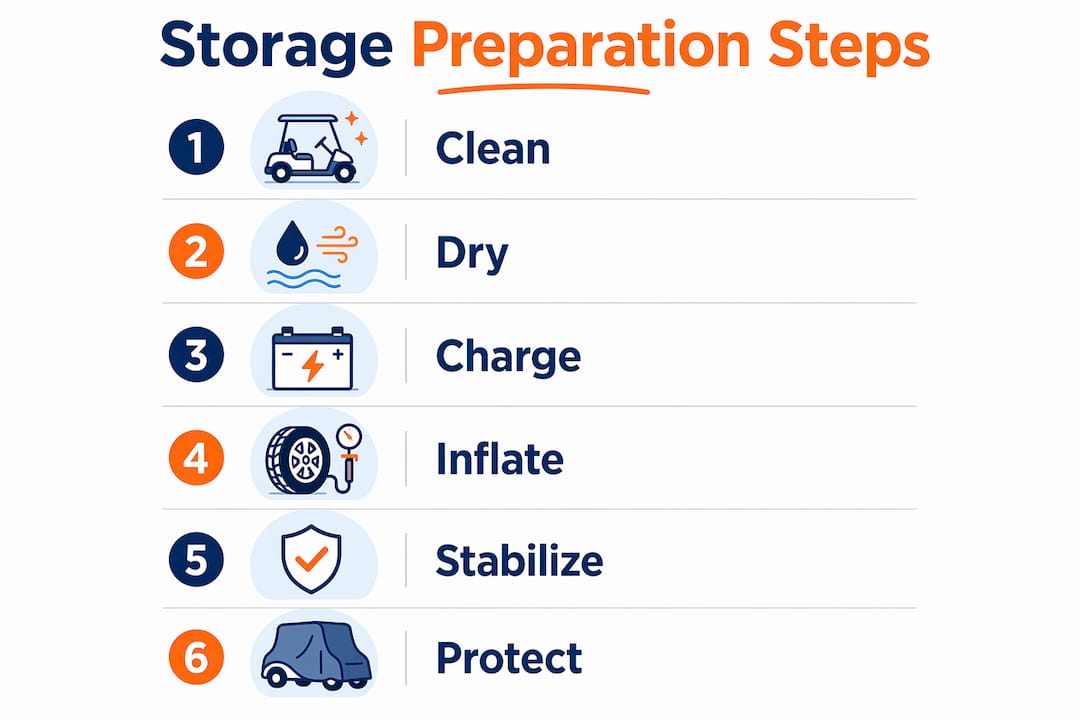
A golf cart storage preparation workflow is the organized sequence of tasks required to safely protect your cart during seasonal inactivity. Skip any step and you risk sulfated batteries, flat-spotted tires, corroded terminals, and a cart that won’t start when spring arrives. The workflow covers four core areas: thorough cleaning, battery care, tire maintenance, and choosing the right storage environment. Tools like a battery maintainer, tire pressure gauge, and breathable cover are not optional extras. They are the difference between a cart that starts on the first try and one that needs expensive repairs. Follow this golf cart maintenance checklist approach and your investment stays protected all off-season.
Every effective storage preparation workflow starts with having the right tools on hand before you begin. Scrambling for supplies mid-process leads to shortcuts, and shortcuts lead to damage.
Cleaning supplies:
Battery maintenance equipment:
Tire care tools:
Protective gear and documentation:
| Category | Key Item | Purpose |
|---|---|---|
| Cleaning | Microfiber towels | Scratch-free drying of body panels |
| Battery | Maintenance charger | Prevents capacity loss during inactivity |
| Tires | Jack stands or cradles | Eliminates flat-spot risk |
| Protection | Breathable cover | Blocks dust and moisture without trapping humidity |
| Documentation | Storage log | Tracks battery charge, date, and fuel treatment |
Pro Tip: Buy a dedicated automatic maintenance charger rather than using your standard charger on a timer. Maintenance chargers sense voltage and cycle on and off automatically, so they won’t overcharge a battery left connected for months.
Cleaning before storage is not just about appearance. Dirt, debris, and moisture left on the cart during storage cause corrosion, mold on seat vinyl, and rust on metal components. A thorough clean before you cover the cart is one of the highest-return steps in the entire process.
Covering a damp cart traps moisture against metal surfaces and accelerates corrosion at battery terminals and frame joints. Best practice is washing followed by a full 24 hours of air drying before applying any cover.
Pro Tip: Park the cart in direct sunlight for a few hours after washing. The heat speeds drying and helps evaporate moisture from under the seat and inside the battery compartment before you move it into storage.
Timing matters too. Clean the cart within a day or two of putting it into storage, not weeks before. A cart that sits dirty in a garage for a month before you get around to covering it accumulates new grime and moisture from the surrounding environment.
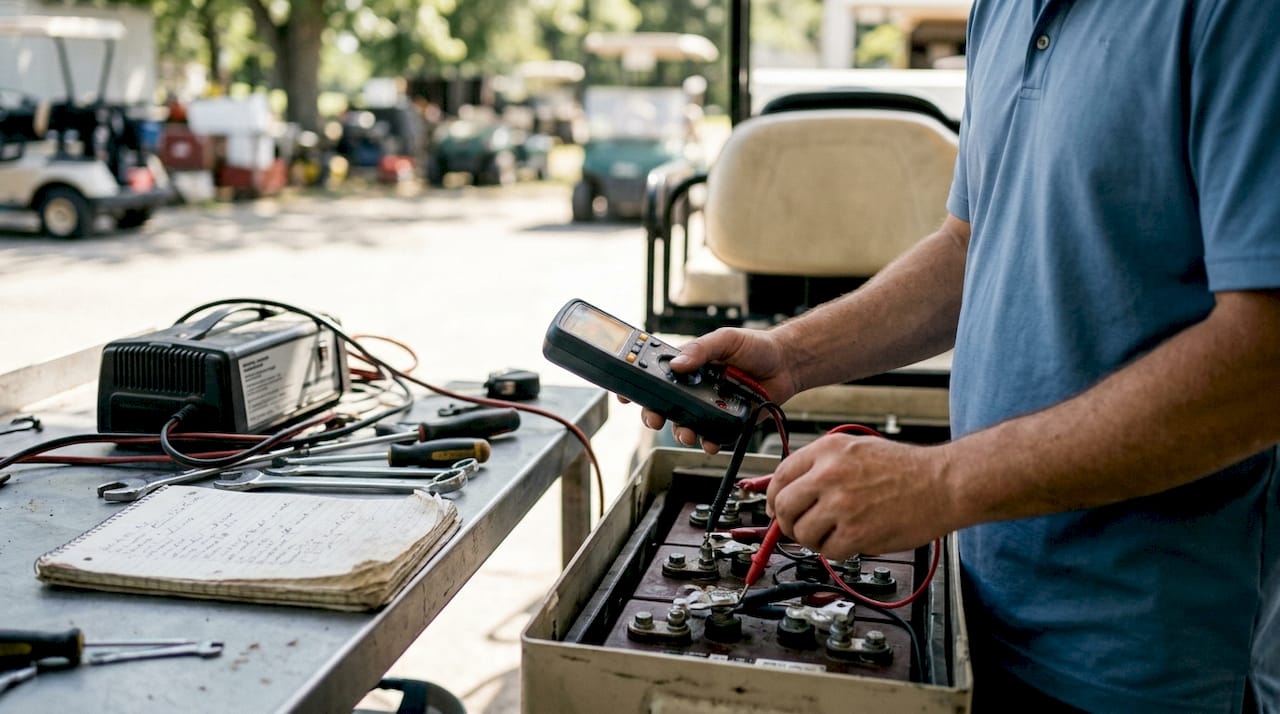
Battery management is the single most important factor in extending your golf cart’s lifespan during seasonal storage. Get this step wrong and you may face a battery replacement before the next season starts.
For lead-acid batteries:
For lithium batteries:
If your cart will sit idle for three or more months, disconnecting the negative terminal or scheduling regular maintenance charges prevents premature capacity loss. Partial discharge left overnight accelerates sulfation and permanently reduces battery capacity.
One step most owners miss: set the cart to Tow or Storage mode before putting it away. This mode cuts power to the controller and prevents the onboard electronics from slowly draining the battery pack over weeks of inactivity. Failure to use Tow mode can damage battery packs over long inactivity periods. Check your owner’s manual for the exact switch location, as it varies by brand between Club Car, Yamaha, and E-Z-GO models.
Pro Tip: Set a phone reminder for the first of each month to check battery voltage with a multimeter. A reading below 12.4 volts on a 12-volt lead-acid battery means it needs a charge before sulfation begins.
Tires and fuel systems are the two most neglected areas in a typical storage routine. Both cause expensive problems if ignored.
| Step | Action | Why It Matters |
|---|---|---|
| Add stabilizer | Pour fuel stabilizer into a full tank | Prevents fuel oxidation and varnish buildup |
| Run the engine | Idle for 5–10 minutes after adding stabilizer | Circulates stabilizer through the carburetor |
| Fill the tank | Top off to reduce air space | Less air means less condensation inside the tank |
| Long-term storage | Drain fuel completely if storing over six months | Prevents stale fuel from gumming the carburetor |
Adding fuel stabilizer without running the engine leaves the carburetor untreated. The stabilizer sits in the tank but never reaches the jets and passages where varnish actually forms. Five to ten minutes of idling after adding stabilizer is the step that actually protects the fuel system.
The storage location and ongoing monitoring routine determine whether your preparation work holds up over the entire off-season.
Choosing a storage location:
Selecting the right cover:
A monthly walk-around inspection catches moisture intrusion, pest activity, and battery charge issues before they become expensive spring problems. Active monitoring prevents the damage that results from neglect during storage.
Monthly inspection checklist:
Pro Tip: Place a few rodent deterrent pouches inside the cart’s storage compartment and under the seat. Mice and squirrels find golf cart wiring insulation attractive, and a single season of nesting can destroy a wiring harness.
Keeping a storage record of the storage date, battery charge level, and fuel stabilization status helps with spring startup and improves resale value. Documentation serves as a service history log that buyers and dealers recognize as a sign of a well-maintained cart.
A complete golf cart storage preparation workflow requires cleaning, battery charging, tire inflation, fuel treatment, and monthly monitoring to prevent off-season damage.
| Point | Details |
|---|---|
| Battery care is the top priority | Fully charge lead-acid batteries and set Tow mode before storage to prevent sulfation and drain. |
| Clean and dry before covering | Wash the cart thoroughly and allow 24 hours of drying before applying any cover. |
| Inflate tires to storage pressure | Set tires to 20–25 PSI and use jack stands for storage periods over two months. |
| Treat fuel in gas carts | Add stabilizer, run the engine for 5–10 minutes, and fill the tank to reduce condensation. |
| Inspect monthly and keep records | A monthly walk-around and a simple storage log prevent costly spring repairs and support resale value. |
Most golf cart owners treat storage preparation as a single afternoon project. Pack it away, throw a cover on it, and forget it until spring. I did the same thing for years, and I paid for it with a set of sulfated batteries that needed replacement after just two seasons.
The shift that changed everything was treating storage as an ongoing process rather than a single event. The monthly battery check takes five minutes. The tire pressure walk-around takes two. But those ten minutes per month are the reason my current battery pack is still performing well after four seasons of use.
The step I see skipped most often is Tow mode. Owners charge the battery, cover the cart, and walk away. The controller keeps drawing a small current the entire time. Over three months, that slow drain pushes the battery into deep discharge territory, which causes damage that no charger can fully reverse. It’s a thirty-second switch flip that most owners don’t know exists.
Record keeping sounds tedious, but a simple notebook entry takes less than two minutes. When you go to sell the cart, that log is worth real money. Buyers pay more for a cart with a documented maintenance history than for an identical cart with no records. The golf cart care tips that matter most are not the dramatic ones. They are the small, consistent habits that compound over years.
— Roshan
Getting your cart ready for storage is straightforward when you have the right products on hand. Golfcartstuff carries everything from lithium golf cart batteries and maintenance chargers to breathable covers and tire accessories, all in one place.
Owners of Club Car DS models will find a full selection of Club Car DS parts including battery hardware, terminal accessories, and storage-ready components. Yamaha owners can browse Yamaha golf cart parts for model-specific maintenance items. The golf cart accessories category covers covers, chargers, and maintenance tools that make the storage workflow faster and more effective. Professional-grade products from Golfcartstuff reduce guesswork and give your cart the protection it deserves through the off-season.
A golf cart storage preparation workflow is an organized sequence of steps covering cleaning, battery care, tire inflation, fuel treatment, and environment setup to protect a cart during seasonal inactivity. Following the workflow prevents common storage damage like sulfated batteries, flat-spotted tires, and corrosion.
Check battery voltage monthly and recharge when a 12-volt lead-acid battery drops below 12.4 volts. A maintenance charger connected continuously handles this automatically without overcharging.
Jack stands or tire cradles are recommended for storage periods over two months. They lift the cart’s weight off the tires and eliminate the risk of flat spots and sidewall deformation.
Yes. Add fuel stabilizer to a full tank and run the engine for 5–10 minutes to circulate it through the carburetor. Skipping the engine run leaves the carburetor jets untreated and vulnerable to varnish buildup.
Tow mode, also called Storage mode on some models, cuts power to the cart’s controller and prevents it from slowly draining the battery pack during inactivity. Skipping this step on Club Car, Yamaha, or E-Z-GO carts can cause deep discharge damage over a full storage season.
Explore our store to see what our products and resources can do for you.

Leave a comment