
Your Cart Is Our Priority
Explore our store to see what our products and resources can do for you.

For most owners and dealers, the best golf cart storage solutions are an indoor garage or climate-controlled unit for long-term protection, a prefab shed or carport for everyday covered parking, and a breathable UV-resistant cover for outdoor situations. Right now, before anything else: cover the cart, put the battery on a maintainer, and park on level ground with tires chocked.
Do these three things today (15 minutes or less):
Quick prep checklist (complete in 30–60 minutes):
Not every owner has a garage, and not every dealer has unlimited floor space. Here is how the main options stack up.
Indoor garage gives the best all-around protection. Temperature stays stable, security is easy to add, and the cart is ready to roll without uncovering. The tradeoff is floor space, which matters if you also park a car or store seasonal gear. Pegboard and overhead slatwall racks convert unused vertical space into organized storage for covers, tools, and parts.
Climate-controlled storage unit is the strongest choice for off-season battery health. Cold temperatures reduce battery capacity in electric carts, and a climate-controlled unit keeps the environment stable without any home renovation. Most standard golf carts fit a 10×10 drive-up unit. For owners who have weighed the numbers, the ongoing cost of retrofitting a garage with climate control and security can exceed the annual rent on a secure storage unit.
Prefab metal shed hits a sweet spot for value. It is fully enclosed, lockable, and available in sizes that fit a single cart or a small fleet. Expect to spend $500–$3,000 depending on size and materials, with DIY assembly taking a weekend.
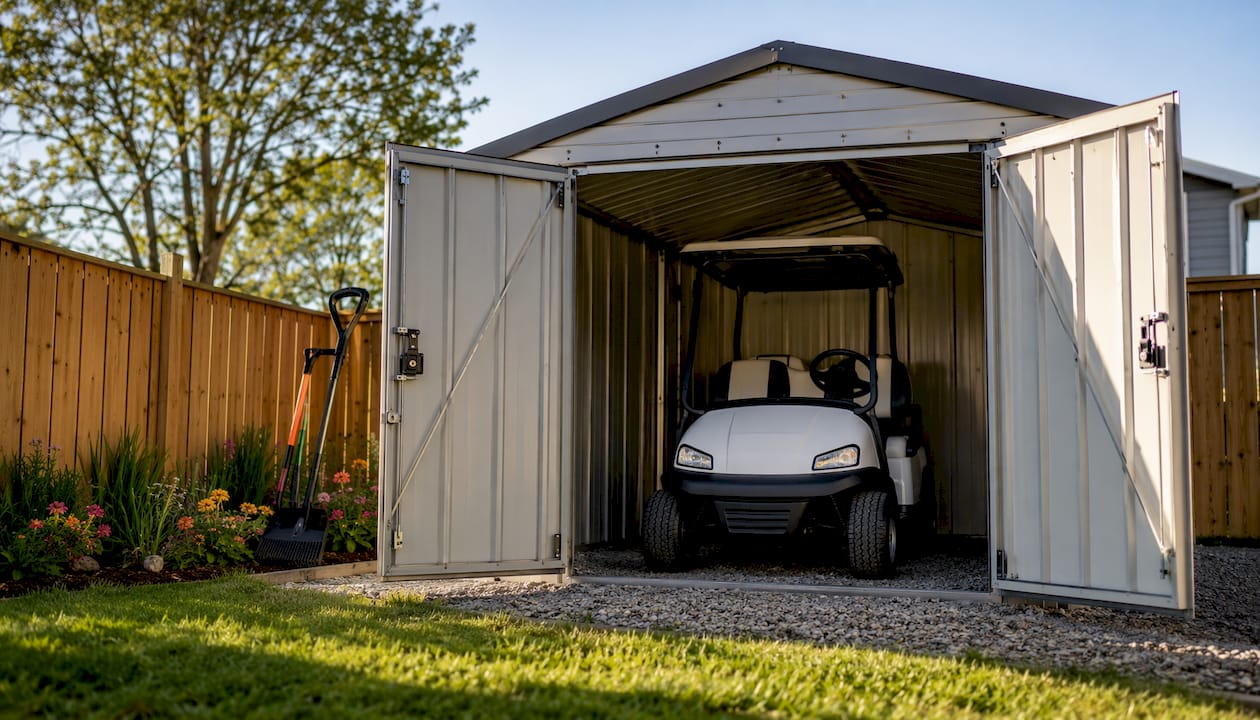
Carport or metal shelter costs less than a shed and still blocks sun, rain, and snow. Steel carports handle wind and heavy weather well and go up in a few hours. Good outdoor placement means choosing a level spot away from overhanging trees and anchoring the structure properly.
Portable clamshell shelter runs $300–$600 and is popular with snowbirds and RV owners who need seasonal, movable cover. Drive-in convenience and quick setup are the main draws. It is not a substitute for a locked structure, but it beats leaving the cart fully exposed.
Cover only is the budget floor, not a long-term plan. A quality breathable cover protects against UV and light rain, but it offers no security and no temperature control. Use it as a supplement to any of the options above, not as a standalone solution.
For dealers managing a fleet, grouped charging bays with labeled circuits and surveillance cameras are non-negotiable. Club Car, Yamaha, and EZGO carts vary slightly in footprint, so measure before committing to a rack or shed layout.
Follow this sequence before storing any cart for more than two weeks.
Pro Tip: Never leave the parking brake engaged for weeks at a time. Park on level ground, shift to neutral, and chock the tires. This single step prevents one of the most common and avoidable storage damage issues.
Single-cart prep takes 30–90 minutes. A dealer running an optimized workflow can process each cart in 15–30 minutes once the checklist is standardized. Golfcartstuff’s seasonal storage workflow guide walks through the full sequence in detail.
The supplies you can reach are the ones you actually use. A dedicated 12–18-inch-deep wall shelf for distilled water, terminal cleaner, and a tire gauge keeps essential maintenance items handy and reduces skipped maintenance.
For individual owners, stock one shelf with:
For dealers, scale up with:
Home organization systems like French cleat slatwall panels work well in both garage and shop settings because you can reconfigure them as your inventory changes. Golfcartstuff carries under-seat trays and cargo accessories that double as onboard storage and keep tools accessible during routine checks.
Concrete floors wick moisture. Placing the cart directly on bare concrete over months can cause rust on the frame and undercarriage. Use a garage mat or plywood platform to break that contact. It is a cheap fix with a real payoff.
For covers, choose breathable and UV-resistant materials. Tarps trap condensation against the cart’s surface and promote mold and corrosion. A purpose-built golf cart cover with integrated vents keeps air moving while blocking rain and UV.
Ventilation matters in enclosed sheds and small garages too. A pair of gable vents or a small exhaust fan prevents humidity from building up, especially in humid climates or after washing the cart before storage.
Pests are a real problem, particularly for carts stored in sheds or garages for months at a time. Rodents chew wiring and nest in battery compartments.
Pest-proofing steps:
Pro Tip: Anchor outdoor covers at the base with bungee straps or a cover lock. A windstorm that pulls the cover off at 2 AM defeats the whole purpose.
Keep batteries fully charged and on a proper maintainer throughout storage. That is the short answer for both lead-acid and lithium systems, but the details differ.
Lead-acid (flooded and AGM):
Lithium:
Monthly check routine (both types):
Golfcartstuff carries battery care accessories and chargers compatible with Club Car, Yamaha, and EZGO systems.
Floor space is money in a dealership. Staggered or angled parking positions let you fit more carts in the same footprint than straight rows. Roll-out dollies make it possible to move carts without starting them, which matters when you are repositioning a full bay.
Dealer workflow essentials:
Designated charging bays with labeled circuits and multi-bank maintainers cut prep time significantly compared to ad-hoc charging across a workshop. Pegboard panels above each bay keep the right tools for that cart model within reach.
Pro Tip: Post a laminated preflight checklist at each charging bay. Techs who follow a posted checklist make fewer errors than those working from memory, especially during busy season transitions.
| Storage option | Typical cost | Setup time |
|---|---|---|
| Quality cover | — | 5 minutes |
| Portable clamshell shelter | $300–$600 | 1–3 hours (DIY) |
| Prefab metal shed | $500–$3,000 | 4–8 hours (DIY) |
| Carport/metal structure | $600–$3,000 | 2–6 hours (DIY) |
| Climate-controlled storage unit | Varies by region (monthly rental) | Drive-up, no setup |
Single-cart prep before storage runs 30–90 minutes. Fleet prep, with an optimized checklist, averages 15–30 minutes per cart.
Ongoing costs to factor in: electricity for battery maintainers, monthly storage unit rent, and insurance if the cart is stored off-site. For owners who are considering a full garage climate-control retrofit, professional storage often proves more economical once energy and security upgrade costs are included.
The most effective golf cart storage combines the right shelter type with consistent battery maintenance and a standardized prep checklist before every storage period.
| Point | Details |
|---|---|
| Choose shelter by use case | Indoor garage or climate-controlled unit for long-term; carport or shed for daily covered parking. |
| Battery care is non-negotiable | Keep lead-acid batteries on a float charger; store lithium at 40–60% charge per manufacturer guidance. |
| Prep takes 30–90 minutes | A standardized checklist cuts dealer fleet prep to 15–30 minutes per cart. |
| Protect against moisture and pests | Use a mat on concrete floors, breathable covers, gable vents, and sealed bins for small parts. |
| Golfcartstuff for compatible gear | Covers, maintainers, chargers, and cargo accessories for Club Car, Yamaha, and EZGO are available at Golfcartstuff. |
Most storage guides treat the cover as the main event. It is not. The cover is the last line of defense. What actually determines whether your cart comes out of storage in good shape is what you did to the battery and the brake before you walked away.
Leaving a battery at partial charge for three months is how you shorten its life by a season or two. Leaving the parking brake engaged is how you create a repair bill in spring. Both mistakes are invisible until they are not, and by then the damage is done.
Dealers face a different version of the same problem: inconsistent prep. One tech does the full checklist, the next skips the terminal clean. The fix is not supervision, it is a posted checklist at every bay that makes the right steps the path of least resistance.
The other thing worth saying: do not overbuild the storage solution before you have the basics right. A $3,000 climate-controlled shed with a dead battery inside is worse than a $300 clamshell shelter with a cart that was properly prepped. Get the prep right first, then upgrade the shelter.
Proper storage starts with having the right accessories on hand before the season ends. Golfcartstuff stocks covers, battery maintainers, chargers, under-seat trays, and cargo boxes built for Club Car, Yamaha, and EZGO carts, so you are not hunting for compatible parts when prep day arrives.
Whether you are storing a single Club Car DS or managing a Yamaha fleet through the off-season, the right accessories make the difference between a cart that starts clean in spring and one that needs a service call. Browse golf cart accessories or go straight to Club Car DS parts to find what your model needs.
Explore our store to see what our products and resources can do for you.

Leave a comment