
Your Cart Is Our Priority
Explore our store to see what our products and resources can do for you.

Not all golf cart tires perform equally on different surfaces. Many owners assume any tire will handle their varied terrain needs, but that misconception often leads to frustration when carts struggle on gravel paths, muddy trails, or sandy beaches. All-terrain golf cart tires offer unique advantages for versatile use, delivering superior traction and durability across mixed conditions. This guide explains why all-terrain tires are a smart upgrade for anyone splitting time between paved courses and off-road adventures, helping you make an informed decision about your next tire investment.
| Point | Details |
|---|---|
| Improved traction and versatility | All-terrain tires provide 30-50% better grip on loose surfaces compared to standard turf tires, making them ideal for mixed terrain use. |
| Tread design matters | Aggressive lug patterns handle mud and sand effectively, while denser treads maintain stability on pavement. |
| Enhanced safety | Reduced slippage and better control on uneven surfaces decrease the risk of getting stuck by up to 60%. |
| Durability benefits | Reinforced sidewalls and deeper treads extend tire life on challenging terrain. |
| Trade-offs exist | Ride smoothness on pavement may decrease slightly compared to turf tires, but the versatility gain outweighs this for mixed-use scenarios. |
All-terrain golf cart tires stand apart from standard options through their specialized construction and design features. Understanding these differences helps you appreciate why they excel in varied conditions.
Tread design varies significantly between tire types. All-terrain tires feature aggressive lugs spaced to handle mud and sand, while maintaining enough density to grip pavement. Deeper treads channel water and debris away from the contact patch, preventing hydroplaning and maintaining traction. Turf tires, by contrast, use smooth, low-tread patterns designed exclusively for grass protection. Street tires fall somewhere between, with shallow treads optimized for paved surfaces but limited off-road capability.
The rubber compound balances grip and durability in all-terrain designs. Manufacturers formulate these compounds to remain flexible across temperature ranges while resisting cuts and punctures from rocks and roots. This balance allows the tire to conform to uneven surfaces for better contact while maintaining structural integrity under stress. Softer compounds grip better but wear faster, while harder formulations sacrifice some traction for extended lifespan.
Reinforced sidewalls distinguish all-terrain tires from their turf and street counterparts. These thicker, more robust sidewalls resist damage from sharp objects and impacts common on trails and rough terrain. The reinforcement also helps maintain tire shape under load, preventing sidewall flex that can reduce control on uneven ground. Combined with deeper treads, this construction creates a tire capable of handling obstacles that would damage or defeat standard golf cart tires.
Exploring types of golf cart wheels reveals how wheel selection complements tire performance. Wider wheels provide better stability for aggressive all-terrain treads, while proper offset ensures clearance for the increased tire diameter common in off-road applications.
Key differences include:
As one tire engineer explains:
All-terrain golf cart tires represent a compromise between dedicated off-road and street performance. The goal is creating a tire that handles 80% of conditions well, rather than excelling in one area while failing in others. This versatility makes them ideal for owners who refuse to limit where they drive.
This balanced approach explains why all-terrain tires have become increasingly popular among golf cart owners who value flexibility over specialization.
Real-world testing reveals substantial performance improvements when switching from standard tires to all-terrain designs. These gains translate directly to safer, more confident driving across diverse conditions.
Traction improvements range from 30-50% on loose surfaces like gravel, sand, and mud. This dramatic increase comes from the aggressive tread patterns that dig into soft terrain and channel material away from the contact patch. On firm surfaces, the same treads provide multiple biting edges that grip irregularities in pavement or hardpack trails. The result is noticeably better acceleration, braking, and cornering across nearly every surface type.
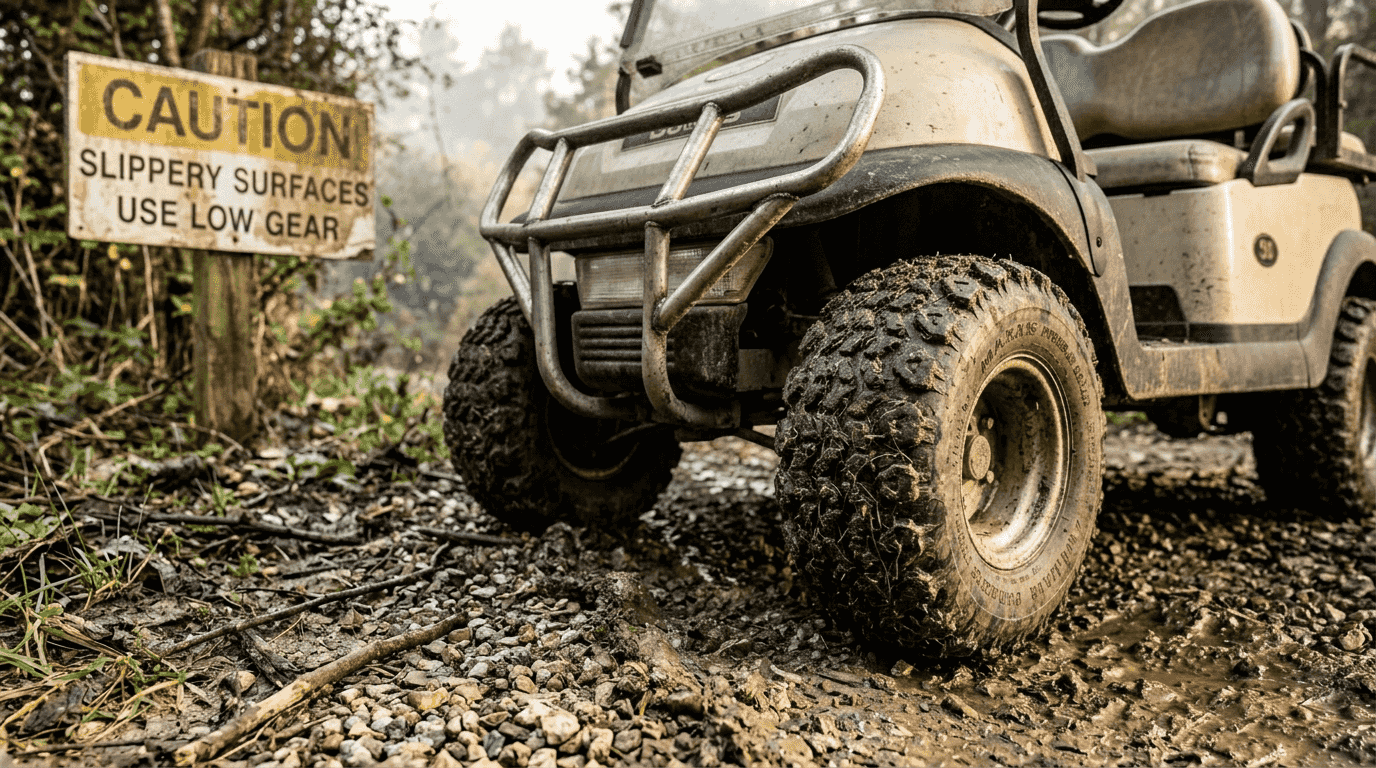
Climbing ability sees approximately 25% improvement on inclines when using all-terrain tires. The enhanced grip allows carts to tackle steeper grades without wheel spin, while the reinforced construction prevents tire deformation that can reduce effective traction. This benefit proves especially valuable on hilly properties or when navigating boat ramps and loading areas where standard tires often struggle.
Getting stuck incidents decrease by 60% with all-terrain tires in challenging conditions. The aggressive tread patterns prevent the tire from riding up on mud or sand, instead cutting through to firmer substrate below. Self-cleaning lug spacing ensures the treads remain effective even in sticky clay or wet conditions that would clog standard tires. This reliability reduces the frustration and potential damage associated with recovery operations.
Stability and control improvements enhance safety on uneven surfaces. The wider contact patch and flexible sidewalls allow all-terrain tires to conform to rocks, roots, and ruts while maintaining predictable handling. This compliance reduces jarring impacts transmitted to passengers and cargo while keeping the cart tracking straight. The result is a smoother, more controlled ride that inspires confidence on challenging terrain.
Performance gains by surface type:
| Surface Type | Traction Improvement | Stability Gain | Typical Use Case |
|---|---|---|---|
| Loose gravel | 45% | High | Driveways, parking areas |
| Wet grass | 35% | Medium | Golf courses after rain |
| Sand | 50% | High | Beach access, sandy trails |
| Mud | 40% | Medium | Trail riding, wet conditions |
| Hardpack dirt | 30% | Medium | Unpaved roads, paths |
Understanding golf cart tires for better traction helps you select the right tread pattern for your primary terrain challenges.
Pro Tip: Match tread aggressiveness to your most challenging terrain. If you occasionally encounter mud but mostly drive on gravel, choose a moderate tread pattern. Save the most aggressive designs for frequent off-road use, as they can feel harsh on pavement and wear faster on hard surfaces.
These performance benefits explain why many golf cart owners consider all-terrain tires essential for mixed-use applications, despite some trade-offs in specialized scenarios.
While all-terrain tires excel in versatility, understanding their limitations helps you make an informed choice. Every tire design involves compromises, and all-terrain options are no exception.
On-road comfort decreases compared to turf tires due to tread aggressiveness. The same lugs that grip mud and sand create a slightly rougher ride on smooth pavement. You’ll notice more road noise and vibration transmitted through the steering wheel and seats. This trade-off becomes more pronounced at higher speeds, though most golf cart applications involve moderate velocities where the difference remains manageable.
Durability depends on rubber compound trade-offs between grip and wear. Softer compounds offer better traction but wear faster, especially on abrasive surfaces like concrete or asphalt. Harder compounds last longer with less traction, creating a balancing act for manufacturers. Most all-terrain tires use medium compounds that provide acceptable performance in both categories, but you’ll see faster wear than dedicated street tires when primarily driving on pavement.
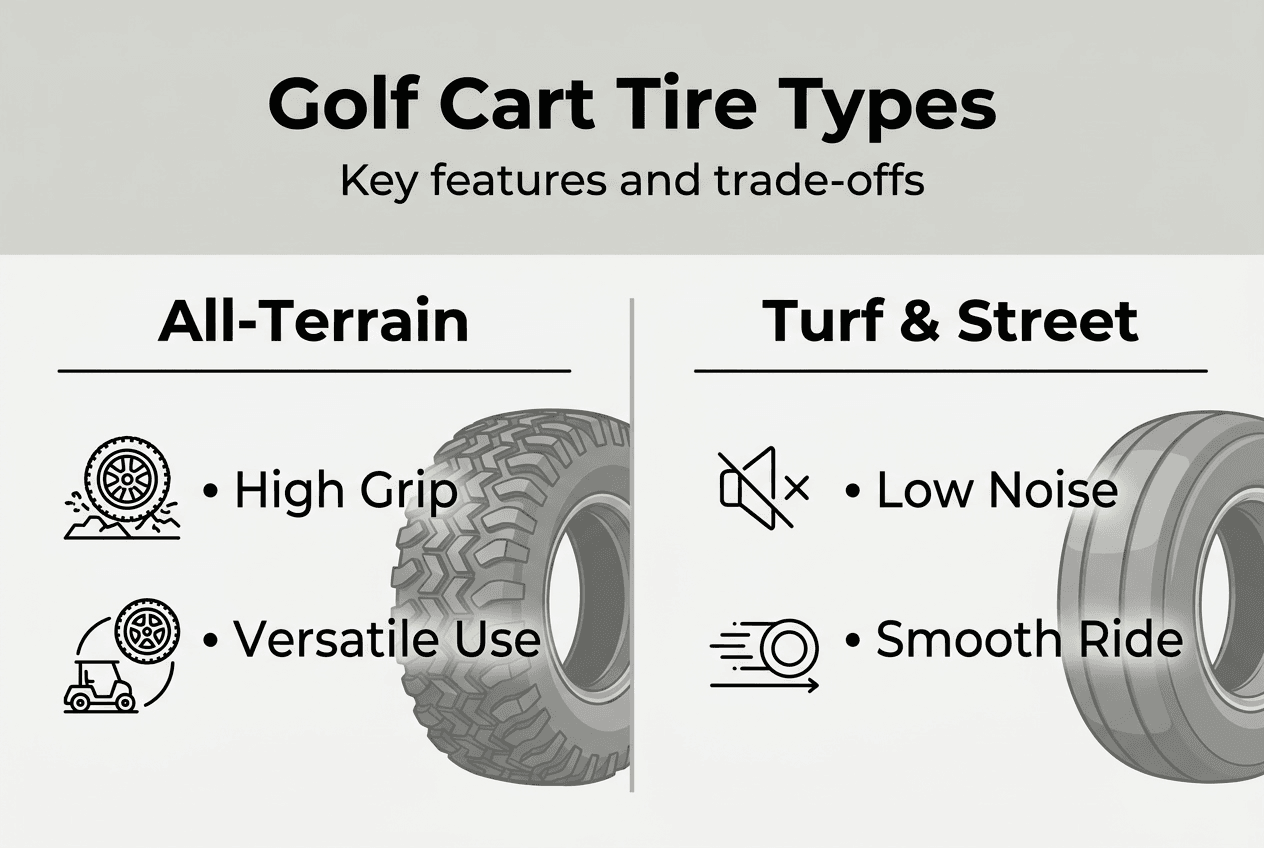
All-terrain tires aren’t ideal for exclusively paved course use. The aggressive treads can damage delicate turf on well-maintained golf courses, leading to complaints from groundskeepers and potential restrictions on where you can drive. The treads also generate more noise on hard surfaces, which may violate quiet cart policies at some facilities. Check course rules before switching to all-terrain tires if you primarily use your cart for traditional golfing.
Comparing tire types side by side:
| Tire Type | Off-Road Traction | On-Road Comfort | Durability | Best Use |
|---|---|---|---|---|
| Turf | Low | Excellent | Good | Golf courses only |
| All-Terrain | Excellent | Good | Very Good | Mixed terrain |
| Street | Fair | Excellent | Excellent | Paved surfaces |
| Mud Terrain | Outstanding | Fair | Good | Extreme off-road |
Reviewing an all-terrain tire comparison provides deeper insights into specific models and their performance characteristics across different scenarios.
Additional considerations include:
Pro Tip: Consider course rules and primary use before switching to all-terrain tires. If you spend 90% of your time on maintained courses, turf tires make more sense despite their off-road limitations. Reserve all-terrain options for carts that regularly encounter varied terrain or serve dual purposes like property maintenance and recreation.
These trade-offs don’t diminish the value of all-terrain tires for appropriate applications. They simply highlight the importance of matching tire type to actual use patterns rather than choosing based on capability you’ll rarely need.
Selecting the right all-terrain tires and maintaining them properly maximizes performance and lifespan. A systematic approach ensures you get the best return on your investment.
Assess your terrain types to select appropriate tread patterns and rubber compounds. Make a list of surfaces you regularly encounter, ranking them by frequency and difficulty. If you primarily drive on gravel with occasional mud, choose a moderate tread pattern with wider lug spacing. For frequent sand or deep mud, aggressive patterns with self-cleaning designs work better. Match the rubber compound to your climate and primary surface, favoring softer compounds for maximum grip in challenging conditions or harder formulations for extended life on mixed terrain.
Check tire size compatibility with your golf cart wheel specifications before purchasing. Measure your current wheel diameter and width, then verify that your desired tire size fits without modifications. Oversized tires may require lift kits or fender adjustments to prevent rubbing during turns or over bumps. Consult your cart’s manual or manufacturer for recommended tire size ranges, as exceeding these limits can affect handling, speedometer accuracy, and warranty coverage.
Maintenance steps for optimal performance:
Regular inflation pressure checks maintain both traction and tire lifespan. Underinflated tires flex excessively, generating heat that breaks down rubber compounds and reduces tread life. They also increase rolling resistance, hurting battery range and creating sluggish handling. Overinflation reduces the contact patch, decreasing traction and creating a harsh ride while making tires more susceptible to impact damage. Check pressure when tires are cold for accurate readings, as driving heats air and increases pressure readings.
Following a golf cart tire installation guide ensures proper mounting and balancing for optimal performance. Understanding golf cart tire sizes explained helps you decode specifications and select compatible replacements.
All-terrain tires reduce wear on suspension and drivetrain components by 10-15% on uneven terrain through better shock absorption and more consistent contact with the ground. This secondary benefit often goes unnoticed but contributes to lower long-term maintenance costs.
Pro Tip: Monitor for uneven wear patterns that indicate alignment or suspension problems. Excessive wear on one edge suggests incorrect camber or toe settings, while center wear indicates overinflation. Addressing these issues early prevents premature tire replacement and avoids drivetrain stress that can damage expensive components like differentials and axles.
Proper selection and maintenance transform all-terrain tires from a simple upgrade into a long-term performance solution that enhances your golf cart’s capability and reliability.
Ready to transform your golf cart’s performance across varied terrain? Upgrading to all-terrain tires opens new possibilities for where and how you use your vehicle.
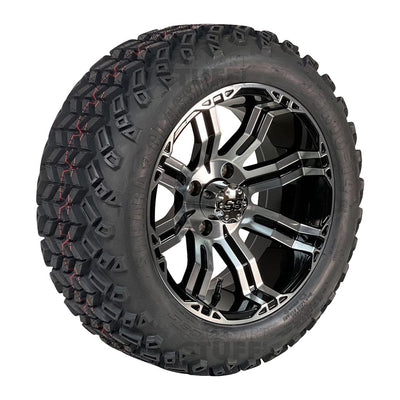
Modern golf cart wheels and tires combo sets simplify the upgrade process by ensuring perfect compatibility between wheels and tires. These pre-matched combinations eliminate guesswork about sizing and fitment, while often providing better value than purchasing components separately. Quality combos feature durable aluminum wheels paired with proven all-terrain tire models, designed to handle everything from beach sand to rocky trails without compromising on-road manners.
Visit GolfCartStuff to explore expert-selected tire and wheel options tailored to different use cases and terrain challenges. Their specialists can help you identify the ideal combination for your specific needs, ensuring you get maximum performance and value from your upgrade.
You can use all-terrain tires on many golf courses, but check facility rules first. Some courses prohibit aggressive treads that might damage delicate turf, especially during wet conditions. The treads also generate more noise than traditional turf tires, which may violate quiet cart policies at premium facilities.
Rotate all-terrain tires every 500 miles or six months to promote even wear across all positions. Replace them when tread depth falls below 3/32 inch or when you notice cracking, bulging, or significant uneven wear. Proper maintenance typically extends lifespan to 3-5 years depending on usage patterns and terrain.
All-terrain tires slightly reduce battery range due to increased rolling resistance from aggressive treads and heavier construction. Most owners report 5-10% range reduction on electric carts, more noticeable on pavement than off-road. The impact varies based on tire model, inflation pressure, and driving conditions.
Yes, all-terrain tires generate more road noise than turf tires on paved surfaces. The aggressive tread lugs create a humming or growling sound that increases with speed. This noise becomes less noticeable on dirt or gravel where tire and surface sounds blend together.
Switching back to turf tires is straightforward if you kept your original wheels and the all-terrain tires didn’t require modifications like lift kits. Simply unmount the all-terrain tires and remount turf tires on your original wheels. If you purchased wheel and tire combos, you’ll need to buy new turf tires or keep both sets for seasonal swapping.
Explore our store to see what our products and resources can do for you.

Leave a comment