




Your Cart Is Our Priority
Explore our store to see what our products and resources can do for you.

TL;DR:
- Regular safety inspections prevent breakdowns and ensure rider and bystander safety.
- Using proper tools and following a systematic checklist is essential for effective inspections.
- Documentation of findings and repairs enhances safety, compliance, and resale value.
A loose brake cable, a cracked tire, a corroded battery terminal — these small oversights have turned routine golf cart rides into serious accidents. Neglected maintenance is one of the leading causes of golf cart accidents, yet most owners skip or rush through inspections. Whether you operate your cart on a golf course, a private community, or public streets, a thorough safety inspection is not optional — it is essential. This guide walks you through exactly what to inspect, what tools you need, how to avoid the most common mistakes, and what to do after the inspection is complete.
| Point | Details |
|---|---|
| Regular inspections prevent problems | Routine checks reduce accident risk and costly breakdowns. |
| Use a thorough checklist | Cover all major systems and keep records for compliance. |
| Address issues promptly | Fix defects immediately to maintain safety and avoid penalties. |
| Preparation makes inspection easier | Gather all tools and information before starting your inspection. |
With that in mind, let’s start by understanding the real impact and requirements behind golf cart safety inspections.
Skipping a safety inspection might save you thirty minutes today, but it can cost you thousands — or worse — down the road. Golf carts operate in environments with pedestrians, cyclists, and other vehicles, which means a mechanical failure is never just an inconvenience. It’s a safety event. Regular maintenance reduces the risk of breakdowns and malfunctions that put riders and bystanders at risk.
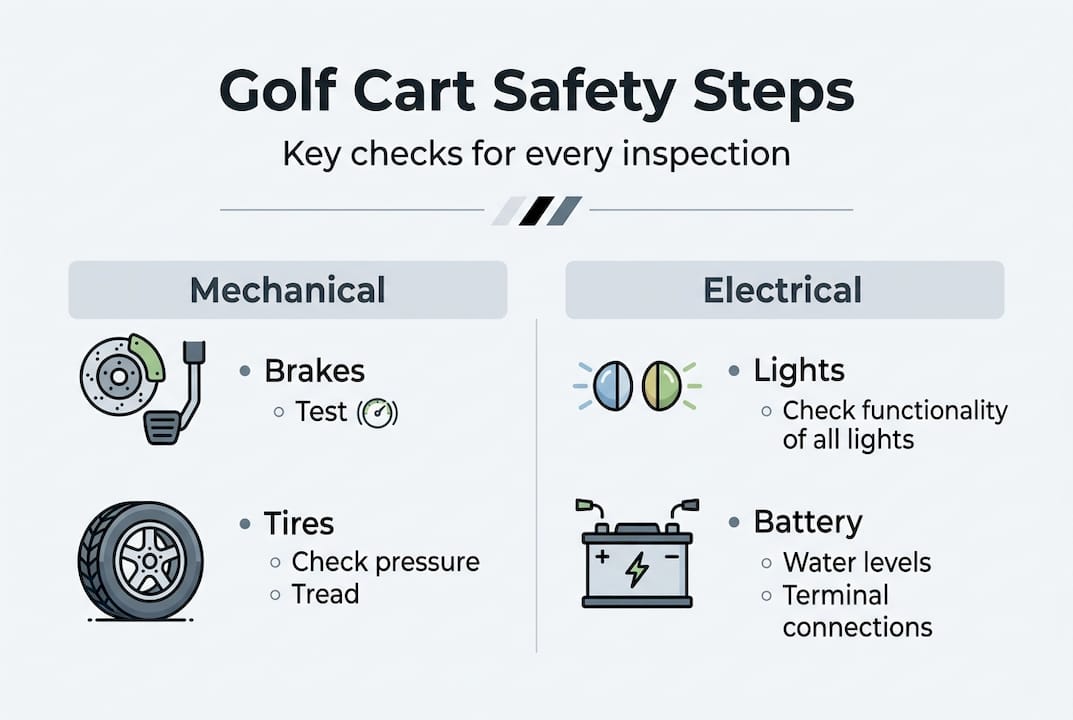
Legal requirements add another layer of urgency. Most states and municipalities require street-legal golf carts to meet specific safety standards, including working lights, mirrors, seat belts, and horn. Failing a compliance check can result in fines or loss of operating privileges. Staying on top of regular golf cart maintenance is the most reliable way to stay compliant year-round.
Here’s what proactive inspections actually protect:
Stat to know: Routine inspections can extend your cart’s operational life and reduce the likelihood of unexpected repair costs by catching problems early — before they cascade into major failures.
Think of a safety inspection the same way you think about golf cart lifespan tips: a small, consistent effort that pays off significantly over time.
Now that you know what’s at stake, let’s gather everything you’ll need for an effective inspection.
Showing up to an inspection without the right tools is like trying to cook without a knife. You’ll miss things, cut corners, and leave with a false sense of security. Certain inspection steps require specialized tools like a tire pressure gauge or a multimeter to get accurate readings.
Essential tools for a golf cart safety inspection:
| Tool | Purpose |
|---|---|
| Tire pressure gauge | Check and adjust tire PSI |
| Multimeter | Test battery voltage and electrical connections |
| Flashlight or work light | Inspect undercarriage and dark areas |
| Wrench set | Tighten loose hardware and connections |
| Brake fluid tester | Assess hydraulic brake fluid condition |
| Safety glasses and gloves | Personal protective equipment |
Before you start, complete these prep steps:
Pro Tip: Pair your inspection with a quick review of your golf cart safety accessories checklist. Some accessories, like mirrors and seat belts, are legally required for street-legal operation and should be part of every inspection.
Good preparation cuts inspection time in half and ensures you don’t miss anything critical. A five-minute setup saves you from a thirty-minute backtrack.
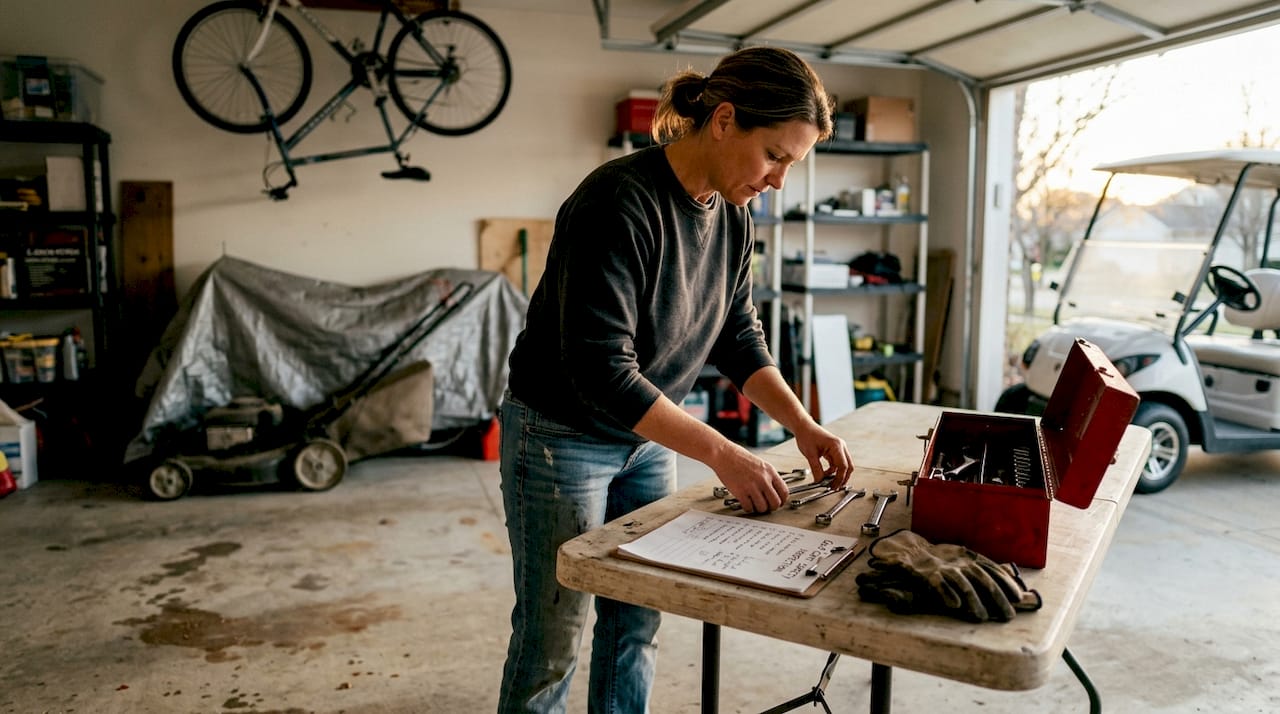
With tools and checklist in hand, follow these steps to ensure a thorough safety inspection.
Inspecting brakes, tires, lights, and steering annually can prevent the majority of major operational issues. Work through this process systematically — top to bottom, front to back.
Pro Tip: Always finish with a short test drive in a safe area. Acceleration, braking, and turning feel will reveal issues that a static inspection simply cannot catch.
“A visual inspection tells you what something looks like. A test drive tells you how it actually performs.”
Even with a checklist, some issues often go unnoticed. Here’s what to watch for and how to troubleshoot.
The most thorough checklist in the world won’t help if you’re making the same mistakes every time. Neglected tire and brake checks are among the leading causes of operational failures — and they’re also among the easiest things to overlook when you’re rushing.
Top mistakes owners make during inspections:
Common symptoms and what they signal:
“If something feels off during the test drive, trust that instinct. Carts don’t develop quirks randomly.”
Pro Tip: Keep a simple symptom log between inspections. Noting when a sound started or when performance changed helps you and any technician diagnose problems faster. Reviewing common maintenance mistakes before each inspection also keeps your process sharp.
Finishing the inspection is just the start — here’s how to keep your cart safe and compliant moving forward.
An inspection without documentation is just a walk-around. Documenting issues and scheduling prompt fixes keeps your cart both safe and legal, and gives you a paper trail that matters for warranties and compliance checks.
Here’s how to handle the post-inspection phase effectively:
A well-maintained log also builds a compelling service history if you ever sell the cart. Buyers pay more for documented care. Think of each inspection record as a deposit into your cart’s resale value.
Once you’re handling inspections regularly, it’s worth considering a deeper perspective on the process.
Most inspection guides hand you a checklist and call it done. What they rarely address is the mindset shift that separates owners who stay safe from those who don’t. The real issue isn’t that people skip inspections entirely — it’s that they inspect what’s obvious and ignore what’s subtle.
Loose hardware, slightly corroded terminals, and early-stage tire sidewall cracking are easy to overlook because they don’t look serious yet. But these are exactly the issues that compound quietly and then fail suddenly. The essential maintenance perspective we’ve seen over years of working with cart owners is this: proactive attention to small details is what separates a cart that lasts a decade from one that needs constant repairs.
Documentation is also underrated. Owners who log every inspection, every repair, and every symptom develop an intuitive understanding of their cart’s patterns. They notice when something changes. That awareness is more valuable than any single checklist item.
Inspections are not a chore. They are the single most cost-effective thing you can do for your cart’s longevity, your safety, and your peace of mind.
Ready to upgrade your cart and inspection toolkit? Here’s where to find the right parts and advice.
A great inspection is only as good as the parts you use to fix what you find. At GOLFCARTSTUFF.COM™, we carry a wide selection of quality components and golf cart accessories designed to keep your cart running safely and meeting compliance standards.
Whether you need replacement brake components, lighting upgrades, battery hardware, or model-specific parts like Club Car DS parts, we’ve got you covered. Our team is available year-round to help you find exactly what your cart needs. Browse our full catalog and get your cart inspection-ready today.
Perform a basic safety check every month and a full detailed inspection at least once a year. Annual inspections are recommended for optimal performance and safety, or before any period of heavy use.
Brakes, tires, lights, battery terminals, and steering components are your top priorities. Checking brakes and tires alone prevents the majority of common operational issues.
Yes. Electric carts need close attention to batteries, wiring, and charging systems, while gas carts require checks on the engine, fuel system, and exhaust. Battery care is crucial for electric models and should never be skipped.
In many cases, yes. Documenting inspections supports legal compliance for street-legal carts and can serve as proof of proper maintenance if a warranty claim arises.
Explore our store to see what our products and resources can do for you.

Leave a comment