
Your Cart Is Our Priority
Explore our store to see what our products and resources can do for you.

TL;DR:
- Proper cleaning with appropriate cleaners extends golf cart seat life and prevents sun and moisture damage.
- Regular rinsing, avoiding harsh chemicals, and applying UV protectant every 4–6 weeks ensure long-term durability.
Cleaning golf cart upholstery is the process of removing dirt, stains, and mildew from seat surfaces to keep them looking fresh and performing their best. Done right, it extends seat life, protects resale value, and prevents the kind of sun and moisture damage that turns a clean cart into an eyesore. Whether your cart has vinyl, leather, or fabric seats, the method matters as much as the effort. This guide covers the right tools, step-by-step techniques for each material type, and the regular maintenance habits that keep your upholstery in top shape through 2026 and beyond.
The right supplies make the difference between a clean seat and a damaged one. Using the wrong chemicals on vinyl or leather can cause cracking, fading, or permanent discoloration. Start with the correct kit before you touch the seats.
The core supplies you need:
What to avoid: Ammonia-based cleaners, undiluted bleach, and harsh degreasers all break down vinyl over time. They may clean on contact, but they accelerate cracking and fading with repeated use. Harsh chemicals like ammonia are consistently flagged by industry guidance as damaging to upholstery materials.
Pro Tip: Always test any new cleaner on a small, hidden area of the seat first. Wait five minutes and check for discoloration before applying it to the full surface.
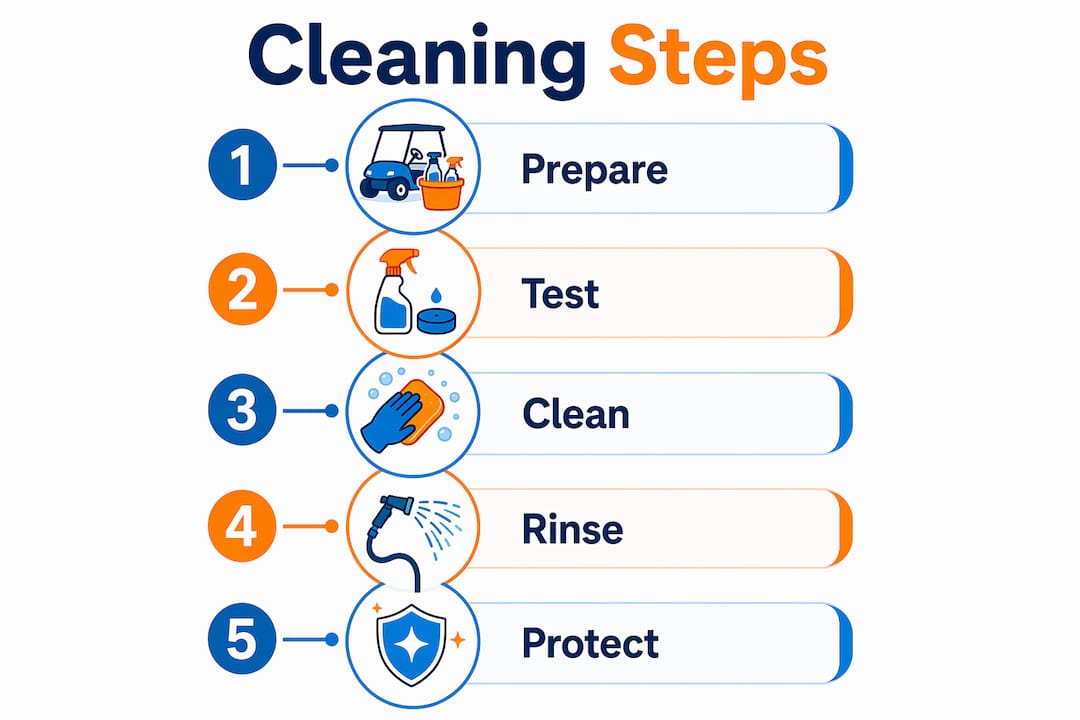
Proper material identification is the first step in choosing safe and effective cleaners. Vinyl, leather, and fabric each respond differently to cleaning agents and scrubbing pressure. Using the wrong method on the wrong material causes more damage than the original dirt.
Leather needs a gentler touch than vinyl. Use a pH-neutral leather cleaner instead of dish soap, which can dry out natural leather. After cleaning, apply a leather conditioner while the surface is still slightly damp. Leather upholstery requires specialized conditioning to maintain suppleness, and skipping this step leads to cracking within a season.
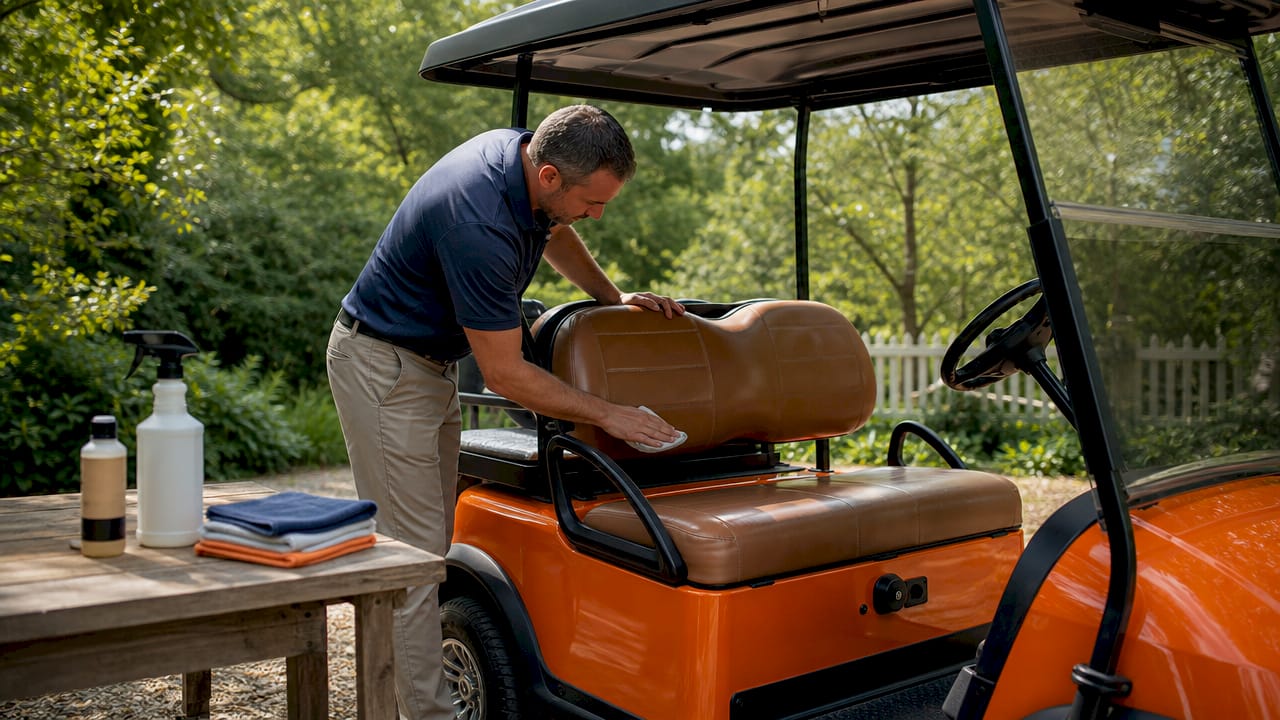
Fabric seats hold stains deeper than vinyl or leather. Blot fresh stains immediately rather than rubbing, which pushes the stain further into the fibers. Use an upholstery-specific fabric cleaner and a soft brush. Rinse with minimal water to avoid soaking the foam underneath. Dry fabric seats in direct sunlight or with a fan to prevent mildew from forming in the padding.
| Seat material | Recommended cleaner | Key caution |
|---|---|---|
| Vinyl | Mild dish soap or vinyl cleaner | Avoid ammonia and harsh degreasers |
| Leather | pH-neutral leather cleaner | Always condition after cleaning |
| Fabric | Upholstery fabric cleaner | Minimize water to protect foam padding |
Mildew is one of the most common problems on golf cart seats, especially in humid climates or when carts are stored uncovered. The good news is that it responds well to a targeted treatment if you catch it early.
Effective mildew removal steps:
Preventing mildew from coming back:
Pro Tip: For stubborn mildew on fabric seats, a commercial enzyme-based upholstery cleaner breaks down organic matter more effectively than bleach and is safer for fabric fibers.
Cleaning removes the problem. Protection prevents it from coming back. The two practices work together, and skipping the protection step means you will be cleaning the same damage repeatedly.
Regular cleaning preserves resale value by stopping vinyl from stiffening and cracking due to dirt and sun exposure. A cart with clean, supple seats commands a noticeably better price than one with cracked, faded upholstery.
A practical protection routine:
For carts exposed to harsh weather year-round, pairing your cleaning routine with broader golf cart weather protection practices extends the life of every exterior surface, not just the seats.
Cleaning golf cart upholstery correctly requires matching your cleaner to the seat material, rinsing thoroughly to avoid residue buildup, and applying UV protectant every 4–6 weeks to prevent cracking and fading.
| Point | Details |
|---|---|
| Match cleaner to material | Use vinyl cleaner for vinyl, pH-neutral cleaner for leather, and fabric-specific cleaner for cloth seats. |
| Rinse thoroughly every time | Soap residue left on seats attracts more dirt and makes future cleaning harder. |
| Apply UV protectant regularly | Apply every 4–6 weeks to prevent sun damage and chemical breakdown of vinyl. |
| Treat mildew with a 1:3 bleach solution | Soak for 5–10 minutes, scrub gently, rinse fully, and dry in direct sunlight. |
| Skip the pressure washer | Use a low-pressure hose or damp cloth to avoid forcing water into seat foam. |
Most upholstery damage I see on golf carts is not from age. It is from overcleaning with the wrong products. Owners spray a strong all-purpose cleaner, scrub hard, and call it done. The seats look clean for a day. Then they crack faster, fade sooner, and hold dirt more stubbornly than before.
The counterintuitive truth is that less product and more rinsing produces better results than heavy application. A light solution of dish soap and warm water, rinsed completely, does more for vinyl than any specialty cleaner used incorrectly.
The second mistake I see constantly is skipping the UV protectant. People treat it as optional, like a finishing touch. It is not. Sun is the primary cause of vinyl cracking, and protectant is the only thing standing between your seats and that damage. If you only add one habit from this guide, make it the protectant.
The third thing worth saying: know what your seats are made of before you clean them. Leather and vinyl look similar, especially on older carts. Applying a bleach solution to leather, or skipping conditioner after cleaning it, causes irreversible damage. A quick check of your cart’s seat repair and material guide takes two minutes and saves you from an expensive replacement.
— Roshan
Keeping your seats clean is only part of the picture. Having the right accessories on hand makes the whole process easier and protects your cart between cleanings.
Golfcartstuff carries a wide selection of golf cart accessories including seat covers, protective treatments, and maintenance supplies for every major cart brand. Whether you drive a Club Car, Yamaha, or EZGO, you will find the parts and accessories that fit your model. Browse the full catalog at Golfcartstuff and keep your cart looking and running its best all season long.
Weekly light cleaning and monthly deep cleaning are the standard recommendations. Clean more frequently after heavy use or rain exposure.
Mild dish soap mixed with warm water is the most reliable option. Dedicated vinyl cleaners also work well, as long as they are free of ammonia and harsh degreasers.
No. Pressure washers force water into the seat foam, which causes internal mold and mildew. Use a low-pressure hose or a damp microfiber cloth instead.
Mix one part bleach with three parts water, apply to the affected area, and let it soak for 5–10 minutes before scrubbing gently. Rinse completely and dry the seat in direct sunlight.
Yes. Regular cleaning prevents vinyl from cracking and stiffening, which directly preserves the cart’s appearance and market value over time.
Explore our store to see what our products and resources can do for you.

Leave a comment